

Abstract
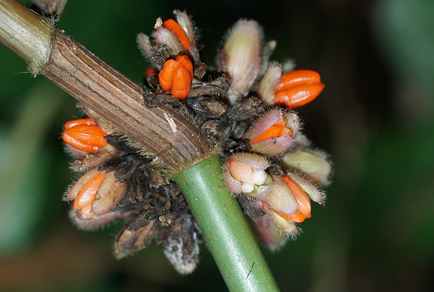
A synopsis of the genus Amischotolype (Commelinaceae) in Thailand is presented. Thirteen species are enumerated, one of which, A. gracilis is a new record for Thailand. A lectotype is designated for A. welzeniana. An identification key to the Thai species of Amischotolype is provided, as well as notes on their ecology, distribution, vernacular names, specimens examined in Thailand, are cited.
References
- Backer, C.A. (1924) Handboek voor de Flora van Java. Ruygrock & Co., Batavia, 141 pp.
- Backer, C.A. (1968) Forrestia. In: Backer, C.A. & Bakhuizen van den Brink, R.C. (Eds.) Flora of Java (Spermatophytes Only), 3, Wolters-Noordhoff, pp. 1–761.
- Blume, C.L. (1827) Campelia. Enumeratio Plantarum Javae 1. 7 pp.
- Boonsuk, B., Chantaranothai, P. & Kantachot, C. (2024) A new species of Amischotolype Hassk. (Commelinaceae: Tradescantieae) from Thailand. Blumea 69: 49–53. https://doi.org/10.3767/blumea.2024.69.01.06
- Burg, W.J. van der & Bidault, E. (2020) Commelinaceae, Solanacae. In: Sosef, M.S.M., van der Burg, J., Bidault, E. & Aubriot, X. (Eds.) Flore du Gabon 55. Margraf, Weikersheim, Backhuys, Leiden, pp. 1–137.
- Clarke, C.B. (1881) Forrestia. In: de Candolle, A. & de Candolle, C. (Eds.) Monographiæ Phanerogamarum 3. pp. 235–238.
- Duistermaat, H. (2012) A taxonomic revision of Amischotolype (Commelinaceae) in Asia. Garden’s Bulletin Singapore 64 (1): 51–131.
- Evans, T.M., Sytsma, K.J., Faden, R.B. & Givnish, T.J. (2003) Phylogenetic relationships in the Commelinaceae: II. a cladistic analysis of rbcL sequences and morphology. Systematic Botany 28 (2): 270–292 https://doi.org/10.1043/0363-6445-28.2.270
- Faden, R.B. & Hunt, D.R. (1991) The classification of the Commelinaceae. Taxon 40: 19–31. https://doi.org/10.2307/1222918
- Hara, H. (1966) Commelinaceae: Amischotolype hookeri. The Flora of the Eastern Himalaya 1: 399.
- Hasskarl, J.K. (1863) Amischotolype Hassk., eine neue Gattung der Commelinaceae. Flora 46: 391–393.
- Hasskarl, J.K. (1864) Ueber Forrestia A.Rich. Flora 47: 625–631.
- Hong, D.Y. (1974) Revisio Commelinacearum Sinicarum. Acta Phytotaxonomica Sinica 12 (4): 462–463.
- Idrees, M. (2022) Amischotolype neoscandens, a new name for A. scandens (Commelinaceae). Kew Bulletin 77: 577–578. https://doi.org/10.1007/s12225-022-10031-6
- Koorders, S.H. (1911) Exkursionsflora von Java vol. 1. G. Fischer, Jena, Germany.
- Lee, C.K., Fuse, S., Poopath, M., Pooma, R. & Tamura, M.N. (2021) Phylogenetics and infrafamilial classification of Commelinaceae (Commelinales). Botanical Journal of the Linnean Society 198: 117–130. https://doi.org/10.1093/botlinnean/boab047
- Nandikar, M.D. & Gurav, R.V. (2014) A taxonomic account of Amischotolype (Commelinaceae) and notes on the occurrence of Porandra in India. Journal of Threatened Taxa 26 (65): 5774–5780. https://doi.org/10.11609/JoTT.o3500.5774-80
- Pichon, M. (1946) Sur les Commélinacées. Notulae Systematicae. Herbier du Muséum de Paris. Phanérogramie. Paris 12: 232–235.
- POWO (2025) Plants of the World online. Facilitated by the Royal Botanic Gardens, Kew. Available from: http://www.plantsoftheworldonline.org/ (accessed 17 April 2025)
- Richard, A. (1834) Forrestia. In: Dumont d’Urville (Ed.) Voyage de Découverts de l’Astrolabe 2. pp. 1–5.
- Ridley, H.N. (1904) New Malayan plants. Journal of the Straits Branch of the Royal Asiatic Society 41: 37–38.
- Syam Radh, S., Nampy, S. & Manudev, K.M. (2016) A synopsis of the genus Amischotolype (Commelinaceae) in India with one new record, A. monosperma (C.B. Clarke) I.M. Turner from Andaman & Nicobar Islands and lectotypification of A. hookeri (Hassk.) H.Hara. International Journal of Advanced Research 4 (4): 427–434. https://doi.org/10.21474/IJAR01/151
- The Forest Herbarium (2014) Tem Smitinand’s Thai Plant Names, revised edition 2014. Office of the Forest Herbarium, Department of National Parks, Wildlife and Plant Conservation, Bangkok.
- Thiers, B. (2024) Index Herbariorum: A Global Directory of Public Herbaria and Associated Staff. New York Botanical Garden’s Virtual Herbarium. Available from: http://sweetgum.nybg.org/ih/ (accessed 10 October 2024)
- Thitimetharoch, T., Chantaranothai, P. & Faden, R.B. (2003) The genus Porandra (Commelinaceae) in Thailand. Thai Forest Bulletin (Botany) 31: 141–148. [https://li01.tci-thaijo.org/index.php/ThaiForestBulletin/article/view/24423]
- Turland, N.J., Wiersema, J.H., Barrie, F.R., Greuter, W., Hawksworth, D.L., Herendeen, P.S., Knapp, S., Kusber, W.-H., Li, D-Z, Marhold, K., May, T.W., McNeill, J., Monro, A.M., Prado, J., Price, M.J. & Smith, G.F. (Eds.) (2018) International Code of Nomenclature for algae, fungi, and plants (Shenzhen Code) adopted by the Nineteenth International Botanical Congress Shenzhen, China, July 2017. Regnum Vegetabile, Koeltz Botanical Books, Glashütten, 159 pp. https://doi.org/10.12705/Code.2018
- Turner, I.M. (1996) Some nomenclatural adjustments in the Commelinaceae, Hypoxidaceae, Lauraceae, Rubiaceae, Sapotaceae, and Zingiberaceae of the Malay Peninsula. Novon 6: 221–224. https://doi.org/10.2307/3391925
- Turner, I.M. (1996) The names used for Singapore plants since 1900. Gardens’ Bulletin. Singapore 45 (1): 1–287.
- Wan, Y. (1986) A new species of the genus Porandra Hong from Guangxi. Bulletin of Botanical Research 6 (4): 153–155.
- Welzen, P.C. van, Madern, A., Raes, N. & Parnell, J.A.N. (2011) The Current and Future Status of Floristic Provinces in Thailand. In: Trisurat, Y., Shrestha, R.P. & Alkemade, R. (Eds.) Land use, climate change and biodiversity modeling: perspectives and applications. Information Science Reference (an imprint of IGI Global), pp. 219–247. https://doi.org/10.4018/978-1-60960-619-0.ch011