

Abstract
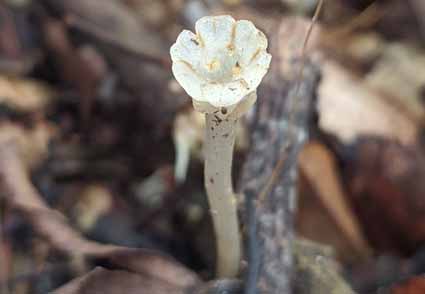
Two new species of Thismia (Thismiaceae) from T. subg. Ophiomeris sect. Ophiomeris are described for the Brazilian Amazon Forest, in the Open Ombrophilous Forests of the State of Acre. Here we provide detailed morphological descriptions, with illustrations, distribution maps and preliminary conservation analyses.
References
<p align="justify"><span style="color: #000000;"><span style="font-family: Times New Roman, serif;"><span style="font-size: small;">ACRE—Governo do Estado do Acre (2010) Zoneamento Ecológico-Econômico do Acre, Fase II. Escala 1:250.000 – Documento Síntese. 2nd ed. Secretaria de Estado de Meio Ambiente, Rio Branco, 356 pp.</span></span></span>
<p align="justify"><span style="color: #000000;"><span style="font-family: Times New Roman, serif;"><span style="font-size: small;">Aguilar-Cano, J., Guzmán-Guzmán, S. & Lopero-Toro, A. (2023) Thismia andicola sp. nov. (Thismiaceae): a new species from the northern Andes in Colombia. Phytotaxa 579: 107–116. https://doi.org/10.11646/phytotaxa.579.2.4</span></span></span>
<p align="justify"><span style="color: #000000;"><span style="font-family: Times New Roman, serif;"><span style="font-size: small;">Alvares, C.A., Stape, J.L., Sentelhas, P.C., Gonçalves, J.D.M. & Sparovek, G. (2013) Köppen’s climate classification map for Brazil. Meteorologische Zeitschrift 22: 711–728. https://doi.org/10.1127/0941-2948/2013/0507</span></span></span>
<p align="justify"><span style="color: #000000;"><span style="font-family: Times New Roman, serif;"><span style="font-size: small;">Bachman, S., Moat, J., Hill, A.W., Torre, J. de la & Scott, B. (2011) Supporting Red List threat assessments with GeoCAT: geospatial conservation assessment tool. ZooKeys 150: 117–126. https://doi.org/10.3897/zookeys.150.2109</span></span></span>
<p align="justify"><span style="color: #000000;"><span style="font-family: Times New Roman, serif;"><span style="font-size: small;">Beentje, H. (2016) The Kew Plant Glossary, an illustrated dictionary of plant terms. 2nd ed. Royal Botanic Gardens, Kew, 184 pp.</span></span></span>
<p align="justify"><span style="color: #000000;"><span style="font-family: Times New Roman, serif;"><span style="font-size: small;">BFG—The Brazil Flora Group (2022) Brazilian Flora 2020: Leveraging the power of a collaborative scientific network. Taxon 71: 178–198. https://doi.org/10.1002/tax.12640</span></span></span>
<p align="justify"><span style="color: #000000;"><span style="font-family: Times New Roman, serif;"><span style="font-size: small;">Engels, M.E., Muscat, E., Moroti, M. de T. & Smidt, E. de C. (2022) Thismia mantiqueirensis (Thismiaceae), a new species of Brazilian Atlantic Forest. Phytotaxa 570: 223–228. https://doi.org/10.11646/phytotaxa.570.2.8</span></span></span>
<p align="justify"><span style="color: #000000;"><span style="font-family: Times New Roman, serif;"><span style="font-size: small;">Fearnside, P.M. (2005) Deforestation in Brazilian Amazonia: history, rates, and consequences. Conservation Biology 19: 680–688. https://doi.org/10.1111/j.1523-1739.2005.00697.x</span></span></span>
<p align="justify"><span style="color: #000000;"><span style="font-family: Times New Roman, serif;"><span style="font-size: small;">Griffith, W. (1844) On the root parasites referred by authors to Rhizantheae, and their allies. Proceedings of the Linnean Society of London 1: 221–223.</span></span></span>
<p align="justify"><span style="color: #000000;"><span style="font-family: Times New Roman, serif;"><span style="font-size: small;">Goebel, K. & Süssenguth, K. (1924) Beiträge zur Kenntnis der südamerikanischen Burmanniaceen. Flora 117: 55–90. https://doi.org/10.1016/S0367-1615(17)31059-5</span></span></span>
<p align="justify"><span style="color: #000000;"><span style="font-family: Times New Roman, serif;"><span style="font-size: small;">IUCN (2012) IUCN Red List Categories and Criteria: Version 3.1. 2nd ed.. International Union for Conservation of Nature and Natural Resources, Gland, Switzerland and Cambridge, 32 pp. </span></span></span>
<p align="justify"><span style="color: #000000;"><span style="font-family: Times New Roman, serif;"><span style="font-size: small;">IUCN (2022) Guidelines for Using the IUCN Red List Categories and Criteria. Version 15.1. Prepared by IUCN Standards and Petitions Committee. Available from: http://www.iucnredlist.org/ (accessed 18 January 2023).</span></span></span>
<p align="justify"><span style="color: #000000;"><span style="font-family: Times New Roman, serif;"><span style="font-size: small;">Jonker, F.P. (1938) A monograph of the Burmanniaceae. Mededelingen van het Botanisch Museum en Herbarium van de Rijksuniversiteit te Utrecht 51: 1–279.</span></span></span>
<p align="justify"><span style="color: #000000;"><span style="font-family: Times New Roman, serif;"><span style="font-size: small;">Kumar, P., Gale, S.W., Li, J.-H., Bouamanivong, S. & Fischer, G.A. (2017) Thismia nigricoronata, a new species of Burmanniaceae (Thismieae, Dioscoreales) from Vang Vieng, Vientiane Province, Laos, and a key to subgeneric classification. Phytotaxa 319: 225–240. https://doi.org/10.11646/phytotaxa.319.3.2</span></span></span>
<p align="justify"><span style="color: #000000;"><span style="font-family: Times New Roman, serif;"><span style="font-size: small;">Maas, H. & Mass, P.J. (1987a) A new Thismia (Burmanniaceae) from French Guiana. Brittonia 39: 376–378. https://doi.org/10.2307/2807137</span></span></span>
<p align="justify"><span style="color: #000000;"><span style="font-family: Times New Roman, serif;"><span style="font-size: small;">Maas, P.J.M., Maas-van de Kamer, H., van Benthem, J., Snelders, H.C.M. & Rübsamen, T. (1986) Burmanniaceae. Flora Neotropica Monograph 42: 1–189.</span></span></span>
<p align="justify"><span style="color: #000000;"><span style="font-family: Times New Roman, serif;"><span style="font-size: small;">Maas, P.J.M. & Maas, H. (1987b) Ecuadorian saprophytes, a preliminary review. Opera Botanica 92: 131–145.</span></span></span>
<p align="justify"><span style="color: #000000;"><span style="font-family: Times New Roman, serif;"><span style="font-size: small;">Mancinelli, W.S., Blum, C.T & Smidt, E. de C. (2012) Thismia prataensis (Thismiaceae), a new species from the Brazilian Atlantic rain forest. Systematic Botany 37: 879–882. https://doi.org/10.1600/036364412X656545</span></span></span>
<p align="justify"><span style="color: #000000;"><span style="font-family: Times New Roman, serif;"><span style="font-size: small;">Merckx, V.S.F.T. & Smets, E.F. (2014) Thismia americana, the 101st anniversary of a botanical mystery. International Journal of Plant Sciences 175: 165–175. https://doi.org/10.1086/674315</span></span></span>
<p align="justify"><span style="color: #000000;"><span style="font-family: Times New Roman, serif;"><span style="font-size: small;">Miers, J. (1847) On a new genus of plants of the family Burmanniaceae. Proceedings of Linnean Society of London 1: 328–329.</span></span></span>
<p align="justify"><span style="color: #000000;"><span style="font-family: Times New Roman, serif;"><span style="font-size: small;">Miers, J. (1866) On Myostoma, a new genus of the Burmanniaceae. Proceedings of Linnean Society of London 2: 461–475. https://doi.org/10.1111/j.1096-3642.1865.tb00195.x</span></span></span>
<p align="justify"><span style="color: #000000;"><span style="font-family: Times New Roman, serif;"><span style="font-size: small;">Nuraliev, M.S., Yudina, S.V., Shepeleva, E.A., Truong, B.V., Do, T.X., Beer, A.S. & Remizowa, M.V. (2021) Floral structure in Thismia (Thismiaceae: Dioscoreales): new insights from anatomy, vasculature and development. Botanical Journal of the Linnean Society 195: 501–531. https://doi.org/10.1093/botlinnean/boaa066</span></span></span>
<p align="justify"><span style="color: #000000;"><span style="font-family: Times New Roman, serif;"><span style="font-size: small;">Schlechter, F.R.R. (1921) Die Thismieae. Notizblatt des Botanischen Gartens und Museums zu Berlin-Dahlem 8: 31–45.</span></span></span>
<p align="justify"><span style="color: #000000;"><span style="font-family: Times New Roman, serif;"><span style="font-size: small;">SEMAPI (2022) Plano de Manejo do Parque Estadual Chandless: Encarte 3—Análise da UC , vol. 3. Secretaria de Estado do Meio Ambiente e das Políticas Indígenas, Secretaria de Estado de Meio Ambiente, Rio Branco, 240 pp.</span></span></span>
<p align="justify"><span style="color: #000000;"><span style="font-family: Times New Roman, serif;"><span style="font-size: small;">Silva, D.F. da, Engels, M.E. & Soares-Lopes, C.R.A. (2020) Novelties in Thismia (Thismiaceae) from South Brazilian Amazon with the description of a new species. Phytotaxa 429: 261–273. https://doi.org/10.11646/phytotaxa.429.4.2</span></span></span>
<p align="justify"><span style="color: #000000;"><span style="font-family: Times New Roman, serif;"><span style="font-size: small;">Silva, D.F. da & Braga, J.M.A. (2022) Thismia petasiformis (Thismiaceae), a new fairy lantern species from the Brazilian Amazon Forest. Phytotaxa 564: 221–229. https://doi.org/10.11646/phytotaxa.564.2.5</span></span></span>
<p align="justify"><span style="color: #000000;"><span style="font-family: Times New Roman, serif;"><span style="font-size: small;">Silva, D.F. da, Ríos, R.C., Cruz, V.J.M.V. da, Souza, I. de & Braga, J.M.A. (2022) Thismia cordata (Thismiaceae), a new fairy lantern species from the Brazilian Atlantic Forest. Phytotaxa 571: 76–84. https://doi.org/10.11646/phytotaxa.571.1.6</span></span></span>
<p align="justify"><span style="color: #000000;"><span style="font-family: Times New Roman, serif;"><span style="font-size: small;">Silva, S.S. de, Bordignon, L., Melo, A.W.F. de & Oliveira, I. (2021) Unidades de Conservação no Acre: tendência de desmatamento e queimadas. In: Franco, A. de O. & Bento, V.R. da S. (Eds.) Áreas Naturais Protegidas Brasileiras: Gestão, Desafios, Conceitos e Reflexões, vol. 1. Ed. Inovar, Campo Grande, pp. 33–46. https://doi.org/10.36926/editorainovar-978-65-80476-57-2</span></span></span>
<p align="justify"><span style="color: #000000;"><span style="font-family: Times New Roman, serif;"><span style="font-size: small;">Silveira, M. (2001) A floresta aberta com bambu no sudoeste da Amazônia: padrões eprocessos em múltiplas escalas. Ph. D. Thesis, Universidade de Brasilia, Brasília, 109 pp. </span></span></span>
<p align="justify"><span style="color: #000000;"><span style="font-family: Times New Roman, serif;"><span style="font-size: small;">Siti-Munirah, M.Y. & Dome, N. (2022) Thismia latiffiana (Thismiaceae), an unusual new species from Terengganu, Peninsular Malaysia. PhytoKeys 188: 105–114. https://doi.org/10.3897/phytokeys.188.77061</span></span></span>
<p align="justify"><span style="color: #000000;"><span style="font-family: Times New Roman, serif;"><span style="font-size: small;">Sochor, M., Egertova, Z., Hroneš, M. & Dan?ák, M. (2018a) Rediscovery of Thismia neptunis (Thismiaceae) after 151 years. Phytotaxa 340: 71–78. https://doi.org/10.11646/phytotaxa.340.1.5</span></span></span>
<p align="justify"><span style="color: #000000;"><span style="font-family: Times New Roman, serif;"><span style="font-size: small;">Sochor, M., Hroneš, M. & Dan?ák, M. (2018b) New insights into variation, evolution and taxonomy of fairy lanterns (Thismia, Thismiaceae) with four new species from Borneo. Plant Systematics and evolution 304: 699–721. https://doi.org/10.1007/s00606-018-1504-5</span></span></span>
<p align="justify"><span style="color: #000000;"><span style="font-family: Times New Roman, serif;"><span style="font-size: small;">Standley, P.C. (1927) New plants from Central America VII. Journal of the Washington Academy of Sciences 17: 159–171.</span></span></span>
<p align="justify"><span style="color: #000000;"><span style="font-family: Times New Roman, serif;"><span style="font-size: small;">Warming, J.E.B (1901) Sur quelques Burmanniacées recueillies au Brésil par le D<sup>r</sup>. A. Glaziou. Oversigt ver det Kongelige Danske Videnskabernes Selskabs Forhandlinger og dets Medlemmers Arbeider 1901: 173–182.</span></span></span>
<p align="justify"><span style="color: #000000;"><span style="font-family: Times New Roman, serif;"><span style="font-size: small;">WCVP (2023) World Checklist of Vascular Plantas, version 2.0. Facilitated by the Royal Botanic Gardens, Kew. Available from: https://wcvp.science.kew.org/ (accessed 18 January 2023).</span></span></span>
<p align="justify"><span style="color: #000000;"><span style="font-family: Times New Roman, serif;"><span style="font-size: small;">Aguilar-Cano, J., Guzmán-Guzmán, S. & Lopero-Toro, A. (2023) Thismia andicola sp. nov. (Thismiaceae): a new species from the northern Andes in Colombia. Phytotaxa 579: 107–116. https://doi.org/10.11646/phytotaxa.579.2.4</span></span></span>
<p align="justify"><span style="color: #000000;"><span style="font-family: Times New Roman, serif;"><span style="font-size: small;">Alvares, C.A., Stape, J.L., Sentelhas, P.C., Gonçalves, J.D.M. & Sparovek, G. (2013) Köppen’s climate classification map for Brazil. Meteorologische Zeitschrift 22: 711–728. https://doi.org/10.1127/0941-2948/2013/0507</span></span></span>
<p align="justify"><span style="color: #000000;"><span style="font-family: Times New Roman, serif;"><span style="font-size: small;">Bachman, S., Moat, J., Hill, A.W., Torre, J. de la & Scott, B. (2011) Supporting Red List threat assessments with GeoCAT: geospatial conservation assessment tool. ZooKeys 150: 117–126. https://doi.org/10.3897/zookeys.150.2109</span></span></span>
<p align="justify"><span style="color: #000000;"><span style="font-family: Times New Roman, serif;"><span style="font-size: small;">Beentje, H. (2016) The Kew Plant Glossary, an illustrated dictionary of plant terms. 2nd ed. Royal Botanic Gardens, Kew, 184 pp.</span></span></span>
<p align="justify"><span style="color: #000000;"><span style="font-family: Times New Roman, serif;"><span style="font-size: small;">BFG—The Brazil Flora Group (2022) Brazilian Flora 2020: Leveraging the power of a collaborative scientific network. Taxon 71: 178–198. https://doi.org/10.1002/tax.12640</span></span></span>
<p align="justify"><span style="color: #000000;"><span style="font-family: Times New Roman, serif;"><span style="font-size: small;">Engels, M.E., Muscat, E., Moroti, M. de T. & Smidt, E. de C. (2022) Thismia mantiqueirensis (Thismiaceae), a new species of Brazilian Atlantic Forest. Phytotaxa 570: 223–228. https://doi.org/10.11646/phytotaxa.570.2.8</span></span></span>
<p align="justify"><span style="color: #000000;"><span style="font-family: Times New Roman, serif;"><span style="font-size: small;">Fearnside, P.M. (2005) Deforestation in Brazilian Amazonia: history, rates, and consequences. Conservation Biology 19: 680–688. https://doi.org/10.1111/j.1523-1739.2005.00697.x</span></span></span>
<p align="justify"><span style="color: #000000;"><span style="font-family: Times New Roman, serif;"><span style="font-size: small;">Griffith, W. (1844) On the root parasites referred by authors to Rhizantheae, and their allies. Proceedings of the Linnean Society of London 1: 221–223.</span></span></span>
<p align="justify"><span style="color: #000000;"><span style="font-family: Times New Roman, serif;"><span style="font-size: small;">Goebel, K. & Süssenguth, K. (1924) Beiträge zur Kenntnis der südamerikanischen Burmanniaceen. Flora 117: 55–90. https://doi.org/10.1016/S0367-1615(17)31059-5</span></span></span>
<p align="justify"><span style="color: #000000;"><span style="font-family: Times New Roman, serif;"><span style="font-size: small;">IUCN (2012) IUCN Red List Categories and Criteria: Version 3.1. 2nd ed.. International Union for Conservation of Nature and Natural Resources, Gland, Switzerland and Cambridge, 32 pp. </span></span></span>
<p align="justify"><span style="color: #000000;"><span style="font-family: Times New Roman, serif;"><span style="font-size: small;">IUCN (2022) Guidelines for Using the IUCN Red List Categories and Criteria. Version 15.1. Prepared by IUCN Standards and Petitions Committee. Available from: http://www.iucnredlist.org/ (accessed 18 January 2023).</span></span></span>
<p align="justify"><span style="color: #000000;"><span style="font-family: Times New Roman, serif;"><span style="font-size: small;">Jonker, F.P. (1938) A monograph of the Burmanniaceae. Mededelingen van het Botanisch Museum en Herbarium van de Rijksuniversiteit te Utrecht 51: 1–279.</span></span></span>
<p align="justify"><span style="color: #000000;"><span style="font-family: Times New Roman, serif;"><span style="font-size: small;">Kumar, P., Gale, S.W., Li, J.-H., Bouamanivong, S. & Fischer, G.A. (2017) Thismia nigricoronata, a new species of Burmanniaceae (Thismieae, Dioscoreales) from Vang Vieng, Vientiane Province, Laos, and a key to subgeneric classification. Phytotaxa 319: 225–240. https://doi.org/10.11646/phytotaxa.319.3.2</span></span></span>
<p align="justify"><span style="color: #000000;"><span style="font-family: Times New Roman, serif;"><span style="font-size: small;">Maas, H. & Mass, P.J. (1987a) A new Thismia (Burmanniaceae) from French Guiana. Brittonia 39: 376–378. https://doi.org/10.2307/2807137</span></span></span>
<p align="justify"><span style="color: #000000;"><span style="font-family: Times New Roman, serif;"><span style="font-size: small;">Maas, P.J.M., Maas-van de Kamer, H., van Benthem, J., Snelders, H.C.M. & Rübsamen, T. (1986) Burmanniaceae. Flora Neotropica Monograph 42: 1–189.</span></span></span>
<p align="justify"><span style="color: #000000;"><span style="font-family: Times New Roman, serif;"><span style="font-size: small;">Maas, P.J.M. & Maas, H. (1987b) Ecuadorian saprophytes, a preliminary review. Opera Botanica 92: 131–145.</span></span></span>
<p align="justify"><span style="color: #000000;"><span style="font-family: Times New Roman, serif;"><span style="font-size: small;">Mancinelli, W.S., Blum, C.T & Smidt, E. de C. (2012) Thismia prataensis (Thismiaceae), a new species from the Brazilian Atlantic rain forest. Systematic Botany 37: 879–882. https://doi.org/10.1600/036364412X656545</span></span></span>
<p align="justify"><span style="color: #000000;"><span style="font-family: Times New Roman, serif;"><span style="font-size: small;">Merckx, V.S.F.T. & Smets, E.F. (2014) Thismia americana, the 101st anniversary of a botanical mystery. International Journal of Plant Sciences 175: 165–175. https://doi.org/10.1086/674315</span></span></span>
<p align="justify"><span style="color: #000000;"><span style="font-family: Times New Roman, serif;"><span style="font-size: small;">Miers, J. (1847) On a new genus of plants of the family Burmanniaceae. Proceedings of Linnean Society of London 1: 328–329.</span></span></span>
<p align="justify"><span style="color: #000000;"><span style="font-family: Times New Roman, serif;"><span style="font-size: small;">Miers, J. (1866) On Myostoma, a new genus of the Burmanniaceae. Proceedings of Linnean Society of London 2: 461–475. https://doi.org/10.1111/j.1096-3642.1865.tb00195.x</span></span></span>
<p align="justify"><span style="color: #000000;"><span style="font-family: Times New Roman, serif;"><span style="font-size: small;">Nuraliev, M.S., Yudina, S.V., Shepeleva, E.A., Truong, B.V., Do, T.X., Beer, A.S. & Remizowa, M.V. (2021) Floral structure in Thismia (Thismiaceae: Dioscoreales): new insights from anatomy, vasculature and development. Botanical Journal of the Linnean Society 195: 501–531. https://doi.org/10.1093/botlinnean/boaa066</span></span></span>
<p align="justify"><span style="color: #000000;"><span style="font-family: Times New Roman, serif;"><span style="font-size: small;">Schlechter, F.R.R. (1921) Die Thismieae. Notizblatt des Botanischen Gartens und Museums zu Berlin-Dahlem 8: 31–45.</span></span></span>
<p align="justify"><span style="color: #000000;"><span style="font-family: Times New Roman, serif;"><span style="font-size: small;">SEMAPI (2022) Plano de Manejo do Parque Estadual Chandless: Encarte 3—Análise da UC , vol. 3. Secretaria de Estado do Meio Ambiente e das Políticas Indígenas, Secretaria de Estado de Meio Ambiente, Rio Branco, 240 pp.</span></span></span>
<p align="justify"><span style="color: #000000;"><span style="font-family: Times New Roman, serif;"><span style="font-size: small;">Silva, D.F. da, Engels, M.E. & Soares-Lopes, C.R.A. (2020) Novelties in Thismia (Thismiaceae) from South Brazilian Amazon with the description of a new species. Phytotaxa 429: 261–273. https://doi.org/10.11646/phytotaxa.429.4.2</span></span></span>
<p align="justify"><span style="color: #000000;"><span style="font-family: Times New Roman, serif;"><span style="font-size: small;">Silva, D.F. da & Braga, J.M.A. (2022) Thismia petasiformis (Thismiaceae), a new fairy lantern species from the Brazilian Amazon Forest. Phytotaxa 564: 221–229. https://doi.org/10.11646/phytotaxa.564.2.5</span></span></span>
<p align="justify"><span style="color: #000000;"><span style="font-family: Times New Roman, serif;"><span style="font-size: small;">Silva, D.F. da, Ríos, R.C., Cruz, V.J.M.V. da, Souza, I. de & Braga, J.M.A. (2022) Thismia cordata (Thismiaceae), a new fairy lantern species from the Brazilian Atlantic Forest. Phytotaxa 571: 76–84. https://doi.org/10.11646/phytotaxa.571.1.6</span></span></span>
<p align="justify"><span style="color: #000000;"><span style="font-family: Times New Roman, serif;"><span style="font-size: small;">Silva, S.S. de, Bordignon, L., Melo, A.W.F. de & Oliveira, I. (2021) Unidades de Conservação no Acre: tendência de desmatamento e queimadas. In: Franco, A. de O. & Bento, V.R. da S. (Eds.) Áreas Naturais Protegidas Brasileiras: Gestão, Desafios, Conceitos e Reflexões, vol. 1. Ed. Inovar, Campo Grande, pp. 33–46. https://doi.org/10.36926/editorainovar-978-65-80476-57-2</span></span></span>
<p align="justify"><span style="color: #000000;"><span style="font-family: Times New Roman, serif;"><span style="font-size: small;">Silveira, M. (2001) A floresta aberta com bambu no sudoeste da Amazônia: padrões eprocessos em múltiplas escalas. Ph. D. Thesis, Universidade de Brasilia, Brasília, 109 pp. </span></span></span>
<p align="justify"><span style="color: #000000;"><span style="font-family: Times New Roman, serif;"><span style="font-size: small;">Siti-Munirah, M.Y. & Dome, N. (2022) Thismia latiffiana (Thismiaceae), an unusual new species from Terengganu, Peninsular Malaysia. PhytoKeys 188: 105–114. https://doi.org/10.3897/phytokeys.188.77061</span></span></span>
<p align="justify"><span style="color: #000000;"><span style="font-family: Times New Roman, serif;"><span style="font-size: small;">Sochor, M., Egertova, Z., Hroneš, M. & Dan?ák, M. (2018a) Rediscovery of Thismia neptunis (Thismiaceae) after 151 years. Phytotaxa 340: 71–78. https://doi.org/10.11646/phytotaxa.340.1.5</span></span></span>
<p align="justify"><span style="color: #000000;"><span style="font-family: Times New Roman, serif;"><span style="font-size: small;">Sochor, M., Hroneš, M. & Dan?ák, M. (2018b) New insights into variation, evolution and taxonomy of fairy lanterns (Thismia, Thismiaceae) with four new species from Borneo. Plant Systematics and evolution 304: 699–721. https://doi.org/10.1007/s00606-018-1504-5</span></span></span>
<p align="justify"><span style="color: #000000;"><span style="font-family: Times New Roman, serif;"><span style="font-size: small;">Standley, P.C. (1927) New plants from Central America VII. Journal of the Washington Academy of Sciences 17: 159–171.</span></span></span>
<p align="justify"><span style="color: #000000;"><span style="font-family: Times New Roman, serif;"><span style="font-size: small;">Warming, J.E.B (1901) Sur quelques Burmanniacées recueillies au Brésil par le D<sup>r</sup>. A. Glaziou. Oversigt ver det Kongelige Danske Videnskabernes Selskabs Forhandlinger og dets Medlemmers Arbeider 1901: 173–182.</span></span></span>
<p align="justify"><span style="color: #000000;"><span style="font-family: Times New Roman, serif;"><span style="font-size: small;">WCVP (2023) World Checklist of Vascular Plantas, version 2.0. Facilitated by the Royal Botanic Gardens, Kew. Available from: https://wcvp.science.kew.org/ (accessed 18 January 2023).</span></span></span>