
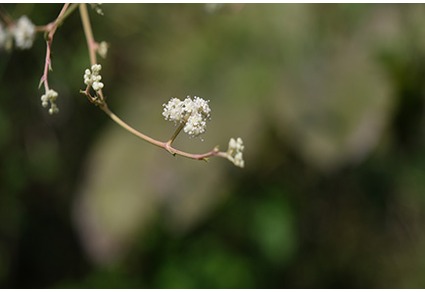

Abstract
Seseli laticalycinum (R.H.Shan & M.L.Sheh) Pimenov and Pseudopeucedanum ledebourielloides (K.T.Fu) C.K.Liu & X.J.He are two poorly known species of the family Apiaceae that were previously reported from different provinces of China. During field surveys, however, we found that both species occur around the Qinling Mountains and are difficult to distinguish morphologically, particularly among populations from the type localities of Ruicheng, Shanxi, and Huayin, Shaanxi. To clarify their taxonomic relationship, we reconstructed their phylogeny and compared chloroplast genome features of S. laticalycinum, P. ledebourielloides and related species using nuclear ITS sequences and chloroplast genome protein-coding sequences. Phylogenetic analyses showed that S. laticalycinum and P. ledebourielloides are nested together, while their chloroplast genome features exhibited only minor differences. Morphological comparisons likewise revealed substantial similarity between the two species. Taken together, the molecular and morphological evidence supports treating Seseli laticalycinum as a synonym of Pseudopeucedanum ledebourielloides.
References
- Anonymous (1981) Flora Tsinlingensis, vol. 1 (3). Science Press, Beijing, 500 pp.
- Burland, T.G. (1999) DNASTAR's Lasergene Sequence Analysis Software. In: Misener, S. & Krawetz, S.A. (Eds.) Bioinformatics Methods and Protocols. Humana Press, Totowa, pp. 71–91. https://doi.org/10.1385/1-59259-192-2:71
- Downie, S.R., Spalik, K., Katz-Downie, D.S. & Reduron, J.P. (2010) Major clades within Apiaceae subfamily Apioideae as inferred by phylogenetic analysis of nrDNA ITS sequences. Plant Diversity and Evolution 128: 111–136. https://doi.org/10.1127/1869-6155/2010/0128-0005
- Doyle, J.J. & Doyle, J.L. (1987) A rapid DNA isolation procedure for small quantities of fresh leaf tissue. Phytochemical Bulletin 19: 11–15.
- Greiner, S., Lehwark, P. & Bock, R. (2019) OrganellarGenomeDRAW (OGDRAW) version 1.3.1: expanded toolkit for the graphical visualization of organellar genomes. Nucleic Acids Research 47: W59–W64. https://doi.org/10.1093/nar/gkz238
- He, X.J., Zhou, S.D., Liu, Q., Peng, C., Xie, D.F. & Yu, Y. (2020) A transcriptome-based study on the phylogeny and evolution of the taxonomically controversial subfamily Apioideae (Apiaceae). Annals of Botany 125: 937–953. https://doi.org/10.1093/aob/mcaa011
- Jin, J.J., Yu, W.B., Yang, J.B., Song, Y., DePamphilis, C.W., Yi, T.S. & Li, D.Z. (2020) GetOrganelle: a fast and versatile toolkit for accurate de novo assembly of organelle genomes. Genome Biology 21: 1–31. https://doi.org/10.1186/s13059-020-02154-5
- Katoh, K. & Standley, D.M. (2013) MAFFT Multiple Sequence Alignment Software Version 7: Improvements in Performance and Usability. Molecular Biology and Evolution 30: 772–780. https://doi.org/10.1093/molbev/mst010
- Kearse, M., Moir, R., Wilson, A., Stones-Havas, S., Cheung, M., Sturrock, S., Buxton, S., Cooper, A., Markowitz, S., Duran, C., Thierer, T., Ashton, B., Meintjes, P. & Drummond, A. (2012) Geneious Basic: An integrated and extendable desktop software platform for the organization and analysis of sequence data. Bioinformatics 28: 1647–1649. https://doi.org/10.1093/bioinformatics/bts199
- Kumar, S., Stecher, G. & Tamura, K. (2016) MEGA7: Molecular Evolutionary Genetics Analysis Version 7.0 for Bigger Datasets. Molecular Biology and Evolution 33: 1870–1874. https://doi.org/10.1093/molbev/msw054
- Ledebour, C.F.V. (1844) Flora Rossica; sive, Enumeratio Plantarum in totius Imperii Rossici provinciis Europaeis, Asiaticis et Americanis hucusque observatarum, vol. 2. Schweizerbart Science Publishers, Stuttgart, 937 pp.
- Linnaeus, C. (1753) Species Plantarum, vol. 1. Impensis Laurentii Salvii, Holmiae, 560 pp. https://doi.org/10.5962/bhl.title.669
- Liu, C.K., Deng, J.J., Song, B.N., Qin, H.H., Zhou, S.D. & He, X.J. (2023) Plastid phylogenomics provide evidence to accept a new genus Pseudopeucedanum (Apiaceae) separated from Peucedanum s.l. Botanical Journal of the Linnean Society 205: 243–252. https://doi.org/10.1093/botlinnean/boad062
- Nylander, J.A.A. (2004) MrModeltest version 2.4. Evolutionary Biology Centre, Uppsala University. Available from: https://github.com/nylander/MrModeltest2 (accessed 9 February 2023)
- Pimenov, M.G. & Kljuyko, E.V. (1999) New nomenclatural combinations for Chinese Umbelliferae. Feddes Repertorium 110: 481–491. https://doi.org/10.1002/fedr.19991100705
- Qu, X.J., Moore, M.J., Li, D.Z. & Yi, T.S. (2019) PGA: a software package for rapid, accurate, and flexible batch annotation of plastomes. Plant Methods 15: 50–61. https://doi.org/10.1186/s13007-019-0435-7
- Rambaut, A. & Drummond, A. (2018) FigTree version 1.4.4. Available from: https://github.com/rambaut/figtree (accessed 9 February 2023)
- Ronquist, F., Teslenko, M., van der Mark, P., Ayres, D.L., Darling, A., Höhna, S., Larget, B., Liu, L., Suchard, M.A. & Huelsenbeck, J.P. (2012) MrBayes 3.2: Efficient Bayesian Phylogenetic Inference and Model Choice Across a Large Model Space. Systematic Biology 61: 539–542. https://doi.org/10.1093/sysbio/sys029
- Schischkin, B.K. (1951) Umbelliflorae. In: Schischkin, B.K. (Ed.) Flora of the U.S.S.R, vol. 17. Botanical Institute of the Academy of Sciences of the USSR, Moscow, Saposhnikovia divaricata Schischk., valid in p. 359. [Translated by Lavoott, R. (1974) Israel Program for Scientific Translations, Jerusalem, 258 pp.]
- Shan, R.H., Sheh, M.L., Yuan, C.C. & Pu, F.T. (1983) New Taxa of the Chinese Umbelliferae (I). Acta Phytotaxonomica Sinica 21: 79–88.
- Sheh, M.L., Pimenov, M.G., Kljuyko, E.V. & Watson, M.F. (2005) Libanotis Haller ex Zinn. In: Wu, Z.Y., Raven, P.H. & Hong, D.Y. (Eds.) Flora of China, vol. 14. Science Press, Beijing & Missouri Botanical Garden Press, St. Louis, pp. 117–122.
- Sheh, M.L. & Watson, M.F. (2005) Peucedanum Linnaeus. In: Wu, Z.Y., Raven, P.H. & Hong, D.Y. (Eds.) Flora of China, vol. 14. Science Press, Beijing & Missouri Botanical Garden Press, St. Louis, pp. 182–192.
- Stamatakis, A. (2014) RAxML version 8: a tool for phylogenetic analysis and post-analysis of large phylogenies. Bioinformatics 30: 1312–1313. https://doi.org/10.1093/bioinformatics/btu033
- Wen, J., Xie, D.F., Price, M., Ren, T., Deng, Y.Q., Gui, L.J., Guo, X.L. & He, X.J. (2021) Backbone phylogeny and evolution of Apioideae (Apiaceae): New insights from phylogenomic analyses of plastome data. Molecular Phylogenetics and Evolution 161: 107183. https://doi.org/10.1016/j.ympev.2021.107183
- White, T.J., Bruns, T., Lee, S. & Taylor, J. (1990) Amplification and direct sequencing of fungal ribosomal RNA genes for phylogenetics. In: Innis, M.A., Gelfand, D.H., Sninsky, J.J. & White, T.J. (Eds.) PCR protocols: a guide to methods and applications. Academic Press Inc, San Diego, California, pp. 315–322. https://doi.org/10.1016/B978-0-12-372180-8.50042-1
- Zhang, D., Gao, F., Jakovlić, I., Zou, H., Zhang, J., Li, W.X. & Wang, G.T. (2019) PhyloSuite: An integrated and scalable desktop platform for streamlined molecular sequence data management and evolutionary phylogenetics studies. Molecular Ecology Resources 20: 348–355. https://doi.org/10.1111/1755-0998.13096
- Zhou, J., Gong, X., Downie, S.R. & Peng, H. (2009) Towards a more robust molecular phylogeny of Chinese Apiaceae subfamily Apioideae: Additional evidence from nrDNA ITS and cpDNA intron (rpl16 and rps16) sequences. Molecular Phylogenetics and Evolution 53: 56–68. https://doi.org/10.1016/j.ympev.2009.05.029