

Abstract
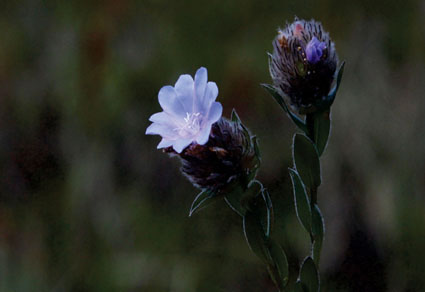
This study presents a synopsis of Evolvulus species in northeast Brazil, based on analyses of specimens from 39 herbaria, field expeditions, specialized literature, and type collections. We recorded 38 species, including E. anagalloides, reported for the first time in the Atlantic Forest, and E. eleaegnifolius, a new record for the flora of Paraíba. This work provides an identification key, diagnosis, data on geographic distribution and environmental preferences, maps, conservation status assessments, and illustrations—12 species were illustrated for the first time. Additionally, we propose two new synonyms under E. glomeratus and E. phyllanthoides.
References
- Albuquerque, U.P., Araújo, E.L., Souto, A.A., Bezerra, B., Freire, E.M.X., Sampaio, E., Casas, F.L., Moura, G., Pereira, G., Melo, J.G., Alves, M., Rodal, M., Schiel, M., Neves, R.L., Alves, R.R.N., Azevedo-Júnior, S. & Telino Júnior, W. (2012) Caatinga revisited: ecology and conservation of an important seasonal dry forest. Scientific World, Journal ID205182. https://doi.org/10.1100/2012/205182
- Auddy, B., Ferreira, M., Blasina, F., Lafon, L., Arredondo, F., Dajas, F., Tripathi, P.C., Seal, T. & Mukherjee, B. (2003) Screening of antioxidant activity of three Indian medicinal plants, traditionally used for the management of neurodegenerative diseases. Journal of Ethnopharmacology 84: 131–138. https://doi.org/10.1016/s0378-8741(02)00322-7
- Bachman, S., Moat, J., Hill, A.W., de la Torre, J. & Scott, B. (2011) Supporting Red List threat assessments with GeoCAT: geospatial conservation assessment tool. ZooKeys 150: 117–126. https://doi.org/10.3897/zookeys.150.2109.figure1
- Bandeira, A.N.T., Buril, M.T., Pinheiro, F.C. & de Melo, I.M. (2016) Evolvulus flavus sp. nov. (Convolvulaceae) from the Brazilian Caatinga. Nordic Journal of Botany 35 (1): 20–24. https://doi.org/10.1111/njb.01268
- Choisy, J.D. (1837) Mémoires de la Société de Physique et d’Histoire Naturelle de Genève. Geneva & Paris, 723 pp.
- Colla, L.A. (1835) Herbarium Pedemontanum juxta Methodum Naturalem Dispositum Additis IV, 207 pp.
- Correia, B.E.F., Machado, M.A.M. & Almeida, E.B. (2020) Lista florística e formas de vida da vegetação de uma restinga em Alcântara, litoral ocidental do Maranhão, Nordeste do Brasil. Revista Brasileira de Geografia Física 13: 2198–2211. https://doi.org/10.26848/rbgf.v13.5.p2198-2211
- CRIA (2020) Geoloc. Available from: http://splink.cria.org.br/ (accessed 20 January 2022)
- Dammer, C.L.U. (1897) Botanische Jahrbücher für Systematik, Pflanzengeschichte und Pflanzengeographie. Wilhelm Engelmann, Leipzig, 118 pp.
- Dryflor (2016) Plant diversity patterns in neotropical dry forests and their conservation implications. Science 353: 1383–1787. https://doi.org/10.1126/science.aaf5080
- Fernald, M.L. (1897) Proceedings of the American Academy of Arts and Sciences. Boston, MA, 89 pp.
- Ferreira, P.P.A., Simão-Bianchini, R. & Miotto, S.T.S. (2014) O gênero Evolvulus L. (Convolvulaceae) na Região Sul do Brasil. Iheringia Série Botânica 69: 201–214.
- Ferrer-Paris, J.R., Zager, I., Keith, D.A., Oliveira-Miranda, M.A., Rodriguez, J.P., Josse, C., Gonzaléz-Gil, M., Miller, R.M., Zambrana-Torrelio, C. & Barrow, R. (2019) An ecosystem risk assessment of temperature and tropical forests of the Americas with na outtlook on future conservation strategies. A Journal of the Society for Conservation Biology 12: 1–10. https://doi.org/10.1111/conl.12623
- Flora do Brasil (2020) under construction. Jardim Botânico do Rio de Janeiro. Available from: http://floradobrasil.jbrj.gov.br/ (accessed 9 June 2021)
- Freire, M.C.C.C. & Monteiro, R. (1993) Florística das praias da ilha de São Luís, estado do Maranhão (Brasil): Diversidade de espécies e suas ocorrências no litoral brasileiro. Acta Amazônica 23: 125–140. https://doi.org/10.1590/1809-43921993233140
- Harris, J. & Harris, M. (2001) Plant identification terminology: an illustrated glossary. 2 ed. Spring Lake Publishing, Utah, 198 pp.
- Helwig, B. (1927) Notizblatt des Botanischen Gartens und Museums zu Berlin-Dahlem. Botanisches Museum, Berlin-Dahlem, 107 pp.
- IBGE—Instituto Brasileiro de Geografia e Estatística. (2020) Divisão regional do Brasil em regiões geográficas imediatas e intermediárias. IBGE, Rio de Janeiro. Available from: https://www.ibge.gov.br (accessed 9 June 2021)
- IPNI (2019) The International Plant Names Index. Available from: https://www.ipni.org/ (accessed 20 October 2021)
- IUCN (2013) The IUCN red list of threatened species, version 2013.1. IUCN Red List Unit, Cambridge U.K. Available from: http://www.iucnredlist.org/ (accessed 20 May 2021) https://doi.org/10.2305/IUCN.UK.2013-2.RLTS.T179321A1575154.en
- Junqueira, M.E. & Simão-Bianchini, R. (2006) O gênero Evolvulus L. (Convolvulaceae) no município de Morro do Chapéu, BA, Brasil. Acta Botanica Brasilica 20: 152–172. https://doi.org/10.1590/S0102-33062006000100015
- Ker Gawler, J.B. (1819) The Botanical Register; consisting of coloured figures of exotic plants cultivated in British gardens; with their history and mode of treatment. James Ridgway, London, 698 pp.
- Lima, G.P. & Almeida, E.B. (2018) Diversidade e similaridade florística de uma restinga ecotonal no Maranhão, nordeste do Brasil. Interciência 4: 275–282.
- Linnaeus, C. (1764) Genera Plantarum Eorumque Characteres Naturales Secundum Numerum, Figuram, Situm, & Proportionem Omnium Fructificationis Partium (Ed. 6). Stockholm, 823 pp. https://doi.org/10.5962/bhl.title.748
- Lyet, A., Thuiller, W., Cheylan, M. & Besnard, A. (2013) Fine‐scale regional distribution modelling of rare and threatened species: bridging GIS Tools and conservation in practice. Diversity and Distribution 19: 651–663. https://doi.org/10.1111/ddi.12037
- Martinelli, G. & Moraes, M.A. (2013) Livro vermelho da flora do Brasil. CNCFLORA, Instituto de Pesquisa Jardim Botânico do Rio de Janeiro, 1100 pp.
- Martius, K.F. (1841) Flora; oder, (allgemeine) botanische Zeitung. Regensburg, Jena 24 (2, Beibl.), 96 pp.
- Meisner, C.F. (1869) Convolvulaceae. In: Martius, C.P.F. & Eichler, A.G. (Eds.) Flora Brasiliensis 7, pp. 199–370.
- Mori, S.A., Silva, L.A.M., Lisboa, G. & Coradin, L. (1989) Manual de manejo do herbário fanerogâmico. 2nd ed. CEPEC, Ilhéus, 104 pp.
- Moricand, S. (1838) Plantes Nouvelles d’Amerique 4. Imprimerie de Jules-Gme Fick, Genève, 176 pp.
- Nees, C.G. & Martius, C.F. (1823) Nova Acta Physico-Medica Academiae Caesareae Leopoldino-Carolinae Naturae Curiosorum Exhibentia Ephemerides sive Observationes Historias et Experimenta 11 (1): 81.
- Ooststroom, S.J. (1934) A monograph of the genus Evovulus. Mededeelingen van het Botanisch Museum en Herbarium van de Rijks Universiteitte Utrecht 14: 1–267.
- Patil, A.N.U.K. & Dixit, V.K. (2009) Anxiolytic activity of Evolvulus alsinoides and Convolvulus pluricaulis in rodents. Pharmaceutical Biology 47: 44–451. https://doi.org/10.1080/13880200902822596
- Santos, F.D.S., Arruda, E.C.P. & Buril, M.T. (2020) Hidden in the rocks: A new species of Evolvulus L. (Convolvulaceae) revealed by anatomy. Brittonia 72: 282–289. https://doi.org/10.1007/s12228-020-09615-y
- Santos, D., Buril, M.T. & Silva, M.J. (2023) Typifications and three new synonymies in Evolvulus L. (Convolvulaceae-Cressae). Phytotaxa 583: 1–14. https://doi.org/10.11646/phytotaxa.583.1.1
- Santos, D. & Buril, M.T. (2025) Taxonomic revision of Evolvulus sect. Lagopodini (Cresseae–Convolvulaceae). Systematic Botany 50: 145–159. https://doi.org/10.1600/036364425X17562473037598
- Schlechtendal, D.F.L. (1855) Linnaea; Ein Journal für die Botanik in ihrem ganzen Umfange. Berlin 26. 653 pp.
- Silva, C.V. (2013) Revisão taxonômica de Evolvulus L.-seção Phyllostachyi Meisn. (Convolvulaceae). Tese de Doutorado, IBT. SãoPaulo, 133 pp.
- Silva, C.V. & Simão-Bianchini, R. (2014) Three new species of Evolvulus (Convolvulaceae) from Bahia, Brazil. Phytotaxa 166: 132–138. https://doi.org/10.11646/phytotaxa.166.2.4
- Simão-Bianchini, R., Vasconcelos, L.V. & Pastore, M. (2016) Flora das Cangas da Serra dos Carajás, Pará, Brasil: Convolvulaceae. Rodriguesia 67: 1301–1318. https://doi.org/10.1590/2175-7860201667530
- Souza, V. & Lorenzi, H. (2012) Botânica sistemática. Guia ilustrado para identificação das famílias de fanerógamas nativas e exóticas no Brasil, baseado em APG III. Nova Odessa, São Paulo, 768 pp.
- Swart, O. (1788) Nova Genera & Species Plantarum seu Prodromus descriptionum Vegetabilium aximam partem incognitorum quae sub itinere in Indiam Occidentalem annis 1783–87. https://doi.org/10.5962/bhl.title.433
- Tabarelli, M., Fonseca, M.T. & Lins, L.V. (Orgs.) (2004) Biodiversidade da Caatinga: áreas e ações prioritárias para a conservação. Ministério do Meio Ambiente/Universidade Federal de Pernambuco, Brasília, pp. 91–100.
- Thiers, B. (2020) Index herbariorum: a global directory of public herbaria and associated staff. New York Botanical Garden’s Virtual Herbarium. Available from: http:// sweetgum.nybg.org/ih/ (accessed 7 January 2025)
- WCSP—World Checklist of Selected Plant Families. Facilitated by the Royal Botanic Gardens, Kew. Available from: http://wcsp.science.kew.org/ (accessed 7 January 2021)