

Abstract
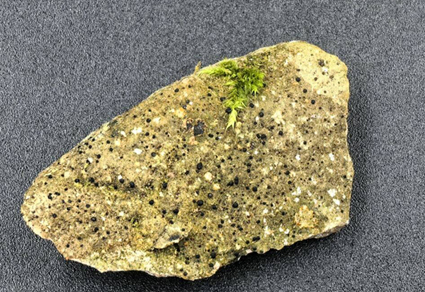
Bilimbia guiyangensis sp. nov. is described and illustrated from densely vegetated subtropical forest in Guiyang, China. The new taxon is characterized by a rimose, non‑sorediate thallus, lecideine apothecia, and 3‑septate, relatively long ascospores (13–24 × 4–5 µm). According to phylogenetic analysis of ITS, LSU and mtSSU sequences, the new species is sister to Bilimbia fuscoviridis, from which it differs in having a non‑sorediate thallus (vs. sorediate), lecideine apothecia (vs. biatorine), and longer ascospores (13–24 µm vs. 11.5–17.0 µm in length). This study also provides one of the most comprehensive syntheses of morphological and chemical data for the genus to date, addressing long-standing taxonomic ambiguities and inconsistencies across available descriptions. A detailed tabular comparison of all available species descriptions within the genus is provided to facilitate accurate identification and support future taxonomic and phylogenetic research.
References
- Arcadia, L. (2020) (2722) Proposal to conserve the name Bilimbia (Ramalinaceae, lichenised Ascomycota) with a conserved type. Taxon 68 (6): 1364–1365. https://doi.org/10.1002/tax.12166
- Altschul, S.F., Gish, W., Miller, W., Myers, E.W. & Lipman, D.J. (1990) Basic local alignment search tool. Molecular Biology 215: 403–410. https://doi.org/10.1016/S0022-2836(05)80360-2
- Bouly de Lesdain, M. (1936) Notes lichénologiques. XXIX. Bulletin de la Société Botanique de France 83: 5–9. https://doi.org/10.1080/00378941.1936.10837281
- Britton, N.L. & Millspaugh, C.F. (1920) The Bahama Flora. 662 pp. https://doi.org/10.5962/bhl.title.1494
- Cannon, P., Ekman, S., Kistenich, S., LaGreca, S., Printzen, C., Timdal, E., Aptroot, A., Coppins, B., Fletcher, A. & Sanderson, N. (2023) Lecanorales: Ramalinaceae [revision 1] including the genera Bacidia, Bacidina, Bellicidia, Biatora, Bibbya, Bilimbia, Cliostomum, Kiliasia, Lecania, Megalaria, Mycobilimbia, Phyllopsora, Ramalina, Scutula, Thalloidima, Toninia, Toniniopsis and Tylothallia. Revisions of British and Irish Lichens 35: 1–83.
- Curtis, T., Waters, D.P. & Lendemer, J.C. (2023) Bilimbia fuscoviridis (≡ Bacidia fuscoviridis), another overlooked sorediate crustose lichen widely distributed in temperate eastern North America. The Torrey Botanical Society 150: 385–397. https://doi.org/10.3159/TORREY-D-22-00034.1
- Crous, P.W., Gams, W., Stalpers, J.A., Robert, V. & Stegehuis, G. (2004) MycoBank: an online initiative to launch mycology into the 21st century. Studies in Mycology 50: 19–22.
- De Notaris, G. (1846) Frammenti lichenografici di un lavoro inedito. Giornale Botanico Italiano 1: 174–224.
- Eitner, E. (1911) Dritter Nachtrag zur schlesischen Flechtenflora. Jahresbericht der Schlesischen Gesellschaft für Vaterländische Kultur 88 (2b Abt.): 20–60.
- Ekman, S. (1996) The corticolous and lignicolous species of Bacidia and Bacidina in North America. Opera Botanica 127: 1–148.
- Ekman, S. (2001) Molecular phylogeny of the Bacidiaceae (Lecanorales, lichenized Ascomycota). Mycological Research 105: 783–797. https://doi.org/10.1017/S0953756201004269
- Ekman, S., Andersen, H.L. & Wedin, M. (2008) The limitations of ancestral state reconstruction and the evolution of the ascus in the Lecanorales (lichenized Ascomycota). Systematic Biology 57: 141–156. https://doi.org/10.1080/10635150801910451
- Ekman, S.J. (2014) The Bacidia coprodes group (Ramalinaceae, Lecanoromycetes, Ascomycota), with special reference to the species in Europe and North America. Phytotaxa 191 (1): 66–80. https://doi.org/10.11646/phytotaxa.191.1.4
- Fink, B. (1910) The Lichen Flora of the United States. University of Michigan Studies, Scientific Series, 304 pp.
- Fink, B. (1935) The Lichen Flora of the United States. 426 pp. https://doi.org/10.3998/mpub.9690813
- Fries, Th.M. (1863) Nya laf-arter. Botaniska Notiser 1863 (1–2): 7–12.
- Gardes, M. & Bruns, T.D. (1993) ITS primers with enhanced specificity for basidiomycetes—application to the identification of mycorrhizae and rusts. Molecular Ecology 2: 113–118. https://doi.org/10.1111/j.1365-294X.1993.tb00005.x
- Gaya, E., Steier, J., Wright, R. & Woods, R. (2021) Barcoding Fungi from Royal Botanic Garden Kew Fungarium. Unpublished.
- Gerasimova, J.V. & Ezhkin, A.K. (2018) Four new species of Bacidia (Ramalinaceae, Lecanorales) in the Russian Far East. The Lichenologist 50: 603–625. https://doi.org/10.1017/S0024282918000397
- Gerasimova, J.V., Ezhkin, A.K., Davydov, E.A. & Beck, A. (2021) Multilocus-phylogeny of the lichen-forming genus Bacidia s. str. (Ramalinaceae, Lecanorales) with special emphasis on the Russian Far East. The Lichenologist 53: 441–455. https://doi.org/10.1017/S0024282921000396
- Gerasimova, J.V., Otte, V., Urbanavichene, I.N., Urbanavichus, G.P. & Beck, A. (2023) High diversity of Bacidia (Ramalinaceae, Lecanorales) species in the Caucasus as revealed by molecular and morphological analyses. The Lichenologist 55 (5): 275–296. https://doi.org/10.1017/S0024282923000385
- Giralt, M. & Matzer, M. (1994) The corticolous species of the genus Rinodina with biatorine or lecideine apothecia in southern Europe and Macaronesia. The Lichenologist 26 (4): 319–332. https://doi.org/10.1006/lich.1994.1026
- Hafellner, J. (1984) Studien in Richtung einer natürlichen Gliederung der Sammelfamilien Lecanoraceae und Lecideaceae. Beihefte zur Nova Hedwigia 79: 241–371.
- Hafellner, J. & Türk, R. (2001) Die liechenisierten Pilze Österreichs—eine Checkliste der bisher nachgewiesenen Arten mit Verbreitungsangaben. Stapfia 76: 3–167.
- Halici, M.G., Güllü, M., Bölükbaşi, E. & Yiğit, M.K. (2023) Thamnolecania yunusii (Ramalinaceae) A new species of lichenised fungus from Horseshoe Island (Antarctic Peninsula). Polar Record 59: 37. https://doi.org/10.1017/S003224742300030X
- Hall, T.A. (1999) BioEdit: a user-friendly biological sequence alignment editor and analysis program for Windows 95/98/NT. Nucleic Acids Symposium Series 41: 95–98.
- Harris, R.C. & Ladd, D.M. (2005) Ozark Lichens: Enumerating the Lichens of the Ozark Highlands of Arkansas, Illinois, Kansas, Missouri, and Oklahoma.
- Index Fungorum Partnership (2026) Index Fungorum. Landcare Research-NZ and RBG Kew: Mycology. Available from: http://www.indexfungorum.org/ (accessed 26 September 2026)
- Lendemer, J.C., Harris, R.C. & Ladd, D. (2016) The faces of Bacidia schweinitzii: molecular and morphological data reveal three new species including a widespread sorediate morph. The Bryologist 119 (2): 143–171. https://doi.org/10.1639/0007-2745-119.2.143
- Kantvilas, G., Messuti, M.I. & Lumbsch, H.T. (2005) Additions to the genus MycoBilimbia s. lat. from the Southern Hemisphere. The Lichenologist 37: 251–259. https://doi.org/10.1017/S0024282905014738
- Kantvilas, G. (2024) Bilimbia, version 2024:1. Tasmanian Herbarium, Tasmanian Museum and Art Gallery. Available from: https://flora.tmag.tas.gov.au/lichen-genera/bilimbia/ (accessed 28 August 2026)
- Kashiwadani, H., Moon, K.H., Guo, S., Dai, Y.C. & Chen, X.L. (2006) Noteworthy species of the genus Ramalina (Ascomycotina: Ramalinaceae) in China. Bulletin of the National Science Museum, Series B, Botany 32: 161–166.
- Katoh, K., Rozewicki, J. & Yamada, K.D. (2019) MAFFT online service: multiple sequence alignment, interactive sequence choice and visualization. Briefings in Bioinformatics 20: 1160–1166. https://doi.org/10.1093/bib/bbx108
- Kistenich, S., Bendiksby, M., Ekman, S., Cáceres, M.E.S., Hernández M., J.E. & Timdal, E. (2019) Towards an integrative taxonomy of Phyllopsora (Ramalinaceae). The Lichenologist 51: 323–392. https://doi.org/10.1017/S0024282919000252
- Kistenich, S., Timdal, E., Bendiksby, M. & Ekman, S. (2018) Molecular systematics and character evolution in the lichen family Ramalinaceae (Ascomycota: Lecanorales). Taxon 67 (5): 871–904. https://doi.org/10.12705/675.1
- Körber, G.W. (1855) Systema lichenum germaniae. Die Fletchen Deutschlands (insbesondere Schlesiens) Mikroskopische Geprüft, kritisch Gesichtet, charakterisch Beschrieben und systematisch Geordnet. Trewendt & Granier.
- Königl. Bayer. Botanische Gesellschaft zu Regensburg, Königl. Botanische Gesellschaft in Regensburg, Königl. Bayer. Botanische Gesellschaft zu Regensburg & Königliche Botanische Gesellschaft (1865) Flora oder Botanische Zeitung: welche Recensionen, Abhandlungen, Aufsätze, Neuigkeiten und Nachrichten, die Botanik betreffend, enthält 48 (22): 341. Die Gesellschaft. Available from: https://www.biodiversitylibrary.org/page/56455 (accessed 20 Oct. 2026)
- Knudsen, K., Kocourková, J., Hodková, E. & Wang, Y. (2021) Lichenological notes 8: Acarospora fusca. Opuscula Philolichenum 20: 19–24. https://doi.org/10.5962/p.388270
- Körber (1855) Systema lichenum Germaniae. Trewendt & Granier, Breslau, 213 pp.
- Kondratyuk, S.Y., Lőkös, L., Farkas, E., Jang, S.H., Liu, D., Halda, J., Persson, P.E., Hansson, M., Kärnefelt, I. & Thell, A. (2019) Three new genera of the Ramalinaceae (lichen-forming Ascomycota) and the phenomenon of presence of ‘extraneous mycobiont DNA’ in lichen associations. Acta Botanica Hungarica 61: 275–323. https://doi.org/10.1556/034.61.2019.3-4.5
- Lamb, I.M. (1963) Index Nominum Lichenum Inter Annos 1932 et 1960 Divulgatorum. i–xii, 810 pp.
- Lendemer, J.C. & Harris, R.C. (2016) Two new host-specific hepaticolous species of Catinaria (Ramalinaceae). The Lichenologist 48 (5): 441–449. https://doi.org/10.1017/S0024282916000438
- Llop, E. (2006) Bilimbia corcovadensis, a neotropical corticolous species of Bilimbia. The Lichenologist 38: 279–281. https://doi.org/10.1017/S0024282906005664
- Llop, E., Ekman, S. & Hladun, N.L. (2007) Bacidia thyrrenica (Ramalinaceae, lichenized Ascomycota), a new species from the Mediterranean region, and a comparison of European members of the Bacidia rubella group. Nova Hedwigia 85: 445–456. https://doi.org/10.1127/0029-5035/2007/0085-0445
- Malíček, J., Konečná, E. & Steinová, J. (2023) Contribution to the lichen biota of Romania. Herzogia 36: 409–427. https://doi.org/10.13158/heia.36.2.2023.409
- Massalongo, A.B. (1852) Ricerche sull'autonomia dei licheni crostosi. 221 pp.
- May, T.W. & Lendemer, J.C. (2023) Report of the Nomenclature Committee for Fungi: 22. Taxon 72 (6): 1356–1363. https://doi.org/10.1002/tax.13099
- Miadlikowska, J., Kauff, F., Högnabba, F., Oliver, J.C., Molnár, K., Fraker, E., Gaya, E., Hafellner, J., Hofstetter, V. & Gueidan, C.J. (2014) A multigene phylogenetic synthesis for the class Lecanoromycetes (Ascomycota): 1307 fungi representing 1139 infrageneric taxa, 317 genera and 66 families. Molecular Phylogenetics and Evolution 79: 132–168. https://doi.org/10.1016/j.ympev.2014.04.003
- Miller, M.A., Pfeiffer, W. & Schwartz, T. (2011) The CIPRES Science Gateway: A Community Resource for Phylogenetic Analyses. In: Proceedings of the 2011 TeraGrid Conference: Extreme Digital Discovery. pp. 1–8. https://doi.org/10.1145/2016741.2016785
- Myllys, L., Svensson, M., Kantvilas, G., Sérusiaux, E., van den Boom, P., Aptroot, A., Cezanne, R., Eichler, M., Pino-Bodas, R., Printzen, C., Pykälä, J., Thor, G., Westberg, M., Weber, L. & Kantelinen, A. (2026) The first comprehensive multilocus phylogeny of the lichenized genus Micarea (Ectolechiaceae, Ascomycota). Taxon 75: e70087. https://doi.org/10.1002/tax.70087
- Næsborg, R.R. (2008) Taxonomic revision of the Lecania cyrtella group based on molecular and morphological evidence. Mycologia 100: 397–416. https://doi.org/10.3852/07-080R
- Næsborg, R.R., Ekman, S. & Tibell, L. (2007) Molecular phylogeny of the genus Lecania (Ramalinaceae, lichenized Ascomycota). Mycological Research 111: 581–591. https://doi.org/10.1016/j.mycres.2007.03.001
- Nimis, P.L. (2016) The Lichens of Italy. A Second Annotated Catalogue. EUT Edizioni Università di Trieste.
- Nimis, P.L. (2026) ITALIC—The Information System on Italian Lichens. Version 8.0. University of Trieste, Department of Biology. Available from: https://dryades.units.it/italic (accessed 28 April 2026)
- Nylander, J. (2004) MrModeltest 2.2. Computer software distributed by the University of Uppsala. Evolutionary Biology Centre, Sweden. Available from: http://github.com/nylander/MrModeltest2/tree/v.2.4 (accessed 20 Oct. 2026)
- Oxner, A.N. (1968) Flora of Lichens of the Ukraine. Vol. 2. 500 pp.
- Orange, A., James, P.W. & White, F. (2001) Microchemical Methods for the Identification of Lichens. British Lichen Society, London.
- Printzen, C. & Tønsberg, T. (1999) The lichen genus Biatora in northwestern North America. The Bryologist 102 (4): 692–713. https://doi.org/10.2307/3244256
- Printzen, C. (2014) A molecular phylogeny of the lichen genus Biatora including some morphologically similar species. The Lichenologist 46: 441–453. https://doi.org/10.1017/S0024282913000935
- Printzen, C., Halda, J.P., McCarthy, J.W., Palice, Z., Rodriguez-Flakus, P., Thor, G., Tønsberg, T. & Vondrák, J. (2016) Five new species of Biatora from four continents. Herzogia 29: 566–585. https://doi.org/10.13158/heia.29.2.2016.566
- Printzen, C., Holien, H., Kantelinen, A., Myllys, L., Ratschow, F., Stepanchikova, I., Weber, L. & Timdal, E. (2023) DNA barcoding indicates the presence of unrecognized species and phylogenetic diversity within the Biatora vernalis- and B. meiocarpa-groups. Plant and Fungal Systematics 68 (2): 262–279. https://doi.org/10.35535/pfsyst-2023-0011
- Rambaut, A., Drummond, A.J., Xie, D., Baele, G. & Suchard, M.A. (2018) Posterior summarization in Bayesian phylogenetics using Tracer 1.7. Systematic Biology 67 (5): 901–904. https://doi.org/10.1093/sysbio/syy032
- Räsänen, V. (1943) Petsamon jäkäläkasvisto. Lisiä Fennoskandian arktisen alueen jäkäläkasviston tuntemiseen. (Die Flechtenflora von Petsamo. Ein Beitrag zur Kenntnis der Flechtenflora des arktischen Gebietes in Fennoskandien). Annales Botanici Societatis Zoologicae-Botanicae Fennicae “Vanamo” 18: 1–110.
- Riddle, L.W. (1912) An enumeration of lichens collected by Clara Eaton Cummings in Jamaica I. Mycologia 4 (3): 125–140. https://doi.org/10.1080/00275514.1912.12017899
- Ronquist, F., Teslenko, M., Van Der Mark, P., Ayres, D.L., Darling, A., Höhna, S., Larget, B., Liu, L., Suchard, M.A. & Huelsenbeck, J.P. (2012) MrBayes 3.2: efficient Bayesian phylogenetic inference and model choice across a large model space. Systematic Biology 61: 539–542. https://doi.org/10.1093/sysbio/sys029
- Royal Botanic Gardens, Kew (2026) Species Fungorum. Royal Botanic Gardens, Kew. Available from: http://www.speciesfungorum.org/ (accessed 26 September 2026)
- Santesson, R. (1952) Foliicolous lichens I. A revision of the taxonomy of the obligate foliicolous lichens. Symbolae Botanicae Upsalienses 12 (1): 1–590.
- Sérusiaux, E., Berger, F., Brand, M. & van den Boom, P. (2007) The lichen genus Porina in Macaronesia, with descriptions of two new species. The Lichenologist 39 (1): 15–33. https://doi.org/10.1017/S0024282907005993
- Smith, C.W., Aptroot, A., Coppins, B.J., Fletcher, A., Gilbert, O.L., James, P.W. & Wolseley, P.A. (Eds.) (2009) The Lichens of Great Britain and Ireland. British Lichen Society, London.
- Spjut, R., Simon, A., Guissard, M., Magain, N. & Sérusiaux, E. (2020) The fruticose genera in the Ramalinaceae (Ascomycota, Lecanoromycetes): their diversity and evolutionary history. MycoKeys 73: 1–68. https://doi.org/10.3897/mycokeys.73.47287
- Spribille, T., Fryday, A.M., Pérez-Ortega, S., Svensson, M., Tønsberg, T., Ekman, S., Holien, H., Resl, P., Schneider, K. & Stabentheiner, E. (2020) Lichens and associated fungi from Glacier Bay National Park, Alaska. The Lichenologist 52: 61–181. https://doi.org/10.1017/S0024282920000079
- Stamatakis, A. (2014) RAxML version 8: a tool for phylogenetic analysis and post-analysis of large phylogenies. Bioinformatics 30: 1312–1313. https://doi.org/10.1093/bioinformatics/btu033
- Sun, M.J., Yan, S.K., Tang, R., Wang, C.X. & Zhang, L.L. (2019) New records of Bilimbia and Toninia from China. Mycotaxon 134: 139–146. https://doi.org/10.5248/134.139
- Szatala (1942) Folia Cryptogamica 2 (5): 411. [Szeged]
- Timdal, E. (1991) A Monograph of the Genus Toninia (Lecideaceae, Ascomycetes). Opera Botanica 110: 1–137.
- Tuckerman, E. (1888) Synopsis of the North American Lichens. S.E. Cassino.
- Veldkamp, J. (2004) Bilimbia (Lichenes) resurrected. The Lichenologist 36: 191–195. https://doi.org/10.1017/S0024282904013908
- Vondrák, J., Svoboda, S., Kosnar, J., Malicek, J., Soun, J., Frolov, I., Svensson, M., Novotný, P. & Palice, Z. (2023) Martin7: a reference database of DNA barcodes for European epiphytic lichens and its taxonomic implications. Preslia 95: 311–345. https://doi.org/10.23855/preslia.2023.311
- Vondrák, J., Svoboda, S., Malíček, J., Palice, Z., Kocourková, J., Knudsen, K., Mayrhofer, H., Thüs, H., Schultz, M. & Košnar, J. (2022) From Cinderella to Princess: an exceptional hotspot of lichen diversity in a long-inhabited central-European landscape. Preslia 94: 143–181. https://doi.org/10.23855/preslia.2022.143
- Weber, L., Niittynen, P., Myllys, L., Pepin, N., Kemppinen, J., Aalto, J., Luoto, M. & Kantelinen, A. (2025) Under and above the snow: Drivers of lichen diversity in subarctic birch forests. https://doi.org/10.22541/au.175672446.64811797/v1
- Willey, H. (1890) New North American lichens. Bulletin of the Torrey Botanical Club 17 (10): 289–292.
- Wu, Q., He, M., Liu, T., Hu, H., Liu, L., Zhao, P. & Li, Q. (2023) Rust fungi on medicinal plants in Guizhou province with descriptions of three new species. Journal of Fungi 9: 953. https://doi.org/10.3390/jof9090953
- Zhao, Z.T., Guo, S.X., Sun, L.Y. & Ren, Q. (2007) The lichen genus Ramalina from Qinling Mountains in China. Mycosystema 26: 343–348. https://doi.org/10.1639/0007-2745-124.1.162
- Zoller, S., Scheidegger, C. & Sperisen, C. (1999) PCR primers for the amplification of mitochondrial small subunit ribosomal DNA of lichen-forming ascomycetes. The Lichenologist 31 (5): 511–516. https://doi.org/10.1006/lich.1999.0220
- Zahlbruckner, A. (1902) Diagnosen neuer und genügend beschriebener kalifornischer Flechten. Beihefte zum Botanischen Centralblatt 13: 149–163.
- Zahlbruckner, A. (1926) Catalogus Lichenum Universalis. Vol. 4. 754 pp.