

Abstract
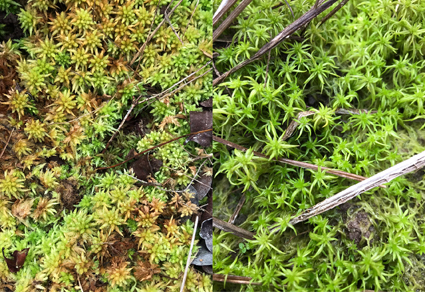
Two Sphagnum species thought to be extinct in Puerto Rico were rediscovered. The current distribution range of these species is substantially reduced compared to the historical distribution based on herbarium records. We contribute notes on S. perichaetiale and S. trinitense distribution, habitat, and a checklist of associated plant species. A key to the three extant Sphagnum species found in Puerto Rico is presented along with suggestions for conservation efforts to preserve S. perichaetiale and S. trinitense. The habitat where the species are found, white sand wetlands, is rare in Puerto Rico and has been subject to past and present disturbances. We suggest that protection of the current habitat is crucial for the preservation of these species and other rare plants.
References
- Ackerman, J.D. (2017) Orchidées invasives: accélération de la colonisation et de la propagation. L’Orchidophile 213: 167–173.
- Anderson, A.B. (1981) White-Sand Vegetation of Brazilian Amazonia. Biotropica 13: 199–210. https://doi.org/10.2307/2388125
- Andrus, R.E. (2007) Sphagnum trinitense. In: Flora of North America Editorial Committee (Eds.) Flora of North America North of Mexico, Vol. 27. Oxford University Press, New York & Oxford, pp. 85. https://doi.org/10.1663/0013-0001(2007)61[312b:fonano]2.0.co;2
- Crum, H.A. & Steere, W.C. (1957) The mosses of Porto Rico and the Virgin Islands. Scientific Survey of Porto Rico and the Virgin Islands 7: 396–599.
- Delgado, C.I. (2000) The nature, origin and occurrence of quartz sand deposits in Puerto Rico. University of Puerto Rico, Mayagüez, 119 pp.
- DNER (2008a) Elementos críticos de la División de Patrimonio Natural—Plantas. Division of Natural Heritage, Department of Natural and Environmental Resources of the Commonwealth of Puerto Rico, San Juan, 12 pp.
- DNER (2008b) Procedimiento Para Evaluar y Determinar La Categoría de Un Hábitat Natural de Acuerdo a La Nueva Ley de Vida Silvestre de Puerto Rico. Department of Natural and Environmental Resources of the Commonwealth of Puerto Rico, San Juan, 38 pp.
- Gao, Q. & Yu, M. (2014) Discerning fragmentation dynamics of tropical forest and wetland during reforestation, urban sprawl, and policy shifts. PLoS ONE 9: e113140. https://doi.org/10.1371/journal.pone.0113140
- GBIF (2026a) Occurrence Download: Sphagnum perichaetiale. (7 September 2026) The Global Biodiversity Information Facility. https://doi.org/10.15468/dl.aq9zkf
- GBIF (2026b) Occurrence Download: Sphagnum trinitense. (7 September 2026) The Global Biodiversity Information Facility. https://doi.org/10.15468/dl.frn9r5
- Gómez-Gómez, F. & Torres-Sierra, H. (1988) Hydrology and effects of development on the water-table aquifer in the Vega Alta quadrangle, Puerto Rico (No. 87-4105). US Geological Survey, 62 pp. [https://pubs.usgs.gov/wri/1987/4105/report.pdf] https://doi.org/10.3133/wri874105
- Google (n.d.) Map of Puerto Rico’s North Coast. Available from: https://www.google.com/maps/@18.4433373,-66.403622,12z (accessed 2020–2022)
- Griffin, D.G. III (1981) El género Sphagnum en Los Andes de Colombia y Venezuela. Clave para las especies frecuentes u ocasionales con notas ecológicas y taxonómicas. Cryptogamie, Bryologie, Lichénologie 2: 201–211.
- Hampe, G.E.L. (1852) Linnaea 25: 359.
- Hampe, G.E.L. (1848) In: Müller, C. (1848) Synopsis Muscorum Frondosorum omnium hucusque Cognitorum, Vol. 1. Sumptibus Alb. Foerstner, Berolini, pp. 93.
- Howard, A.R. (1968) The ecology of an elfin forest in Puerto Rico, 1. Introduction and composition studies. Journal of the Arnold Arboretum 49: 381–418. https://doi.org/10.5962/p.324699
- Karlin, E.F. (2006) Update on the distribution and ecology of Sphagnum portoricense. The Bryologist 109: 541–550. https://doi.org/10.1639/0007-2745(2006)109
- Lugo, A.E., Castro, L.M., Vale, A., López, T.d.M., Prieto, E.H., Martinó, A.G., Rolón, A.R.P., Tossas, A.G., McFarlane, D.A., Miller, T., Rodríguez, A., Lundberg, J., Thomlinson, J., Colón, J., Schellekens, J.H., Ramos, O. & Helmer, E. (2001) Puerto Rican Karst—A Vital Resource. United States Department of Agriculture Forest Service Gen. Tech. Report WO-65, 101 pp. https://doi.org/10.2737/WO-GTR-65
- Ma, X.Y., Xu, H., Cao, Z.Y., Shu, L. & Zhu, R.L. (2022) Will climate change cause the global peatland to expand or contract? Evidence from the habitat shift pattern of Sphagnum mosses. Global Change Biology 28: 6419–6432. https://doi.org/10.1111/gcb.16354
- Master, L.L., Faber-Langendoen, D., Bittman, R., Hammerson, G.A., Heidel, B., Ramsay, L., Snow, K., Teucher, A. & Tomaino, A. (2012) NatureServe Conservation Status Assessments: Factors for Evaluating Species and Ecosystem Risk. NatureServe, Arlington, VA.
- Merced, A. (2023) Monitoring the distribution, ecology and conservation status of Sphagnum in Puerto Rico. Technical report of the observations, management recommendations and status of Sphagnum populations in Puerto Rico. International Institute of Tropical Forestry. [https://usforestserv.on.worldcat.org/oclc/1593828658]
- Müller, C. (1848) Synopsis Muscorum Frondosorum omnium hucusque Cognitorum, Vol. 1. Sumptibus Alb. Foerstner, Berolini, pp. 102.
- Robinson, S.C., Nieto-Lugilde, M., Duffy, A.M., Martinez Muñoz, K., Aguero, B., Merced, A., Hassel, K., Flatberg, K.I. & Shaw, A.J. (2023) The Sphagnum cuspidatum complex: phylogeny, species delimitation, and morphology. Biological Journal of the Linnean Society 141: 466–492. https://doi.org/10.1093/biolinnean/blad111
- Sastre-D.J., I. & Buck, W.R. (1993) Annotated checklist of the mosses of Puerto Rico. Caribbean Journal of Science 29: 226–234.
- Sastre-D.J., I. & Santiago-Valentín, E. (1996) Bryology in Puerto Rico: knowledge prior to and after the Scientific Survey of Porto Rico and the Virgin Islands. Annals of the New York Academy of Sciences 776: 115–122.
- Sastre-D.J., I. & Tan, B. (1995) Problems of bryophyte conservation in the tropics: a discussion, with case example from Puerto Rico and the Philippines. Caribbean Journal of Science 31: 200–206.
- Sepúlveda, N. (1999) Ground-water flow, solute transport, and simulation of remedial alternatives for the water-table aquifer in Vega Alta, Puerto Rico. Water-Resources Investigations Report 97-4170. U.S. Geological Survey, San Juan, 96 pp. https://doi.org/10.3133/wri974170
- Veve, T.D. & Taggart, B.E. (Eds.) (1996) Atlas of ground-water resources in Puerto Rico and the US Virgin Islands. Water-Resources Investigations Report 94-4198. U.S. Geological Survey, 161 pp. [https://www.recursosaguapuertorico.com/GW_Atlas_of_PR_USGS.pdf] https://doi.org/10.3133/wri944198
- WFO (2024) Sphagnum sintenisii Müll.Hal. World Flora Online. Available from: http://www.worldfloraonline.org/taxon/wfo-0001190196 (accessed 1 September 2024)
- Whitney, B.S., Swindles, G.T., Cameron, I., Gałka, M. & Meerman, J.C. (2025) A tropical Sphagnum peatland ecosystem in lowland Belize. Current Biology 35: 4587–4594.e3. https://doi.org/10.1016/j.cub.2025.08.002
- Yu, M., Rivera-Ocasio, E., Heartsill-Scalley, T., Davila-Casanova, D., Rios-López, N. & Gao, Q. (2019) Landscape-level consequences of rising sea-level on coastal wetlands: saltwater intrusion drives displacement and mortality in the twenty-first century. Wetlands 39: 1343–1355. https://doi.org/10.1007/s13157-019-01138-x