
Abstract
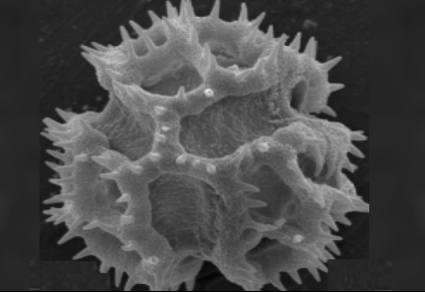
A new species of Lessingianthus (Asteraceae, Vernonieae) from Mato Grosso do Sul (Brazil) and northeastern Paraguay is described and illustrated. The species was identified during a taxonomic revision of the genus based on herbarium material combined with detailed morphological, micromorphological (LM and SEM), and palynological analyses. It is morphologically similar to L. glabratus but differs by its pedunculate capitula (vs. sessile), 20–30 florets per head (vs. 35–40), 6–7-seriate involucre with linear-lanceolate, uniformly long-acuminate and brownish phyllaries (vs. ovate-lanceolate, purplish phyllaries with variable apices), and by the absence of conical, non-glandular trichomes on the corolla lobes. It further differs from L. carduoides and L. subcarduoides in leaf shape and margin, number of florets per capitulum, and the trichome complement of the corolla lobes and cypsela. Pollen grains are radially symmetric, 3-colporate, echinolophate (type B), consistent with the diagnostic pollen type of the genus. The new species occurs in the Cerrado, Alto Paraná Atlantic Forest, and Humid Chaco ecoregions, where it grows on sandy, well-drained soils. Based on available occurrence data, it is preliminarily assessed as Vulnerable (VU: B1ab(ii,iii)+B2ab(ii,iii)) according to the IUCN Red List criteria.
References
- Anderson, L.E. (1954) Hoyer’s solution as a rapid mounting medium for Bryophytes. Bryologist 57: 242–247. https://doi.org/10.1639/00072745(1954)57[242:HSAARP]2.0.CO;2
- Angulo, M.B. & Dematteis, M. (2010) Pollen morphology of the South American genus Lessingianthus (Vernonieae, Asteraceae) and its taxonomic implications. Grana 49: 12–25. https://doi.org/10.1080/00173130903435192
- Angulo, M.B. & Dematteis, M. (2012a) Cytotaxonomy of some species of the South American genus Lessingianthus (Asteraceae, Vernonieae). Plant Systematics and Evolution 298 (2): 277–285. https://doi.org/10.1007/s00606-011-0542-z
- Angulo, M.B. & Dematteis, M. (2012b) Taxonomy of the Lessingianthus saltensis (Vernonieae, Asteraceae) species complex. Annales Botanici Fennici 49 (4): 239–247. https://doi.org/10.5735/085.049.0404
- Angulo, M.B. & Dematteis, M. (2014a) Lessingianthus H. Rob. In: Zuloaga, F.O., Belgrano, M.J. & Anton, A.M. (Eds.) Flora Argentina, Flora Vascular de la República Argentina Dicotyledoneae Asteraceae: Senecio a Vernonieae, vol. 7 (3). IBODA CONICET, Argentina, pp. 249–264. https://doi.org/10.2307/j.ctt16xwb7t.26
- Angulo, M.B. & Dematteis, M. (2014b) Floral microcharacters in the genus Lessingianthus (Vernonieae, Asteraceae) and its taxonomic implications. Plant Systematics and Evolution 300: 1925–1940. https://doi.org/10.1007/s00606-014-1019-7
- Angulo, M.B. & Dematteis, M. (2014c) A new species and taxonomic novelties in the South American genus Lessingianthus (Vernonieae, Asteraceae). Phytotaxa 186 (4): 207–214. https://doi.org/10.11646/phytotaxa.186.4.4
- Angulo, M.B., Vega, A.J. & Dematteis, M. (2012) Nuevas combinaciones en los géneros sudamericanos Lepidaploa y Lessingianthus (Vernonieae, Asteraceae). Gayana Botanica 69: 267–274. https://doi.org/10.4067/s0717-66432012000200006
- Angulo, M.B., Sosa, M.M. & Dematteis, M. (2015) Systematic significance of the cypsela morphology in Lessingianthus (Vernonieae, Asteraceae). Australian Systematic Botany 28: 173–189. https://doi.org/10.1071/SB15022
- Bachman, S., Moat, J., Hill, A.W., de la Torre, J. & Scott, B. (2011) Supporting Red List threat assessments with GeoCAT: geospatial conservation assessment tool. ZooKeys 150: 117–126. https://doi.org/10.3897/zookeys.150.2109
- Cabrera, A.L. (1944) Vernonieas Argentinas (Compositae). Darwiniana 6: 265–379.
- Cassini, A.H.G. (1817) Aperçu des generes noauveaux formés par M. Henri Cassini dans la familla des Synanthérés. Quatrième fascicule. Bulletin des Sciences de La Sociéte Philomatique de Paris 1817: 66–70.
- Cassini, A.H.G. (1819) Suite du sixième mémoire sur la famille des Synanthérées, contenant les caractères des tribus. Journal de Physique, de Chimie, d‘histoire Naturelle et des Arts 88: 189–204.
- Cassini, A.H.G. (1825) Oliganthe. Oliganthes. In: Cuvier, F.G. (Ed.) Dictionnaire des Sciences Naturelles, vol. 36. Strasbourg, F.G. Levrault, & Paris, pp. 18–20.
- Chapman, A.D. (2020) Current best practices for generalizing sensitive species occurrence data. Global Biodiversity Information Facility (GBIF) Secretariat, Copenhagen, Denmark, 50 pp. https://doi.org/10.15468/doc-5jp4-5g10
- Chodat, R. (1901) Plantae Hasslerianae: énumération des plantes récoltées au Paraguay par le Dr. Ëmile Hassler de 1885–1895 et de 1898–1900. Bulletin de l’Herbier Boissier série 2 1: 395–442. https://doi.org/10.5962/bhl.title.45112
- Chodat, R. (1902) Plantae Hasslerianae: énumération des plantes récoltées au Paraguay par le Dr. Ëmile Hassler de 1885–1895 et de 1898–1900. Bulletin de l’Helbier Bossier série 2 3: 297–305. https://doi.org/10.5962/bhl.title.45112
- Dematteis, M. (2004) Taxonomía del complejo Vernonia rubricaulis (Vernonieae, Asteraceae). Bonplandia 13 (1–4): 5–13. https://doi.org/10.30972/bon.131-41396
- Dematteis, M. & Angulo, M.B. (2010) Additions to the genus Lessingianthus (Vernonieae, Asteraceae) from South America. Rodriguésia 61: 233–241. https://doi.org/10.1590/2175-7860201061207
- Dematteis, M. & Angulo, M.B. (2012) New species of Lessingianthus (Asteraceae, Vernonieae) from Brazil and Paraguay. Blumea 57: 109–113. https://doi.org/10.3767/000651912X653813
- Erdtman, G. (1966) Pollen morphology and plant taxonomy. Angiosperms. Hafner Publishing Coompany, New York, 553 pp.
- Hofmann, G.S., Weber, E.J., Bastazini, V.A.G., Rossatto, D.R., Franco, A.C., Granada, C.E., Kaminski, L.A., Borges-Martins, M., Silva, R.C. Cardoso, M.F., Oliveira, L.F.B., Aquino, F.E. & Pereira, M.J. (2025) Climate change in the Brazilian Cerrado: a looming threat to terrestrial biodiversity. Wiley Interdisciplinary Reviews: Climate Change 16: e70022. https://doi.org/10.1111/gcb.15712
- IUCN (2012) IUCN Red List categories and criteria. IUCN, Gland, 32 pp.
- IUCN Standards and Petitions Committee (2024) Guidelines for using the IUCN Red List categories and criteria. IUCN, Gland & Cambridge. Available from: https://www.iucnredlist.org/resources/redlistguidelines (accessed October 2025)
- Katinas, L. (2025) Trichomes in Asteraceae: names standardization and a unified classification. Botanical Review 91: 1–50. https://doi.org/10.1007/s12229-024-09311-6
- Keeley, S.C. & Jones, S.B. (1979) Distribution of the pollen types in Vernonia (Vernonieae: Asteraceae). Systematic Botany 4: 195–202. https://doi.org/10.2307/2418418
- King, R.M. & Robinson, H. (1970) The new synantherology. Taxon 19: 6–11. https://doi.org/10.2307/1217907
- Lessing, C.F. (1829) De Synanthereis herbarii regii Berolinensis dissertatio prima. Linnaea 4: 240–356.
- Marques, D., Oliveira Franca, R., Angulo, M.B., Via do Pico, G., Dematteis, M. & Marzinek, J. (2020) Comparative anatomy of cypsela in the complex group Chrysolaena, Echinocoryne, Lepidaploa and Lessingianthus: Contributions to the systematic of the “Evil Tribe” (Vernonieae, Compositae). Systematic Botany 45 (3): 668–680. https://doi.org/10.1600/036364420X15935294613545
- Myers, N., Mittermeier, R.A., Mitermeier, C.G., Fonseca, G.A. & Kent, J. (2000) Biodiversity hotspots for conservation priorities. Nature 403: 853–858. https://doi.org/10.1038/35002501
- Muñiz, A.C., de Lemos-Filho, J.P. & Lovato, M.B. (2024) Non-adaptedness and vulnerability to climate change threaten Plathymenia trees (Fabaceae) from the Cerrado and Atlantic Forest. Scientific Reports 14 (1): e25611. https://doi.org/10.1038/s41598-024-75664-y
- Olson, D.M., Dinerstein, E.D., Wikramanayake, N.D., Burgess, G.V.N., Powell, E.C., Underwood, J.A., D’Amico, I., Itoua, H.E., Strand, J.C., Morrison, C.J., Loucks, T.F., Allnutt, T.H., Ricketts, Y., Kura, J.F., Lamoreux, W.W., Wettengel, P., Hedao, H. & Kassem, K.R. (2001) Terrestrial ecoregions of the world: a new map of life on Earth. BioScience 51: 933–938. https://doi.org/10.1641/00063568(2001)051[0933:TEOTWA]2.0.CO;2
- Punt, W., Hoen, P.P., Blackmore, S., Nilsson, S. & Le Thomas, A. (2007) Glossary of pollen and spore terminology. Review of Palaeobotany and Palynology 143: 1–81. https://doi.org/10.1016/j.revpalbo.2006.06.008
- QGIS Development Team (2024) QGIS geographic information system, version 3.36.1. Open Source Geospatial Foundation, Beaverton. Available from: http://qgis.osgeo.org (accessed June 2025)
- Robinson, H. (1988) Studies in the Lepidaploa complex (Vernonieae: Asteraceae), IV. The new genus Lessingianthus. Proceedings of the Biological Society of Washington 101: 929–951.
- Robinson, H. (1999) Generic and subtribal classification of American Vernonieae. Smithsonian Contributions to Botany 89: 1–116. https://doi.org/10.5479/si.0081024X.89
- Strassburg, B.B.N., Brooks, T., Feltran-Barbieri, R., Iribarrem, A., Crouzeilles, R., Loyola, R., Latawiec, A.E., Oliveira Filho, F.J.B., Scaramuzza, C.A.M., Scarano, F.R., Soares-Filho, B. & Balmford, A. (2017) Moment of truth for the Cerrado hotspot. Nature Ecology & Evolution 1: e0099. https://doi.org/10.1038/s41559-017-0099
- Thiers, B. (2025) Index herbariorum: a global directory of public herbaria and associated staff. New York Botanical Garden, New York. Available from: http://sweetgum.nybg.org/science/ih/ (accessed 15 September 2025)
- Torres, R., Altrichter, M., Camino, M., Noss, A., Perovic, P., Quiroga, V. & Taber, A. (2025) Partitioning the effects of habitat loss, hunting and climate change on the endangered Chacoan peccary. Diversity and Distributions 31: e13701. https://doi.org/10.1111/ddi.13701