

Abstract
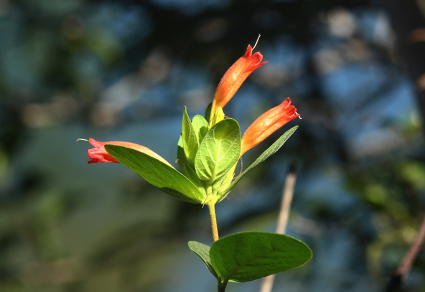
During ongoing phylogenetic and taxonomic studies of New World Ruellia, with emphasis on the Cerrado biome of central Brazil, a new species was discovered. The new species represents the only Brazilian member of the Neotropical clade Ruellia sect. Strobiliformes. Morphologically, the new species resembles R. densa, a species belonging to Ruellia sect. Siphonacanthus, and with which it has been frequently confused in herbaria and floristic studies. Here, we describe and illustrate Ruellia kameyamae, provide a distribution map, habitat and ecological notes, phenological information, and a diagnostic comparison between R. kameyamae and R. densa.
References
- Alves, J.V. & Buril, M.T. (2022) Distribution patterns, endemism, richness and diversity of Convolvulaceae in the Espinhaço Range, Brazil. Anais da Academia Brasileira de Ciências 94 (Suppl. 4): e20211380. https://doi.org/10.1590/0001-3765202220211380
- Bachman, S., Moat, J., Hill, A.W., de la Torre, J. & Scott, B. (2011) Supporting Red List threat assessments with GeoCAT: geospatial conservation assessment tool. ZooKeys 150: 117–126. https://doi.org/10.3897/zookeys.150.2109
- Baillon, H. (1891) Histoire des plantes. Vol. 10. Librairie Hachette & Cie, Paris, 502 pp. https://doi.org/10.5962/bhl.title.40796
- Coelho, A.J.P., Magnago, L.F.S., Matos, F.A.R., Mota, N.M., Diniz, É.S. & Meira-Neto, J.A.A. (2020) Effects of anthropogenic disturbances on biodiversity and biomass stock of Cerrado, the Brazilian savanna. Biodiversity and Conservation 29: 3151–3168. https://doi.org/10.1007/s10531-020-02013-6
- Durkee, L.H. (1986) Family 200: Acanthaceae. In: Burger, W.C. (Ed.) Flora Costaricensis. Fieldiana, Botany, New Series 18: 1–87.
- Ellis, B., Daly, D.C., Hickey, L.J., Johnson, K.R., Mitchell, J.D., Wilf, P. & Wing, S.L. (2009) Manual of leaf architecture. Cornell University Press, Ithaca, 190 pp. https://doi.org/10.1079/9781845935849.0000
- Esri (2020) ArcGIS Desktop: Release 10.8. Environmental Systems Research Institute, Redlands, California.
- Ezcurra, C. (1993) Systematics of Ruellia (Acanthaceae) in southern South America. Annals of the Missouri Botanical Garden 80: 787–845. https://doi.org/10.2307/2399931
- Fernandes, U.G. (2019) O gênero Ruellia L. (Acanthaceae) no Estado de Goiás e Distrito Federal, Brasil. Instituto de Botânica da Secretaria de Infraestrutura e Meio Ambiente, São Paulo, 230 pp.
- Fernandes, U.G., Manzitto-Tripp, E.A., Medina, N., Simão-Bianchini, R. & Kameyama, C. (2024) Novelties in Ruellia (Acanthaceae) for the Brazilian Cerrado. Systematic Botany 49: 1–36. https://doi.org/10.1600/036364424X17110456120721
- Flora e Funga do Brasil (2026) Acanthaceae. In: Flora e Funga do Brasil. Jardim Botânico do Rio de Janeiro, Rio de Janeiro. Available from: https://floradobrasil.jbrj.gov.br/FB33 (accessed 16 April 2026)
- Giulietti, A.M., Menezes, N.L., Pirani, J.R., Meguro, M. & Wanderley, M.G.L. (1987) Flora da Serra do Cipó, Minas Gerais: caracterização e lista das espécies. Boletim de Botânica 9: 1–151. https://doi.org/10.11606/issn.2316-9052.v9i0p1-151
- Harris, J.G. & Harris, M.W. (2001) Plant identification terminology: an illustrated glossary. 2nd ed. Spring Lake Publishing, Spring Lake, 216 pp.
- Hiern, W.P. (1877[1878]) Symbolae ad floram Brasiliae centralis cognoscendam. Videnskabelige Meddelelser fra den Naturhistoriske Forening i Kjøbenhavn 1877–1878: 74–75. Available from: https://www.biodiversitylibrary.org/item/110684 (accessed 25 September 2026)
- IBGE—Instituto Brasileiro de Geografia e Estatística (2023) Biomas do Brasil: arquivos vetoriais. Instituto Brasileiro de Geografia e Estatística, Rio de Janeiro. Available from: https://geoftp.ibge.gov.br/informacoes_ambientais/estudos_ambientais/biomas/vetores/ (accessed 16 April 2026)
- ICMBio—Instituto Chico Mendes de Conservação da Biodiversidade (2021) Dados geoespaciais das unidades de conservação federais do Brasil. Instituto Chico Mendes de Conservação da Biodiversidade, Brasília. Available from: https://www.gov.br/icmbio/pt-br/dados-icmbio/dados_geoespaciais (accessed 16 April 2026)
- IUCN (2012) IUCN Red List Categories and Criteria: Version 3.1. 2nd ed. IUCN, Gland & Cambridge, 32 pp. Available from: https://portals.iucn.org/library/node/10315 (accessed 10 June 2022)
- IUCN Standards and Petitions Committee (2024) Guidelines for using the IUCN Red List Categories and Criteria. Version 16. IUCN, Gland & Cambridge. Available from: https://www.iucnredlist.org/resources/redlistguidelines (accessed 16 April 2026)
- Jacobi, C.M., do Carmo, F.F., Vincent, R.C. & Stehmann, J.R. (2007) Plant communities on ironstone outcrops: a diverse and endangered Brazilian ecosystem. Biodiversity and Conservation 16: 2185–2200. https://doi.org/10.1007/s10531-007-9156-8
- Kameyama, C. (1995) Flora da Serra do Cipó, Minas Gerais: Acanthaceae. Boletim de Botânica da Universidade de São Paulo 14: 181–206. https://doi.org/10.11606/issn.2316-9052.v14i0p181-206
- Kunth, C.S. (1818) Nova Genera et Species Plantarum 4. Libraria Graeco-Latino-Germanica, Lutetiae Parisiorum, Paris, 406 pp.
- Leonard, E.C. (1961) Acanthaceae. In: Maguire, B., Wurdack, J.J., Leonard, E.C., Monachino, J. & Cowan, R.S. The botany of the Guayana Highland—Part IV (2). Memoirs of the New York Botanical Garden 10: 47–58.
- Lindau, G. (1895) Acanthaceae. In: Engler, H.G.A. & Prantl, K.A.E. Die Natürlichen Pflanzenfamilien 4 (3b): 247–354.
- Lindau, G. (1895) Acanthaceae americanae. Bulletin de l’Herbier Boissier 3: 366–374.
- Lindau, G. (1897) Acanthaceae americanae III. Bulletin de l’Herbier Boissier 5: 654.
- Lindau, G. (1900) Acanthaceae. In: Durand, T.A. & Pittier, H.F. (Eds.) Primitiae Florae Costaricensis 2. Anales del Instituto Físico-Geográfico Nacional de Costa Rica 8: 299–302.
- Lindau, G. (1901) Acanthaceae americanae IV. Annalen des Kaiserlich-Königlich Naturhistorischen Hofmuseums 16: 72.
- Lindau, G. (1904) Acanthaceae americanae III. Bulletin de l’Herbier Boissier 2: 311–323.
- Linnaeus, C. (1753) Species plantarum, vol. 2. Salvius, Stockholm, pp. 561–1200.
- Llamozas, S. (2001) Tres nuevas especies de Ruellia L. (Acanthaceae) de Venezuela. Acta Botanica Venezuelica 24: 75–83.
- Manzitto-Tripp, E.A., Darbyshire, I., Daniel, T.F., Kiel, C.A. & McDade, L.A. (2022) Revised classification of Acanthaceae and worldwide dichotomous keys. Taxon 71: 103–153. https://doi.org/10.1002/tax.12600
- Manzitto-Tripp, E.A. & Daniel, T.F. (2023) Phylogeny and revised classification of New World Ruellia. Taxon 72: 1034–1056. https://doi.org/10.1002/tax.13001
- McDade, L.A. & Tripp, E.A. (2007) A synopsis of Costa Rican Ruellia (Acanthaceae), with descriptions of four new species. Brittonia 59: 199–216. https://doi.org/10.1663/0007-196x(2007)59[199:asocrr]2.0.co;2
- Miranda, E.E. de (Coord.) (2005) Brasil em Relevo. Embrapa Monitoramento por Satélite, Campinas. Available from: http://www.relevobr.cnpm.embrapa.br (accessed 16 April 2026)
- Nees von Esenbeck, C.G.D. (1847) Acanthaceae. In: Martius, C.F.P. (Ed.) Flora Brasiliensis, 9. F. Fleischer, Lipsiae, pp. 1–164.
- Oliveira, A.C., Kanegae, M.F., Amaral, M.F. & Favaro, F.L. (2011) Guia para observação das aves do Parque Nacional de Brasília. Instituto Chico Mendes de Conservação da Biodiversidade (ICMBio), Brasília, 300 pp. https://doi.org/10.26512/2003.tcc.290
- Payne, W.W. (1978) A glossary of plant hair terminology. Brittonia 30: 239–255. https://doi.org/10.2307/2806659
- Pereira, K.D.L. & Silva, R. (2009) Levantamento da avifauna da área urbana de Anápolis, Goiás. Ensaios e Ciência: Ciências Biológicas, Agrárias e da Saúde 13: 33–46.
- Radford, A.E., Dickison, W.C., Massey, J.R. & Bell, C.R. (1974) Vascular Plant Systematics. Harper and Row, New York, 891 pp.
- Ramamoorthy, T.P. (1991) Ruellia section Chiropterophila (Acanthaceae): a novelty from Mexico. Botanical Journal of the Linnean Society 107: 79–88. https://doi.org/10.1111/j.1095-8339.1991.tb00216.x
- Rapini, A. (2010) Revisitando as Asclepiadoideae (Apocynaceae) da Cadeia do Espinhaço. Boletim de Botânica da Universidade de São Paulo 28: 97–123. https://doi.org/10.11606/issn.2316-9052.v28i2p97-123
- Silva, M.J. (2022a) Ruellia scarlatina, a new name for the sixty-year-old but misunderstood Ruellia capitata Rizzini (Acanthaceae). Phytotaxa 547: 55–65. https://doi.org/10.11646/phytotaxa.547.1.5
- Silva, M.J. (2022b) Ruellia umbrosa (Ruellieae, Acanthaceae) a new and critically endangered species from Lowlands of the Goiás state, Brazil. Phytotaxa 544: 81–88. https://doi.org/10.11646/phytotaxa.544.1.7
- Silva, G.K.R. (2022c) Flora de Cristalina - GO: endemismo e espécies ameaçadas. Instituto Federal de Educação, Ciência e Tecnologia Goiano, Urutaí, 69 pp.
- Sousa, V.F., Kameyama, C., Fernandes, U.G. & Versieux, L.M. (2026) A new species and lectotypifications in Ruellia (Acanthaceae) from Northeastern Brazil. Systematic Botany 51: 1–11. https://doi.org/10.1600/SYSBOT-25-00027
- Strassburg, B.B.N., Brooks, T., Feltran-Barbieri, R., Iribarrem, A., Crouzeilles, R., Loyola, R., Latawiec, A.E., Oliveira Filho, F.J.B., Scaramuzza, C.A.M., Scarano, F.R., Soares-Filho, B. & Balmford, A. (2017) Moment of truth for the Cerrado hotspot. Nature Ecology & Evolution 1: 0099. https://doi.org/10.1038/s41559-017-0099
- Tripp, E.A. (2007) Evolutionary relationships within the species-rich genus Ruellia (Acanthaceae). Systematic Botany 32: 628–649. https://doi.org/10.1600/036364407782250625
- Tripp, E.A. (2010) Taxonomic revision of Ruellia section Chiropterophila (Acanthaceae): a lineage of rare and endemic species from Mexico. Systematic Botany 35: 629–661. https://doi.org/10.1600/036364410792495845
- Tripp, E.A., Daniel, T.F., Fatimah, S. & McDade, L.A. (2013) Phylogenetic relationships within Ruellieae (Acanthaceae) and a revised classification. International Journal of Plant Sciences 174: 97–137. https://doi.org/10.1086/668248
- Tripp, E.A. & Luján, M.A. (2018) Venezuelan Ruellia (Acanthaceae): a monograph. Memoirs of the New York Botanical Garden 119: 1–76.
- Tripp, E.A. & Manos, P.S. (2008) Is floral specialization an evolutionary dead-end? Pollination system transitions in Ruellia (Acanthaceae). Evolution 62: 1712–1737. https://doi.org/10.1111/j.1558-5646.2008.00398.x
- Tripp, E.A. & Tsai, Y.H.E. (2017) Disentangling geographical, biotic, and abiotic drivers of plant diversity in Neotropical Ruellia (Acanthaceae). PLoS ONE 12: e0176021. https://doi.org/10.1371/journal.pone.0176021
- Viana, P.L. & Lombardi, J.A. (2007) Florística e caracterização dos campos rupestres sobre canga na Serra da Calçada, Minas Gerais, Brasil. Rodriguésia 58: 159–177. https://doi.org/10.1590/2175-7860200758112
- Vilar, T.S., Kameyama, C. & Cavalcanti, T.B. (2010) Acanthaceae. In: Cavalcanti, T.B. & Batista, M.F. (orgs.) Flora do Distrito Federal, Brasil. Embrapa Recursos Genéticos e Biotecnologia, Brasília, pp. 15–53.
- Wood, J.R.I. (2012) Two new species of Acanthaceae from Bolivia. Kew Bulletin 67: 257–264.
- Wasshausen, D.C. (1992) New species of Ruellia (Acanthaceae) from the Venezuelan Guayana. Novon 2: 139–148. https://doi.org/10.2307/3391675
- Zavatin, D.A., Freitas, J., de Lírio, E.J., Faller, V.S., Prado, J., Kameyama, C. & Fernandes, U.G. (2026) Ruellia capixaba (Acanthaceae, Acanthoideae), a new scandent species from Espírito Santo state, with taxonomic updates for other Ruellia of the Atlantic Forest of Brazil. Brittonia 78: 340–351. https://doi.org/10.1007/s12228-026-09877-y