
Abstract
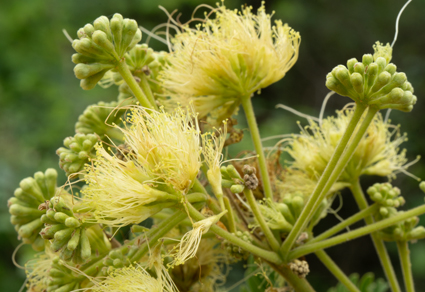
In July 2025 P.J. van der Merwe recorded an Albizia community in the eastern Soutpansberg that did not resemble any of the nine species known to occur in the mountain. Further investigation showed that while the trees are most similar to the tropical species Albizia schimperiana, Albizia troosii sp. nov. was found to be both morphologically and ecologically distinct and is described and illustrated as a new species. In addition, its preliminary conservation status is assessed as Critically Endangered.
References
- Baker, E.G. (1932) New species of Leguminae. Journal of Botany, British and Foreign. London 70: 251–255.
- Brenan, J.P.M. (1955) Notes on Mimosoideae: I. Kew Bulletin 10 (2): 161–192.
- Brenan, J.P.M. (1970) Albizia Durazz. Flora Zambesiaca 3 (1): 113–135.
- Dyer, R.A. (1938) Euphorbia zoutpansbergensis. The Flowering Plants of South Africa 18: pl. 715.
- Fernandes, R. & Fernandes, A. (1965) Anacacardiaceae Africanae novae vel minus cognitae—II. Boletim da Sociedade Broteriana sér. 2 39: 247–257.
- Hahn, N. (1997) Rubiaceae. A new species of Vangueria from the Soutpansberg. Bothalia 27 (1): 45–48. https://doi.org/10.4102/abc.v27i1.654
- Hahn, N. (2012) A revision of the Combretum vendae complex. South African Journal of Botany 78: 147–149. https://doi.org/10.1016/j.sajb.2011.06.005
- Hahn, N. (2016) Senegalia montis-salinarum, a new species of Fabaceae: Mimosoideae endemic to the Soutpansberg, South Africa. Phytotaxa 244 (2): 174–180. https://doi.org/10.11646/phytotaxa.244.2.5
- Hahn, N. (2017) Endemic flora of the Soutpansberg, Blouberg and Makgabeng. South African Journal of Botany 113: 324–336. https://doi.org/10.1016/j.sajb.2017.09.006
- Hahn, N. (2019) Indigenous vascular plants of the Soutpansberg, South Africa. Bothalia: African Biodiversity and Conservation 49 (1): 1–5. https://doi.org/10.4102/abc.v49i1.2402
- Harms, H. (1915) Leguminisae africanae. VIII. Botanische Jahrbücher 53 (3/5): 455–476.
- Hurter, P.J.H. & Glen, H.F. (1996) Encepalartos hirsutus (Zamiaceae): a newly described species from South Africa. South African Journal of Botany 62 (1): 46–48. https://doi.org/10.1016/S0254-6299(15)30577-9
- Hutchinson, J. (1946) A Botanist in southern Africa. P. R. Gawthorn, London.
- IUCN Standards and Petitions Committee (2024) Guidelines for Using the IUCN Red List Categories and Criteria. Version 16, Prepared by the Standards and Petitions Committee. [https://www.iucnredlist.org/documents/RedListGuidelines.pdf]
- Moffett, R.O. (2007) Name changes in the Old World Rhus and recognition of Searsia (Anacardiaceae). Bothalia 37 (2): 165–175. https://doi.org/10.4102/abc.v37i2.311
- Oliver, D. (1871) Mimoseae. In: Oliver, D. (Ed.) Flora of Tropical Africa 2. pp. 321–364.
- Pole Evans, I.B. (1934) Aloe angelica. In: Flowering Plants of South Africa 14. pl. 554.
- Sonder, O.W. (1860) Order XLVI Terebintaceae Juss. In: Harvey, W.H. & Sonder, O.W. (Eds.) Flora Capensis 1. Hodges & Smith, Dublin, pp. 502–527.
- Stone, R.D., Mona, I.G., Styles, D., Burrows, J. & Ramdhani, S. (2019) Taxonomic revision of South African Memecylon (Melastomataceae—Olisbeoideae), including three new species. Phytotaxa 418 (3): 237–257. https://doi.org/10.11646/phytotaxa.418.3.1
- Van Wyk, A.E. (1984) A new species of Combretum from Venda and taxonomic notes on the section Angustimarginata (Combretaceae). South African Journal of Botany 3 (2): 125–134. https://doi.org/10.1016/S0022-4618(16)30067-5