

Abstract
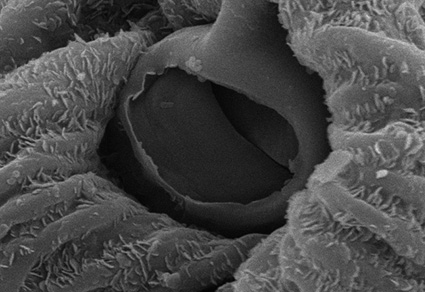
Capparis spinosa (caper bush) represents a taxonomically complex group comprising several closely related taxa. These taxa are significant for their agricultural, industrial, pharmacological, and ecological value. However, species delimitation within the group has been complicated by a high degree of variability in key morphological characters. As micromorphological characteristics often provide more reliable taxonomic information than external macromorphology, this study evaluates the discriminative value of pollen grain, sepal, and fruit surface micromorphology for identifying taxa within the C. spinosa group in Iran. Specimens from across different regions of Iran were examined using light microscopy and scanning electron microscopy (SEM). The findings indicate that several micromorphological features are diagnostic among the studied taxa, including the shape and ornamentation of pollen grains, the type of epicuticular wax on the fruit surface, the presence or absence of hair on the sepal surface, the pattern of fruit surface sculpture, the distribution of epicuticular wax on the stomatal aperture, and stomatal ledge shape of the sepal. Furthermore, the results provide new taxonomic insights into the Iranian C. spinosa group. Finally, an identification key for the studied taxa, based on these micromorphological features, is presented.
References
- Ahmadi, M. & Saeidi, H. (2018) Genetic diversity and structure of Capparis spinosa L. in Iran as revealed by ISSR markers. Physiology and Molecular Biology of Plants 24: 483–491. https://doi.org/10.1007/s12298-018-0518-3
- Ahmadi, M., Saeidi, H. & Mirtadzadini, M. (2019) Intraspecific inversion in psbA-trnH region and its implication for DNA barcoding: Case study of Capparis spinosa L. group. Taxonomy and Biosystematics 11: 79–90.
- Ahmadi, M., Saeidi, H. & Mirtadzadini, M. (2020) Species delimitation in Capparis spinosa group (Capparaceae) in Iran: multivariate morphometric analysis and ISSR markers. Phytotaxa 456: 1–26. https://doi.org/10.11646/phytotaxa.456.1.1
- Aichi-Yousfi, H., Bahri, B.A., Medini, M., Rouz, S., Nejib Rejeb, M. & Ghrabi-Gammar, Z. (2016) Genetic diversity and population structure of six species of Capparis in Tunisia using AFLP markers. Comptes Rendus. Biologies 339: 442–453. https://doi.org/10.1016/j.crvi.2016.09.001
- Babosha, A., Ryabchenko, A., Kumachova, T., Komarova, G. & Yatsenko, I. (2023) Micromorphology of the leaf surface in some species of Dryadoideae (Rosaceae). Micron 167: 103428. https://doi.org/10.1016/j.micron.2023.103428
- Barthlott, W. (1981) Epidermal and seed surface characters of plants: systematic applicability and some evolutionary aspects. Nordic Journal of Botany 1: 345–355. https://doi.org/10.1111/j.1756-1051.1981.tb00704.x
- Barthlott, W., Neinhuis, C., Cutler, D., Ditsch, F., Meusel, I., Theisen, I. & Wilhelmi, H. (1998) Classification and terminology of plant epicuticular waxes. Botanical Journal of the Linnean Society 126: 237–260. https://doi.org/10.1111/j.1095-8339.1998.tb02529.x
- Boissier, E. (1867) Flora Orientalis sive enumeratio plantarum in Oriente a Graecia et Aegypto ad Indiae fines hucusque observatarum. H. Georg, Basel, Genève. https://doi.org/10.5962/bhl.title.20323
- Chedraoui, S., Abi-Rizk, A., El-Beyrouthy, M., Chalak, L., Ouaini, N. & Rajjou, L. (2017) Capparis spinosa L. in a systematic review: A xerophilous species of multi values and promising potentialities for agrosystems under the threat of global warming. Frontiers in Plant Science 8: 1845. https://doi.org/10.3389/fpls.2017.01845
- Cornejo, X. (2020) Acanthocapparis (Capparaceae): a new genus from Mesoamerica. Harvard Papers in Botany 25: 43–46. https://doi.org/10.3100/hpib.v25iss1.2020.n4
- Cornejo, X. & Iltis, H.H. (2008a) Two new genera of Capparaceae: Sarcotoxicum and Mesocapparis stat. nov., and the reinstatement of Neocalyptrocalyx. Harvard Papers in Botany 13: 103–116. https://doi.org/10.3100/1043-4534(2008)13[103:TNGOCS]2.0.CO;2
- Cornejo, X. & Iltis, H.H. (2008b) The reinstatement of Capparidastrum (Capparaceae). Harvard Papers in Botany 13: 229–236. https://doi.org/10.3100/1043-4534-13.2.229
- Cornejo, X., Mejía-Pazos, N. & Soto, M.A. (2021) Notes on the genus Capparidastrum (Capparaceae) and the description of C. estrellae, a new species from northwestern Ecuador. Harvard Papers in Botany 26: 101–104. https://doi.org/10.3100/hpib.v26iss1.2021.n4
- Cosson, E. (1849) Notes sur quelques plantes critiques, rares ou nouvelles. Fascicule II. Victor Masson, Paris, pp. 25–48.
- Danin, A. (2010) Capparis in the East Mediterranean countries. Flora Mediterranea 20: 179–185.
- Edgeworth, M.P. (1862) Journal of the proceedings of the Linnean Society, Botany 6. https://doi.org/10.1111/j.1095-8312.1862.tb01226.x
- Erdtman, G. (1945) Pollen morphology and plant taxonomy IV. Labiatae, Verbenaceae and Avicenniaceae. Svensk Botanisk Tidskrift 39: 279–285.
- Erdtman, G. (1952) Pollen morphology and plant taxonomy—Angiosperms. Almqvist and Wiksell, Stockholm, 539 pp.
- Erdtman, G. (1960) The acetolysis method – A revised description. Svensk Botanisk Tidskrift, pp. 561–564.
- Fici, S. (2001) Intraspecific variation and evolutionary trends in Capparis spinosa L. (Capparaceae). Plant Systematics and Evolution 228: 123–141. https://doi.org/10.1007/s006060170024
- Fici, S. (2004) Micromorphological observations on leaf and pollen of Capparis L. sect. Capparis (Capparaceae). Plant Biosystems - An International Journal Dealing with all Aspects of Plant Biology 138: 125–134. https://doi.org/10.1080/11263500412331283753
- Fici, S. (2014) A taxonomic revision of the Capparis spinosa group (Capparaceae) from the Mediterranean to Central Asia. Phytotaxa 174: 1. https://doi.org/10.11646/phytotaxa.174.1.1
- Fici, S. (2015) A taxonomic revision of the Capparis spinosa group (Capparaceae) from eastern Africa to Oceania. Phytotaxa 203: 24–36. https://doi.org/10.11646/phytotaxa.203.1.2
- Ghimire, B., Park, B.K., Son, D.C. & Oh, S.-H. (2020) Achene morphology and anatomy of Clematis L. (Ranunculaceae) in Korea and its taxonomic implications. Plants 9: 1279. https://doi.org/10.3390/plants9101279
- Gristina, A.S., Fici, S., Siragusa, M., Fontana, I., Garfì, G. & Carimi, F. (2014) Hybridization in Capparis spinosa L.: Molecular and morphological evidence from a Mediterranean island complex. Flora - Morphology, Distribution, Functional Ecology of Plants 209: 733–741. https://doi.org/10.1016/j.flora.2014.09.002
- Hall, J.C. (2008) Systematics of Capparaceae and Cleomaceae: an evaluation of the generic delimitations of Capparis and Cleome using plastid DNA sequence data. Botany 86: 682–696. https://doi.org/10.1139/B08-026
- Hedge, I.C. & Lamond, J. (1970) Capparidaceae. In: Rechinger, K. (Ed.) Flora Iranica. Akademische Druck-u, Verlagsanstalt, Graz.
- Higton, R.N. & Akeroyd, J.R. (1991) Variation in Capparis spinosa L. in Europe. Botanical Journal of Linnean Society 106: 104–111.
- Iltis, H.H. & Cornejo, X. (2010) Studies in the Capparaceae XXIX: synopsis of Quadrella, a Mesoamerican and West Indian genus. Journal of the Botanical Research Institute of Texas 4 (1): 117–132.
- Iltis, H.H. & Cornejo, X. (2011) Two new genera and three new combinations in Neotropical Capparaceae. Harvard Papers in Botany 16: 65–70. https://doi.org/10.3100/025.016.0110
- Inocencio, C., Cowan, R.S., Alcaraz, F., Rivera, D. & Fay, M.F. (2005) AFLP fingerprinting in Capparis subgenus Capparis related to the commercial sources of capers. Genetic Resources and Crop Evolution 52: 137–144. https://doi.org/10.1007/s10722-003-4432-2
- Inocencio, C., Rivera, D., Obón, M.C., Alcaraz, F.J. & Barreña, J.-A. (2006) A systematic revision of Capparis section Capparis (Capparaceae). Annals of the Missouri Botanical Garden 1: 122–149. https://doi.org/10.3417/0026-6493(2006)93[122:ASROCS]2.0.CO;2
- Jabeen, S., Zafar, M., Ahmad, M., Ali, M.A., Elshikh, M.S., Makhkamov, T., Mamarakhimov, O., Yuldashev, A., Khaydarov, K., Gafforov, Y., Baysunov, B., Mammadova, A.O., Botirova, L., Sultana, S., Majeed, S., Rozina, Ahmad, S., Abid, A. & Rahmatov, A. (2024) Micrometer insights into Nepeta genus: Pollen micromorphology unveiled. Micron 177: 103574. https://doi.org/10.1016/j.micron.2023.103574
- Jacobs, M. (1965) The genus Capparis (Capparaceae) from the Indus to the Pacific. Blumea 12: 385–541.
- Kawagoe, T., Shimizu, K.K., Kakutani, T. & Kudoh, H. (2011) Coexistence of trichome variation in a natural plant population: a combined study using ecological and candidate gene approaches. PLoS One 6: e22184. https://doi.org/10.1371/journal.pone.0022184
- Kers, L.E. (2003) Capparaceae. In: Kubitzki, K. & Bayer, C. (Eds.) Flowering plants · dicotyledons. The families and genera of vascular plants. Springer, Berlin, Heidelberg, pp. 36–56. https://doi.org/10.1007/978-3-662-07255-4_13
- Keshavarzi, M. & Mosaferi, S. (2023) Leaf anatomy and micromorphology of the Capparis spinosa (Capparaceae) group in Iran. Plant Biosystems - An International Journal Dealing with all Aspects of Plant Biology 157: 262–271. https://doi.org/10.1080/11263504.2022.2100501
- Khan, D., Shaukat, S.S., Zaki, M.J. & Ali, S.V. (2018) Surface microstructure of leaf of Capparis cartilaginea Decaisne (family Capparaceae). International Journal of Biology and Biotechnology 15: 85–97.
- Khatibi, R. & Saberi, M. (2020) Bio-climatic classification of Iran by multivariate statistical methods. SN Applied Sciences 2: 1694. https://doi.org/10.1007/s42452-020-03500-9
- Lê, S., Josse, J. & Husson, F. (2008) FactoMineR: An R package for multivariate analysis. Journal of statistical software 25: 1–18. https://doi.org/10.18637/jss.v025.i01
- Linnaeus, C. (1753) Species plantarum, exhibentes plantas rite cognitas, ad genera relatas, cum differentiis specificis, nominibus trivialibus, synonymis selectis, locis natalibus, secundum systema sexuale digestas. 1st ed. Impensis Laurentii Salvii, Holmiae, 560 pp.
- Mahla, H.R., Rathore, V.S., Singh, D. & Singh, J.P. (2013) Capparis decidua (Forsk.) Edgew.: an underutilized multipurpose shrub of hot arid region—distribution, diversity and utilization. Genetic Resources and Crop Evolution 60: 385–394. https://doi.org/10.1007/s10722-012-9934-3
- Mahmoodi, R., Faghir, M.B. & Shahi Shavvon, R. (2022) Foliar micromorphology of the family Lythraceae in Iran with special emphasis on the genera Lythrum, Ammannia, and Rotala. Rostaniha 23: 161–179.
- Maire, R. (1965) Flore de l’Afrique du Nord. Éditions Paul Lechevalier (ed.), Paris, 407 pp.
- Majeed, S., Ahmad, M., Ali, A., Althobaiti, A.T., Ramadan, M.F., Kilic, O., Demirpolat, A., Çobanoğlu, D.N., Zafar, S., Afza, R., Makhkamov, T., Yuldashev, A., Gafforov, Y., Khaydarov, K., Zafar, M. & Sultana, S. (2023) Pollen micromorphology among Amaranthaceous species from desert rangeland: Exine stratification and their taxonomic significance. BioMed Research International. https://doi.org/10.1155/2023/4967771
- Matel, T.P., Gandolfo, M.A. & Mitchell, J.D. (2025) Cuticular morphology of Schinus L. and related genera. Botanical Journal of the Linnean Society 208: 91–123. https://doi.org/10.1093/botlinnean/boae071
- Maurya, S. & Choudhary, R.K. (2022) Species complexes in Capparis (Capparaceae) resolved with plastidial markers. Annales Botanici Fennici 59. https://doi.org/10.5735/085.059.0124
- Maurya, S., Cornejo, X., Lee, C., Kim, S.Y., Van Hai, D. & Choudhary, R.K. (2023) Molecular phylogenetic tools reveal the phytogeographic history of the genus Capparis L. and suggest its reclassification. Perspectives in Plant Ecology, Evolution and Systematics 58: 125720. https://doi.org/10.1016/j.ppees.2023.125720
- Moore, D.P., Webb, J.A. & Collinson, E.M. (1991) Pollen analysis. 2nd ed. Blackwell Scientific Publications, Oxford, 216 pp.
- Ostroumova, T.A. (2021) Fruit micromorphology of Siberian Apiaceae and its value for taxonomy of the family. Turczaninowia 24: 120–143. https://doi.org/10.14258/turczaninowia.24.2.13
- Park, B.K., Son, D.C. & Ghimire, B. (2021) Taxonomic relevance of petiole anatomical and micro-morphological characteristics of Clematis L. (Ranunculaceae) taxa from South Korea. PeerJ 9: e11669. https://doi.org/10.7717/peerj.11669
- Parsa, A. (1978) Flora of Iran. Ministry of Science and Education, 500 pp.
- POWO. (2026) Plants of the World Online. Published on the Internet; http://www.plantsoftheworldonline.org/ (Retrieved 24 May 2024)
- Presotto, A., Hernández, F., Díaz, M., Fernández-Moroni, I., Pandolfo, C., Basualdo, J., Cuppari, S., Cantamutto, M. & Poverene, M. (2017) Crop-wild sunflower hybridization can mediate weediness throughout growth-stress tolerance trade-offs. Agriculture, Ecosystems & Environment 249: 12–21. https://doi.org/10.1016/j.agee.2017.08.003
- Ravindran, P.N., Pillai, G.S. & Babu, K.N. (2004) Under-utilized herbs and spices. In: Peter & Peter, K.V. (Eds.) Handbook of Herbs and Spices. pp. 53–103. https://doi.org/10.1533/9781855738355.1.53
- Rezaee Chamanie, K., Beygom Faghir, M., Mahmoodi, M., Kazempour Osaloo, S. & Moradi, A. (2024) Using leaf micromorphology to characterize Iranian species of Ribes (Grossulariaceae). Feddes Repertorium 135: 160–171. https://doi.org/10.1002/fedr.202300007
- Rivera, D., Inocencio, C., Obón, C. & Alcaraz, F. (2003) Review of food and medicinal uses of Capparis L. subgenus Capparis (Capparidaceae). Economic botany 57: 515–534. https://doi.org/10.1663/0013-0001(2003)057[0515:ROFAMU]2.0.CO;2
- Rodríguez, R.R. & Greuter, W. (2004) A study of differentiation patterns in Capparis sect. Breyniastrum in Cuba, with a nomenclatural and taxonomic survey of Cuban Capparis (Capparaceae). Willdenowia 34: 259. https://doi.org/10.3372/wi.34.34121
- Saghafi Khadem, F. (2000) Capparaceae family. In: Assadi, M., Khatamsaz, M., Maassoumi, A.A. & Mozaffarian, V. (Eds.) Flora of Iran. Research Institute of Forests and Rangelands, Tehran.
- Salimi Moghadam, N., Saeidi Mehrvarz, S., Ahmadian Namin, A. & Shavvon, R.S. (2015) Micromorphology of fruits and seeds of Iranian Geranium (Geraniaceae), and its systematic significance. Nordic Journal of Botany 33: 673–683. https://doi.org/10.1111/njb.00859
- Sarvi, A., Faghir, M.B. & Shahi Shavvon, R. (2022) Pollen and seed micro-morphology of the genus Polygala (Polygalaceae) in Iran. Phytotaxa 542. https://doi.org/10.11646/phytotaxa.542.3.2
- Saxena, N.P. (2010) Objective botany. 3rd ed. Krishna Prakashan Media, 447 pp.
- Sultan, H.A.S., Elreish, B.I. & Yagi, S.M. (2010) Anatomical and phytochemical studies of the leaves and roots of Urginea grandiflora Bak. and Pancratium tortuosum Herbert. Ethnobotanical leaflets 7: 12.
- Tlili, N., Elfalleh, W., Saadaoui, E., Khaldi, A., Triki, S. & Nasri, N. (2011) The caper (Capparis L.): Ethnopharmacology, phytochemical and pharmacological properties. Fitoterapia 82: 93–101. https://doi.org/10.1016/j.fitote.2010.09.006
- Trofimov, D. & Rohwer, J.G. (2018) Epidermal features allowing identification of evolutionary lineages in the Ocotea complex (Lauraceae). Perspectives in Plant Ecology, Evolution and Systematics 31: 17–35. https://doi.org/10.1016/j.ppees.2017.12.003
- Wilkinson, H.P. (1979) The plant surface (mainly leaf). In: Metcalfe, C.R. & Chalk, L. (Eds.) Anatomy of the Dicotyledons. Clarendon Press, Oxford, pp. 97–167.
- Xu, Y. (2024) Surface morphology and microstructure of Bauhinia variegata L. flowers and leaves. Micron 177: 103575. https://doi.org/10.1016/j.micron.2023.103575
- Yilmaz-Çitak, B. & Dural, H. (2020) Fruit and seed micromorphology of the genus Iberis L. (Brassicaceae) in Turkey and its utility in taxonomic delimitation. Botanical Sciences 98: 584–592. https://doi.org/10.17129/botsci.2573
- Zhao, X., Hou, Q., Du, M., Zhang, H., Jia, L., Zhang, Z., Ma, Z. & Sun, K. (2022) Micromorphological leaf epidermal traits as potential taxonomic markers for infrageneric classification of Oxytropis (Fabaceae). PhytoKeys 201: 51–76. https://doi.org/10.3897/phytokeys.201.85154
- Zohary, M. (1960) The species of Capparis in the Mediterranean and the Near Eastern countries. Bull Res Council Israel, pp. 49–64.