

Abstract
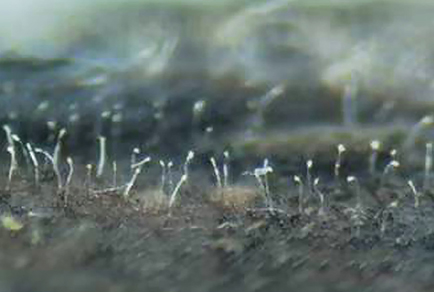
Stachybotryaceae (Hypocreales, Sordariomycetes) is a genus-rich, highly diverse family with a worldwide distribution across terrestrial and aquatic habitats. Hyalinostachys is a monotypic genus, with its type species, H. cylindrospora, isolated from bamboo. In this study, two fungal isolates were collected from decaying bamboo in Guangxi Province, China. Morphologically, these isolates differ from H. cylindrospora by possessing cylindrical conidiophores, conidiogenous cells arranged in groups of 5–7 at the apex of each conidiophore, and shorter conidia. Phylogenetic analyses based on a concatenated dataset of LSU, ITS, and rpb2 sequences demonstrated that the two isolates form a distinct lineage within Hyalinostachys. Therefore, a new species, H. guangxiensis sp. nov., is introduced as the second species in the genus.
References
- Aime, M.C., Miller, A.N., Aoki, T., Bensch, K., Cai, L., Crous, P.W., Hawksworth, D.L., Hyde, K.D., Kirk, P.M., Lücking, R., May, T.W., Malosso, E., Redhead, S.A., Rossman, A.Y., Stadler, M., Thines, M., Yurkov, A.M., Zhang, N. & Schoch, C.L. (2021) How to publish a new fungal species, or name, version 3.0. IMA Fungus 12 (1): 1–15. https://doi.org/10.1186/s43008-021-00063-1
- Bao, D.F., Hyde, K.D., Maharachchikumbura, S.S.N., Perera, R.H., Thiyagaraja, V., Hongsanan, S., Wanasinghe, D.N., Shen, H.W., Tian, X.G., Yang, L.Q., Nalumpang, S. & Luo, Z.L. (2023) Taxonomy, phylogeny and evolution of freshwater Hypocreomycetidae (Sordariomycetes). Fungal Diversity 121: 1–94. https://doi.org/10.1007/s13225-023-00521-8
- Crous, P.W., Shivas, R.G., Quaedvlieg, W., van der Bank, M., Zhang, Y., Summerell, B.A., Guarro, J., Wingfield, M.J., Wood, A.R., Alfenas, A.C., Braun, U., Cano-Lira, J.F., García, D., Marin-Felix, Y., Alvarado, P., Andrade, J.P., Armengo, J., Assefa, A., Den Breeÿen, A., Camele, I., Cheewangkoon, R., De Souza, J.T., Duong, T.A., Esteve-Raventós, F., Fournier, J., Frisullo, S., García-Jiménez, J., Gardiennet, A., Gené, J., Hernández-Restrepo, M., Hirooka, Y., Hospenthal, D.R., King, A., Lechat, C., Lombard, L., Mang, S.M., Marbach, P.A., Marincowitz, S., Marin-Felix, Y., Montaño-Mata, N.J., Moreno, G., Perez, C.A., Pérez Sierra, A.M., Robertson, J.L., Roux, J., Rubio, E., Schumacher, R.K., Stchigel, A.M., Sutton, D.A., Tan, Y.P., Thompson, E.H., van der Linde, E., Walker, A.K., Walker, D.M., Wickes, B.L., Wong, P.T. & Groenewald, J.Z. (2014) Fungal Planet description sheets: 214–280. Persoonia 32: 184–306. https://doi.org/10.3767/003158514X682395
- Dai, D.Q., Phookamsak, R., Wijayawardene, N.N., Li, W.J., Bhat, D.J., Xu, J.C., Taylor, J.E., Hyde, K.D. & Chukeatirote, E. (2017) Bambusicolous fungi. Fungal Diversity 82 (1): 1–105. https://doi.org/10.1007/s13225-016-0367-8
- Du, H.Z., Liu, N.G., Wu, N., Cheewangkoon, R. & Liu, J.K. (2025) Morpho-phylogenetic evidence reveals novel hyphomycetous fungi on medicinal plants in Southwestern China. Mycology 16 (3): 1023–1082. https://doi.org/10.1080/21501203.2024.2444436
- Frazer, S., Pestka, J., Kim, J.K., Medina, A., Aldred, D. & Magan, N. (2012) Impact of environmental factors on growth and satratoxin G production by strains of Stachybotrys chartarum. World Mycotoxin Journal 5: 37–43. https://doi.org/10.3920/WMJ2011.1329
- Hall, T.A. (1999) BioEdit: A user-friendly biological sequence alignment editor and analysis program for Windows 95/98/NT. Nucleic Acids Symposium Series 41: 95–98.
- Harrach, B., Bata, A., Bajmócy, E. & Benko, M. (1983) Isolation of satratoxins from the bedding straw of a sheep flock with fatal stachybotryotoxicosis. Applied and Environmental Microbiology 45: 1419–1422. https://doi.org/10.1128/aem.45.5.1419-1422.1983
- Hino, I. (1938) Illustrationes fungorum bambusicolorum. Bulletin of the Miyazaki College of Agricultural Forestry 10: 55–64.
- Hyde, K.D., Zhou, D.Q. & Dalisay, T. (2002) Bambusicolous fungi: A review. Fungal Diversity 9: 1–14.
- Hyde, K.D., Norphanphoun, C., Maharachchikumbura, S.S.N., Bhat, D.J., Jones, E.B.G., Bundhun, D., Chen, Y.J., Bao, D.F., Boonmee, S., Calabon, M.S., Chaiwan, N., Chethana, K.W.T., Dai, D.Q., Dayarathne, M.C., Devadatha, B., Dissanayake, A.J., Dissanayake, L.S., Doilom, M., Dong, W., Fan, X.L., Goonasekara, I.D., Hongsanan, S., Huang, S.K., Jayawardena, R.S., Jeewon, R., Karunarathna, A., Konta, S., Kumar, V., Lin, C.G., Liu, J.K., Liu, N.G., Luangsa-ard, J., Lumyong, S., Luo, Z.L., Marasinghe, D.S., McKenzie, E.H.C., Niego, A.G.T., Niranjan, M., Perera, R.H., Phukhamsakda, C., Rathnayaka, A.R., Samarakoon, M.C., Samarakoon, S.M.B.C., Sarma, V.V., Senanayake, I.C., Shang, Q.J., Stadler, M., Tibpromma, S., Wanasinghe, D.N., Wei, D.P., Wijayawardene, N.N., Xiao, Y.P., Yang, J., Zeng, X.Y., Zhang, S.N. & Xiang, M.M. (2020) Refined families of Sordariomycetes. Mycosphere 11: 305–1059. https://doi.org/10.5943/mycosphere/11/1/7
- Hyde, K.D., Saleh, A., Aumentado, H.D.R., Boekhout, T., Bera, I., Khyaju, S., Bhunjun, C.S., Chethana, K.W.T., Phukhamsakda, C., Doilom, M., Thiyagaraja, V., Mortimer, P.E., Maharachchikumbura, S.S.N., Hongsanan, S., Jayawardena, R.S., Dong, W., Jeewon, R., AI-Otibi, F., Wijesinghe, S.N. & Wanasinghe, D.N. (2024) Fungal numbers: global needs for a realistic assessment. Fungal Diversity 128: 191–225. https://doi.org/10.1007/s13225-024-00545-8
- Jayasiri, S.C., Hyde, K.D., Ariyawansa, H.A., Bhat, D.J., Buyck, B., Cai, L., Dai, Y.C., Abd-Elsalam, K.A., Ertz, D., Hidayat, I., Jeewon, R., Jones, E.B.G., Bahkali, A.H., Karunarathna, S.C., Liu, J.K., Luangsa-ard, J.J., Lumbsch, H.T., Maharachchikumbura, S.S.N., McKenzie, E.H.C., Moncalvo, J.M., Ghobad–Nejhad, M., Nilsson, H., Pang, K.L., Pereira, O.L., Phillips, A.J.L., Raspé, O., Rollins, A.W., Romero, A.I., Etayo, J., Selçuk, F., Stephenson, S.L., Suetrong, S., Taylor, J.E., Tsui, C.K.M., Vizzini, A., Abdel-Wahab, M.A., Wen, T.C., Boonmee, S., Dai, D.Q., Daranagama, D.A., Dissanayake, A.J., Ekanayaka, A.H., Fryar, S.C., Hongsanan, S., Jayawardena, R.S., Li, W.J., Perera, R.H., Phookamsak, R., deSilva, N.I., Thambugala, K.M., Tian, Q., Wijayawardene, N.N., Zhao, R.L., Zhao, Q., Kang, J.C. & Promputtha, I. (2015) The Faces of Fungi database: fungal names linked with morphology, phylogeny and human impacts. Fungal Diversity 74: 3–18. https://doi.org/10.1007/s13225-015-0351-8
- Jiang, H., Phookamsak, R., Hongsanan, S., Bhat, D.J., Mortimer, P.E., Suwannarach, N., Kakumyan, P. & Xu, J. (2022) A review of bambusicolous Ascomycota in China with an emphasis on species richness in southwest China. Studies in Fungi 7: 1–33. https://doi.org/10.48130/SIF-2022-0020
- Katoh, K., Rozewicki, J. & Yamada, K.D. (2019) MAFFT online service: Multiple sequence alignment, interactive sequence choice and visualization. Briefings in Bioinformatics 20 (4): 1160–1166. https://doi.org/10.1093/bib/bbx108
- Kirjavainen, P.V., Täubel, M., Karvonen, A.M., Sulyok, M., Tiittanen, P., Krska, R., Hyvärinen, A. & Pekkanen, J. (2015) Microbial secondary metabolites in homes in association with moisture damage and asthma. Indoor Air 26 (3): 448–456. https://doi.org/10.1111/ina.12213
- Liu, Y.J., Whelen, S. & Hall, B.D. (1999) Phylogenetic relationships among ascomycetes: evidence from an RNA polymerse II subunit. Molecular Biology and Evolution 16 (12): 1799–1808. https://doi.org/10.1093/oxfordjournals.molbev.a026092
- Lombard, L., Houbraken, J., Decock, C., Samson, R.A., Meijer, M., Réblová, M., Groenewald, J.Z. & Crous, P.W. (2016) Generic hyper-diversity in Stachybotriaceae. Persoonia 36: 156–246. https://doi.org/10.3767/003158516X691582
- Li, Q.R. & Jiang, Y.L. (2011) Stachybotrys subreniformis, new from soil in China. Mycotaxon 115 (1): 171–173. https://doi.org/10.5248/115.171
- Luo, Z.L., Hyde, K.D., Liu, J.K., Maharachchikumbura, S.S.N., Jeewon, R., Bao, D.F., Bhat, D.J., Lin, C.G., Li, W.L., Yang, J., Liu, N.G., Lu, Y.Z., Jayawardena, R.S., Li, J.F. & Su, H.Y. (2019) Freshwater Sordariomycetes. Fungal Diversity 99: 451–660. https://doi.org/10.1007/s13225-019-00438-1
- Maharachchikumbura, S.S.N., Chen, Y., Ariyawansa, H.A., Hyde, K.D., Haelewaters, D., Perera, R.H., Samarakoon, M.C., Wanasinghe, D.N., Bustamante, D.E., Liu, J., Lawrence, D.P., Cheewangkoon, R. & Stadler, M. (2021) Integrative approaches for species delimitation in Ascomycota. Fungal Diversity 109: 155–179. https://doi.org/10.1007/s13225-021-00486-6
- Miller, M.A., Pfeiffer, W. & Schwartz, T. (2010) Creating the CIPRES Science Gateway for inference of large phylogenetic trees. In: 2010 Gateway Computing Environments Workshop (GCE). IEEE, pp. 1–8. https://doi.org/10.1109/GCE.2010.5676129
- Pathak, P.D. & Chauhan, R.K.S. (1976) Leaf spot disease of Crotolaria juncea L. caused by Stachybotrys atra Corda. Current Science 45: 567.
- Ronquist, F., Teslenko, M., Van der Mark, P., Ayres, D.L., Darling, A., Höhna, S., Larget, B., Liu, L., Suchard, M.A. & Huelsenbeck, J.P. (2012) MrBayes 3.2: Efficient Bayesian phylogenetic inference and model choice across a large model space. Systematic Biology 61: 539–542. https://doi.org/10.1093/sysbio/sys029
- Samarakoon, B.C., Wanasinghe, D.N., Phookamsak, R., Bhat, J., Chomnunti, P., Karunarathna, S.C. & Lumyong, S. (2021) Stachybotrys musae sp. nov., S. microsporus, and Memnoniella levispora (Stachybotryaceae, Hypocreales) found on bananas in China and Thailand. Life 11 (4): 323. https://doi.org/10.3390/life11040323
- Senanayake, I.C., Bhat, J.D., Cheewangkoon, R. & Xie, N. (2020) Bambusicolous Arthrinium Species in Guangdong Province, China. Frontiers in Microbiology 11: 602773. https://doi.org/10.3389/fmicb.2020.602773
- Shi, J.Y., Zhou, D.Q., Ma, L.S., Yao, J. & Zhang, D.M. (2020) Diversity of bamboo species in China. WORLD BAMBOO AND RATTAN 18 (4): 55–65. https://doi.org/10.12168/sjzttx.2020.04.011
- Stamatakis, A. (2014) RAxML version 8: A tool for phylogenetic analysis and post-analysis of large phylogenies. Bioinformatics (Oxford, England) 30 (9): 1312–1313. https://doi.org/10.1093/bioinformatics/btu033
- Tennakoon, D.S., Kuo, C.H., Maharachchikumbura, S.S.N., Thambugala, K.M., Gentekaki, E., Phillips, A.J.L., Bhat, D.J., Wanasinghe, D.N., de Silva, N.I., Promputtha, I. & Hyde, K.D. (2021) Taxonomic and phylogenetic contributions to Celtis formosana, Ficus ampelas, F. septica, Macaranga tanarius and Morus australis leaf litter inhabiting microfungi. Fungal Diversity 108 (1): 1–215. https://doi.org/10.1007/s13225-021-00474-w
- Tibpromma, S., Hyde, K.D., McKenzie, E.H.C., Bhat, D.J., Phillips, A.J.L., Wanasinghe, D.N., Samarakoon, M.C., Jayawardena, R.S., Dissanayake, A.J., Tennakoon, D.S., Doilom, M., Phookamsak, P., Tang, A.M.C., Xu, J., Mortimer, P.E., Promputtha, I., Maharachchikumbura, S.S.N., Khan, S. & Karunarathna, S.C. (2018) Fungal diversity notes 840–928: micro-fungi associated with Pandanaceae. Fungal Diversity 93 (1): 1–160. https://doi.org/10.1007/s13225-018-0408-6
- Vaidya, G., Lohman, D.J. & Meier, R. (2011) SequenceMatrix: Concatenation software for the fast assembly of multi-gene datasets with character set and codon information. Cladistics 27 (2): 171–180. https://doi.org/10.1111/j.1096-0031.2010.00329.x
- Vilgalys, R. & Hester, M. (1990) Rapid genetic identification and mapping of enzymatically amplified ribosomal DNA from several Cryptococcus species. Journal of Bacteriology 172 (8): 4238–4246. https://doi.org/10.1128/jb.172.8.4238-4246.1990
- White, T.J., Bruns, T., Lee, S.J.W.T. & Taylor, J. (1990) Amplification and direct sequencing of fungal ribosomal RNA genes for phylogenetics. PCR protocols: a guide to methods and applications 18 (1): 315–322. https://doi.org/10.1016/B978-0-12-372180-8.50042-1
- Yan, K., Zhang, J., Cai, Y., Cao, G.L., Meng, L., Soaud, S.A., Heakel, R.M.Y., Ihtisham, M., Zhao, X.M., Wei, Q., Dai, T.F., Abbas, M. & Sappah, A.H.E. (2023) Comparative analysis of endophytic fungal communities in bamboo species Phyllostachys edulis, Bambusa rigida, and Pleioblastus amarus. Scientific Reports 13: 20910. https://doi.org/10.1038/s41598-023-48187-1
- Yu, X.D., Zhang, S.N., Liang, X.D., Zhu, J.T., Hyde, K.D. & Liu, J.K. (2024a) Bambusicolous fungi from Southwestern China. Mycosphere: Journal of Fungal Biology 15 (1): 5038–5145. https://doi.org/10.5943/mycosphere/15/1/24
- Yu, X.D., Zhang, S.N. & Liu, J.K. (2024b) Novel hyphomycetous fungi associated with bamboo from Sichuan, China. Phytotaxa 634 (3): 235–254. https://doi.org/10.11646/phytotaxa.634.3.4
- Zhang, J.F., Liu, J.K., Hyde, K.D., Chen, Y.Y., Ran, H.Y. & Liu, Z.Y. (2023) Ascomycetes from karst landscapes of Guizhou Province, China. Fungal Diversity 122 (1): 1–160. https://doi.org/10.1007/s13225-023-00524-5
- Zhao, G.H., Li, D.W., Jiang, J.H. & Peng, J. (2010) First report of Stachybotrys chartarum causing leaf blight of Tillandsia tenuifolia in China. Plant Disease 94 (9): 1166. https://doi.org/10.1094/PDIS-94-9-1166B