

Abstract
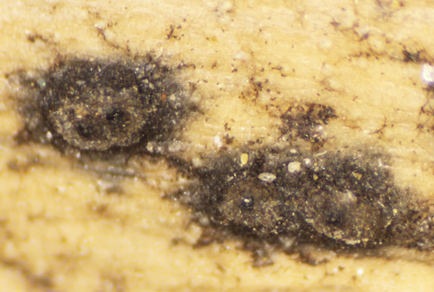
Nigropunctata xishuangbannaensis sp. nov. is introduced in this study, isolated from decaying bamboo culms in Yunnan Province, China. Multigene phylogenetic analyses based on five loci (ITS, LSU, rpb2, tub2, and tef1-α) place this taxon in a well-supported, distinct lineage clearly separated from closely related species in the genus, supporting its status as a novel species. Morphologically, the new species differs from its phylogenetically close relatives, N. chiangraiensis and N. conspicua, by the absence of a mucilaginous sheath and its ellipsoidal ascospores with pointed ends. A detailed comparative morphological analysis of N. xishuangbannaensis and related or similar species is also provided.
References
- Boonmee, S., Wanasinghe, D.N., Calabon, M.S., Huanraluek, N., Chandrasiri, S.K.U., Jones, G.E.B., Rossi, W., Leonardi, M., Singh, S.K., Rana, S., Singh, P.N., Maurya, D.K., Lagashetti, A.C., Choudhary, D., Dai, Y.C., Zhao, C.L., Mu, Y.H., Yuan, H.S., He, S.H., Phookamsak, R., Jiang, H.B., Martín, M.P., Dueñas, M., Telleria, M.T., Kałucka, I.L., Jagodziński, A.M., Liimatainen, K., Pereira, D.S., Phillips, A.J.L., Suwannarach, N., Kumla, J., Khuna, S., Lumyong, S., Potter, T.B., Shivas, R.G., Sparks, A.H., Vaghefi, N., Abdel-Wahab, M.A., AbdelAziz, F.A., Li, G.J., Lin, W.F., Singh, U., Bhatt, R.P., Lee, H.B., Nguyen, T.T.T., Kirk, P.M., Dutta, A.K., Acharya, K., Sarma, V.V., Niranjan, M., Rajeshkumar, K.C., Ashtekar, N., Lad, S., Wijayawardene, N.N., Bhat, D.J., Xu, R.J., Wijesinghe, S.N., Shen, H.W., Luo, Z.L., Zhang, J.Y., Sysouphanthong, P., Thongklang, N., Bao, D.F., Aluthmuhandiram, J.V.S., Abdollahzadeh, J., Javadi, A., Dovana, F., Usman, M., Khalid, A.N., Dissanayake, A.J., Telagathoti, A., Probst, M., Peintner, U., Garrido-Benavent, I., Bóna, L., Merényi, Z., Boros, L., Zoltán, B., Stielow, J.B., Jiang, N., Tian, C.M., Shams, E., Dehghanizadeh, F., Pordel, A., Javan-Nikkhah, M., Denchev, T.T., Denchev, C.M., Kemler, M., Begerow, D., Deng, C.Y., Harrower, E., Bozorov, T., Kholmuradova, T., Gafforov, Y., Abdurazakov, A., Xu, J.C., Mortimer, P.E., Ren, G.C., Jeewon, R., Maharachchikumbura, S.S.N., Phukhamsakda, C., Mapook, A. & Hyde, K.D. (2021) Fungal diversity notes 1387–1511: Taxonomic and phylogenetic contributions on genera and species of fungal taxa. Fungal Diversity 111: 1–335. https://doi.org/10.1007/s13225-021-00489-3
- Cao, B., Phurbu, D., Ralaiveloarisoa, A., Liimatainen, K., Niskanen, T., Ramírez-Cruz, V., Bradshaw, A.J., Dentinger, B.T.M., Ramírez-Guillén, F., Cortés-Pérez, A., Guzmán-Dávalos, L., Villalobos-Arámbula, A.R., Castro-Jauregui, O., Silva, P.S., Day, R., Davoodian, N., Lebel, T., Castellano, M., May, T.W., Toome, M., Vasey, J., Hofer, K., Thangavel, R., Braithwaite, M., Braithwaite, L., Dutta, A.K., Chattopadhyay, P., Roy, N., Tanti, B., Biswas, P.R., Arumugam, E., Kezo, K., Kaliyaperumal, M., Murugadoss, R., Ji, J.X., Kakishima, M., Cooper, J., Nuytinck, J., Luo, Z.L., Wang, W.P., Zhang, X., Wen, T.C., Jia, A.L., Fan, X.L., Jiang, N., Jiao, N., Zhang, Y., Manawasinghe, I.S., Li, H., Xiong, Y.R., Zhou, T., Tan, Q.L., Hoshino, T., Lagaet, P., De Lange, R., Verbeken, A., Tondeleir, L., Manz, C., Hampe, F., Zhao, C.L., Yang, Y., Zhang, G.Q., Dai, D.Q., Tomšovský, M., Denchev, T.T., Denchev, C.M., Léveillé-Bourret, É., Kemler, M., Chen, Y.P., Maharachchikumbura, S.S.N., Feng, Z.X., Wang, L., Wang, Q.M., Wan, S.P., Yu, F.Q., Liu, J.K., Du, H.Z., Wu, N., Hu, H.L., Su, J.Y., Wang, Z.H., Hu, Y.P., Yu, H., Wang, J., Yang, Y.H., Dong, W., Shu, Y.X., Zhao, H.J., Wang, C.Q., Xia, W.X., Liao, C.F., Doilom, M., Li, G.J., Suwannarach, N., Senwanna, C., Gafforov, Y., Flakus, A., Suchan, T., Plata, O., Rodriguez-Flakus, P., Tamang, J., Acharya, K., Yang, H.D., Jayawardena, R.S., Tiendrebeogo, A., Decock, C., Somda, I., Legrève, A., Yang, Y., Xiao, Y.P., Zhou, X.Z., Li, J.X., Thongklang, N., Han, X.X., Yang, W.Q., Wang, S.H., He, M.Q., Hyde, K.D. & Zhao, R.L. (2025) Fungal diversity notes 1919–2016: Taxonomic and phylogenetic contributions to fungal taxa. Fungal Diversity 132: 425–651. https://doi.org/10.1007/s13225-025-00556-z
- Corbu, V.M., Gheorghe-Barbu, I., Dumbravă, A.Ș., Vrâncianu, C.O. & Șesan, T.E. (2023) Current Insights in Fungal Importance—A Comprehensive Review. Microorganisms 11 (6): 1384. https://doi.org/10.3390/microorganisms11061384
- Gardes, M. & Bruns, T.D. (1993) ITS primers with enhanced specificity for basidiomycetes—Application to the identification of mycorrhizae and rusts. Molecular Ecology 2 (2): 113–118. https://doi.org/10.1111/j.1365-294X.1993.tb00005.x
- Glass, N.L. & Donaldson, G.C. (1995) Development of primer sets designed for use with the PCR to amplify conserved genes from filamentous ascomycetes. Applied and Environmental Microbiology 61 (4): 1323–1330. https://doi.org/10.1128/aem.61.4.1323-1330.1995
- Habib, K., Li, W.H., Ren, Y.L., Liu, L.L., Lu, C.T., Zhang, Q.F., Yao, Z.Q., Luo, X.Y., Zhou, X., Zeng, W.Y., Kang, Y.Q., Shen, X.C., Wijayawardene, N.N., Elgorban, A.M., Al-Rejaie, S. & Li, Q.R. (2025) Exploration of ascomycetous Fungi revealing novel taxa in Southwestern China. Mycosphere 16 (1): 1412–1529. https://doi.org/10.5943/mycosphere/16/1/8
- Hall, T.A. (1999) BioEdit: A user-friendly biological sequence alignment editor and analysis program for Windows 95/98/NT. Nucleic Acids Symposium Series 41: 95–98.
- Huelsenbeck, J.P., Ronquist, F., Nielsen, R. & Bollback, J.P. (2001) Bayesian inference of phylogeny and its impact on evolutionary biology. Science 294: 2310–2314. https://doi.org/10.1126/science.1065889
- Hyde, K.D., Norphanphoun, C., Chen, J., Dissanayake, A.J., Doilom, M., Hongsanan, S., Jayawardena, R.S., Jeewon, R., Perera, R.H., Thongbai, B. & Wanasinghe, D.N. (2018) Thailand’s amazing diversity: up to 96% of fungi in northern Thailand may be novel. Fungal Diversity 93: 215–239. https://doi.org/10.1007/s13225-018-0415-7
- Katoh, K., Rozewicki, J. & Yamada, K.D. (2019) MAFFT online service: Multiple sequence alignment, interactive sequence choice and visualization. Briefings in Bioinformatics 20 (4): 1160–1166. https://doi.org/10.1093/bib/bbx108
- Li, Q.R., Habib, K., Long, S.H., Wu, Y.P., Zhang, X., Hu, H.M., Wu, Q.Z., Liu, L.L., Zhou, S.X., Shen, X.C. & Kang, J.C. (2024) Unveiling fungal diversity in China: New species and records within the Xylariaceae Family. Mycosphere 15 (1): 275–364. https://doi.org/10.5943/mycosphere/15/1/2
- Li, W.H., Habib, K., Yao, Z.Q., Wang, G.Y., Wang, X.Y., Li, Q.R. & Kang, J.C. (2026) First Complete Mitochondrial Genome of Nigropunctata complanata—A New Record for China. Phytotaxa 752 (2): 150–162. https://doi.org/10.11646/phytotaxa.752.2.5
- Liu, L.L., Ren, Y.L., Habib, K., Lu, C.T., Wu, Y.P., Long, S.H., Lin, Y., Zhang, X., Kang, Y.Q., Wijayawardene, N.N., Wang, F., Elgorban, A.M., Al-Rejaie, S., Samarakoon, M.C., Shen, X.C. & Li, Q.R. (2025) New taxa of Xylariales from Karst Ecosystems in Southwestern China. Mycosphere 16 (1): 1–78. https://doi.org/10.5943/mycosphere/16/1/1
- Liu, Y.J., Whelen, S. & Hall, B.D. (1999) Phylogenetic relationships among ascomycetes: Evidence from an RNA polymerase II subunit. Molecular Biology and Evolution 16: 1799–1808. https://doi.org/10.1093/oxfordjournals.molbev.a026092
- Lu, C.T., Ren, Y.L., Habib, K., Zhang, Q.F., Liu, L.L., Kang, J.C., Shen, X.C., Wijayawardene, N.N., Al Rejaie, S.S., Loinheuang, C., Li, Q.R., Long, Q.D. & Elgorban, A.M. (2025) Two new species of Nigropunctata and the first report of sexual morph of Melanographium citri (Pallidoperidiaceae, Xylariales) from south-western China. MycoKeys 122: 257–275. https://doi.org/10.3897/mycokeys.122.161215
- Miller, M., Pfeiffer, W.T. & Schwartz, T. (2010) Creating the CIPRES science gateway for inference of large phylogenetic trees. Proceedings of the Gateway Computing Environments Workshop 14: 1–8. https://doi.org/10.1109/GCE.2010.5676129
- Rambaut, A. (2018) FigTree v1.4.4: Tree figure drawing tool. Available from: http://tree.bio.ed.ac.uk/software/figtree (accessed 29 Dec 2025)
- Rehner, S.A. & Buckley, E. (2005) A Beauveria phylogeny inferred from nuclear ITS and EF1-alpha sequences: Evidence for cryptic diversification and links to Cordyceps teleomorphs. Mycologia 97 (1): 84–98. https://doi.org/10.3852/mycologia.97.1.84
- Ren, G.C., Jayasiri, S.C., Tibpromma, S., De Farias, A.R.G., Chethana, K.W.T., Faraj, K.H., Wanasinghe, D.N., Xu, J.C., Hyde, K.D. & Gui, H. (2024) Saprobic ascomycetes associated with woody litter from the Greater Mekong Subregion (Southwestern China and Northern Thailand). Mycosphere 15 (1): 954–1082. https://doi.org/10.5943/mycosphere/15/1/8
- Ronquist, F., Teslenko, M., van der Mark, P., Ayres, D.L., Darling, A., Höhna, S., Larget, B., Liu, L., Suchard, M.A. & Huelsenbeck, J.P. (2012) MrBayes 3.2: Efficient Bayesian phylogenetic inference and model choice across a large model space. Systematic Biology 61 (3): 539–542. https://doi.org/10.1093/sysbio/sys029
- Samarakoon, M.C., Hyde, K.D., Maharachchikumbura, S.S.N., Stadler, M., Gareth Jones, E.B., Promputtha, I., Suwannarach, N., Camporesi, E., Bulgakov, T.S. & Liu, J.-K. (2022) Taxonomy, phylogeny, molecular dating and ancestral state reconstruction of Xylariomycetidae (Sordariomycetes). Fungal Diversity 112 (1): 1–88. https://doi.org/10.1007/s13225-021-00495-5
- Samarakoon, M.C., Lumyong, S., Manawasinghe, I.S., Suwannarach, N. & Cheewangkoon, R. (2023) Addition of Five Novel Fungal Flora to the Xylariomycetidae (Sordariomycetes, Ascomycota) in Northern Thailand. Journal of Fungi (Basel, Switzerland) 9 (11): 1065. https://doi.org/10.3390/jof9111065
- Stamatakis, A. (2014) RAxML version 8: A tool for phylogenetic analysis and post-analysis of large phylogenies. Bioinformatics (Oxford, England) 30 (9): 1312–1313. https://doi.org/10.1093/bioinformatics/btu033
- Sugita, R., Yoshioka, R. & Tanaka, K. (2024) Anthostomella-like fungi on bamboo: Four new genera belonging to a new family Pallidoperidiaceae (Xylariales). Mycoscience 65 (1): 28–46. https://doi.org/10.47371/mycosci.2023.11.005
- Tun, Z.L., Gomdola, D., Bhunjun, C.S., Maharachchikumbura, S.S.N., Alotibi, F. & Hyde, K.D. (2024) A novel species and a new geographical record of Nigropunctata from Bambusa vulgaris in northern Thailand. Phytotaxa 676 (2): 155–168. https://doi.org/10.11646/phytotaxa.676.2.4
- Vilgalys, R. & Hester, M. (1990) Rapid genetic identification and mapping of enzymatically amplified ribosomal DNA from several Cryptococcus species. Journal of Bacteriology 172 (8): 4238–4246. https://doi.org/10.1128/jb.172.8.4238-4246.1990
- White, T.J., Bruns, T., Lee, S.J.W.T. & Taylor, J. (1990) Amplification and direct sequencing of fungal ribosomal RNA genes for phylogenetics. In: PCR protocols: a guide to methods and applications, 18 (1). pp. 315–322. https://doi.org/10.1016/B978-0-12-372180-8.50042-1
- Zhang, S.N., Hyde, K.D., Jones, E.G., Yu, X.D., Cheewangkoon, R. & Liu, J.K. (2024) Current insights into palm fungi with emphasis on taxonomy and phylogeny. Fungal Diversity 127 (1): 55–301. https://doi.org/10.1007/s13225-024-00536-9
- Zhou, X., Habib, K., Zeng, W., Ren, Y., Shen, X., Kang, J. & Li, Q. (2024) Addition of three new species of Xylariomycetidae fungi on bamboo from Southern China. MycoKeys 109: 109–129. https://doi.org/10.3897/mycokeys.109.128020