

Abstract
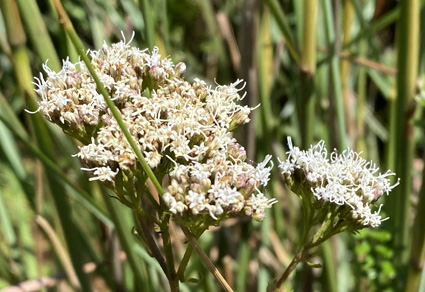
A new combination of Grazielia (Asteraceae, Eupatorieae), endemic to the highlands of the Brazilian Atlantic Forest, is proposed here. The genus is characterized by having one series of outer phyllaries noticeably different from the inner ones. The species in question shows similarities with G. gaudichaudiana, G. intermedia and G. serrata, but differs from these in narrowly elliptic to lanceolate leaf blades and glabrous leaves. An updated identification key for the genus is presented. We also provide data on etymology and flowering period, photographic plates, and a preliminary extinction risk assessment for the taxon.
References
- Bachman, S., Moat, J., Hill, A.W., de la Torre, J. & Scott, B. (2011) Supporting red list threat assessments with GeoCAT: Geospatial conservation assessment tool. ZooKeys 126: 117–126. https://doi.org/10.3897/zookeys.150.2109
- Baker, J.G. (1876) Compositae II. Eupatoriaceae. In: Martius, C.F.P. von, Eichler, A.W. & Urban, I. (Eds.) Flora Brasiliensis, vol. 6 (2). Typographia Regia, München, pp. 181–374.
- Barroso, G.M. (1950) Considerações sobre o gênero Eupatorium. Arquivos do Jardim Botânico do Rio de Janeiro 10: 13–116.
- Beentje, H. (2016) The Kew Plant Glossary: An Illustrated Dictionary of Plant Terms (2nd ed.). Kew Publishing, Royal Botanic Gardens, Richmond, 192 pp.
- Cabrera, A.L. & Klein, R.M. (1989) Compostas 4—Tribo: Eupatorieae. In: Reitz, R. (Ed.) Flora Ilustrada Catarinense. Herbário Barbosa Rodrigues, Itajaí, pp. 415–750.
- Candolle, A.P. de (1838) Prodromus systematis naturalis regni vegetabilis, vol. 7. Treuttel & Würtz, Paris, 801 pp.
- Esteves, R.L. (2001) O gênero Eupatorium s.l. (Compositae—Eupatorieae) no estado de São Paulo—Brasil. PhD Thesis. Universidade Estadual de Campinas, Campinas, 314 pp.
- Freire, S.E. & Ariza Espinar, L. (2014) Grazielia R.M.King & H.Rob. In: Zuloaga, F.O. & Anton, A.M. (Eds.) Flora Argentina: Flora Vascular de la República Argentina, vol. 7 (1). Instituto de Botánica Darwinion, Consejo Nacional de Investigaciones Científicas y Técnicas, Buenos Aires, pp. 349–350.
- Funk, V.A., Susanna, A., Stuessy, T.F. & Robinson, H. (2009) Systematics, Evolution and Biogeography of Compositae. International Association for Plant Taxonomy, Vienna, 1001 pp.
- Gardner, G. (1845) Contributions towards a Flora of Brazil, being the distinctive characters of a century of new species of plants from the Organ Mountains (cont.). London Journal of Botany 4: 116.
- Hickey, L.J. (1973) Classification of the architecture of dicotyledonous leaves. American Journal of Botany 60: 17–33. https://doi.org/10.1002/j.1537-2197.1973.tb10192.x
- IBGE (2022) Biomas e Sistema Costeiro-Marinho do Brasil—1:250:000. Instituto Brasileiro de Geografia e Estatística, Brasília. Available from: https://www.ibge.gov.br/geociencias/informacoes-ambientais/vegetacao/15842-biomas.html (accessed 8 May 2025)
- IUCN (2024) Guidelines for using the IUCN red list categories and criteria, version 16. Prepared by the Standards and Petitions Committee. Available from: https://www.iucnredlist.org/resources/redlistguidelines (accessed 8 May 2025)
- JSTOR (2026) Global Plants. Available from: https://plants.jstor.org/ (accessed 14 August 2026)
- King, R.M. & Robinson, H. (1971a) Studies in the Eupatorieae (Asteraceae). LV. The genus, Dimorpholepis. Phytologia 22: 118–120. https://doi.org/10.5962/bhl.part.26922
- King, R.M. & Robinson, H. (1971b) Studies in the Eupatorieae (Asteraceae). LVI. A new genus, Campovassouria. Phytologia 22: 121–122. https://doi.org/10.5962/bhl.part.26922
- King, R.M. & Robinson, H. (1972) Studies in the Eupatorieae (Asteraceae). LXVII. Grazielia nom. nov. for Dimorpholepis. Phytologia 23 (3): 305–306. https://doi.org/10.5962/bhl.part.19872
- King, R.M. & Robinson, H. (1987) The Genera of the Eupatorieae (Asteraceae). Monographs in Systematic Botany from the Missouri Botanical Garden 22: 1–581. https://doi.org/10.5962/bhl.title.156613
- Linnaeus, C. (1753) Species Plantarum. L. Salvius, Holmia [Stockholm], 1200 pp.
- Matzenbacher, N.I. (1979) Estudo taxonômico do gênero Eupatorium L. (Compositae) no Rio Grande do Sul—Brasil. Dissertação de Mestrado. Universidade Federal do Rio Grande do Sul, Porto Alegre, 310 pp.
- Nakajima, J., Hattori, E.K.O., Grossi, M.A. & de Souza, B. (2026) Grazielia. In: Flora e Funga do Brasil. Jardim Botânico do Rio de Janeiro. Available from: https://floradobrasil.jbrj.gov.br/FB27076 (accessed 16 August 2026)
- QGIS Development Team (2015) QGIS Geographic Information System, Open Source Geospatial Foundation Project. Available from: http://qgis.osgeo.org (accessed September 2025)
- Reflora (2026) Reflora—Herbário Virtual. Available from: http://floradobrasil.jbrj.gov.br/reflora/herbarioVirtual/ (accessed 14 August 2026)
- Rivera, V.L., Panero, J.L., Schilling, E.E., Crozier, B.S. & Moraes, M.D. (2016) Origins and recent radiation of Brazilian Eupatorieae (Asteraceae) in the eastern Cerrado and Atlantic Forest. Molecular Phylogenetics and Evolution 97: 90–100. https://doi.org/10.1016/j.ympev.2015.11.013
- Roque, N. & Bautista, H.P. (2008) Asteraceae: caracterização e morfologia floral. EDUFBA, Salvador.
- Specieslink (2026) SpeciesLink network. Available from: https://specieslink.net/search/ (accessed 14 August 2026)
- Sprengel, C. (1826) Systema Vegetabilium, ed. 16, vol. 3. Sumtibus Librariae Dieterihianae, Gottingae, 936 pp.
- Thiers, B. (2026, continuously updated) Index Herbariorum: A global directory of public herbaria and associated staff. New York Botanical Garden’s Virtual Herbarium. Available from: http://sweetgum.nybg.org/science/ih/ (accessed 14 August 2026)
- Turczaninow, N. (1848) Decades 3, 4, et 5 generum adhuc nos descriptorum, adjectis descriptionibus nonnullarum specierum Myrtacearum xerocarpicarum atque Umbelliferarum imperfectarum. Bulletin de la Société Impériale des Naturalistes de Moscou 21: 570–591.
- Turland, N.J., Wiersema, J.H., Barrie, F.R., Gandhi, K.N., Gravendyck, J., Greuter, W., Hawksworth, D.L., Herendeen, P.S., Klopper, R.R., Knapp, S., Kusber, W.-H., Li, D.-Z., May, T.W., Monro, A.M., Prado, J., Price, M.J., Smith, G.F. & Zamora Señoret, J.C. (2025) International Code of Nomenclature for algae, fungi, and plants (Madrid Code). Regnum Vegetabile 162. University of Chicago Press, Chicago. https://doi.org/10.7208/chicago/9780226839479.001.0001