
Abstract
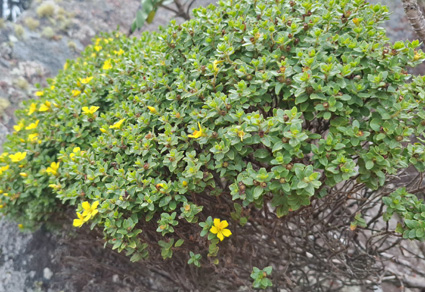
The genus Microlicia in the Rio de Contas region of Bahia, Brazil, is revisited. A checklist of the 46 recognized species of Microlicia is provided, along with an identification key. Five species are described as new: Microlicia confusa, M. crispula, M. echinata, M. itobirana, and M. ramosiana. We also recognize two new synonyms, M. amblysepala under M. subsetosa and M. minima var. aristifera under M. minima; designate lectotypes for Rhexia cordata, Microlicia amblysepala, M. minima, and M. minima var. aristifera; and provide a complete morphological description for Microlicia luetzelburgii.
References
- Almeda, F. & Martins, A.B. (2001) New combinations and new names in some Brazilian Microlicieae (Melastomataceae), with notes on the delimitation of Lavoisiera, Microlicia, and Trembleya. Novon 11: 1–7. https://doi.org/10.2307/3393198
- Almeda, F. & Martins, A.B. (2012) Microlicia wurdackiana (Melastomataceae: Microlicieae); a new species from Bahia, Brazil. Kew Bulletin 67: 467–470. https://doi.org/10.1007/s12225-012-9396-y
- Almeda, F., Michelangeli, F.A. & Goldenberg, R. (2022) Conclusion and future prospects. In: Goldenberg, R., Michelangeli, F.A. & Almeda, F. (Eds.) Systematics, Evolution, and Ecology of Melastomataceae. Springer, Cham, pp. 791–793. https://doi.org/10.1007/978-3-030-99742-7
- Andrino, C.O., Costa, F.N., Simon, M.F., Missagia, R.V. & Sano, P.T. (2023) Eriocaulaceae: A new classification system based on morphological evolution and molecular evidence. Taxon 72: 515–549. https://doi.org/10.1002/tax.12915
- Andrino, C.O., Barbosa-Silva, R.G., Siniscalchi, C., Baleeiro, P.C., da Costa, F.N., Dabydeen, L., Missagia, R., Jobson, R.W., Plunkett, G.M., Sano, P.T., Simon, M.F., Torke, B. & Viana, P.L. (2025) Phylogenomic evidence reveals non-monophyly of Paepalanthoideae (Eriocaulaceae) and challenges the broad concept of Paepalanthus. Taxon 74: 1054–1066. https://doi.org/10.1002/tax.13359
- Bachmann, S., Moat, J., Hill, A.W., Torre, J. & Scott, B. (2011) Supporting Red List threat assessments with GeoCAT: Geospatial conservation assessment tool. Zookeys 150: 117–126. https://doi.org/10.3897/zookeys.150.2109
- Candolle, A.P. (1828) Prodromus systematis naturalis regni vegetabilis. Treuttel et Würtz, Paris, 494 pp.
- Carvalho, M.R. (1987) Dicionário Tupi (antigo)–Português. Empresa gráfica da Bahia, Salvador, 314 pp.
- Chamisso, A. (1835 [“1834”]) De plantis in expeditione speculatoria romanzoffiana et in herbariis regiis berolinensibus observatis. Melastomaceae americanae. Linnaea 9: 368–460.
- Cogniaux, C.A. (1883) Melastomaceae: Microlicieae. In: Martius, C.F.P. & Eichler, A.G. (Eds.) Flora brasiliensis 14. Frid.Fleischer, Munich, pp. 5–205.
- Colli-Silva, M., Vasconcelos, T.N.C. & Pirani, J.R. (2019) Outstanding plant endemism levels strongly support the recognition of campo rupestre provinces in mountaintops of eastern South America. Journal of Biogeography 46: 1723–1733. https://doi.org/10.1111/jbi.13585
- Diniz, D.D.O. & Silva, M.J.D. (2020) Microlicia D. Don (Microlicieae, Melastomataceae) no Parque Nacional da Chapada dos Veadeiros, Estado de Goiás, Brasil. Hoehnea 47: e322019. https://doi.org/10.1590/2236-8906-32/2019
- Don, D. (1823) [“1822”] An illustration of the natural family of plants called Melastomaceae. Memoirs of the Wernerian Natural History Society 4: 276–329.
- Fick, S.E. & Hijmans, R.J. (2017) WorldClim 2: new 1km spatial resolution climate surfaces for global land areas. International Journal of Climatology 37: 4302–4315. https://doi.org/10.1002/joc.5086
- Flora e Funga do Brasil (2026) Paepalanthus. Jardim Botânico do Rio de Janeiro. Available from: https://floradobrasil.jbrj.gov.br/FB7558 (accessed 3 April 2026)
- Gali, L., Pacifico, R., Almeda, F. & Fidanza, K. (2022) Two new species of Microlicia (Melastomataceae) from Chapada Diamantina, Bahia, Northeastern Brazil. Phytotaxa 544: 52–60. https://doi.org/10.11646/phytotaxa.544.1.4
- Graser, A., Sutton, T. & Bernasocchi, M. (2025) The QGIS project: Spatial without compromise. Patterns 6: 101265. https://doi.org/10.1016/j.patter.2025.101265
- Harley, R.M. & Simmons, M.A. (1986) Florula of Mucugê. Royal Botanic Gardens, Kew, London, 238 pp.
- IBGE (2025) Rio de Contas, Bahia. Instituto Brasileiro de Geografia e Estatística, Rio de Janeiro, Brazil. Available from: https://www.ibge.gov.br/cidades-e-estados/ba/rio-de-contas.html (accessed 5 August 2026)
- IUCN (2024) Guidelines for Using the IUCN Red List Categories and Criteria. Version 16. Prepared by the Standards and Petitions Committee. [https://www.iucnredlist.org/documents/RedListGuidelines.pdf]
- Jesus, J.C., Romero, R. & Roque, N. (2018) Two new species of Microlicia (Melastomataceae) from the Septentrional Espinhaço, Bahia, Brazil. Phytotaxa 343: 240–248. https://doi.org/10.11646/phytotaxa.343.3.4
- Koschnitzke, C. & Martins, A.B. (2006) Revisão taxonômica de Chaetostoma DC. (Melastomataceae, Microlicieae). Arquivos do Museu Nacional 64: 95–119.
- Koschnitzke, C. & Martins, A.B. (2007) Nomenclatural alterations in Microlicieae (Melastomataceae). Novon 17: 472–475. https://doi.org/10.3417/1055-3177(2007)17[472:naimm]2.0.co;2
- Markgraf, F. (1927) Melastomataceae. In: Pilger, R. (Ed.) Plantae Luetzelburgianae brasiliensis VII. Notizblatt des Botanischen Gartens und Museums zu Berlin-Dahlem 10: 43–54. https://doi.org/10.2307/3994816
- Martins, A.B. & Almeda, F. (2017) A monograph of the Brazilian endemic genus Lavoisiera (Melastomataceae; Microlicieae). Phytotaxa 315: 1–194. https://doi.org/10.11646/phytotaxa.315.1.1
- Martius, C.F.P. (1829) Microlicia D.Don. In: Nova Genera et Species Plantarum 3. Impensis Auctoris, Munich, pp. 105–110, tabs. 251–253.
- Martius, C.F.P. (1832) Cambessedesia DC. In: Nova Genera et Species Plantarum 3. Impensis Auctoris, Munich, pp. 125–127.
- Martius, C.F.P. (1834) Die Eriocauleae als selbstständige Pflanzen-Familie aufgestellt und erläutert. Annales des Sciences Naturelles, Botanique sér. 2, 2: 26–43.
- Moreira, K.V.C. (2022) A tribo Lavoisiereae (Melastomataceae) no Planalto Diamantina, Minas Gerais, Brasil. Masters dissertation. Uberlândia: Universidade Federal de Uberlândia, 102 pp. https://doi.org/10.14393/ufu.di.2022.444
- Naudin, C. (1844) Additions à la flore du Brésil Méridional. Annales de Sciences Naturelles sér. 3, 2: 140–156.
- Naudin, C. (1845) Description de genres nouveaux, et rectification de quelques anciens genres appartenant à la famille des Mélastomacées. Additions à la flore du Brésil Méridional. Annales de Sciences Naturelles sér. 3, 3: 169–192.
- Pacifico, R. & Almeda, F. (2018) Two new species of Microlicia (Melastomataceae) from the Cadeia do Espinhaço, Brazil. Brittonia 70: 445–454. https://doi.org/10.1007/s12228-018-9539-z
- Pacifico, R. & Almeda, F. (2020a) Microlicia morrensis (Melastomataceae): the third species in the genus endemic to Morro do Chapéu, Bahia, Brazil. Phytotaxa 454: 137–144. https://doi.org/10.11646/phytotaxa.454.2.5
- Pacifico, R. & Almeda, F. (2020b) A new species of Microlicia (Melastomataceae) endemic to restingas in Bahia, Brazil. Journal of the Botanical Research Institute of Texas 14: 271–278. https://doi.org/10.17348/jbrit.v14.i2.1008
- Pacifico, R. & Almeda, F. (2022a) Lavoisiereae: A Neotropical tribe with remarkable endemism on eastern Brazilian mountaintops. In: Goldenberg, R., Michelangeli, F.A. & Almeda, F. (Eds.) Systematics, Evolution, and Ecology of Melastomataceae. Springer, Cham, pp. 385–408. https://doi.org/10.1007/978-3-030-99742-7_19
- Pacifico, R. & Almeda, F. (2022b) New species of Marcetia and Microlicia (Melastomataceae) endemic to the campo rupestre of Chapada Diamantina, Bahia, Brazil. Phytotaxa 573: 39–69. https://doi.org/10.11646/phytotaxa.573.1.3
- Pacifico, R. & Almeda, F. (2022c) Microlicia coronata (Melastomataceae), a new ericoid species from the Serra das Almas, Bahia, Brazil. Brittonia 74: 265–271. https://doi.org/10.1007/s12228-022-09712-0
- Pacifico, R. & Almeda, F. (2022d) A new species of Microlicia (Melastomataceae) endemic to Serra das Confusões expands the range of the genus to Piauí, Brazil. Phytotaxa 548: 73–81. https://doi.org/10.11646/phytotaxa.548.1.6
- Pacifico, R. & Almeda, F. (2025) Microlicia inconspicua (Melastomataceae: Lavoisiereae), an overlooked new species from the Chapada Diamantina, Bahia, Brazil. Kew Bulletin 80: 993–999. https://doi.org/10.1007/s12225-025-10306-8
- Pacifico, R. & Almeda, F. (2026) Microlicia flavorubescens (Melastomataceae: Lavoisiereae), a New Species from Campo Rupestre Vegetation in the Caatinga Domain, Bahia, Brazil. Systematic Botany. https://doi.org/10.1600/SYSBOT-25-00019
- Pacifico, R., Almeda, F., Frota, A. & Fidanza, K. (2020) Areas of endemism on Brazilian mountaintops revealed by taxonomically verified records of Microlicieae (Melastomataceae). Phytotaxa 450: 119–148. https://doi.org/10.11646/phytotaxa.450.2.1
- Pacifico, R., Almeda, F., Gali, L. & Fidanza, K. (2022a) Two new narrow endemic species of Microlicia (Melastomataceae, Lavoisiereae) from Serra do Porco Gordo, Bahia, Brazil. Nordic Journal of Botany 2022: e03749. https://doi.org/10.1111/njb.03749
- Pacifico, R., Almeda, F., Gali, L. & Fidanza, K. (2022b) Novelties in Microlicia (Melastomataceae, Lavoisiereae) endemic to the campo rupestre of Guiné, Chapada Diamantina, Bahia, Brazil. Phytotaxa 566 (3): 290–300. https://doi.org/10.11646/phytotaxa.566.3.4
- Pacifico, R., Almeda, F. & Kriebel, R. (2023) Microlicia delicata and Microlicia pumila (Melastomataceae), two new species from unprotected mountains with campo rupestre vegetation in eastern Brazil. Phytotaxa 599 (4): 207–224. https://doi.org/10.11646/phytotaxa.599.4.1
- Pacifico, R., Almeda, F., Engels, M.E. & Goldenberg, R. (2025) Two new species of Microlicia (Melastomataceae) from unprotected campo rupestre in the western Chapada Diamantina, Bahia, Brazil. PhytoKeys 266: 253–265. https://doi.org/10.3897/phytokeys.266.158601
- Pacifico, R. & Fidanza, K. (2018) Flora da Serra do Cipó: Microlicieae (Melastomataceae). Boletim de Botânica 36: 25–95. https://doi.org/10.11606/issn.2316-9052.v36i0p25-95
- Pacifico, R. & Kriebel, R. (2026) Microlicia almedae (Melastomataceae), a new species from the Chapada Diamantina, Bahia, Brazil. PhytoKeys 276: 183–195. https://doi.org/10.3897/phytokeys.276.193021
- Pataro, L., Romero, R. & Roque, N. (2013) Four new species of Microlicia (Melastomataceae) from Chapada Diamantina, Bahia, Brazil. Kew Bulletin 68: 285–293. https://doi.org/10.1007/s12225-013-9448-y
- Pataro, L., Romero, R. & Roque, N. (2017) Microlicieae (Melastomataceae) no município de Mucugê, Chapada Diamantina, Bahia, Brasil. Rodriguésia 68: 1287–1311. https://doi.org/10.1590/2175-7860201768412
- Romero, R. & Woodgyer, E.M. (2018) Six new species of Microlicia (Melastomataceae) from Bahia, Brazil. Kew Bulletin 73: 22. https://doi.org/10.1007/s12225-018-9747-4
- Romero, R., Versiane, A.F.A. & Woodgyer, E.M. (2022) Miscellaneous taxonomic and nomenclatural notes on Microlicia D.Don (Melastomataceae). Phytotaxa 559: 99–131. https://doi.org/10.11646/phytotaxa.559.2.1
- Romero, R., Pataro, L. & Versiane, A.F.A. (2025) Three new species of Microlicia (Melastomataceae) with yellow corollas from Chapada Diamantina, Bahia, Brazil. Plant Ecology and Evolution 158 (2): 157–167. https://doi.org/10.5091/plecevo.140649
- Romero, R., Fontelas, J.C., Moreira, K.V.C., Ferreira-Alves, R., Oliveira, L.F.A. & Versiane, A.F.A. (2026) Microlicia in Flora e Funga do Brasil. Jardim Botânico do Rio de Janeiro. Available from: https://floradobrasil.jbrj.gov.br/FB9782 (accessed 5 August 2026)
- Santos, A.K.A. & Silva, T.R.S. (2005) A família Melastomataceae no município de Rio de Contas, Bahia, Brasil. Sitientibus Série Ciências Biológicas 5: 76–92. https://doi.org/10.13102/scb8218
- Sprengel, C. (1820) Neue Entdeckungen im ganzen Umfang der Pflanzenkunde 1. Leipzig, 452 pp.
- Sprengel, C. (1825) Rhexia. In: Sprengel, C. (Ed.) Systema vegetabilium, vol. 2, nº 16. Sumtibus Librariae Dieterichianae, Gottingae [Göttingen], pp. 305–311. https://doi.org/10.5962/bhl.title.822
- Stannard, B.L. (ed.) (1995) Flora of the Pico das Almas, Chapada Diamantina – Bahia, Brazil. Kew, Royal Botanic Gardens, London, 853 pp.
- Thiers, B. (2026) [continuously updated] Index Herbariorum: A global directory of public herbaria and associated staff. New York Botanical Garden’s Virtual Herbarium. Available from: https://sweetgum.nybg.org/science/ih/ (accessed 3 July 2026)
- Triana, J.J. (1872) [“1871”] Les Mélastomacées. Transactions of the Linnean Society of London 28: 1–188. https://doi.org/10.1111/j.1096-3642.1871.tb00222.x
- Turland, N.J., Wiersema, J.H., Barrie, F.R., Gandhi, K.N., Gravendyck, J., Greuter, W., Hawksworth, D.L., Herendeen, P.S., Klopper, R.R., Knapp, S., Kusber, W.H., Li, D.Z., May, T.W., Monro, A.M., Prado, J., Price, M.J., Smith, G.F. & Zamora Señoret, J.C. (2025) International Code of Nomenclature for algae, fungi, and plants (Madrid Code). Regnum Vegetabile 162. University of Chicago Press, Chicago. https://doi.org/10.7208/chicago/9780226839479.001.0001
- Ule, E.H.G. (1908) Melastomataceae. In: Ule, E.H.G. (Org.) Beiträge zur Flora von Bahia. 1. Botanische Jahrbücher für Systematik, Pflanzengeschichte und Pflanzengeographie. Leipzig 42: 232–236.
- Versiane, A.F.A., Romero, R., Reginato, M., Welker, C.A.D., Michelangeli, F.A. & Goldenberg, R. (2021) Phylogenetic analyses of Microlicieae (Melastomataceae), with emphasis on the re-circumscription of the large genus Microlicia. Botanical Journal of the Linnean Society 197: 35–60. https://doi.org/10.1093/botlinnean/boab011
- Woodgyer, E.M. & Lughadha, E.N. (1995) Microlicia. In: Stannard, B.L. (ed.) Flora of the Pico das Almas, Chapada Diamantina – Bahia, Brazil. Kew, Royal Botanic Gardens, London, pp. 466–478.
- Woodgyer, E.M. & Zappi, D. (2005) Two new species of Microlicia D.Don (Melastomataceae) from Catolés, Bahia, NE Brazil. Kew Bulletin 60: 435–440.
- Woodgyer, E.M. & Zappi, D. (2009) Two new species of Microlicia D.Don (Melastomataceae) from Bahia, NE Brazil. Kew Bulletin 64: 279–284. https://doi.org/10.1007/s12225-009-9121-7
- Wurdack, J.J. (1981) Certamen Melastomataceis XXXIII. Phytologia 49: 147–158.
- Wurdack, J.J. (1983) Certamen Melastomataceis XXXVI. Phytologia 53: 121–137. https://doi.org/10.5962/bhl.part.12598
- Wurdack, J.J. (1984) Certamen Melastomataceis XXXVII. Phytologia 55: 131–147.
- Wurdack, J.J. (1995) New species of Melastomataceae from Bahia, Brazil. Kew Bulletin 50: 821–825. https://doi.org/10.2307/4110248
- Zappi, D.C., Lucas, E., Stannard, B.L., Nic Lughadha, E., Pirani, J.R., Queiroz, L.P., Atkins, S., Hind, D.J.N., Giulietti, A.M., Harley, R.M. & Carvalho, A.M. (2003) Lista das plantas vasculares de Catolés, Chapada Diamantina, Bahia, Brasil. Boletim de Botânica 21: 345–398. https://doi.org/10.11606/issn.2316-9052.v21i2p345-398