

Abstract
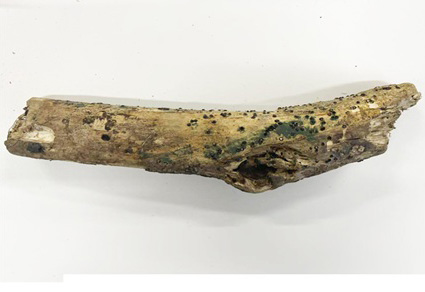
A new species of Nemania (Xylariaceae) is described from Guangxi Province, southern China. Nemania is the third-largest genus in the family and includes saprobes, endophytes, and pathogens with a worldwide distribution. During a study of fungal collections from Guangxi, two fungal isolates were analyzed using BLASTn searches and phylogenetic analyses of ITS, LSU, rpb2, and tub2 sequences. These clustered closely with N. paraphysata, but differed in having larger asci, only one type of paraphysis, and distinct ascospore characters. Based on combined morphological and molecular evidence, the fungus is recognized as a new species, Nemania cuneiformis sp. nov. A detailed description, illustrations, and a comparative discussion with closely related species are provided.
References
- Afshari, N., Noorabadi, M.T., McKenzie, E.H.C., Pumas, C., Bhunjun, C.S., Jayawardena, R.S., Gomes de Farias, A.R., Phukhamsakda, C., Jeewon, R., Chaharmiri-Dokhaharani, S., Suwannarach, N., Kumla, J., Al-Otibi, F., Hyde, K.D. & Lumyong, S. (2025) Taxonomy and diversity of woody litter microfungi associated with six phylogenetically related host species in Doi Tung national park, Chiang Rai, Thailand. Mycosphere 16 (1): 4783–4935. https://doi.org/10.5943/mycosphere/16/1/36
- Apurillo, C.C.S., Phukhamsakda, C., Mukhopadhyay, S., Gunarathne, A. & Jones, E.B.G. (2024) Nemania hydei sp. nov. (Xylariaceae) from Avicennia marina in Central Thailand. New Zealand Journal of Botany 62 (1): 103–118. https://doi.org/10.1080/0028825X.2023.2289420
- Ariyawansa, H.A., Hyde, K.D., Jayasiri, S.C., Buyck, B., Chethana, K.W.T., Dai, D.Q., Dai, Y.C., Daranagama, D.A., Jayawardena, R.S., Lücking, R., Ghobad-Nejhad, M., Niskanen, T., Thambugala, K.M., Voigt, K., Zhao, R.L., Li, G.J., Doilom, M., Boonmee, S., Yang, Z.L., Cai, Q., Cui, Y.Y., Bahkali, A.H., Chen, J., Cui, B.K., Chen, J.J., Dayarathne, M.C., Dissanayake, A.J., Ekanayaka, A.H., Hashimoto, A., Hongsanan, S., Jones, E.B.G., Larsson, E., Li, W.J., Li, Q.R., Liu, J.K., Luo, Z.L., Maharachchikumbura, S.S.N., Mapook, A., McKenzie, E.H.C., Norphanphoun, C., Konta, S., Pang, K.L., Perera, R.H., Phookamsak, R., Phukhamsakda, C., Pinruan, U., Randrianjohany, E., Singtripop, C., Tanaka, K., Tian, C.M., Tibpromma, S., Abdel-Wahab, M.A., Wanasinghe, D.N., Wijayawardene, N.N., Zhang, J.F., Zhang, H., Abdel-Aziz, F.A., Wedin, M., Westberg, M., Ammirati, J.F., Bulgakov, T.S., Lima, D.X., Callaghan, T.M., Callac, P., Chang, C.H., Coca, L.F., Dal-Forno, M., Dollhofer, V., Fliegerová, K., Greiner, K., Griffith, G.W., Ho, H.M., Hofstetter, V., Jeewon, R., Kang, J.C., Wen, T.C., Kirk, P.M., Kytövuori, I., Lawrey, J.D., Xing, J., Li, H., Liu, Z.Y., Liu, X.Z., Liimatainen, K., Lumbsch, H.T., Matsumura, M., Moncada, B., Nuankaew, S., Parnmen, S., Santiago, A.L.C.M.A., Sommai, S., Song, Y., Souza, C.A.F., Souza-Motta, C.M., Su, H.Y., Suetrong, S., Wang, Y., Wei, S.F., Wen, T.C., Yuan, H.S., Zhou, L.W., Réblová, M., Fournier, J., Camporesi, E., Luangsa-ard, J.J., Tasanathai, K., Khonsanit, A., Thanakitpipattana, D., Somrithipol, S., Diederich, P., Millanes, A.M., Common, R.S., Stadler, M., Yan, J.Y., Li, X.H., Lee, H.W., Nguyen, T.T.T., Lee, H.B., Battistin, E., Marsico, O., Vizzini, A., Vila, J., Ercole, E., Eberhardt, U., Simonini, G., Wen, H.A., Chen, X.H., Miettinen, O. & Spirin, V. (2015) Fungal diversity notes 111–252–taxonomic and phylogenetic contributions to fungal taxa. Fungal Diversity 75 (1): 27–274. https://doi.org/10.1007/s13225-015-0346-5
- Asghari, R., Phukhamsakda, C., Jones, E.B.G., Bahkali, A., Apurillo, C.C.S., Karimi, O., Kakumyan, P. & Hyde, K.D. (2025) Morphology and phylogeny reveal two new species and host records of hyphomycetous fungi on Areca species from marine habitats in Thailand. MycoKeys 118: 179–206. https://doi.org/10.3897/mycokeys.118.147229
- Crous, P.W., Wingfield, M.J., Guarro, J., Cheewangkoon, R., van der Bank, M., Swart, W.J., Stchigel, A.M., Cano-Lira, J.F., Roux, J., Madrid, H., Damm, U., Wood, A.R., Shuttleworth, L.A., Hodges, C.S., Munster, M., de Jesús Yáñez-Morales, M., Zúñiga-Estrada, L., Cruywagen, E.M., de Hoog, G.S., Silvera, C. & Groenewald, J.Z. (2013) Fungal Planet description sheets: 154–213. Persoonia 31: 188–296. https://doi.org/10.3767/003158513X675925
- Daranagama, D.A., Camporesi, E., Tian, Q., Liu, X.Z., Chamyuang, S., Stadler, M. & Hyde, K.D. (2015) Anthostomella is polyphyletic comprising several genera in Xylariaceae. Fungal Diversity 73 (1): 203–238. https://doi.org/10.1007/s13225-015-0329-6
- Dayarathne, M.C., Jones, E.B.G., Maharachchikumbura, S.S.N., Devadatha, B., Sarma, V.V., Khongphinitbunjong, K., Chomnunti, P. & Hyde, K.D. (2020) Morpho-molecular characterization of microfungi associated with marine based habitats. Mycosphere 11 (1): 1–188. https://doi.org/10.5943/mycosphere/11/1/1
- Dissanayake, L., Samarakoon, M.C., Maharachchikumbura, S., Hyde, K., Tang, X., Li, Q., Mortimer, P., Faraj, T., Xu, J., Kang, J.C. & Wanasinghe, D. (2024) Exploring the taxonomy and phylogeny of Sordariomycetes taxa emphasizing Xylariomycetidae in Southwestern China. Mycosphere 15: 1675–1793. https://doi.org/10.5943/mycosphere/15/1/15
- Donk, M.A. (1964) Pyrenomycetes. Nomina conservanda proposita. Regnum Vegetabile 34: 16–31.
- Fournier, J., Lechat, C., Courtecuisse, R. & Moreau, P.A. (2017) The genus Rosellinia (Xylariaceae) in Guadeloupe and Martinique (French West Indies). Ascomycete.org 9 (6): 205–222. https://doi.org/10.25664/art-0212
- Fournier, J., Lechat, C. & Ribes Ripoll, M.Á. (2020) Record of Nemania aureolutea (Xylariaceae) from the southern-most region of Spain. Ascomycete.org 12 (6): 221–226. https://doi.org/10.25664/ART-0311
- Gardes, M. & Bruns, T.D. (1993) ITS primers with enhanced specificity for basidiomycetes: Application to the identification of mycorrhizae and rusts. Molecular Ecology 2 (2): 113–118. https://doi.org/10.1111/j.1365-294X.1993.tb00005.x
- Glass, N.L. & Donaldson, G.C. (1995) Development of primer sets designed for use with the PCR to amplify conserved genes from filamentous ascomycetes. Applied and Environmental Microbiology 61 (4): 1323–1330. https://doi.org/10.1128/aem.61.4.1323-1330.1995
- Granmo, A., Laessøe, T. & Schumacher, T. (1999) The genus Nemania s.l. (Xylariaceae) in Norden. Sommerfeltia 27 (1): 1–96. https://doi.org/10.2478/som-1999-0002
- Gray, S.F. (1821) A Natural Arrangement of British Plants. Vol. 1. Baldwin, Cradock & Joy, London.
- Habib, K., Li, W.H., Ren, Y.L., Liu, L.L., Lu, C.T., Zhang, Q.F., Yao, Z.Q., Luo, X.Y., Zhou, X., Zeng, W.Y., Kang, Y.Q., Shen, X.C., Wijayawardene, N.N., Elgorban, A.M., Al-Rejaie, S. & Li, Q.R. (2025) Exploration of ascomycetous fungi revealing novel taxa in Southwestern China. Mycosphere 16 (1): 1412–1529. https://doi.org/10.5943/mycosphere/16/1/9
- Hall, T.A. (1999) BioEdit: A user-friendly biological sequence alignment editor and analysis program for Windows 95/98/NT. Nucleic Acids Symposium Series 41: 95–98.
- Hsieh, H.M., Lin, C.R., Fang, M.N., Rogers, J.D., Fournier, J., Lechat, C. & Ju, Y.M. (2010) Phylogenetic status of Xylaria subgenus Pseudoxylaria among taxa of the subfamily Xylarioideae (Xylariaceae) and phylogeny of the taxa involved in the subfamily. Molecular Phylogenetics and Evolution 54 (3): 957–969. https://doi.org/10.1016/j.ympev.2009.12.015
- Ju, Y.M., Hsieh, H.M., Ho, M.C., Szu, D.H. & Fang, M.J. (2007) Theissenia rogersii sp. nov. and phylogenetic position of Theissenia. Mycologia 99 (4): 612–621. https://doi.org/10.1080/15572536.2007.11832555
- Ju, Y.M. & Rogers, J.D. (2002) The genus Nemania (Xylariaceae). Nova Hedwigia 74 (1–2): 75–120. https://doi.org/10.1127/0029-5035/2002/0074-0075
- Katoh, K., Rozewicki, J. & Yamada, K.D. (2019) MAFFT online service: Multiple sequence alignment, interactive sequence choice and visualization. Briefings in Bioinformatics 20 (4): 1160–1166. https://doi.org/10.1093/bib/bbx108
- Konta, S., Hyde, K.D., Phookamsak, R., Xu, J.C., Maharachchikumbura, S.S.N., Daranagama, D.A., McKenzie, E.H.C., Boonmee, S., Tibpromma, S., Eungwanichayapant, P.D., Samarakoon, M.C. & Lu, Y.Z. (2020) Polyphyletic genera in Xylariaceae (Xylariales): Neoxylaria gen. nov. and Stilbohypoxylon. Mycosphere 11 (1): 2629–2651. https://doi.org/10.5943/mycosphere/11/1/17
- Li, Q.R., Habib, K., Long, S.H., Wu, Y.P., Zhang, X., Hu, H.M., Wu, Q.Z., Liu, L.L., Zhou, S.X., Shen, X.C. & Kang, J.C. (2024) Unveiling fungal diversity in China: New species and records within the Xylariaceae Family. Mycosphere 15 (1): 275–364. https://doi.org/10.5943/mycosphere/15/1/2
- Li, Q.R., Kang, J.C. & Hyde, K.D. (2015) Two new species of the genus Collodiscula (Xylariaceae) from China. Mycological Progress 14 (7): 52. https://doi.org/10.1007/s11557-015-1075-6
- Li, Q.R., Wen, T.C., Kang, J.C. & Hyde, K.D. (2015) A new species of Collodiscula (Xylariaceae) from China. Phytotaxa 205 (3): 187–196. https://doi.org/10.11646/phytotaxa.205.3.6
- Liu, L.L., Ren, Y.L., Habib, K., Lu, C.T., Wu, Y.P., Long, S.H., Lin, Y., Zhang, X., Kang, Y.Q., Wijayawardene, N.N., Wang, F., Elgorban, A.M., Al-Rejaie, S., Samarakoon, M.C., Shen, X.C. & Li, Q.R. (2025) New taxa of Xylariales from Karst Ecosystems in Southwestern China. Mycosphere 16 (1): 1–78. https://doi.org/10.5943/mycosphere/16/1/1
- Liu, Y.J., Whelen, S. & Hall, B.D. (1999) Phylogenetic relationships among ascomycetes based on an RNA polymerase II subunit. Molecular Biology and Evolution 16 (12): 1799–1808. https://doi.org/10.1093/oxfordjournals.molbev.a026092
- Long, Q.D., Liu, L.L., Zhang, X., Wen, T.C., Kang, J.C., Hyde, K.D., Shen, X.C. & Li, Q.R. (2019) Contributions to species of Xylariales in China-1. Durotheca species. Mycological Progress 18 (3): 495–510. https://doi.org/10.1007/s11557-018-1458-6
- Long, S., Pi, Y., Wu, Y., Liu, L., Zhang, X., Long, Q., Lin, Y., Kang, Y., Kang, J., Wijayawardene, N.N. & Li, Q. (2022) Rosellinia qiongensis sp. nov., R. verticillata sp. nov. and a new record of R. lamprostoma from China. Phytotaxa 552 (5): 287–300. https://doi.org/10.11646/phytotaxa.552.5.2
- Miller, M., Pfeiffer, W.T. & Schwartz, T. (2010) Creating the CIPRES science gateway for inference of large phylogenetic trees. In: Proceedings of the Gateway Computing Environments Workshop (GCE). IEEE, pp. 1–8. https://doi.org/10.1109/GCE.2010.5676129
- Oh, S., Yang, J.H., Woo, J., Oh, S. & Hur, J. (2020) Diversity and distribution patterns of endolichenic fungi in Jeju Island, South Korea. Sustainability 12 (9): 3769. https://doi.org/10.3390/su12093769
- Petrini, L.E. & Petrini, O. (1985) Xylariaceous fungi as endophytes. Sydowia 38: 216–234.
- Petrini, L.E. & Rogers, J.D. (1986) A summary of the anamorphs of Hypoxylon with a key to species described since 1930. Mycotaxon 26: 401–435. https://doi.org/10.5962/p.417134
- Petrini, L.E. (2013) Rosellinia—a world monograph. Bibliotheca Mycologica 205. J. Cramer, Stuttgart.
- Pi, Y.H., Long, S.H., Wu, Y.P., Liu, L.L., Lin, Y., Long, Q., Kang, J.C., Kang, Y.Q., Chang, C.R., Shen, X.C., Wijayawardene, N.N., Zhang, X. & Li, Q.R. (2021) A taxonomic study of Nemania from China, with six new species. MycoKeys 83: 39–67. https://doi.org/10.3897/mycokeys.83.69906
- Pouzar, Z. (1985a) Reassessment of Hypoxylon serpens-complex I. Ceská Mykologie 39: 15–25. https://doi.org/10.33585/cmy.39102
- Pouzar, Z. (1985b) Reassessment of the Hypoxylon serpens-complex II. Ceská Mykologie 39: 129–134. https://doi.org/10.33585/cmy.39301
- Pourmoghaddam, M.J., Ekiz, G., Lambert, C., Surup, F., Primahana, G., Wittstein, K., Khodaparast, S.A., Voglmayr, H., Krisai-Greilhuber, I. & Stradal, T.E.B. & Stadler, M. (2022) Studies on the secondary metabolism of Rosellinia and Dematophora strains (Xylariaceae) from Iran. Mycological Progress 21 (8): 65. https://doi.org/10.1007/s11557-022-01816-x
- Rambaut, A. (2018) FigTree—Tree Figure Drawing Tool Version v. 1.4.4. Institute of Evolutionary Biology, University of Edinburgh.
- Ronquist, F., Teslenko, M., van der Mark, P., Ayres, D.L., Darling, A., Höhna, S., Larget, B., Liu, L., Suchard, M.A. & Huelsenbeck, J.P. (2012) MrBayes 3.2: Efficient bayesian phylogenetic inference and model choice across a large model space. Systematic Biology 61: 539–542. https://doi.org/10.1093/sysbio/sys029
- Samarakoon, M.C., Hyde, K.D., Maharachchikumbura, S.S.N., Stadler, M., Jones, E.B.G., Promputtha, I., Suwannarach, N., Camporesi, E., Bulgakov, T.S. & Liu, J.K. (2022) Taxonomy, phylogeny, molecular dating and ancestral state reconstruction of Xylariomycetidae (Sordariomycetes). Fungal Diversity 112 (1): 1–88. https://doi.org/10.1007/s13225-021-00495-5
- Senanayake, I.C., Rossi, W., Leonardi, M., Maharachchikumbura, S.S.N. & Liu, J.K. (2023) Fungal diversity notes 1611–1716: taxonomic and phylogenetic contributions on fungal genera and species emphasis in south China. Fungal Diversity 122: 161–403. https://doi.org/10.1007/s13225-023-00523-6
- Senn-Irlet, B., Blaser, S., Dougoud, R., Stöckli, E., Mürner, R. & Gross, A. (2021) Ascomyceten der Schweiz—seltene und wenig dokumentierte Arten. Cryptogamica Helvetica 23: 1–440. https://doi.org/10.5167/uzh-203714
- Sir, E.B., Lambert, C., Wendt, L., Hladki, A.I., Romero, A.I. & Stadler, M. (2016) A new species of Daldinia (Xylariaceae) from the Argentine subtropical montane forest. Mycosphere 7 (9): 1378–1388. https://doi.org/10.5943/mycosphere/7/9/11
- Stadler, M., Kuhnert, E., Peršoh, D. & Fournier, J. (2013) The Xylariaceae as model example for a unified nomenclature following the One Fungus- One Name (1F1N) concept. Mycology 4 (1): 5–21. https://doi.org/10.1080/21501203.2013.782478
- Stamatakis, A. (2014) RAxML version 8: A tool for phylogenetic analysis and post-analysis of large phylogenies. Bioinformatics 30 (9): 1312–1313. https://doi.org/10.1093/bioinformatics/btu033
- Tan, Y.P., Bishop-Hurley, S.L., Shivas, R.G. & Thompson, J.R. (2022) Index of Australian Fungi no. 1. Index of Australian Fungi 1: 1–5. https://doi.org/10.13140/RG.2.2.16073.21600
- Tang, A., Jeewon, R. & Hyde, K.D. (2007) Phylogenetic relationships of Nemania plumbea sp. nov. and related taxa based on ribosomal ITS and RPB2 sequences. Mycological Research 111 (4): 392–402. https://doi.org/10.1016/j.mycres.2007.01.009
- Tibpromma, S., Zhang, L., Karunarathna, S.C., Du, T.Y., Phukhamsakda, C., Rachakunta, M., Suwannarach, N., Xu, J., Mortimer, P.E. & Wang, Y.H. (2021) Volatile constituents of endophytic fungi isolated from Aquilaria sinensis with descriptions of two new species of Nemania. Life (Chicago, Ill.) 11 (4): 363. https://doi.org/10.3390/life11040363
- Vilgalys, R. & Hester, M. (1990) Rapid genetic identification and mapping of enzymatically amplified ribosomal DNA from several Cryptococcus species. Journal of Bacteriology 172: 4239–4246. https://doi.org/10.1128/jb.172.8.4238-4246.1990
- Voglmayr, H., Friebes, G., Gardiennet, A. & Jaklitsch, W.M. (2018) Barrmaelia and Entosordaria in Barrmaeliaceae (fam. nov., Xylariales), and critical notes on Anthostomella-like genera based on multigene phylogenies. Mycological Progress 17 (1): 155–177. https://doi.org/10.1007/s11557-017-1349-2
- Voglmayr, H., Tello, S., Jaklitsch, W.M., Friebes, G., Baral, H.O. & Fournier, J. (2022) About spirals and pores: Xylariaceae with remarkable germ loci. Persoonia 49: 58–98. https://doi.org/10.3767/persoonia.2022.49.02
- Vu, D., Groenewald, M., de Vries, M., Gehrmann, T., Stielow, B., Eberhardt, U., Al-Hatmi, A.M., Groenewald, J.Z., Cardinali, G., Houbraken, J., Boekhout, T., Crous, P.W., Robert, V. & Verkley, G.J.M. (2019) Large-scale generation and analysis of filamentous fungal DNA barcodes boosts coverage for kingdom fungi and reveals thresholds for fungal species and higher taxon delimitation. Studies in Mycology 92: 135–154. https://doi.org/10.1016/j.simyco.2018.05.001
- Wendt, L., Sir, E.B., Kuhnert, E., Heitkämper, S., Lambert, C., Hladki, A.I., Romero, A.I., Luangsa-ard, J.J., Srikitikulchai, P., Peršoh, D. & Stadler, M. (2018) Resurrection and emendation of the Hypoxylaceae, recognised from a multigene phylogeny of the Xylariales. Mycological Progress 17 (1–2): 115–154. https://doi.org/10.1007/s11557-017-1311-3
- White, T.J., Bruns, T.D., Lee, S.B. & Taylor, J.W. (1990) Amplification and direct sequencing of fungal ribosomal RNA genes for phylogenetics. In: Innis, M.A., Gelfand, D.H., Sninsky, J.J. & White, T.J. (Eds.) PCR Protocols: A guide to methods and applications. Academic Press, pp. 315–322. https://doi.org/10.1016/B978-0-12-372180-8.50042-1
- Wittstein, K., Cordsmeier, A., Lambert, C., Wendt, L., Sir, E.B., Weber, J., Wurzler, N., Petrini, L.E. & Stadler, M. (2020) Identification of Rosellinia species as producers of cyclodepsipeptide PF1022 A and resurrection of the genus Dematophora as inferred from polythetic taxonomy. Studies in Mycology 96: 1–16. https://doi.org/10.1016/j.simyco.2020.01.001
- Wu, Y.P., Pi, Y.H., Long, S.H., Lin, Y., Long, Q.D., Kang, J.C., Kang, Y.Q., Shen, X.C., Wijayawardene, N.N., Zhang, X. & Li, Q.R. (2021) Morphological and phylogenetic study of five species of Astrocystis and Collodiscula on bamboo. Phytotaxa 522 (4): 265–284. https://doi.org/10.11646/phytotaxa.522.4.1
- Xie, X., Liu, L., Zhang, X., Long, Q., Shen, X., Boonmee, S., Kang, J. & Li, Q. (2019) Contributions to species of Xylariales in China—2. Rosellinia pervariabilis and R. tetrastigmae spp. nov., and a new record of R. caudata. Mycotaxon 134 (1): 183–196. https://doi.org/10.5248/134.183
- Zhang, H., Wei, T.P., Li, L.Z., Luo, M.Y., Jia, W.Y., Zeng, Y., Jiang, Y.L. & Tao, G.C. (2021) Multigene phylogeny, diversity and antimicrobial potential of endophytic Sordariomycetes from Rosa roxburghii. Frontiers in Microbiology 12: 755919. https://doi.org/10.3389/fmicb.2021.755919
- Zhang, S.N., Hyde, K.D., Jones, E.B.G., Maharachchikumbura, S.S.N. & Liu, J.K. (2024) Current insights into palm fungi with emphasis on taxonomy and phylogeny. Fungal Diversity 127: 55–301. https://doi.org/10.1007/s13225-024-00536-9