
Abstract
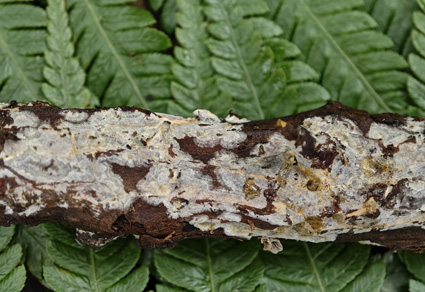
In this study, a new species, Heterocorticium cremeum, is proposed based on morphological features and molecular evidence. The new species is characterized by resupinate, membranaceous to slightly coriaceous basidiomata with a smooth to slightly uneven and white to cream hymenial surface, a monomitic hyphal system composed of clamped generative hyphae, longitudinally septate basidia, and allantoid basidiospores (9.6–12.0 × 4.2–5.2 µm). Phylogenetic analyses of ITS+nLSU sequences revealed that the new species formed a strongly supported monophyletic lineage that is closely related to H. niveomarginatum and H. latisporum. Detailed morphological descriptions, illustrations, and phylogenetic analysis results of the new species are provided.
References
- Alvarenga, R.L.M. & Gibertoni, T.B. (2021) Crystallodon Alvarenga gen. nov., a new genus of the Auriculariales from the Neotropics. Cryptogamie Mycologie 42: 17–24. https://doi.org/10.5252/cryptogamie-mycologie2021v42a2
- Alvarenga, R.L.M., Spirin, V., Malysheva, V., Gibertoni, T.B. & Larsson, K.H. (2019) Two new genera and six other novelties in Heterochaete sensu lato (Auriculariales, Basidiomycota). Botany 97 (8): 439–451. https://doi.org/10.1139/cjb-2019-0046
- Alvarenga, R.L.M., Westphalen, M.C. & Gibertoni, T.B. (2023) Elmerina and Protomerulius: novelties from Brazil based on morphological and molecular analyses. Plant Systematics and Evolution 309 (5): 39. https://doi.org/10.1007/s00606-023-01875-x
- Bhunjun, C.S., Chen, Y.J., Phukhamsakda, C., Boekhout, T., Groenewald, J.Z., McKenzie, E.H.C., Francisco, E.C., Frisvad, J.C., Groenewald, M., Hurdeal, V.G., Luangsa-Ard, J., Perrone, G., Visagie, C.M., Bai, F.Y., Błaszkowski, J., Braun, U., de Souza, F.A., de Queiroz, M.B., Dutta, A.K., Gonkhom, D., Goto, B.T., Guarnaccia, V., Hagen, F., Houbraken, J., Hyde, K.D., Lumbsch, H.T., Manamgoda, D.S., Miller, A.N., Niu, Y., Raja, H.A., Rajeshkumar, K.C., Réblová, M., Rodrigues, A.M., Rossman, A.Y., Samson, R.A., Seifert, K.A., Sharma, G., Shivas, R.G., Stadler, M., Stchigel, A.M., Su, H.Y., Tanaka, K., Taylor, J.W., Thambugala, K.M., Tsui, C.K.M., Udayanga, D., Vánky, K., Verkley, G.J.M., Wanasinghe, D.N., Wijayawardene, N.N., Wu, S.H., Zhang, T. & Zhang, Y. (2024) What are the 100 most cited fungal genera? Studies in Mycology 108: 1–411. https://doi.org/10.3114/sim.2024.108.01
- Chen, Y.L., Su, M.S., Zhang, L.P., Zou, Q., Wu, F., Zeng, N.K. & Liu, M. (2020) Pseudohydnum brunneiceps (Auriculariales, Basidiomycota), a new species from Central China. Phytotaxa 441 (1): 87–94. https://doi.org/10.11646/phytotaxa.441.1.8
- Dai, Y.C., Wei, Y.L. & Zhang, X.Q. (2004a) An annotated checklist of non-poroid Aphyllophorales in China. Annales Botanici Fennici 41: 233–247.
- Dai, Y.C., Wei, Y.L. & Wang, Z. (2004b) Wood-inhabiting fungi in southern China 2. Polypores from Sichuan Province. Annales Botanici Fennici 41: 319–329.
- Dai, Y.C., Yu, C.J. & Wang, H.C. (2007) Polypores from eastern Xizang (Tibet), western China. Annales Botanici Fennici 44: 135–145.
- Dai, Y.C. (2012) Polypore diversity in China with an annotated checklist of Chinese polypores. Mycoscience 53 (1): 49–80. https://doi.org/10.1007/s10267-011-0134-3
- Dai, Y.C., Cui, B.K., Si, J., He, S.H., Hyde, K.D., Yuan, H.S., Liu, X.Y. & Zhou, L.W. (2015) Dynamics of the worldwide number of fungi with emphasis on fungal diversity in China. Mycological Progress 14 (9): 1–9. https://doi.org/10.1007/s11557-015-1084-5
- Dai, Y.C., Yang, Z.L., Cui, B.K., Wu, G., Yuan, H.S., Zhou, L.W., He, S.H., Ge, Z.W., Wu, F., Wei, Y.L., Yuan, Y. & Si, J. (2021) Diversity and systematics of the important macrofungi in Chinese forests. Mycosystema 40 (4): 770–805. https://doi.org/10.13346/j.mycosystema.210036
- Dong, J.H., Zhu, Y.G., Qian, C.B. & Zhao, C.L. (2024a) Taxonomy and phylogeny of Auriculariales (Agaricomycetes, Basidiomycota) with descriptions of four new species from south-western China. MycoKeys 108: 115–146. https://doi.org/10.3897/mycokeys.108.128659
- Dong, J.H., Li, Q., Yuan, Q., Luo, Y.X., Zhang, X.C., Dai, Y.F., Zhou, Q., Liu, X.F., Deng, Y.L., Zhou, H.M., Muhammad, A. & Zhao, C.L. (2024b) Species diversity, taxonomy, molecular systematics and divergence time of wood-inhabiting fungi in Yunnan-Guizhou Plateau, Asia. Mycosphere 15: 1110–1293. https://doi.org/10.5943/mycosphere/15/1/10
- Dong, J.H., Li, Q., Su, J. & Zhao, C.L. (2025a) Punctochaete murina gen. et sp. nov. (Agaricomycetes, Basidiomycota) from southwestern China. European Journal of Taxonomy 981: 96–113. https://doi.org/10.5852/ejt.2025.981.2821
- Dong, J.H., Zou, J.L., He, S.Y., Chen, M.L. & Zhao, C.L. (2025b) A new corticioid genus of Auriculariales—Nigrochaete, collected from Yunnan, China. Journal of Fungal Research 23 (03): 190–201. https://doi.org/10.13341/j.jfr.2024.1826
- Dong, J.H., Xu, Y., Jiang, Q.Q., Hosen, M.I. & Zhao, C.L. (2025c) A new genus and two new species of Auriculariales (Basidiomycota) from southwest China, evidenced by morphological characteristics and phylogenetic analyses. Mycological Progress 24 (1): 4–4. https://doi.org/10.1007/s11557-024-02027-2
- Guan, Q.X., Liu, C.M., Zhao, T.J. & Zhao, C.L. (2020) Heteroradulum yunnanensis sp. nov. (Auriculariales, Basidiomycota) evidenced by morphological characters and phylogenetic analyses in China. Phytotaxa 437: 51–59. https://doi.org/10.11646/phytotaxa.437.2.1
- Hall, T.A. (1999) BioEdit: A user-friendly biological sequence alignment editor and analysis program for Windows 95/98/NT. Nucleic Acids Symposium Series 41: 95–98.
- He, M.Q., Zhao, R.L., Hyde, K.D., Begerow, D., Kemler, M., Yurkov, A., McKenzie, E.H.C., Raspé, O., Kakishima, M., Sánchez Ramírez, S., Vellinga, E.C., Halling, R.E., Papp, T., Zmitrovich, I.V., Buyck, B., Ertz, D., Wijayawardene, N.N., Cui, B.K., Schoutteten, N., Liu, X.Z., Li, T.H., Yao, Y.J., Zhu, X.Y., Liu, A.Q., Li, G.J., Zhang, M.Z., Ling, Z.L., Cao, B., Antonín, V., Boekhout, T., Barbosa da Silva, B.D., De Crop, E., Decock, C., Dima, B., Dutta, A.K., Fell, J.W., Geml, J., Ghobad Nejhad, M., Giachini, A.J., Gibertoni, T.B., Gorjón, S.P., Haelewaters, D., He, S.H., Hodkinson, B.P., Horak, E., Hoshino, T., Justo, A., Lim, Y.W., Menolli, N., Mešić, A., Moncalvo, J.M., Mueller, G.M., Nagy, L.G., Nilsson, R.H., Noordeloos, M., Nuytinck, J., Orihara, T., Ratchadawan, C., Rajchenberg, M., Silva Filho, A.G.S., Sulzbacher, M., Tkalčec, Z., Valenzuela, R., Verbeken, A., Vizzini, A., Wartchow, F., Wei, T.Z., Weiß, M., Zhao, C.L., Kirk, P.M. & Dai, Y.C. (2019) Notes, outline and divergence times of Basidiomycota. Fungal Diversity 99: 105–367. https://doi.org/10.1007/s13225-019-00435-4
- Hillis, D.M. & Bull, J.J. (1993) An empirical test of bootstrapping as a method for assessing confidence in phylogenetic analysis. Systematic Biology 42 (2): 182–192. https://doi.org/10.2307/2992540
- Hyde, K.D., Baldrian, P., Chen, Y., Thilini Chethana, K.W., De Hoog, S., Doilom, M., de Farias, A.R.G., Gonçalves, M.F.M., Gonkhom, D., Gui, H., Hilário, S., Hu, Y., Jayawardena, R.S., Khyaju, S., Kirk, P.M., Kohout, P., Luangharn, T., Maharachchikumbura, S.S.N., Manawasinghe, I.S., Mortimer, P.E., Niego, A.G.T., Phonemany, M., Sandargo, B., Senanayake, I.C., Stadler, M., Surup, F., Thongklang, N., Wanasinghe, D.N., Bahkali, A.H. & Walker, A. (2024) Current trends, limitations and future research in the fungi? Fungal Diversity 125 (1): 1–71. https://doi.org/10.1007/s13225-023-00532-5
- Hyde, K.D., Dong, Y., Phookamsak, R., Jeewon, R., Bhat, D.J., Jones, E.B.G., Liu, N.G., Abeywickrama, P.D., Mapook, A., Wei, D., Perera, R.H., Manawasinghe, I.S., Pem, D., Bundhun, D., Karunarathna, A., Ekanayaka, A.H., Bao, D.F., Li, J., Samarakoon, M.C., Chaiwan, N., Lin, C.G., Phutthacharoen, K., Zhang, S.N., Senanayake, I.C., Goonasekara, I.D., Thambugala, K.M., Phukhamsakda, C., Tennakoon, D.S., Jiang, H.B., Yang, J., Zeng, M., Huanraluek, N., Liu, J.K., Wijesinghe, S.N., Tian, Q., Tibpromma, S., Brahmanage, R.S., Boonmee, S., Huang, S.K., Thiyagaraja, V., Lu, Y.Z., Jayawardena, R.S., Dong, W., Yang, E.F., Singh, S.K., Singh, S.M., Rana, S., Lad, S.S., Anand, G., Devadatha, B., Niranjan, M., Sarma, V.V., Liimatainen, K., Aguirre Hudson, B., Niskanen, T., Overall, A., Alvarenga, R.L.M., Gibertoni, T.B., Pfliegler, W.P., Horváth, E., Imre, A., Alves, A.L., da Silva Santos, A.C., Tiago, P.V., Bulgakov, T.S., Wanasinghe, D.N., Bahkali, A.H., Doilom, M., Elgorban, A.M., Maharachchikumbura, S.S.N., Rajeshkumar, K.C., Haelewaters, D., Mortimer, P.E., Zhao, Q., Lumyong, S., Xu, J. & Sheng, J. (2020) Fungal diversity notes 1151–1276: taxonomic and phylogenetic contributions on genera and species of fungal taxa. Fungal Diversity 100 (1): 5–277. https://doi.org/10.1007/s13225-020-00439-5
- Hyde, K.D., Fryar, S., Tian, Q., Bahkali, A.H. & Xu, J. (2016) Lignicolous freshwater fungi along a north–south latitudinal gradient in the Asian/Australian region; can we predict the impact of global warming on biodiversity and function? Fungal Ecology 19: 190–200. https://doi.org/10.1016/j.funeco.2015.07.002
- Ji, X.H., Wu, F., Dai, Y.C. & Vlasák, J. (2017) Two new species of Fulvifomes (Hymenochaetales, basidiomycota) from America. MycoKeys 22: 1–13. https://doi.org/10.3897/mycokeys.22.12380.figure6
- Jia, B.S., Zhou, L.W., Cui, B.K., Rivoire, B. & Dai, Y.C. (2014) Taxonomy and phylogeny of Ceriporia (Polyporales, Basidiomycota) with an emphasis of Chinese collections. Mycological Progress 13: 81–93. https://doi.org/10.1007/s11557-013-0895-5
- Kalyaanamoorthy, S., Minh, B.Q., Wong, T.K.F., von Haeseler, A. & Jermiin, L.S. (2017) ModelFinder: Fast model selection for accurate phylogenetic estimates. Nature Methods 14 (6): 587–589. https://doi.org/10.1038/nmeth.4285
- Katoh, K., Rozewicki, J. & Yamada, K.D. (2019) MAFFT online service: multiple sequence alignment, interactive sequence choice and visualization. Briefings in Bioinformatics 20 (4): 1160–1166. https://doi.org/10.1093/bib/bbx108
- Kirk, P.M., Cannon, P.F., Stalpers, J.A. & Minter, D.W. (2008) Dictionary of the Fungi. 10th ed. CABI Publishing, Wallingford.
- Li, J., Zhao, C.L. & Liu, C.M. (2022a) The morphological characteristics and phylogenetic analyses revealed an additional taxon in Heteroradulum (Auriculariales). Diversity 14: 40. https://doi.org/10.3390/d14010040
- Li, Q.Z., Liu, S.L., Wang, X.W., May, T.W. & Zhou, L.W. (2022b) Redelimitation of Heteroradulum (Auriculariales, Basidiomycota) with H. australiense sp. nov. MycoKeys 86: 87–101. https://doi.org/10.3897/mycokeys.86.76425
- Li, Y.F. & Zhao, C.L. (2022) Adustochaete yunnanensis sp. nov. from China. Mycotaxon 137: 261–270. https://doi.org/10.5248/137.261
- Li, Y., Nie, T., Nakasone, K.K., Li, H.J. & He, S.H. (2023) Taxonomy and phylogeny of corticioid fungi in Auriculariaceae (Auriculariales, Basidiomycota): a new genus, five new species and four new combinations. Journal of Fungi 9 (3): 318. https://doi.org/10.3390/jof9030318
- Liu, S.L., Shen, Z.Q., Li, Q.Z., Liu, X.Y. & Zhou, L.W. (2022) Alloexidiopsis gen. nov., a revision of generic delimitation in Auriculariales. Frontiers in Microbiology 13: 894641. https://doi.org/10.3389/fmicb.2022.894641
- Liu, X.Y., Liu, S.L., Wei, H.W., Wang, X.W., Yu, J., Shen, S. & Zhou, L.W. (2023) Preliminary species diversity and community phylogenetics of wood-inhabiting basidiomycetous fungi in the Dabie Mountains, central China reveal unexpected richness. IMA Fungus 14 (1): 23. https://doi.org/10.1186/s43008-023-00130-9
- Liu, X.F., Shen, S. & Zhao, C.L. (2019) Morphological and molecular identification of a new species of Eichleriella. Phytotaxa 404: 245–254. https://doi.org/10.11646/phytotaxa.404.6.3
- Lu, H.Y., Lou, H.H., Hu, J.J., Liu, Z.J. & Chen, Q.H. (2020) Macrofungi: a review of cultivation strategies, bioactivity, and application of mushrooms. Comprehensive Reviews in Food Science and Food Safety 19 (5): 2333–2356. https://doi.org/10.1111/1541-4337.12602
- Malysheva, V. & Spirin, V. (2017) Taxonomy and phylogeny of the Auriculariales (Agaricomycetes, Basidiomycota) with stereoid basidiocarps. Fungal Biology 121 (8): 689–715. https://doi.org/10.1016/j.funbio.2017.05.001
- Mapook, A., Hyde, K.D., Hassan, K., Kemkuignou, B.M., Čmoková, A., Surup, F., Kuhnert, E., Paomephan, P., Cheng, T., de Hoog, S., Song, Y., Jayawardena, R.S., Al Hatmi, A.M.S., Mahmoudi, T., Ponts, N., Studt Reinhold, L., Richard Forget, F., Chethana, K.W.T., Harishchandra, D.L., Mortimer, P.E., Li, H., Lumyong, S., Aiduang, W., Kumla, J., Suwannarach, N., Bhunjun, C.S., Yu, F.M., Zhao, Q., Schaefer, D. & Stadler, M. (2022) Ten decadal advances in fungal biology leading towards human well-being. Fungal Diversity 116 (1): 547–614. https://doi.org/10.1007/s13225-022-00510-3
- Miettinen, O., Spirin, V. & Niemelä, T. (2012) Notes on the genus Aporpium (Auriculariales, Basidiomycota), with a new species from temperate Europe. Annales Botanici Fennici 49: 359–368. https://doi.org/10.5735/085.049.0607
- Niego, A.G.T., Rapior, S., Thongklang, N., Raspé, O., Hyde, K.D. & Mortimer, P. (2023) Reviewing the contributions of macrofungi to forest ecosystem processes and services. Fungal Biology Reviews 44: 100294. https://doi.org/10.1016/j.fbr.2022.11.002
- Niemelä, T. (1998) The Skeletocutis subincarnata complex (Basidiomycetes), a revision. Acta Botanica Fennica 161: 1–35.
- Petersen, J.H. (1996) Farvekort. The Danish Mycological Society s’ Colour-Chart. Foreningen til Svampekundskabens Fremme, Greve, Germany, 6 pp.
- Phookamsak, R., Hyde, K.D., Jeewon, R., Bhat, D.J., Jones, E.B.G. & Maharachchikumbura, S.S.N. (2019) Fungal diversity notes 929–1035. Fungal Diversity 95: 1–273. https://doi.org/10.1007/s13225-019-00421-w
- Qi, J.Z., Kang, S.J., Zhang, M., Qi, S., Li, Y.L., Vadim, K., Du, S.T. & Li, M.L. (2025) Genomic sequencing and characterization of two Auricularia species from the Qinling Region: insights into evolutionary dynamics and secondary metabolite potential. Journal of Fungi 11 (5): 425. https://doi.org/10.3390/jof11050395
- Rehner, S.A. & Samuels, G.J. (1994) Taxonomy and phylogeny of Gliocladium analysed from nuclear large subunit ribosomal DNA sequences. Mycological Research 98 (6): 625–634. https://doi.org/10.1016/S0953-7562(09)80409-7
- Ronquist, F., Teslenko, M., van der Mark, P., Ayres, D.L., Darling, A., Höhna, S., Larget, B., Liu, L., Suchard, M.A. & Huelsenbeck, J.P. (2012) MrBayes 3.2: efficient bayesian phylogenetic inference and model choice across a large model space. Systematic Biology 61 (3): 539–542. https://doi.org/10.1093/sysbio/sys029
- Si, J., Li, W., Cui, B.K. & Dai, Y.C. (2011) Advances of research on characteristics, molecular biology and applications of laccase from fungi. Biotechnology Bulletin 223: 48–55. https://doi.org/10.13560/j.cnki.biotech.bull.1985.2011.02.018
- Si, J., Meng, G., Wu, Y., Ma, H.F., Cui, B.K. & Dai, Y.C. (2019) Medium composition optimization, structural characterization, and antioxidant activity of exopolysaccharides from the medicinal mushroom Ganoderma lingzhi. International Journal of Biological Macromolecules 124: 1186–1196. https://doi.org/10.1016/j.ijbiomac.2018.11.274
- Sotome, K., Maekawa, N., Nakagiri, A., Lee, S.S. & Hattori, T. (2014) Taxonomic study of Asian species of poroid Auriculariales. Mycological Progress 13: 987–997. https://doi.org/10.1007/s11557-014-0984-0
- Spirin, V., Malysheva, V., Miettinen, O., Vlasák, J., Alvarenga, R.L., Gibertoni, T., Ryvarden, L. & Larsson, K.H. (2019) On Protomerulius and Heterochaetella (Auriculariales, Basidiomycota). Mycological Progress 18: 1079–1099. https://doi.org/10.1007/s11557-019-01507-0
- Spirin, V., Malysheva, V., Roberts, P., Trichies, G., Savchenko, A. & Larsson, K.H. (2019) A convolute diversity of the Auriculariales (Agaricomycetes, Basidiomycota) with sphaeropedunculate basidia. Nordic Journal of Botany 37 (4): e02397. https://doi.org/10.1111/njb.02394
- Spirin, V., Malysheva, V., Viner, I., Alvarenga, R.L.M., Grebenc, T., Gruhn, G., Savchenko, A., Grootmyers, D., Ryvarden, L., Vlasák, J., Larsson, K.H. & Nilsson, R.H. (2025) Additions to the taxonomy of the Auriculariales (Basidiomycota) with pedunculate basidia. MycoKeys 120: 339–392. https://doi.org/10.3897/mycokeys.120.155492
- Stamatakis, A. (2006) RAxML-VI-HPC: maximum likelihood-based phylogenetic analyses with thousands of taxa and mixed models. Bioinformatics 22 (21): 2688–2690. https://doi.org/10.1093/bioinformatics/btl446
- Sun, X., Yang, C.H., Ma, Y.P., Zhang, J.C. & Wang, L. (2022) Research progress of Auricularia heimuer on cultivation physiology and molecular biology. Frontiers in Microbiology 13: 1048249. https://doi.org/10.3389/fmicb.2022.1048249
- Tohtirjap, A., Hou, S.X., Rivoire, B., Gates, G., Wu, F. & Dai, Y.C. (2023) Two new species of Exidia sensu lato (Auriculariales, Basidiomycota) based on morphology and DNA sequences. Frontiers in Microbiology 13: 1080290. https://doi.org/10.3389/fmicb.2022.1080290
- Vilgalys, R. & Hester, M. (1990) Rapid genetic identification and mapping of enzymatically amplified ribosomal DNA from several Cryptococcus species. Journal of Bacteriology 172 (8): 4238–4246. https://doi.org/10.1128/jb.172.8.4238-4246.1990
- Wang, H., Wang, D.Q. & Zhao, C.L. (2022) Eichleriella aculeobasidiata sp. nov. (Auriculariales, Basidiomycota) evidenced by morphological characters and phylogenetic analyses in China. Kew Bulletin 77: 325–332. https://doi.org/10.1007/s12225-022-10001-y
- Wang, W., Yuan, T.Q., Cui, B.K. & Dai, Y.C. (2013) Investigating lignin and hemicellulose in white rot fungus-pretreated wood that affect enzymatic hydrolysis. Bioresource Technology 134: 381–385. https://doi.org/10.1016/j.biortech.2013.02.042
- Wei, Y.L. & Dai, Y.C. (2004) Ecological function of wood-inhabiting fungi in forest ecosystem. Chinese Journal of Applied Ecology 15 (10): 1935–1938.
- Weiß, M. & Oberwinkler, F. (2001) Phylogenetic relationships in Auriculariales and related groups—hypotheses derived from nuclear ribosomal DNA sequences. Mycological Research 105 (4): 403–415. https://doi.org/10.1017/S095375620100363X
- Wells, K. (1961) Studies of Some Tremellaceae. IV. Exidiopsis. Mycologia 53 (4): 317–370. https://doi.org/10.2307/3756581
- Wells, K. & Raitviir, A. (1977) The Species of Exidiopsis (Tremellaceae) of the U.S.S.R. Mycologia 69 (5): 987–1007. https://doi.org/10.2307/3758782
- Wendiro, D., Wacoo, A.P. & Wise, G. (2019) Identifying indigenous practices for cultivation of wild saprophytic mushrooms: responding to the need for sustainable utilization of natural resources. Journal of Ethnobiology and Ethnomedicine 15 (1): 64. https://doi.org/10.1186/s13002-019-0342-z
- White, T.J., Bruns, T., Lee, S. & Taylor, J. (1990) Amplification and direct sequencing of fungal ribosomal RNA genes for phylogenetics. In: Innis, M.A., Gelfand, D.H., Sninsky, J.J. & White, T.J. (Eds.) PCR Protocols: A Guide to Methods and Applications. Academic Press, San Diego, pp. 315–322. https://doi.org/10.1016/b978-0-12-372180-8.50042-1
- Wijesinghe, S.N., Deng, Y.L., Yuan, Q., Zhou, H.M., Wang, L., Dai, Y.F., Xu, Y., Jiang, N., AlOtibi, F., Al-Sadi, A.M., Cao, B., Chen, Q., de Silva, N.I., Dong, J.H., Dong, W., Du, T.Y., Gu, Z.R., He, S.Y., Jiang, Q.Q., Li, F., Li, Q., Li, W., Liu, P., Liu, W.X., Liu, X.Y., Liu, Z.B., Lu, W.H., Maharachchikumbura, S.S.N., Su, J.Q., Tang, S.M., Tennakoon, D.S., Wang, X.C., Xiao, W.Y., Xie, M.L., Yang, X., Yang, Y., Yang, Y.U., Yang, Y.H., Yang, Y.T., Zhang, J.L., Zhang, S.C., Zhang, X.C., Zhang, X.J., Zhou, Q., Al-Kharousi, M., Al-Maqbali, D., Al-Owaisi, A., Al-Yahya'ei, M.N., Han, X.X., Hongsanan, S., Hussain, S., Jin, J.L., Karunarathna, S.C., Li, C.T., Li, S.L., Li, Y., Luo, Z.L., Manawasinghe, I.S., Peng, L.Y., Thongklang, N., Tian, W.H., Tibpromma, S., Velazhahan, R., Xiao, Y.P., Zhang, Z.J., Zhao, H.J., Zhao, R.L., Rathnayaka, A.R., Wanasinghe, D.N., Hyde, K.D. & Zhao, C.L. (2025) Mycosphere Notes 572-624: Exploring the hidden diversity of fungi and fungi-like taxa in different terrestrial microhabitats. Mycosphere 16 (1): 2975–3129. https://doi.org/10.5943/mycosphere/16/1/21
- Wu, F., Yuan, Y., Malysheva, V., Du, P. & Dai, Y.C. (2014) Species clarification of the most important and cultivated Auricularia mushroom “Heimuer”: evidence from morphological and molecular data. Phytotaxa 186: 241–253. https://doi.org/10.11646/phytotaxa.186.5.1
- Wu, F., Chen, J.J., Ji, X.H., Vlasák, J. & Dai, Y.C. (2017) Phylogeny and diversity of the morphologically similar polypore genera Rigidoporus, Physisporinus, Oxyporus, and Leucophellinus. Mycologia 109: 749–765. https://doi.org/10.1080/00275514.2017.1405215
- Wu, F., Dai, S.J., Vlasák, J., Spirin, V. & Dai, Y.C. (2019) Phylogeny and global diversity of Porodaedalea, a genus of gymnosperm pathogens in the Hymenochaetales. Mycologia 111 (1): 40–53. https://doi.org/10.1080/00275514.2018.1526618
- Wu, F., Tohtirjap, A., Fan, L.F., Zhou, L.W., Alvarenga, R.L.M., Gibertoni, T.B. & Dai, Y.C. (2021) Global diversity and updated phylogeny of Auricularia (Auriculariales, Basidiomycota). Journal of Fungi 7 (11): 933. https://doi.org/10.3390/jof7110933
- Wu, S.H. & Dai, Y.C. (2020) Species clarification of the medicinal fungus Sanghuang. Mycosystema 39 (5): 781–794. https://doi.org/10.13346/j.mycosystema.190354
- Yuan, H.S., Lu, X. & Decock, C. (2018) Molecular and morphological evidence reveal a new genus and species in Auriculariales from tropical China. MycoKeys 35: 27–39. https://doi.org/10.3897/mycokeys.35.25271
- Yuan, H.S. & Dai, Y.C. (2008) Polypores from northern and central Yunnan Province, Southwestern China. Sydowia 60: 147–159.
- Yuan, Y., Chen, J.J., Korhonen, K., Martin, F. & Dai, Y.C. (2021) An updated global species diversity and phylogeny in the forest pathogenic genus Heterobasidion (Basidiomycota, Russulales). Frontiers in Microbiology 11: 596393. https://doi.org/10.3389/fmicb.2020.596393
- Yang, Y., Xu, Y., Wang, L., Jiang, Q.Q., Su, J.Q., Li, R., Zhou, H.M. & Zhao, C.L. (2025) Multigene phylogeny of seven wood-inhabiting fungal orders in Basidiomycota, and proposal of a new genus and thirteen new species. Mycosphere 16 (1): 245–295. https://doi.org/10.5943/mycosphere/16/1/4
- Zhang, Q.Y., Liu, H.G., Papp, V., Zhou, M., Dai, Y.C. & Yuan, Y. (2023) New insights into the classification and evolution of Favolaschia (Agaricales, Basidiomycota) and its potential distribution, with descriptions of eight new species. Mycosphere 14: 777–814. https://doi.org/10.5943/mycosphere/14/1/10
- Zhao, C.L., Cui, B.K., Song, J. & Dai, Y.C. (2015) Fragiliporiaceae, a new family of Polyporales (Basidiomycota). Fungal Diversity 70: 115–126. https://doi.org/10.1007/s13225-014-0299-0
- Zhou, L.W. & Dai, Y.C. (2013) Phylogeny and taxonomy of poroid and lamellate genera in the Auriculariales (Basidiomycota). Mycologia 105: 1219–1230. https://doi.org/10.3852/12-212
- Zhou, M., Dai, Y.C., Vlasák, J., Liu, H.G. & Yuan, Y. (2023) Updated systematics of Trichaptum s.l. (Hymenochaetales, Basidiomycota). Mycosphere 14: 815–917. https://doi.org/10.5943/mycosphere/14/1/11
- Zhuang, L., Guan, Q.X., Dai, Y.C. & Zhao, H. (2026) A new wood-decaying fungus, Heterocorticium niveomarginatum (Auriculariales, Basidiomycota) from Heilongjiang Province, Northeast China. Phytotaxa 748 (1): 73–84. https://doi.org/10.11646/phytotaxa.748.1.5