

Abstract
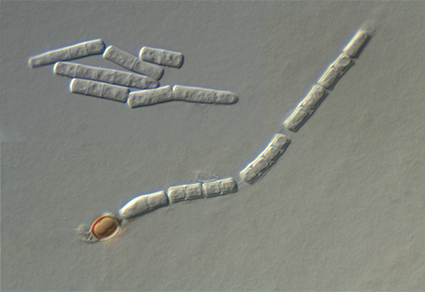
Soil is one of the most favored habitats for fungi, but fungal diversity from plastic-contaminated soil has rarely been explored. This study focused on landfill soil at a waste treatment plant in Hebei, China, resulting in the isolation of 62 strains. These strains were identified to 25 species, belonging to the genera Alternaria, Aspergillus, Beauveria, Cephalotrichum, Cladosporium, Fusarium, Gliomastix, Marquandomyces, Metarhizium, Mortierella, Mucor, Paraphaeosphaeria, Penicillium, Pseudogymnoascus, Scytalidium, Trichoderma and Yamadazyma. Species in some of these genera, such as Alternaria alternata, Aspergillus sydowii and Cladosporium cladosporioides identified from the newly isolated strains, have previously been reported as plastic-degrading fungi. Nevertheless, no plastic degradation experiments were conducted in this study, and consequently, the potential ability of 62 strains for plastic degradation remains unclear and warrants further investigation. In addition, two strains from the genus Scytalidium were identified as a hitherto unknown species and newly described as S. asiaticum. This new species differs from phylogenetically close species S. sphaerosporum in having larger arthroconidia. The current results indicate that further exploration of landfill soil is necessary to comprehensively assess soil fungal diversity.
References
- Alvarez-Barragan, J., Dominguez-Malfavon, L., Vargas-Suarez, M., Gonzalez-Hernandez, R., Aguilar-Osorio, G. & Loza-Tavera, H. (2016) Biodegradative activities of selected environmental fungi on a polyester polyurethane varnish and polyether polyurethane foams. Applied and Environmental Microbiology 82: 5225–5235. https://doi.org/10.1128/aem.01344-16
- Brunner, I., Fischer, M., Rüthi, J., Stierli, B. & Frey, B. (2018) Ability of fungi isolated from plastic debris floating in the shoreline of a lake to degrade plastics. PLoS ONE 13: e0202047. https://doi.org/10.1371/journal.pone.0202047
- Capella-Gutiérrez, S., Silla-Martínez, J.M. & Gabaldón, T. (2009) trimAl: a tool for automated alignment trimming in large-scale phylogenetic analyses. Bioinformatics 25: 1972–1973. https://doi.org/10.1093/bioinformatics/btp348
- Chen, M.L., Wu, Z.Y., Du, Y.J., Du, R.P., Mukjang, N. & Luo, X. (2026) Morpho-molecular approach reveals a novel endophytic fungus, Scytalidium linderae sp. nov., associated with the roots of Lindera aggregata in China. Phytotaxa 754 (2): 206–216. https://doi.org/10.11646/phytotaxa.754.2.6
- Crous, P.W., Slippers, B., Wingfield, M.J., Rheeder, J., Marasas, W.F.O., Philips, A.J.L., Alves, A., Burgess, T., Barber, P. & Groenewald, J.Z. (2006) Phylogenetic lineages in the Botryosphaeriaceae. Studies in Mycology 55: 235–253. https://doi.org/10.3114/sim.55.1.235
- Delabona, P.S., Silva, M.R., Paixão, D.A.A., Lima, D.J., Rodrigues, G.N., Lee, M.S., Souza, M.G.S., Bussamra, B.C., Santos, A.S. & Pradella, J.G.C. (2019) A novel Scytalidium species: understand the cellulolytic system for biomass saccharification. Brazilian Journal of Chemical Engineering 36: 85–97. https://doi.org/10.1590/0104-6632.20190361s20170495
- El-Dash, H.A., Yousef, N.E., Aboelazm, A.A., Awan, Z.A., Yahya, G. & El-Ganiny, A.M. (2023) Optimizing eco-friendly degradation of polyvinyl chloride (PVC) plastic using environmental strains of Malassezia species and Aspergillus fumigatus. International Journal of Molecular Sciences 24: 15452. https://doi.org/10.3390/ijms242015452
- Gaitnieks, T., Silbauma, L., Muižnieks, I., Zaļuma, A., Kļaviņa, D., Burņeviča, N., Grosberga, M., Lazdiņš, A. & Piri, T. (2022) Spread of Heterobasidion genotypes in Norway spruce stands on drained peat soil in Latvia. Canadian Journal of Forest Research 52: 499–510. https://doi.org/10.1139/cjfr-2021-0309
- Gałązka, A., Grządziel, J., Gałązka, R., Gawryjołek, K., Ukalska-Jaruga, A. & Smreczak, B. (2020) Fungal community, metabolic diversity, and glomalin-related soil proteins (GRSP) content in soil contaminated with crude oil after long-term natural bioremediation. Frontiers in Microbiology 11: 572314. https://doi.org/10.3389/fmicb.2020.572314
- Gao, R.R., Liu, R. & Sun, C.M. (2022) A marine fungus Alternaria alternata FB1 efficiently degrades polyethylene. Journal of Hazardous Materials 431: 128617. https://doi.org/10.1016/j.jhazmat.2022.128617
- Guzman, L.A.P., Mach, L., Marešová, J., Wipler, J., Doležal, P., Száková, J. & Tlustoš, P. (2025) Fungal communities in soils contaminated with persistent organic pollutants: adaptation and potential for mycoremediation. Applied Sciences 15: 8607. https://doi.org/10.3390/app15158607
- Harms, K., Pathompong, P., Baschien, C. & Marin-Felix, Y. (2025) New dung-inhabiting ascomycetes from Germany extend diversity in Parascedosporium and Scytalidium, including updated descriptions of two Collariella species. Mycological Progress 24: 90. https://doi.org/10.1007/s11557-025-02101-3
- Huelsenbeck, J.P. & Ronquist, F. (2001) MRBAYES: Bayesian inference of phylogenetic trees. Bioinformatics 17: 754–755. https://doi.org/10.1093/bioinformatics/17.8.754
- Ji, X.Y., Jiang, Y., Li, F., Ding, Z.Y., Meng, Z. & Liu, X.Y. (2025) Unveiling species diversity within early-diverging fungi from China VIII: Four new species in Mortierellaceae (Mortierellomycota). Microorganisms 13: 1330. https://doi.org/10.3390/microorganisms13061330
- Kalyaanamoorthy, S., Minh, B.Q., Wong, T.K.F., von Haeseler, A. & Jermiin, L.S. (2017) ModelFinder: fast model selection for accurate phylogenetic estimates. Nature Methods 14: 587–589. https://doi.org/10.1038/nmeth.4285
- Kang, H.J., Sigler, L., Lee, J., Gibas, C.F., Yun, S.H. & Lee, Y.W. (2010) Xylogone ganodermophthora sp. nov., an ascomycetous pathogen causing yellow rot on cultivated mushroom Ganoderma lucidum in Korea. Mycologia 102: 1167–1184. https://doi.org/10.3852/09-304
- Katoh, K., Misawa, K., Kuma, K. & Miyata, T. (2002) MAFFT: a novel method for rapid multiple sequence alignment based on fast Fourier transform. Nucleic Acids Research 30: 3059–3066. https://doi.org/10.1093/nar/gkf436
- Li, D.W., Paine, E. & Schultes, N.P. (2025) A Scytalidium-like indoor fungus revealing polyphyletic relationships and convergent evolution in Scytalidium. Fungal Biology 129: 101691. https://doi.org/10.1016/j.funbio.2025.101691
- Lima, C.L.F., Cordeiro, T.R.L., Santos, M.A.B., Leão, I.F., Santos, F.R.S., Muniz, A.W., Yadav, L.S., Lee, H.B. & Santiago, A.L.C.M.A. (2026) The third report of Cunninghamellaceae fungi in the Brazilian Amazon forest: Two new species of Cunninghamella isolated from soil. Mycologia 118: 1–16. https://doi.org/10.1080/00275514.2025.2588505
- Liu, T.Y., Chen, W., Zhang, K., Hu, X.Y., Berestetskiy, A., Hu, Q.B. & Weng, Q.F. (2025) Three new entomopathogenic fungal species isolated from soil in China. Frontiers in Microbiology 16: 1705425. https://doi.org/10.3389/fmicb.2025.1705425
- Liu, Y.J., Whelen, S. & Hall, B.D. (1999) Phylogenetic relationships among ascomycetes: evidence from an RNA polymerse II subunit. Molecular Biology and Evolution 16: 1799–1808. https://doi.org/10.1093/oxfordjournals.molbev.a026092
- Malachová, K., Novotný, Č., Adamus, G., Lotti, N., Rybková, Z., Soccio, M., Šlosarčíková, P., Verney, V. & Fava, F. (2020) Ability of Trichoderma hamatum Isolated from plastics-polluted environments to attack petroleum-based, synthetic polymer films. Processes 8: 467. https://doi.org/10.3390/pr8040467
- Maswadeh, H.M., Saadoun, I.M., Hameed, K.M., Maraqa, A. & Ibrahim, I.N. (2011) Assessment of potential plastic-degrading fungi in Jordanian habitats. Turkish Journal of Biology 35: 1–10. https://doi.org/10.3906/biy-0901-9
- Nguyen, L.T., Schmidt, H.A., von Haeseler, A. & Minh, B.Q. (2014) IQ-TREE: a fast and effective stochastic algorithm for estimating maximum-likelihood phylogenies. Molecular Biology and Evolution 32: 268–274. https://doi.org/10.1093/molbev/msu300
- Pardo-Rodríguez, M.L. & Zorro-Mateus, P.J.P. (2021) Biodegradation of polyvinyl chloride by Mucor s.p. and Penicillium s.p. isolated from soil. Revista de Investigación, Desarrollo e Innovación 11: 387–399. https://doi.org/10.19053/20278306.v11.n2.2021.12763
- Pesante, A. (1957) Osservazioni su una carie del platana. Annali della Sperimentazione Agraria 11 (suppl): 249–266.
- Phillips, A.J.L., Alves, A., Abdollahzadeh, J., Slippers, B., Wingfield, M.J., Groenewald, J.Z. & Crous, P.W. (2013) The Botryosphaeriaceae: genera and species known from culture. Studies in Mycology 76: 51–167. https://doi.org/10.3114/sim0021
- Ren, L., Zhang, J., Geng, B., Zhao, J., Jia, W. & Cheng, L. (2025) Ecological shifts and functional adaptations of soil microbial communities under petroleum hydrocarbon contamination. Water 17: 1216. https://doi.org/10.3390/w17081216
- Sangale, M.K., Shahnawaz, M. & Ade, A.B. (2019) Potential of fungi isolated from the dumping sites mangrove rhizosphere soil to degrade polythene. Scientific Reports 9: 5390. https://doi.org/10.1038/s41598-019-41448-y
- Selbmann, L., de Hoog, G.S., Zucconi, L., Isola, D., Ruisi, S., van den Ende, A.H.G., Ruibal, C., De Leo, F., Urzì, C. & Onofri, S. (2008) Drought meets acid: three new genera in a dothidealean clade of extremotolerant fungi. Studies in Mycology 61: 1–20. https://doi.org/10.3114/sim.2008.61.01
- Tan, Y.P., Minns, S.A., Vuong, D., Moraitis, D., Nguyen, X.S. & Lacey, E. (2025) Index of Australian fungi no. 63. Zenodo Available from: https://doi.org/10.5281/zenodo.17336528
- Tong, S.Q., Yang, Y.F., Li, P., Wu, Y.J., Sun, B.D. & Zhang, Z.Y. (2025) Phylogenetic assessment and taxonomic revision of Scytalidium (Helotiales, Leotiomycetes). IMA Fungus 16: 164608. https://doi.org/10.3897/imafungus.16.164608
- Vilgalys, R. & Hester, M. (1990) Rapid genetic identification and mapping of enzymatically amplified ribosomal DNA from several Cryptococcus species. Journal of Bacteriology 172: 4238–4246. https://doi.org/10.1128/jb.172.8.4238-4246.1990
- von Arx, J.A. & Nilsson, T. (1969) Xylogone sphaerospora, a new ascomycete from stored pulpwood chips. Svensk Botanisk Tidskrift 63: 345–349.
- White, T.J., Bruns, T., Lee, S. & Taylor, J. (1990) Amplification and direct sequencing of fungal ribosomal RNA genes for phylogenetics. PCR Protocols: A Guide to Methods and Applications 18: 315–322. https://doi.org/10.1016/b978-0-12-372180-8.50042-1
- Xia, S.Y., Su, P.W., Wang, X.J., Liu, S.L., Liu, L. & Zhou, L.W. (2026) Two new fungal species in the Hypocreales from the soil in Ngari Prefecture, Xizang, China. Taxonomy 6: 10. https://doi.org/10.3390/taxonomy6010010
- Yamada-Onodera, K., Mukumoto, H., Katsuyaya, Y., Saiganji, A. & Tani, Y. (2001) Degradation of polyethylene by a fungus, Penicillium simplicissimum YK. Polymer Degradation and Stability 72: 323–327. https://doi.org/10.1016/S0141-3910(01)00027-1
- Ye, S.J., Lim, S.K., Jeong, Y.S., Lee, C.H., Ten, L.N., Lee, S.Y. & Jung, H.Y. (2025) Arthrographis abieticola sp. nov., a novel soil-derived fungal species from Korea. Mycobiology 53: 584–592. https://doi.org/10.1080/12298093.2025.2532239
- Yu, G. (2020) Using ggtree to visualize data on tree-like structures. Current Protocols in Bioinformatics 69: e96. https://doi.org/10.1002/cpbi.96
- Zhen, Z., Wang, S.B., Luo, S.W., Ren, L., Liang, Y.Q., Yang, R.C., Li, Y.T., Zhang, Y.Q., Deng, S.Q., Zou, L., Lin, Z. & Zhang, D.Y. (2019) Significant impacts of both total amount and availability of heavy metals on the functions and assembly of soil microbial communities in different land use patterns. Frontiers in Microbiology 10: 2293. https://doi.org/10.3389/fmicb.2019.02293