
Abstract
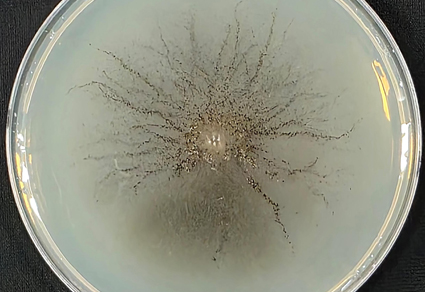
During a survey of putative tree pathogens on oak forests in Gangwon Province, South Korea, a fungal isolate exhibiting morphological characteristics typical of Ceratocystis was consistently recovered from natural wounds on Quercus mongolica. Multi-locus phylogenetic analyses based on maximum parsimony and maximum likelihood approaches using three loci (TUB2, TEF1α and MCM7), combined with distinctive morphological features of aleuriospores and conidia, revealed that the isolate forms a phylogenetically distinct lineage. Consequently, this fungus is herein described as Ceratocystis quercina sp. nov., marking the second novel species newly described from South Korea, following C. quercicola. In this regard, this discovery suggests the potential for further taxonomic novelty within the genus Ceratocystis and highlights the need for broader surveys to determine the actual prevalence and spatial distribution of Ceratocystis taxa in the Korean Peninsula.
References
- Baker, C.J., Harrington, T.C., Kraus, U. & Alfenas, A.C. (2003) Genetic variability and host specialization in the Latin American clade of Ceratocystis fimbriata. Phytopathology 93: 1274–1284. https://doi.org/10.1094/PHYTO.2003.93.10.1274
- Brawner, J., Japarudin, Y., Lapammu, M., Rauf, R., Boden, D. & Wingfield, M.J. (2015) Evaluating the inheritance of Ceratocystis acaciivora symptom expression in a diverse Acacia mangium breeding population. Southern Forests: A Journal of Forest Science 77: 83–90. https://doi.org/10.2989/20702620.2015.1007412
- Carbone, I. & Kohn, L.M. (1999) A method for designing primer sets for speciation studies in filamentous ascomycetes. Mycologia 91: 553–556. https://doi.org/10.1080/00275514.1999.12061051
- Cho, S.E., Lee, D.H., Wingfield, M.J. & Marincowitz, S. (2020) Ceratocystis quercicola sp. nov. from Quercus variabilis in Korea. Mycobiology 48: 245–251. https://doi.org/10.1080/12298093.2020.1766649
- de Beer, Z.W., Duong, T., Barnes, I., Wingfield, B.D. & Wingfield, M.J. (2014) Redefining Ceratocystis and allied genera. Studies in Mycology 79: 187–219. https://doi.org/10.1016/j.simyco.2014.10.001
- DeVay, J.E., Lukezic, F.L., English, H., Trujillo, E.E. & Moller, W.J. (1968) Ceratocystis canker of deciduous fruit trees. Phytopathology 58: 949–954.
- Engelbrecht, C.J.B., Harrington, T.C., Steimel, J. & Capretti, P. (2004) Genetic variation in eastern North American and putatively introduced populations of Ceratocystis fimbriata f. platani. Molecular Ecology 13: 2995–3005. https://doi.org/10.1111/j.1365-294X.2004.02312.x
- Fourie, A., Wingfield, M.J., Wingfield, B.D. & Barnes, I. (2015) Molecular markers delimit cryptic species in Ceratocystis sensu stricto. Mycological Progress 14: 1020. https://doi.org/10.1007/s11557-014-1020-0
- Gardes, M. & Bruns, T.D. (1993) ITS primers with enhanced specificity for basidiomycetes‐application to the identification of mycorrehizae and rusts. Molecular Ecology 2: 113–118. https://doi.org/10.1111/j.1365-294X.1993.tb00005.x
- Glass, N.L. & Donaldson, G.C. (1995) Development of primer sets designed for use with the PCR to amplify conserved genes from filamentous ascomycetes. Applied and Environmental Microbiology 61: 1323–1330. https://doi.org/10.1128/aem.61.4.1323-1330.1995
- Guindon, S. & Gascuel, O. (2003) A simple, fast and accurate method to estimate large phylogenies by maximum-likelihood. Systematic Biology 52: 696–704. https://doi.org/10.1080/10635150390235520
- Guindon, S., Dufayard, J.F., Lefort, V., Anisimova, M., Hordijk, W. & Gascuel, O. (2010) New algorithms and methods to estimate maximum-likelihood phylogenies: assessing the performance of PhyML 3.0. Systematic Biology 59: 307–321. https://doi.org/10.1093/sysbio/syq010
- Halsted, B.D. (1890) Some fungous diseases of the sweet potato. Bulletin New Jersey Agricultural Experiment Station 76: 7–14.
- Heath, R.N., Wingfield, M.J., Van Wyk, M. & Roux, J. (2009) Insect associates of Ceratocystis albifundus and patterns of association in a native savanna ecosystem in South Africa. Environmental Entomology 38: 356–364. https://doi.org/10.1603/022.038.0207
- Holland, L.A., Lawrence, D.P., Nouri, M.T., Travadon, R., Harrington, T.C. & Trouillas, F.P. (2019) Taxonomic revision and multi-locus phylogeny of the North American clade of Ceratocystis. Fungal Systematics and Evolution 3: 135–156. https://doi.org/10.3114/fuse.2019.03.07
- Jacobs, K., Bergdahl, D.R., Wingfield, M.J., Halik, S., Seifert, K.A., Bright, D.E. & Wingfield, B.D. (2004) Leptographium wingfieldii introduced into North America and found associated with exotic Tomicus piniperda and native bark beetles. Mycological Research 108: 411–418. https://doi.org/10.1017/s0953756204009748
- Juzwik, J. & French, D.W. (1983) Ceratocystis fagacearum and C. piceae on the surfaces of free-flying and fungus-mat-inhabiting nitidulids. Phytopathology 73: 1164–1168. https://doi.org/10.1094/phyto-73-1164
- Juzwik, J., Skalbeck, T.C. & Neuman, M.F. (2004) Sap beetle species (Coleoptera: Nitidulidae) visiting fresh wounds on healthy oaks during spring in Minnesota. Forest Science 50: 757–764. https://doi.org/10.1093/forestscience/50.6.757
- Katoh, K., Kuma, K.I., Toh, H. & Miyata, T. (2005) MAFFT version 5: improvement in accuracy of multiple sequence alignment. Nucleic Acids Research 33: 511–518. https://doi.org/10.1093/nar/gki198
- Katoh, K., Rozewicki, J. & Yamada, K.D. (2019) MAFFT online service: multiple sequence alignment, interactive sequence choice and visualization. Briefings in Bioinformatics 20: 1160–1166. https://doi.org/10.1093/bib/bbx108
- Kumar, S., Stecher, G. & Tamura, K. (2016) MEGA7: molecular evolutionary genetics analysis version 7.0 for bigger datasets. Molecular Biology and Evolution 33: 1870–1874. https://doi.org/10.1093/molbev/msw054
- Li, Q., Harrington, T.C., McNew, D., Li, J., Huang, Q., Somasekhara, Y.M. & Alfenas, A.C. (2016) Genetic bottlenecks for two populations of Ceratocystis fimbriata on sweet potato and pomegranate in China. Plant Disease 100: 2266–2274. https://doi.org/10.1094/PDIS-03-16-0409-RE
- Moller, W.J. & DeVay, J.E. (1968) Insect transmission of Ceratocystis fimbriata in deciduous fruit orchards. Phytopathology 58: 1499–1508.
- Ploetz, R.C., Hulcr, J., Wingfield, M.J. & De Beer, Z.W. (2013) Destructive tree diseases associated with ambrosia and bark beetles: black swan events in tree pathology? Plant Disease 97: 856–872. https://doi.org/10.1094/PDIS-01-13-0056-FE
- Tarigan, M., Roux, J., Van Wyk, M., Tjahjono, B. & Wingfield, M.J. (2011) A new wilt and die-back disease of Acacia mangium associated with Ceratocystis manginecans and C. acaciivora sp. nov. in Indonesia. South African Journal of Botany 77: 292–304. https://doi.org/10.1016/j.sajb.2010.08.006
- Teviotdale, B.L. & Harper, D.H. (1991) Infection of pruning and small bark wounds in almond by Ceratocystis fimbriata. Plant Disease 75: 1026–1030. https://doi.org/10.1094/pd-75-1026
- Tsopelas, P., Santini, A., Wingfield, M.J. & de Beer, Z.W. (2017) Canker stain: a lethal disease destroying iconic plane trees. Plant Disease 101: 645–646. https://doi.org/10.1094/PDIS-09-16-1235-FE
- White, T.J., Bruns, T., Lee, S. & Taylor, J. (1990) Amplification and direct sequencing of fungal ribosomal RNA genes for phylogenetics. In: Innis, M.A., Gelfand, D.H., Sninsky, J.J. & White, T.J. (Eds.) PCR protocols: a guide to methods and application. Academic Press, San Diego, pp. 315–322. https://doi.org/10.1016/b978-0-12-372180-8.50042-1
- Wingfield, M.J., Roux, J. & Wingfield, B.D. (2013) Ceratocystis and Ophiostoma: international spread, new associations and plant health. In: Seifert, K.A., de Beer, Z.W. & Wingfield, M.J. (Eds.) The Ophiostomatoid fungi: Expanding frontiers, CBS Biodiversity Series 12. CBS-KNAW Fungal Biodiversity Centre, Utrecht, pp. 191–200.
- Wingfield, M.J., Barnes, I., de Beer, Z.W., Roux, J., Wingfield, B.D. & Taerum, S.J. (2017a) Novel associations between ophiostomatoid fungi, insects and tree hosts: current status—future prospects. Biological Invasions 19: 3215–3228. https://doi.org/10.1007/s10530-017-1468-3
- Wingfield, M.J., Slippers, B., Wingfield, B.D. & Barnes, I. (2017b) The unified framework for biological invasions: a forest fungal pathogen perspective. Biological Invasions 19: 3201–3214. https://doi.org/10.1007/s10530-017-1450-0