

Abstract
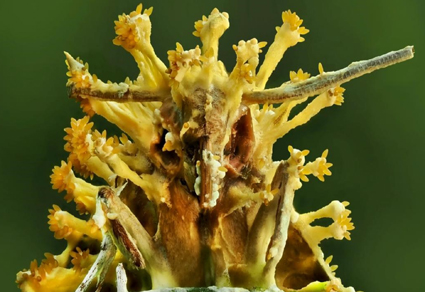
Akanthomyces Lebert belongs to the family Cordycipitaceae (Hypocreales, Sordariomycetes), which is regarded as one of the most important groups of entomopathogenic fungi (EPF). Despite the high fungal diversity in Sabah, Malaysia, the systematics and phylogeny of Akanthomyces in this region is still lacking. This study aimed to characterize entomopathogenic fungal specimens collected from Sabah using morphological and molecular phylogenetic approaches to determine their taxonomic status. During surveys of entomopathogenic fungi, two specimens infecting lepidopteran host were collected and examined using morphological characterization and molecular phylogenetic analyses. Five genetic markers, including the internal transcribed spacer (ITS) region, small subunit ribosomal RNA (SSU), translation elongation factor 1-alpha (TEF1-α), RNA polymerase II largest subunit (RPB1), and RNA polymerase II second largest subunit (RPB2), were amplified and sequenced to infer phylogenetic relationships. Phylogenetic analyses were conducted using Maximum Likelihood (ML) and Bayesian Inference (BI) based on individual and concatenated datasets (ITS–SSU–TEF1-α-RPB1–RPB2). The analyses consistently recovered the Bornean isolates as a distinct, well-supported lineage. Morphologically, the isolates are distinguished by robust, cream to pale-yellow branched synnemata, smaller perithecia, larger ellipsoidal conidia and filiform, multiseptate ascospores that disarticulate at maturity into cylindrical to slightly barrel-shaped part-spores at maturity compared with closely related species. Based on the combined morphological and phylogenetic evidence, Akanthomyces infaproensis sp. nov. is described from Sabah, Malaysia. The discovery of this new species expands the known diversity of Akanthomyces and highlights the tropical rainforests of Sabah as reservoirs of undescribed fungal diversity.
References
- Aini, A.N., Mongkolsamrit, S., Wijanarka, W., Thanakitpipattana, D., Luangsa-ard, J.J. & Budiharjo, A. (2020) Diversity of Akanthomyces on moths (Lepidoptera) in Thailand. MycoKeys 71: 1–22. https://doi.org/10.3897/mycokeys.71.55126
- Armand, A., Khodaparast, S.A., Masigol, H. & Grossart, H.P. (2020) Screening of fungal strains isolated from dead insects for production of plant litter-degrading enzymes. Mycologia Iranica 7 (1): 155–161. https://doi.org/10.22092/mi.2020.123124
- Bu, J., Wei, D.P., Liu, Z.H., Yang, Y., Liu, Z.L., Kang, J.C., Peng, X.C., Xie, S.W., Zhang, H.G., He, Z.J., Huang, S.K., Zhang, X., Hyde, K.D., Wijayawardene, N.N. & Wen, T.C. (2025) Molecular phylogeny and morphology reveal four novel species in Cordycipitaceae in China. MycoKeys 116: 91–124. https://doi.org/10.3897/mycokeys.116.147006
- Caride, P., Garrido, J., Rivas-Ferreiro, M., Villar, I. & Castro, M. (2024) First report of Akanthomyces dipterigenus (Hypocreales: Cordycipitaceae) in the Iberian Peninsula. Italian Journal of Mycology 53 (1): 75–84. https://doi.org/10.6092/issn.2531-7342/18993
- Castlebury, L.A., Rossman, A.Y., Sung, G.H., Hyten, A.S. & Spatafora, J.W. (2004) Multigene phylogeny reveals new lineage for Stachybotrys chartarum, the indoor air fungus. Mycological Research 108 (8): 864–872. https://doi.org/10.1017/S0953756204000607
- Castrillo, L.A. & Harris-Shultz, K. (2024) Entomophthoralean and hypocrealean fungal pathogens of the sugarcane aphid, Melanaphis sacchari (Hemiptera: Aphididae), on Sorghum in Georgia. Journal of Invertebrate Pathology 204: 108107. https://doi.org/10.1016/j.jip.2024.108107
- Chen, W.H., Liang, J.D., Ren, X.X., Zhao, J.H. & Han, Y.F. (2023) Study on species diversity of Akanthomyces (Cordycipitaceae, Hypocreales) in the Jinyun Mountains, Chongqing, China. MycoKeys 98: 299–315. https://doi.org/10.3897/mycokeys.98.106415
- Chen, W.H., Liang, J.D., Ren, X.X., Zhao, J.H., Han, Y.F. & Liang, Z.Q. (2022) Species diversity of Cordyceps-like fungi in the Tiankeng karst region of China. Microbiology Spectrum 10: e01975-22. https://doi.org/10.1128/spectrum.01975-22
- Cherepanova, M.A., Mitina, G.V., Choglokova, A.A. & Borisov, B.A. (2025) First-ever discoveries of the entomopathogenic fungus Akanthomyces uredinophilus in Russia. Biology Bulletin Reviews 15 (2): S185–S197. https://doi.org/10.1134/S2079086425600985
- Chiriví-Salomón, J.S., Danies, G., Restrepo, S. & Sanjuan, T. (2015) Lecanicillium sabanense sp. nov. (Cordycipitaceae), a new fungal entomopathogen of coccids. Phytotaxa 234: 63–74. https://doi.org/10.11646/phytotaxa.234.1.4
- Clewley, J.P. (1995) Macintosh sequence analysis software: DNAStar’s LaserGene. Molecular Biotechnology 3 (3): 221–224. https://doi.org/10.1007/BF02789332
- Danilovich, M.E., Ovruski, S.M., Fariña, J.I. & Delgado, O.D. (2020) First report on the entomopathogenicity and virulence of Akanthomyces muscarius LY 72.14, a Yungas native fungal isolate, for Anastrepha fraterculus control. Biocontrol Science and Technology 30 (11): 1212–1227. https://doi.org/10.1080/09583157.2020.1802699
- Darriba, D., Taboada, G.L., Doallo, R. & Posada, D. (2012) jModelTest 2: More models, new heuristics and high-performance computing. Nature Methods 9 (8): 772. https://doi.org/10.1038/nmeth.2109
- Di Sora, N., Turco, S., Brugneti, F., Isoli, F., Mazzaglia, A., Contarini, M. & Rossini, L. (2025) “The last of them”: Entomopathogenic effect of Akanthomyces muscarius on the scale insect pest Toumeyella parvicornis under laboratory conditions, a potential biological control candidate. Physiologia Plantarum 177 (5): e70533. https://doi.org/10.1111/ppl.70533
- Douglas, I. (2022) The Danum Hydrology Project: origins, aims, context. In: Water and the Rainforest in Malaysian Borneo: Hydrological Research at the Danum Valley Field Studies Center. Springer International Publishing, pp. 47–68. https://doi.org/10.1007/978-3-030-91544-5_3
- Du, C., Yang, B., Wu, J. & Ali, S. (2019) Identification and virulence characterization of two Akanthomyces attenuatus isolates against Megalurothrips usitatus (Thysanoptera: Thripidae). Insects 10 (6): 168. https://doi.org/10.3390/insects10060168
- Hajek, A.E., Everest, T.A. & Clifton, E.H. (2023) Accumulation of fungal pathogens infecting the invasive spotted lanternfly, Lycorma delicatula. Insects 14 (12): 912. https://doi.org/10.3390/insects14120912
- Hall, T., Biosciences, I. & Carlsbad, C.J.G.B.B. (2011) BioEdit: An important software for molecular biology. GERF Bulletin of Biosciences 2 (1): 60–61.
- Hopple, J.S. Jr. & Vilgalys, R. (1999) Phylogenetic relationships in the mushroom genus Coprinus and dark-spored allies based on sequence data from the nuclear gene coding for the large ribosomal subunit RNA: Divergent domains, outgroups, and monophyly. Molecular Phylogenetics and Evolution 13 (1): 1–19. https://doi.org/10.1006/mpev.1999.0634
- Hsieh, L.S., Tzean, S.S. & Wu, W.J. (1997) The genus Akanthomyces on spiders from Taiwan. Mycologia 89: 319–324. https://doi.org/10.1080/00275514.1997.12026788
- Huson, D.H. & Bryant, D. (2006) Application of phylogenetic networks in evolutionary studies. Molecular Biology and Evolution 23 (2): 254–267. https://doi.org/10.1093/molbev/msj030
- James, T.Y., Stajich, J.E., Hittinger, C.T. & Rokas, A. (2020) Toward a fully resolved fungal tree of life. Annual Review of Microbiology 74 (1): 291–313. https://doi.org/10.1146/annurev-micro-022020-051835
- Kepler, R.M., Luangsa-ard, J.J., Hywel-Jones, N.L., Quandt, C.A., Sung, G.H., Rehner, S.A., Aime, M.C., Henkel, T.W., Sanjuan, T., Zare, R., Chen, M.J., Li, Z.Z., Rossman, A.Y., Spatafora, J.W. & Shrestha, B. (2017) A phylogenetically based nomenclature for Cordycipitaceae (Hypocreales). IMA Fungus 8: 335–353. https://doi.org/10.5598/imafungus.2017.08.02.08
- Kepler, R.M., Sung, G.H., Ban, S., Nakagiri, A., Chen, M.J., Huang, B. & Spatafora, J.W. (2012) New teleomorph combinations in the entomopathogenic genus Metacordyceps. Mycologia 104 (1): 182–197. https://doi.org/10.3852/11-070
- Khonsanit, A., Thanakitpipattana, D., Mongkolsamrit, S., Kobmoo, N., Phosrithong, N., Samson, R.A., Crous, P.W. & Luangsa-ard, J.J. (2024) A phylogenetic assessment of Akanthomyces sensu lato in Cordycipitaceae (Hypocreales, Sordariomycetes): introduction of new genera and the resurrection of Lecanicillium. Fungal Systematics and Evolution 14: 271–305. https://doi.org/10.3114/fuse.2024.14.17
- Kovač, M., Gorczak, M., Wrzosek, M., Tkaczuk, C. & Pernek, M. (2020) Identification of entomopathogenic fungi as naturally occurring enemies of the invasive oak lace bug, Corythucha arcuata (Say) (Hemiptera: Tingidae). Insects 11 (10): 679. https://doi.org/10.3390/insects11100679
- Kubátová, A., Kunz, B. & Hubka, V. (2024) Reintroducing Akanthomyces ampullifer: providing genetic barcodes, culture, and updated description for the dipteran pathogen rediscovered in Germany. Mycoscience 65: 260–269. https://doi.org/10.47371/mycosci.2024.08.001
- Lebert, H. (1858) Ueber einige neue oder unvollkommen gekannte Krankheiten der Insekten, welche durch Entwicklung niederer Pflanzen im lebenden Körper entstehen. Zeitschrift für wissenschaftliche Zoologie 9: 439–453.
- Liu, S.L., Wang, X.W., Li, G.J., Deng, C.Y., Rossi, W., Leonardi, M., Liimatainen, K., Kekki, T., Niskanen, T., Smith, M.E., Ammirati, J., Bojantchev, D., Abdel-Wahab, M.A., Zhang, M., Tian, E., Lu, Y.Z., Zhang, J.Y., Ma, J., Dutta, A.K., Acharya, K., Du, T.Y., Xu, J., Kim, J.S., Lim, Y.W., Gerlach, A., Zeng, N.K., Han, Y.X., Razaghi, P., Raza, M., Cai, L., Calabon, M.S., Jones, E.B.G., Saha, R., Kumar, T.K.A., Krishnapriya, K., Thomas, A., Kaliyaperumal, M., Kezo, K., Gunaseelan, S., Singh, S.K., Singh, P.N., Lagashetti, A.C., Pawar, K.S., Jiang, S., Zhang, C., Zhang, H., Qing, Y., Bau, T., Peng, X.C., Wen, T.C., Ramirez, N.A., Niveiro, N., Li, M.X., Yang, Z.L., Wu, G., Tarafder, E., Tennakoon, D.S., Kuo, C.H., da Silva, T.M., Souza-Motta, C.M., Bezerra, J.D.P., He, G., Ji, X.H., Suwannarach, N., Kumla, J., Lumyong, S., Wannathes, N., Rana, S., Hyde, K.D. & Zhou, L.W. (2024) Fungal diversity notes 1717–1817: taxonomic and phylogenetic contributions on genera and species of fungal taxa. Fungal Diversity 124 (1): 1–216. https://doi.org/10.1007/s13225-023-00529-0
- Luangsa-Ard, J., Tasanathai, K., Thanakitpipattana, D., Khonsanit, A. & Stadler, M. (2018) Novel and interesting Ophiocordyceps spp. (Ophiocordycipitaceae, Hypocreales) with superficial perithecia from Thailand. Studies in Mycology 89 (1): 125–142. https://doi.org/10.1016/j.simyco.2018.02.001
- Mains, E.B. (1950) Entomogenous species of Akanthomyces, Hymenostilbe and Insecticola in North America. Mycologia 42: 566–589. https://doi.org/10.1080/00275514.1950.12017861
- Manfrino, R., Gutierrez, A., Diez del Valle, F., Schuster, C., Ben Gharsa, H., López Lastra, C. & Leclerque, A. (2022) First description of Akanthomyces uredinophilus comb. nov. from hemipteran insects in America. Diversity 14 (12): 1118. https://doi.org/10.3390/d14121118
- Manfrino, R., Schuster, C., Saar, K., López Lastra, C.C. & Leclerque, A. (2019) Genetic characterization, pathogenicity, and benomyl susceptibility of Lecanicillium fungal isolates from Argentina. Journal of Applied Entomology 143 (3): 204–213. https://doi.org/10.1111/jen.12580
- Mar, T.T., Suwannarach, N. & Lumyong, S. (2012) Isolation of entomopathogenic fungi from Northern Thailand and their production in cereal grains. World Journal of Microbiology and Biotechnology 28 (12): 3281–3291. https://doi.org/10.1007/s11274-012-1139-6
- Meirelles, L.N., Mesquita, E., Corrêa, T.A., Bitencourt, R.D.O.B., Oliveira, J.L., Fraceto, L.F. & Bittencourt, V.R.E.P. (2023) Encapsulation of entomopathogenic fungal conidia: Evaluation of stability and control potential of Rhipicephalus microplus. Ticks and Tick-borne Diseases 14 (4): 102184. https://doi.org/10.1016/j.ttbdis.2023.102184
- Miller, M.A., Pfeiffer, W. & Schwartz, T. (2010) Creating the CIPRES Science Gateway for inference of large phylogenetic trees. In: 2010 gateway computing environments workshop (GCE). IEEE, pp. 1–8. https://doi.org/10.1109/GCE.2010.5676129
- Mongkolsamrit, S., Noisripoom, W., Thanakitpipattana, D., Wutikhun, T., Spatafora, J.W. & Luangsa-ard, J.J. (2018) Disentangling cryptic species with Isaria-like morphs in Cordycipitaceae. Mycologia 110: 230–257. https://doi.org/10.1080/00275514.2018.1446651
- Nicoletti, R. & Becchimanzi, A. (2020) Endophytism of Lecanicillium and Akanthomyces. Agriculture 10 (6): 205. https://doi.org/10.3390/agriculture10060205
- O’Donnell, K., Sarver, B.A., Brandt, M., Chang, D.C., Noble-Wang, J., Park, B.J. & Ward, T.J. (2007) Phylogenetic diversity and microsphere array-based genotyping of human pathogenic Fusaria, including isolates from the multistate contact lens-associated US keratitis outbreaks of 2005 and 2006. Journal of Clinical Microbiology 45 (7): 2235–2248. https://doi.org/10.1128/jcm.00533-07
- Pu, H., Yang, J., Keyhani, N.O., Yang, L., Zheng, M., Qiu, C. & Qiu, J. (2025) Molecular phylogenetics and estimation of evolutionary divergence and biogeography of the family Cordycipitaceae (Ascomycota, Hypocreales). Journal of Fungi 11: 28. https://doi.org/10.3390/jof11010028
- Quaedvlieg, W.G.J.M., Binder, M., Groenewald, J.Z., Summerell, B.A., Carnegie, A.J., Burgess, T.I. & Crous, P.W. (2014) Introducing the consolidated species concept to resolve species in the Teratosphaeriaceae. Persoonia 33 (1): 1–40. https://doi.org/10.3767/003158514X681981
- Rehner, S.A. & Buckley, E. (2005) A Beauveria phylogeny inferred from nuclear ITS and EF1-α sequences: Evidence for cryptic diversification and links to Cordyceps teleomorphs. Mycologia 97 (1): 84–98. https://doi.org/10.1080/15572536.2006.11832842
- Reynolds, G., Payne, J., Sinun, W., Mosigil, G. & Walsh, R.P. (2011) Changes in forest land use and management in Sabah, Malaysian Borneo, 1990–2010, with a focus on the Danum Valley region. Philosophical Transactions of the Royal Society B: Biological Sciences 366 (1582): 3168–3176. https://doi.org/10.1098/rstb.2011.0154
- Ronquist, F. & Huelsenbeck, J.P. (2003) MrBayes 3: Bayesian phylogenetic inference under mixed models. Bioinformatics 19 (12): 1572–1574. https://doi.org/10.1093/bioinformatics/btg180
- Ronquist, F., Teslenko, M., van der Mark, P., Ayres, D.L., Darling, A., Höhna, S. & Huelsenbeck, J.P. (2012) MrBayes 3.2: Efficient Bayesian phylogenetic inference and model choice across a large model space. Systematic Biology 61 (3): 539–542. https://doi.org/10.1093/sysbio/sys029
- Samson, R.A. & Evans, H.C. (1974) Notes on entomogenous fungi from Ghana: II. The genus Akanthomyces. Acta Botanica Neerlandica 23 (1): 28–35. https://doi.org/10.1111/j.1438-8677.1974.tb00913.x
- Sanjuan, T., Tabima, J., Restrepo, S., Læssøe, T., Spatafora, J.W. & Franco-Molano, A.E. (2014) Entomopathogens of Amazonian stick insects and locusts are members of the Beauveria species complex (Cordyceps sensu stricto). Mycologia 106 (2): 260–275. https://doi.org/10.3852/13-020
- Schoch, C.L., Robert, V., Vu, D., Card., Irinyi, L. & Federhen, S. (2014) Finding needles in haystacks: linking scientific names, reference specimens and molecular data for Fungi. Database 2014: 1–21. https://doi.org/10.1093/database/bau061
- Schoch, C.L., Seifert, K.A., Huhndorf, S., Robert, V., Spouge, J.L., Levesque, C.A. & White, M.M. (2012) Nuclear ribosomal internal transcribed spacer (ITS) region as a universal DNA barcode marker for fungi. Proceedings of the National Academy of Sciences 109 (16): 6241–6246. https://doi.org/10.1073/pnas.1117018109
- Shahbaz, M., Wasti, I.G., Baluat, Z., Ling, E.Y.M. & Seelan, J.S.S. (2026) Metarhizium tawauensis (Clavicipitaceae, Hypocreales), a new entomopathogenic fungus from Sabah, northern Borneo, Malaysia. Phytotaxa 763 (3): 219–234. https://doi.org/10.11646/phytotaxa.763.3.2
- Shrestha, B., Kubátová, A., Tanaka, E., Oh, J., Yoon, D.H., Sung, J.M. & Sung, G.H. (2019) Spider-pathogenic fungi within Hypocreales (Ascomycota): their current nomenclature, diversity, and distribution. Mycological Progress 18: 983–1003. https://doi.org/10.1007/s11557-019-01512-3
- Silva, L.N., Freer-Smith, P. & Madsen, P. (2019) Production, restoration, mitigation: a new generation of plantations. New Forests 50 (2): 153–168. https://doi.org/10.1007/s11056-018-9644-6
- Spatafora, J.W., Sung, G.H., Sung, J.M., Hywel-Jones, N.L. & White, J.F. Jr. (2007) Phylogenetic evidence for an animal pathogen origin of ergot and the grass endophytes. Molecular Ecology 16 (8): 1701–1711. https://doi.org/10.1111/j.1365-294X.2007.03225.x
- Stamatakis, A. (2014) RAxML version 8: A tool for phylogenetic analysis and post-analysis of large phylogenies. Bioinformatics 30 (9): 1312–1313. https://doi.org/10.1093/bioinformatics/btu033
- Steenwyk, J.L., Li, Y., Zhou, X., Shen, X.X. & Rokas, A. (2023) Incongruence in the phylogenomics era. Nature Reviews Genetics 24 (12): 834–850. https://doi.org/10.1038/s41576-023-00620-x
- Su, L., Zhu, H., Guo, Y., Du, X., Guo, J., Zhang, L. & Qin, C. (2019) Lecanicillium coprophilum (Cordycipitaceae, Hypocreales), a new species of fungus from the feces of Marmota monax in China. Phytotaxa 387 (1): 55–62. https://doi.org/10.11646/phytotaxa.387.1.4
- Subari, I.A.A.M., Shahbaz, M., Repin, R., Karim, R., Tan, Y.S. & Seelan, J.S.S. (2025) First record of Hericium coralloides (Hericiaceae, Basidiomycota): A coral tooth mushroom from Sabah (Northern Borneo), Malaysia. Malayan Nature Journal 77 (4): 251–264. https://doi.org/10.62613/mnj.25774.01
- Sung, G.H., Hywel-Jones, N.L., Sung, J.M., Luangsa-ard, J.J., Shrestha, B. & Spatafora, J.W. (2007) Phylogenetic classification of Cordyceps and the clavicipitaceous fungi. Studies in Mycology 57: 5–59. https://doi.org/10.3114/sim.2007.57.01
- Vilgalys, R. & Hester, M. (1990) Rapid genetic identification and mapping of enzymatically amplified ribosomal DNA from several Cryptococcus species. Journal of Bacteriology 172 (8): 4238–4246. https://doi.org/10.1128/jb.172.8.4238-4246.1990
- Vinit, K., Doilom, M., Wanasinghe, D.N., Bhat, D.J., Brahmanage, R.S., Jeewon, R., Xiao, Y. & Hyde, K.D. (2018) Phylogenetic placement of Akanthomyces muscarius, a new endophyte record from Nypa fruticans in Thailand. Current Research in Environmental & Applied Mycology 8: 404–417. https://doi.org/10.5943/cream/8/3/10
- Vu, D., Groenewald, M., De Vries, M., Gehrmann, T., Stielow, B., Eberhardt, U. & Verkley, G.J.M. (2019) Large-scale generation and analysis of filamentous fungal DNA barcodes boost coverage for kingdom Fungi and reveal thresholds for fungal species and higher taxon delimitation. Studies in Mycology 92 (1): 135–154. https://doi.org/10.1016/j.simyco.2018.05.001
- Wanasinghe, T.A., Chaiwat, T. & Hyde, K.D. (2018) Lecanicillium uredinophilum, known from rust, also occurs on animal hosts with chitinous bodies. Asian Journal of Mycology 1: 63–73. https://doi.org/10.5943/ajom/1/1/5
- Wang, Y., Wang, Z.Q., Luo, R., Souvanhnachit, S., Thanarut, C., Dao, V.M. & Yu, H. (2024) Species diversity and major host/substrate associations of the genus Akanthomyces (Hypocreales, Cordycipitaceae). MycoKeys 101: 113–141. https://doi.org/10.3897/mycokeys.101.109751
- Wang, Y., Zhang, X., Peng, X., Xiao, Y., Yang, Y., Liu, Z. & Wen, T. (2025) Secondary metabolites of the entomopathogenic fungus Purpureocillium clavatum (Ophiocordycipitaceae, Hypocreales). Mycosystema 44 (3): 240–270. https://doi.org/10.13346/j.mycosystema.240270
- Wasti, I.G., Fayle, T.M., Kumaran, J.V., Anwar Ali Khan, F.A. & Sathiya Seelan, J.S. (2024) Fungal community composition in anthropogenically-active and non-active northern Borneo caves. Malayan Nature Journal 76 (3): 261–291. https://doi.org/10.62613/mnj.24763.05
- White, T.J., Bruns, T., Lee, S.W.J.T. & Taylor, J. (1990) Amplification and direct sequencing of fungal ribosomal RNA genes for phylogenetics. In: Innis, M.A., Gelfand, D.H., Sninsky, J.J. & White, T.J. (Eds.) PCR Protocols: A Guide to Methods and Applications. Academic Press, San Diego, pp. 315–322. https://doi.org/10.1016/b978-0-12-372180-8.50042-1
- Zhang, X., Fu, Z., Lu, F., Song, J. & Zhao, C. (2024) Morphological characteristics and phylogenetic analyses revealed a new invertebrate-pathogenic fungus Akanthomyces bannaensis (Cordycipitaceae, Ascomycota) in China. Phytotaxa 666 (1): 17–30. https://doi.org/10.11646/phytotaxa.666.1.2
- Zhao, L., Groenewald, J.Z., Hou, L.W., Starink-Willemse, M., Beek, B., Grum-Grzhimaylo, O.A. & Crous, P.W. (2025) New insights into Acremonium-like fungi in Hypocreales: a taxonomic and phylogenetic perspective. Studies in Mycology 113 (1): 1–71. https://doi.org/10.3114/sim.2026.113.01
- Zhou, Y., Zou, X., Zhi, J., Xie, J. & Jiang, T. (2020) Fast recognition of Lecanicillium spp. and its virulence against Frankliniella occidentalis. Frontiers in Microbiology 11: 561381. https://doi.org/10.3389/fmicb.2020.561381