

Abstract
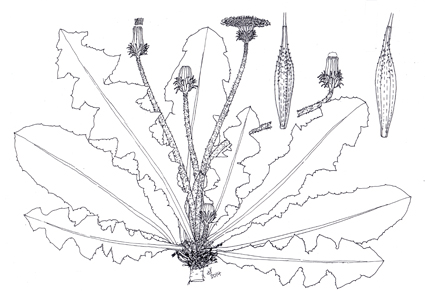
On the basis of cultivated plant material and herbarium specimens from three expeditions, the Taraxacum flora of Crimea and other parts of southern Ukraine is presented; the Taraxacum data from other parts of Ukraine is also included. Older Taraxacum records are revised and the new material is analysed in detail. Ninety-three species in twelve sections are recognized in the Ukrainian material, and 44 of them are described as new. A natural hybrid between T. linearisquameum and T. serotinum is described from Serbia and Hungary. Taraxacum sect. Borysthenica is revised as a whole, i.e. including members outside Ukraine (three new species described), and is compared with T. mexicanum, the type T. sect. Mexicana. For the sake of comparison, detailed treatments of several taxa close to those from Ukraine are included.
References
- Andrienko, T.L., Bilyk, G.I., Bradis, E.M., Golubets, M.A., Makhaeva, L.V., Rubtsov, M.I., Tkachenko, V.S. & Shelyag-Sosonko, Y.R. (1977) Geobotanichne rayonyvannya Ukrainskoi RSR. Naukova dumka, Kyiv, 301 pp., 1 map.
- Beck, G. (1893) Flora von Nieder-Österreich, vol. 2. Carl Gerold‘s Sohn, Wien, pp. 895–1396.
- Becker, A. (1887) Ueber Taraxacum- und Glycyrrhiza-Arten un Alhagi camelorum. Bulletin de la Société Impériale des Naturalistes de Moscou ser. nov. 1: 222–226. [https://www.biodiversitylibrary.org/item/106774#page/238/mode/1up]
- Becker, W.S. (1902) Viola splendida et Viola sieheana spec. nov. 1902. Bulletin de l’herbier Boissier sér. 2 2 (8): 750–752.
- Besser, W.S. (1821) Enumeratio plantarum hucusque in Volhynia, Podolia, Gub. Kiioviensi, Bessarbia Cis-Tyraica et circa Odessam collectarum. Typis Josephi Zawadski, Vilnae, 76 pp. [Only the identical issue of this work from 1822 was seen; https://www.biodiversitylibrary.org/item/29435#page/7/mode/1up]
- Bezusko, L.G., Mosyakin, S.L. & Bezusko, A.G. (2011) Patterns and trends of development of the plant cover of Ukraine in the Late Pleistocene and Holocene. –Alterpress, Kyiv, 450 pp. [In Ukrainian]
- Blažková, D. (1985) Vegetation of the Vitoša Mountains (Bulgaria) in relation to an anemo-orographic system. Preslia 57: 219–226.
- Bohn, U., Gollub, G., Hettwer, C., Neuhäuslová, Z., Raus, T., Schlüter, H. & Weber, H. (2004) Karte der natürlichen Vegetation Europas / Map of the Natural Vegetation of Europe, Maßstab / Scale 1:2.500.000, Interaktive/Interactive CD-ROM-Erläuterungstext, Legende, Karten / Explanatory Text, Legend, Maps. Landwirtschaftsverlag, Münster.
- Bohn, U., Neuhäusl, R. et al. (2003) Karte der natürlichen Vegetation Europas / Map of the Natural Vegetation of Europe, Maßstab / Scale 1:2.500.000, Teil 1 / Part 1: Erläuterungstext / Explanatory Text, 655 pp., Teil 2 / Part 2: Legende / Legend, 153 pp., Teil 3 / Part 3: Karten / Maps. Landwirtschaftsverlag, Münster, 808 pp.
- Boiko, M.F. (2014) The Second Checklist of Bryobionta of Ukraine. Chornomorski Botanical Journal 10 (4): 426–487. https://doi.org/10.14255/2308-9628/14.104/2
- Borovyk, D., Dembicz, I., Dengler, J., Guarino, R., Kuzemko, A., Lavrinenko, K., Moysiyenko, I., Skobel, N., Bednarska, I., Babytskiy, A., Bezsmertna, O., Borovyk, L., Buzhdygan, O., Chusova, O., Iemelianova, S., Kalashnik, K., Khodosovtsev, A., Kolomiiets, G., Kolomiychuk, V., Kucher, O., Shapoval, V., Zagorodniuk, N., Zakharova, M. & Vynokurov, D. (2024) Plant species richness records in Ukrainian steppes. Tuexenia 44: 225–239. https://doi.org/10.14471/2024.44.002
- Buschmann, A. (1938) Über einige ausdauernde Cerastium-Arten aus der Verwandtschaft des C. tomentosum Linné. Repertorium specierum novarum regni vegetabilis 43: 118–143 + 1 plate. https://doi.org/10.1002/fedr.4870432104
- Candolle, A.P. de (1838) Prodromus systematis naturalis regni vegetabilis, vol. 7 (1). Treuttel & Würtz, Paris, 330 pp. [https://www.biodiversitylibrary.org/item/7156#page/5/mode/1up]
- Chopik, V.I. (1976) Visokogirna flora Ukrainskikh Karpat [High alpine flora of the Ukrainian Carpathians]. Naukova Dumka, Kyiv, 269 pp. [In Ukrainian]
- Christiansen, M.P. (1942) The Taraxacum-flora of Iceland. In: Gröntved, J., Paulsen, O. & Sørensen, T. (Eds.) The Botany of Iceland 3 (3). E. Munksgaard, Copenhagen, pp. 235–343 + 44 plates.
- Christiansen, M.P. (1971) Nye Taraxacum-Arter i Danmark. Botanisk Tidsskrift 66: 76–97.
- Cordova, C.E. (2016) The Mediterraneanization of Crimea. Physical and cultural processes in landscape transformation. Méditerranée 126: 25–36. https://doi.org/10.4000/mediterranee.8179
- Cornish, K. (2017) Alternative natural rubber crops: why should we care? Technology and Innovation 18: 245–256. https://doi.org/10.21300/18.4.2017.245
- Cornish, K., Scott, D.J., Xie, W., Mau, C.J.D., Zheng, Y.F., Liu, X.H. & Prestwich, G.D. (2018) Unusual subunits are directly involved in binding substrates for natural rubber biosynthesis in multiple plant species. Phytochemistry 156: 55–72. https://doi.org/10.1016/j.phytochem.2018.08.014
- Dahlstedt, H. (1900) Taraxacum. In: Andersson, G. & Hesselman, H. Bidrag till kännedomen Spetsbergens och Beeren Eilands kärlväxtflora. Bihang til Kongliga Svenska Vetenskaps-Akademiens Handlingar, sect. III, 26 (1): 12–16.
- Dahlstedt, H. (1905) Om skandinaviska Taraxacumformer. Botaniska Notiser 1905: 145–172.
- Dahlstedt, H. (1906) Einige wildwachsende Taraxaca aus dem botanischen Garten zu Upsala. In: Sernander, R., Svedelius, N. & Norén, C.O. (Eds.) Botaniska Studier Tillägnade F. R. Kjellman. Almqvist & Wiksell, Uppsala, pp. 164–183.
- Dahlstedt, H. (1907a) Ueber einige in Bergianschen botanichen Garten in Stockholm kultivierte Taraxaca. Acta Horti Bergiani 4 (2): 1–31 + 2 plates.
- Dahlstedt, H. (1907b) Taraxacum reichenbachii (Huter) subsp. dovrense. Arkiv för Botanik 7 (1): 1–11.
- Dahlstedt, H. (1910) Ostvenska Taraxaca. Arkiv för Botanik 9 (10): 1–73.
- Dahlstedt, H. (1911a) Nya östsvenska Taraxaca. Arkiv för Botanik 10 (6): 1–35.
- Dahlstedt, H. (1911b) Västsvenska Taraxaca. Arkiv för Botanik 10 (11): 1–73.
- Dahlstedt, H. (1921) De svenska arterna av släktet Taraxacum. I. Erythrosperma. II. Obliqua. Acta Florae Sueciae 1: 1–160.
- Dahlstedt, H. (1925) Taraxaca från västra Norge. Bergens Museums Aarbok 1923–1924/6: 1–39.
- Dahlstedt, H. (1926) Über einige orientalische Taraxacum-Arten. Acta Horti Bergiani 9 (1): 1–36.
- Dahlstedt, H. (1933) Einige neue Taraxacum-Arten aus der Schweiz. Bericht der Schweizerischen Botanischen Gesellschaft 42: 718–723.
- den Nijs, J.C.M. (1997) Taraxacum: ploidy levels, hybridization and speciation. The advantage and consequence of combining reproductive systems. Lagascalia 19: 45–56. [https://bibdigital.rjb.csic.es/viewer/12030/?offset=#page=46&viewer=picture&o=bookmark&n=0&q=]
- Didukh, Y.P. (2010) The «Red Data Book of Ukraine. Plant Kingdom». An afterword. Ukrainian Botanical Journal 67: 481–503.
- Didukh, Y.P. & Shelyag-Sosonko, Y.R. (2003) Geobotanical zoning of Ukraine and adjacent territories. Ukrainian Botanical Journal 60: 6–17. [In Ukrainian]
- Didukh, Y.P. (1992) Vegetation cover of the Crimean mountains. Naukova Dumka, Kyiv, 251 pp. [In Russian]
- Didukh, Y.P., Litvinskaya, S.A. & Novosad, V.V. (1990) Botanical-geographical regionalization of the Crimea-Novorossiysk Province. Botanicheskiy Zhurnal 75: 494–507. [In Russian]
- Didukh, Y.P., Romashchenko, K.Y. & Futorna, O.A. (2016) Stages of the evolution of the genus Stipa and the formation of steppes. Ukrainian Botanical Journal 73: 21–32. [In Ukrainian] https://doi.org/10.15407/ukrbotj73.01.021
- Doll, R. (1973a) Revision der sect. Erythrosperma Dahlst. emend. Lindb. f. der Gattung Taraxacum Zinn. I. Feddes Repertorium 83 (9–10): 673–740. https://doi.org/10.1002/fedr.19730830905
- Doll, R. (1973b) Neue Taraxacum-Arten aus der UdSSR. Feddes Repertorium 83 (7–8): 495–500. https://doi.org/10.1002/fedr.19730830705
- Doll, R. (1973c) Revision der sect. Erythrosperma Dahlst. emend. Lindb. f. der Gattung Taraxacum Zinn. II. Feddes Repertorium 84 (1–2): 1–180. https://doi.org/10.1002/fedr.19730840102
- Doll, R. (1974) Die Gattung Taraxacum. Die Neue Brehm-Bücherei, Wittenberg-Lutherstadt, 158 pp.
- Doll, R. (1975) Cytotaxonomische Beiträge zur Taraxacum-Flora der Türkei. Plant Systematics and Evolution 123: 199–212. https://doi.org/10.1007/BF00989404
- Doll, R. (1976) Neue Taraxacum-Arten des Kaukasus. Feddes Repertorium 87 (5): 319–324. https://doi.org/10.1002/fedr.19760870505
- Doll, R. (1977) Neue Taraxacum-Arten aus der Hohen Tatra I. Preslia 49: 121–128.
- Doll, R. (1978) Zur Taraxacum-Flora des Rila-Gebirges. Feddes Repertorium 88 (9–10): 629–643. https://doi.org/10.1002/fedr.19780880904
- Doll, R. (1982) Grundriß der Evolution der Gattung Taraxacum Zinn. Feddes Repertorium 93 (7–8): 481–624. https://doi.org/10.1002/fedr.19820930702
- Doll, R. & Pankow, H. (1968) Über die Verbreitung von Taraxacum laevigatum (Willd.) DC. in Mecklenburg. Wissenschaftliche Zeitschrift der Universität Rostock, Mathematisch-naturwissenschaftliche Reihe 17: 325–347.
- Dörfler, I. (1901) Herbarium normale, Schedae ad Centuriam XLI. O. Hensel, Gottesberg, 26 pp.
- Dostál, J. (1989) Nová květena ČSSR [New flora of the Czechoslovak Socialist Republic], vol. 2. Academia, Praha, 780 pp.
- Druce, G.C. (1930) Plant notes, etc., for 1929. Report, Botanical Society and Exchange Club of the British Isles 9 (1): 18–44.
- Dubyna, D.V., Dziuba, T.P., Yemelianova, S.M., Bahrikova, N.O., Borysova, O.V., Borsukevych, L.M., Vynokurov, D.S., Hapon, S.V., Hapon, Y.V., Davydov, D.A., Dvoretskyi, T.V., Didukh, Y.P., Zhmud, O.I., Kozyr, M.S., Konishchuk, V.V., Kuzemko, A.A., Pashkevych, N.A., Ryff, L.E., Solomakha, V.A., Felbaba-Klushyna, L.M., Fitsailo, T.V., Chorna, H.A., Chornei, I.I., Sheliah-Sosonko, Y.R. & Yakushenko, D.M. (2019) Prodromus roslynnosti Ukrajiny [Prodrome of the vegetation of Ukraine]. Naukova Dumka, Kyiv, 784 pp. [In Ukrainian]
- Dudáš, M., Ghendov, V., Ionița, O. & Mártonfiová, L. (2025) Revision of the genus Taraxacum section Erythrosperma in the Republic of Moldova: new species records, chromosome counts and distribution of the microspecies. Folia Geobotanica 60. https://doi.org/10.1007/s12224-025-09470-3
- Dudáš, M., Kolarčik, V., Šuvada, R. & Vašut, R.J. (2024) The Taraxacum sect. Erythrosperma (Asteraceae, Cichorioideae) in Slovakia IV. Distribution of T. erythrospermum and synonymisation of T. slovacum. Phytotaxa 646 (3): 265–281. https://doi.org/10.11646/phytotaxa.646.3.3
- Efimov, P. (2025) Typification of five names in Taraxacum (Asteraceae): T. besarabicum, T. brevicorniculatum, T. calcareum, T. magnum, T. schischkinii. Botany Letters 172: 1–8. https://doi.org/10.1080/23818107.2025.2539746
- Ehrhart, F. (1790) Versuch eines Verzeichnisses der um Upsal wild wachsenden Pflanzen. Beiträge zur Naturkunde 5: 1–40.
- Fateryga, V.V., Kuluev, B.R., Svirin, S.A. & Fateryga, A.V. (2024) Lectotypification and comments on the taxonomic status of Taraxacum pobedimovae Schischk. (Asteraceae: Crepidinae). Turczaninowia 27: 32–38. https://doi.org/10.14258/turczaninowia.27.1.4
- Fischer, F.E.L. (1808) Catalogue du jardin des plantes, de S. E. Monsieur le Comte Aléxis de Razoumoffsky... à Gorenki près de Moscou. [Moskva], viii + 143 pp.
- Fischer, F.E.L. (1812) Catalogue du jardin des plantes de son excellence Monsieur le Comte Alexis de Razoumoffski, a Gorenki. N. S. Vsevolodski, Moscou, 76 pp.
- Forsskål, P. (1775) Flora aegyptiaco-arabica. Ex officina Mölleri, Hauniae, 32 + cxxvi + 219 pp.
- Gajić, M. (1975) Taraxacum Wigg. In: Josifović, M. (Ed.) Flora SR Srbije, vol. 7. Srpska akademija nauki i umjetnosti, Beograd, pp. 296–301.
- Ge, X.J., Kirschner, J. & Štěpánek, J. (2011) Taraxacum F. H. Wiggers. In: Wu, Z.Y., Raven, P.H. & Hong, D.Y. (Eds.) Flora of China, vols. 20–21. Missouri Botanical Garden Press, St. Louis & Science Press, Beijing, pp. 270–325. [http://www.efloras.org/florataxon.aspx?flora_id=2&taxon_id=10074]
- Gürdal, B., Kirschner, J., Štěpánek, J. & Özhatay, N. (2018) Contributions to the genus Taraxacum (Asteraceae) – five new species records for the flora of Turkey. Plant Biosystems 152 (4): 873–879. https://doi.org/10.1080/11263504.2017.1359212
- Gustafsson, Å. (1932) Zytologische und experimentelle Studien in der Gattung Taraxacum. Hereditas 16: 41–62.
- Haglund, G.E. (1934) Taraxacum. In: Samuelsson, G. Symbolae ad Floram Graecam. Arkiv för Botanik 26A (5): 24–27.
- Haglund, G.E. (1937) On some Taraxacum species of the group Vulgaria Dahlst. Botaniska Notiser 1937: 56–62.
- Haglund, G.E. (1943) Några nya Taraxaca från Skåne och Danmark. Botaniska Notiser 1943: 232–242.
- Haglund, G.E. (1950) Einige Taraxaca aus der Schweiz. Bericht der Schweizerischen Botanischen Gesellschaft 60: 231–243.
- Haglund, G.E. (1960) Taraxacum. In: Rechinger, K.H. [filius] Zur Flora von Syrien, Libanon und den angrenzenden Gebieten (Reliquiae Samuelssonianae VI.). Arkiv för Botanik andra serien 5: 468–471, Plates XXXVIII–XXXIX.
- Handel-Mazzetti, H. (1907) Monographie der Gattung Taraxacum. Franz Deuticke, Leipzig & Wien, x + 175 pp. + 7 plates. [https://bibdigital.rjb.csic.es/records/item/10236]
- Handel-Mazzetti, H. (1923) Nachträge zur Monographie der Gattung Taraxacum. Österreichische Botanische Zeitschrift 72: 254–275. https://doi.org/10.1007/BF01660056
- Harvey, W.H. & Sonder, O.W. (1865) Flora Capensis; being a systematic description of the plants of the Cape Colony, Caffraria, & port Natal, vol. 3. Hodges, Smith, and Co., Dublin, & I. C. Juta, Capetown, 633 pp.
- Haworth, C.C. & Richards, A.J. (1990) The lectotypification and revision of Dahlstedt’s species of Taraxacum Weber based on British or Irish plants. Watsonia 18: 125–130.
- Hegi, G. (1928) Illustrierte Flora von Mittel-Europa, vol. 6/2, Lieferung 10–12. J.F. Lehmanns Verlag, München, pp. 1009–1152.
- Heim, S. (2008) Plant breeding and agrarian research in Kaiser-Wilhelm-Institutes 1933–1945. Calories, caoutchouc, careers. Springer, Dordrecht, 222 pp.
- Hensen, I., Kilian, C., Wagner, V., Durka, W., Pusch, J. & Wesche, K. (2010) Low genetic variability and strong differentiation among isolated populations of the rare steppe grass Stipa capillata L. in Central Europe. Plant Biology 12: 526–536. https://doi.org/10.1111/j.1438-8677.2009.00227.x
- Heuffel, J. (1854) Ueber die Pflanzengattung Taraxacum Hall. und ein neues aus derselben geschiedenes Genus: Diószegia. Zeitschrift für Natur- und Heilkunde in Ungarn 4 (23): 177–178.
- Heuffel, J. (1858) Enumeratio plantarum in Banatu Temesiensi sponte crescentium et frequentius cultarum. Verhandlungen der Kaiserlich-Königlichen Zoologisch-Botanischen Gesellschaft in Wien 8: 39–240. https://doi.org/10.5962/bhl.title.9873
- Hobohm, C. (Ed.) (2014) Endemism in vascular plants. Springer Verlag, Dordrecht, 347 pp. https://doi.org/10.1007/978-94-007-6913-7
- Holmboe, J. (1914) Studies on the vegetation of Cyprus. Bergens Museums Skrifter nov. ser. 1 (2): 1–344.
- Holmgren, B. (1942) Blekinges Flora. J. A. Krooks Bokhandel, Karlshamn, 380 pp.
- Hornemann, J.W. (1819) Supplementum Horti botanici Hafniensis. Typis Schultzii, Hafniae, 172 pp.
- Hudziok, G. (1965) Neue Arten der Gattung Taraxacum Zinn sowie eine neue Art der Gattung Alchemilla L. aus der Mark Brandenburg. Feddes Repertorium 72: 25–30. https://doi.org/10.1002/fedr.19650720104
- Hudziok, G. (1969) Neue Taraxacum-Arten der Sektion Palustria Dahlstedt aus Norddeutschland (II). Feddes Repertorium 80: 323–338. https://doi.org/10.1002/fedr.19690800404
- Hylander, N. (1941) Förteckning över Skandinaviens växter 1. Kärlväxter, ed. 3. Lunds Botaniska Förening, Lund, 197 pp.
- Jeník, J. (1959) Kurzgefasste Übersicht der Theorie der anemo-orographischen Systeme. Preslia 31: 337–357.
- Kihlman, O. (1885) Anteckningar om floran i Inari Lappmark. Meddelanden af Societas pro Fauna et Flora Fennica 11: 45–135.
- Kirschner, J. & Štěpánek, J. (1986) Towards a monograph of Taraxacum sect. Palustria (Studies in Taraxacum 5). Preslia 58: 97–116.
- Kirschner, J. & Štěpánek, J. (1987) Again on the sections in Taraxacum (Cichoriaceae). Taxon 36: 608–617. https://doi.org/10.2307/1221855
- Kirschner, J. & Štěpánek, J. (1992) Notes on the series of Taraxaca Exsiccata, Fasc. I–IV. Preslia 64: 17–33.
- Kirschner, J. & Štěpánek, J. (1993) The genus Taraxacum in the Caucasus. 1, Introduction. 2, The section Porphyrantha. Folia Geobotanica & Phytotaxonomica 28: 295–320 + 5 plates. https://doi.org/10.1007/BF02853517
- Kirschner, J. & Štěpánek, J. (1996) Modes of speciation and evolution of sections in Taraxacum. Folia Geobotanica & Phytotaxonomica 31: 415–426. https://doi.org/10.1007/BF02815386
- Kirschner, J. & Štěpánek, J. (1997a) Notes on the series of Taraxaca Exsiccata, Fasc. V–VII (Studies in Taraxacum 16). Preslia 69: 35–58.
- Kirschner, J. & Štěpánek, J. (1997b) A nomenclatural checklist of supraspecific names in Taraxacum. Taxon 46: 87–98. https://doi.org/10.2307/1224294
- Kirschner, J. & Štěpánek, J. (1998) A monograph of Taraxacum sect. Palustria. Institute of Botany, Průhonice, 281 pp.
- Kirschner, J. & Štěpánek, J. (1999) A revision of Taraxacum sect. Piesis (Compositae). Folia Geobotanica 33 (1998): 391–414.
- Kirschner, J. & Štěpánek, J. (2000) Distribution of Taraxacum bessarabicum based on herbarium specimens. (A supplement to the Revision of Taraxacum sect. Piesis). Taraxacum Newsletter 22: 9–19.
- Kirschner, J. & Štěpánek, J. (2004) New sections in Taraxacum. Folia Geobotanica 39: 259–274. https://doi.org/10.1007/BF02804781
- Kirschner, J. & Štěpánek, J. (2011) Typification of Leontodon taraxacum L. (≡ Taraxacum officinale F.H. Wigg.) and the generic name Taraxacum: A review and a new typification proposal. Taxon 60: 216–220. https://doi.org/10.1002/tax.601021
- Kirschner, J. & Tábor, I. (2016) Typoid potential of cultivated introduced woody plants: A case study of the Wilson collections in Průhonice Park, Czech Republic. Acta Musei Moraviae, Scientiae biologicae 101 (2): 93–99.
- Kirschner, J., Gürdal, B., Štěpánek, J. & Zeisek, V. (2021) Taraxacum mirabile, an enigmatic sexual halophilous endemic dandelion, represents a new section. Phytotaxa 489 (1): 49–64. https://doi.org/10.11646/phytotaxa.489.1.4
- Kirschner, J., Štěpánek, J. & Klimeš, L. (2006) Dandelions in Central Asia: A revision of Taraxacum section Leucantha. Preslia 78: 27–65. [http://www.preslia.cz/P061CKir.pdf]
- Kirschner, J., Štěpánek, J., Černý, T., De Heer, P. & van Dijk, P.J. (2013) Available ex situ germplasm of the potential rubber crop Taraxacum koksaghyz belongs to a poor rubber producer, T. brevicorniculatum (Compositae–Crepidinae). Genetic Resources & Crop Evolution 60: 455–471. https://doi.org/10.1007/s10722-012-9848-0
- Kirschner, J., Štěpánek, J., Doostmohammadi, M. & Zeisek, V. (2021) Taraxacum assemanii represents a new section: A revision of the misinterpreted Taraxacum primigenium, and the elucidation of the enigmatic Taraxacum section Primigenia (Compositae, Crepidinae). Phytotaxa 520 (2): 117–136. https://doi.org/10.11646/phytotaxa.520.2.1
- Kirschner, J., Štěpánek, J., Klimeš, L., Dvorský, M., Brůna, J., Macek, M. & Kopecký, M. (2020) The Taraxacum flora of Ladakh, with notes on the adjacent regions of the West Himalaya. Phytotaxa 457 (1): 1–409. https://doi.org/10.11646/phytotaxa.457.1.1
- Kirschner, J., Štěpánek, J., Tichý, M., Krahulcová, A., Kirschnerová, L. & Pellar, L. (1994) Variation in Taraxacum bessarabicum and allied taxa of the section Piesis (Compositae): Allozyme diversity, karyotypes and breeding behaviour. Folia Geobotanica & Phytotaxonomica 29: 61–83. https://doi.org/10.1007/bf02807777
- Kirschner, J., Stepanova, N.Yu., Nosova, M.B. & Štěpánek, J. (2022) Sexual reproduction in Taraxacum sect. Borealia (Asteraceae, Crepidinae) first documented in the continental Russian Far East. Turczaninowia 25 (2): 155–162. https://doi.org/10.14258/turczaninowia.25.2.15
- Klokov, M.V. (1954) Novye Ukrainskie slozhnotsvetnye. Botanicheskie Materialy Gerbariya Botanicheskogo Instituta Imeni V.L. Komarova Akademii Nauk SSSR 16: 355–368.
- Klokov, M.V. (1963) Osnovnye etapy razvitiya ravninnoy flory Evropeyskoy chasti SSSR [The main stages in the development of the lowland llora of the European part of the USSR]. Materialy po istorii flory i rastitelnosti SSSR 4: 376–406. [In Russian]
- Koroleva, V.A. (1939) Interspecific hybridization in the genus Taraxacum. Doklady Akademii Nauk SSSR 24: 174–176. [In Russian]
- Koroleva, V.A. (1940a) Novye vidy oduvanchika iz Tian’-Shana [New dandelion species from Tien-Shan]. Botanichekiye Materialy Gerbariya Botanicheskogo Instituta Akademii Nauk SSSR 8: 91–98. [In Russian]
- Koroleva, V.A. (1940b) Biologicheskie osobennosti kok-sagyza i zasoryayushchikh ego plantacii nekauchukonosnych oduvanchikov [Special biological features of Taraxacum koksaghyz and non-rubber dandelions weedy in its plantations]. Vestnik Socialicheskogo Rastenievodstva 1: 12–31. [In Russian]
- Kotov, M.I. (1965) Kul’baba – Taraxacum Wigg. In: Visyulina, O.D. (Ed.) Flora URSR, vol. 12. Naukova Dumka, Kyiv, pp. 271–290. [In Ukrainian]
- Kovalevskaya, S.S. (1962) Novye oduvanchiki iz Srednei Azii [New dandelions from Middle Asia]. Botanicheskie Materiali Gerbaria Instituta Botaniki Akademii Nauk Uzbekistana 17: 6–15.
- Kozhin, M.N. (2025) Dopol’neniye k konspektu flory zapovednika “Utrysh” (Severo-Zapadnyy Kavkaz), Soobshchenie 4 [Supplement to the checklist of the Utrysh Nature Reserve, the northwestern Caucasus, Report 4]. Trudy Karel’skogo Nauchnogo Tsentra RAN 2025 (1): 98–104. https://doi.org/10.17076/bg1993
- Krahulcová, A. (1993) New chromosome numbers in Taraxacum with reference to SAT-chromosomes. Folia Geobotanica & Phytotaxonomica 28: 289–294. https://doi.org/10.1007/bf02853516
- Krytska, L.I. (1988) Endemizm flori stepiv ta vapnyakovikh vidslonen Pravoberezhnogo Zlakovogo Stepu [Endemism of the flora of the steppes and limestone outcrops of the Right-Bank Cereal Steppe]. Ukrainian Botanical Journal 45 (4): 15–19. [In Ukrainian]
- Kuzemko, A., Budzhak, V., Vasheniak, Y., Vynokurov, D., Didukh, Y.P., Dziuba, T., Iemelianova, S., Kucher, O., Moysienko, I., Tokaryuk, A.I., Khodosovtsev, O.Ye., Chorney, I.I., Chusova, O.O., Shapoval, V.V., Shyriaieva, D.V, Balashov, I.O., Brusentsova, N.O., Vasylyuk, O.V., Viter, S.H., Havrylyuk, M.N., Heryak, Y.M., Kornyeyev, V.O., Marushchak, O.Y., Nekrasova, O.D., Rusin, M.Y. & Kuzemko, I. (2022) Atlas travianykh biotopiv Ukrainy [Atlas of Grassland Habitats of Ukraine]. Druk Art, Chernivtsi, 244 pp. [In Ukrainian]
- Kuzemko, A.A., Didukh, Ya.P., Onyshchenko, V.A. & Sheffer, Ya. (Eds.) (2018) The National Habitat Catalog of Ukraine. FOP Klymenko, Kyiv, 442 pp. [In Ukrainian]
- Kuzemko, A., Vynokurov, D. & Shyriaeva, D. (2020) Distribution of species of the genus Stipa in Ukraine according to phytosociological databases. Plant Introduction 87–88: 87–103. https://doi.org/10.46341/PI2020037
- Kuzemko, A.A., Steinbauer, M.J., Becker, T., Didukh, Y.P., Dolnik, C., Jeschke, M., Naqinezhad, A., Ugurlu, E., Vassilev, K. & Dengler, J. (2016) Patterns and drivers of phytodiversity in steppe grasslands of Central Podolia (Ukraine). Biodiversity & Conservation 25: 2233–2250. https://doi.org/10.1007/s10531-016-1060-7
- Lamotte, M. (1874) Notice sur quelques plantes nouvelles ou récemment découvertes en Auvergne. Bulletin de la Société Botanique de France 21: 120–128. https://doi.org/10.1080/00378941.1874.10825551
- Ledebour, C.F. (1815) Decades sex plantarum novarum in Imperio Rossico indigenarum. Mémoires de l’Academie Imperiale des Sciences de St. Petersbourg 5: 514–578.
- Ledebour, C.F. (1833) Flora altaica, vol. 4 (1833). Typis G. Reimeri, Berolini, xcvi + 336 pp.
- Ledebour, C.F. (1846) Flora rossica sive enumeration plantarum in totius Imperii rossici [...] observatarum, vol. 4. E. Schweizerbart, Stuttgartiae, 937 pp. [https://www.biodiversitylibrary.org/item/29478#page/7/mode/1up]
- Lessing, C.F. (1835) Beitrag zur Flora des südlichen Urals und der Steppen. Linnaea 9: 145–213. [https://www.biodiversitylibrary.org/item/10853#page/216/mode/1up]
- Lindberg, H. (1908) Taraxacum-former från södra och mellersta Finland. Acta Societatis pro Fauna et Flora Fennica 29 (9): 1–48. [https://www.biodiversitylibrary.org/page/5537493#page/295/mode/1up]
- Link, H.F. (1822) Enumeratio plantarum horti regii botanici berolinensis altera, vol. 2. G. Reimer, Berolini, 172 pp.
- Linnaeus, C. (1753) Caroli Linnaei ... Species plantarum, exhibentes plantas rite cognitas, ad genera relatas, cum differentiis specificis, nominibus trivialibus, synonymis selectis, locis natalibus, secundum systema sexuale digestas. Impensis Laurentii Salvii, Holmiae, 1200 pp. https://doi.org/10.5962/bhl.title.59734
- Litvinenko, I.N. (1935) Novyy vid kul’baby (Taraxacum) z flori URSS. Ucheni Zapiski Kharkivskogo Derzhavnogo Universitetu 2–3: 149–154.
- Lundevall, C.-F. & Øllgaard, H. (1999) The genus Taraxacum in the Nordic and Baltic countries: types of all specific, subspecific and varietal taxa, including type locations and sectional belonging. Preslia 71: 43–171.
- Lyons, I. (1763) Fasciculus plantarum circa Cantabrigiam nascentium, quae post Rajum observatum fuere. A. Millar, Londini, xvi + 56 pp.
- Małecka, J. (1972) Further cyto-taxonomic studies in the genus Taraxacum sect. Palustria Dahlstedt. Acta Biologica Cracoviensia ser. bot. 15: 113–126 + 6 plates.
- Marklund, G. (1911) Bidrag till kännedomen om Taraxacum-floran i Karelia Ladogensis. Acta Societatis pro Fauna et Flora Fennica 34 (7): 3–22.
- Marklund, G. (1925) Nya Taraxaca. Acta Societatis pro Fauna et Flora Fennica 55 (5): 1–25.
- Marklund, G. (1938) Die Taraxacum-Flora Estlands. Acta Botanica Fennica 23: 1–150.
- Marklund, G. (1940) Die Taraxacum-Flora Nylands. Acta Botanica Fennica 26: 1–187.
- Marschall von Bieberstein, F.A. (1819) Flora taurico-caucasica [...], vol. 3. Typis academicis, Charkouiae, 654 pp.
- Marynych, O.M. & Shyshchenko, P.G. (2005) Fizychna geografia Ukrayiny [Physical geography of Ukraine]. Znannya, Kyiv, 511 pp. [In Ukrainian]
- Mirbel, C.F.B. (1805) Histoire naturelle, générale et particulière, des plantes, vol. 11. F. Dufart, Paris, 417 pp.
- Moradi, H., Noroozi, J. & Fourcade, Y. (2025) Plant endemic diversity in the Irano-Anatolian global biodiversity hotspot is dramatically threatened by future climate change. Biological Conservation 302: e110963. https://doi.org/10.1016/j.biocon.2024.110963
- Mosyakin, S.L., Bezusko, L.G. & Mosyakin, A.S. (2005) Relikti, refugiumi ta migratsiyni shlyakhi roslin Yevropi u pleystotseni – golotseni: korotkiy oglyad filogeografichnikh svidchen [Relics, refugia, and migration routes of European plants during the Pleistocene–Holocene: a brief overview of phylogeographic evidence]. Ukrainian Botanical Journal 62 (6): 777–789. [In Ukrainian] [http://jnas.nbuv.gov.ua/article/UJRN-0000139077]
- Mosyakin, S.L. & Fedoronchuk, M.M. (2016) Vascular plants of Ukraine. A nomenclatural checklist. M. G. Kholodny Institute of Botany, Kyiv, 345 pp.
- Nobis, M., Marciniuk, J., Marciniuk, P., Wolanin, M., Király, G., Nowak, A., Paszko, B., Klichowska, E., Moreno-Moral, G., Piwowarczyk, R., Sánchez-Pedraja, Ó., Wróbel, A., Egorova, I.N., Eliáš, P., Krivenko, D.A., Kuzmin, I.V., Lazkov, G.A., Mei, G., Nobis, A., Olonova, M.V., Soreng, R.J., Stinca, A., Vasjukov, V.M. & Vershinin, N.A. (2020) Contribution to the flora of Asian and European countries: new national and regional vascular plant records, 9. Turkish Journal of Botany 44: 455–480. https://doi.org/10.3906/bot-1908-41
- Nobis, M., Wolanin, M., Marciniuk, J., Marciniuk, P., Klichowska, E., Sánchez Pedraja, Ó., Piwowarczyk, R., Alibekov, D., Kubentayev, S., Nowak, A., Świerszcz, S., Celka, Z., Chmiel, J., Paszko, B., Pliszko, A., Szkudlarz, P., Krzempek, M., Binkiewicz, B., Baasanmunkh, S., Hyeok, J.C., Chernetskyy, M., Kapała, K., Nobis, A., Oyuntsetseg, B., Plášek, V., Rakowski, W., Rosadziński, S., Szeląg, Z., Szewczyk, M., Tojibaev, K.S., Turginov, O., Usée, T. & Zelek, R. (2025) New national and regional plant records: Contribution to the flora of the Old World countries, 2. Acta Societatis Botanicorum Poloniae 94 (202669): 1–43. https://doi.org/10.5586/asbp/202669
- Noroozi, J., Khalvati, S., Nafisi, H., Kaveh, A., Nazari, B., Zare, G., Minaei, M., Vitek, E. & Schneeweiss, G.M. (2021) Endemics determine bioregionalization in the alpine zone of the Irano-Anatolian biodiversity hotspot (South-West Asia). Alpine Botany 131: 177–186. https://doi.org/10.1007/s00035-021-00266-7
- Øllgaard, H. (2003a) New species of Taraxacum, sect. Ruderalia, found in Central and Northern Europe. Preslia 75: 137–164.
- Øllgaard, H. (2003b) Two new species of Taraxacum (Asteraceae) from eastern Poland. Polish Botanical Journal 48: 1–9.
- Øllgaard, H. (2006) Further new Taraxacum species (Asteraceae, Cichorieae) from northern Europe. Willdenowia 36 (2): 693–706. https://doi.org/10.3372/wi.36.36205
- Ozias-Akins, P. & van Dijk, P.J. (2007) Mendelian genetics of apomixis in plants. Annual Review of Genetics 41: 509–537. https://doi.org/10.1146/annurev.genet.40.110405.090511
- Palmgren, A. (1910) Bidrag till kännedomen om Ålands vegetation och flora. I. Taraxaca. Acta Societatis pro Fauna et Flora Fennica 34 (1): 4–53.
- Pânzaru, P. (2000) Taraxacum hypanicum Tzvel. în flora Republicii Moldova. In: Anonymus (Ed.) Bazele teoretice ale inverzirii şi amenajării localităţilor rurale şi urbane. Mater. conf. Ştiinţ., 4–5 Sep 1997, Chişinău, pp. 214–215. [only these two pages seen]
- Poddubnaya-Arnoldi, V. (1939) Development of pollen and embryosac in interspecific hybrids of Taraxacum. Doklady Akademii Nauk SSSR 24: 374–377.
- Poddubnaja-Arnoldi, V. & Dianowa, V. (1934) Eine zytoembryologische Untersuchung einiger Arten der Gattung Taraxacum. Planta 23: 19–46. https://doi.org/10.1007/bf01925440
- Railonsala, A. (1964) Taraxaca nova V. Annales Botanici Fennici 1: 125–145.
- Raunkiaer, C.C. (1903) Kimdannelse uden befrugtning hos Maelkebøtte (Taraxacum). Botanisk Tidsskrift 25: 109–139.
- Raunkiaer, C.C. (1906) Dansk Exkursions-Flora eller Nøgle til Bestemmelsen af de danske Blomsterplanterog Karsporeplanter. Gyldendalske Boghandel Nordisk Forlag, Kjøbenhavn & Kristiania, xxxii + 286 pp.
- Richards, A.J. (1970) Observations on Taraxacum sect. Erythrosperma Dt. em. Lindb. fil. in Slovakia. Acta Facultatis Rerum Naturalium Universitatis Comenianae, Botanica 18: 81–120.
- Richards, A.J. (1972) Taxonomic and nomenclatural notes on Taraxacum (Compositae). Botanical Journal of the Linnean Society 65: 37–45. https://doi.org/10.1111/j.1095-8339.1972.tb00922.x
- Richards, A.J. (1973) The origin of Taraxacum agamospecies. Botanical Journal of the Linnean Society 66: 189–211. https://doi.org/10.1111/j.1095-8339.1973.tb02169.x
- Richards, A.J. (1976) An account of some neotropical Taraxacum species. Rhodora 78 (816): 682–706. [https://www.jstor.org/stable/23313614]
- Richards, A.J. (1985) Sectional nomenclature in Taraxacum (Asteraceae). Taxon 34: 633–644. https://doi.org/10.2307/1222201
- Rodin, L.E. (1933) Novyy vid oduvanchika [A new Taraxacum species]. Trudy Botanicheskogo Instituta Akademii Nauk SSSR, ser. 1, Flora i Sistematika Vysshikh Rasteniy 1: 187–189. [In Russian]
- Sahlin, C.I. (1971) Zur Taraxacum-Flora Niedersachsens. Botaniska Notiser 124: 497–504.
- Sahlin, C.I. (1979) Einige neue Taraxacum-Arten aus Bayern. Berichte der Bayerischen Botanischen Gesellschaft zur Erforschung der heimischen Flora 50: 173–187.
- Schischkin, B.K. (1937) Novye oduvanchiki iz Kazakhstana [New dandelions from Kazakhstan]. Botanicheskie Materialy Gerbariya Botanicheskogo Instituta Akademii Nauk SSSR 7: 3–13.
- Schischkin, B.K. [& Tzvelev, N.N., ed.] (1964) Oduvanchik – Taraxacum Wigg. In: Komarov, V.L. (Ed.) Flora SSSR, vol. 29. Nauka, Moskva & Leningrad, pp. 405–560, 728–754. [In Russian]
- Schultz, C.H. [Bipontinus] (1848) Zwei neue Bürger des Gebietes von Koch‘s Synopsis florae germanicae et helveticae. Flora 31 (11): 169–171.
- Schur, F. (1866) Enumeratio plantarum Transsilvaniae exhibens: stirpes phanerogamas sponte crescentes atque frequentius cultas, cryptogamas vasculares, characeas, etiam muscos hepaticasque ... Apud Guilielmum Braumüller, Vindobonae, xviii + 984 pp.
- Sennen [frère] (1912) Quelques formes nouvelles ou peu connues de la flore de Catalogne, Aragon, Valence. Boletin de la Sociedad Aragonesa de Ciencias Naturales 11: 177–215.
- Shiyan, N.M., Mosyakin, S.L. & Fedoronchuk, M.M. (2012) Typification of taxa of the family Asteraceae in the flora of Ukraine: genera Taraxacum Wigg. and Tragopogon L. Ukrayins’kyi Botanichnyi Zhurnal 69: 319–327.
- Shynder, O.I., Kostruba, T.M., Chorna, G.A. & Kolomiychuk, V.P. (2022) New and additional information on the flora of the Middle Dnieper. Naukovi Zapiski NaUKMA, Biologiya i Ekologiya 5: 64–75. [In Ukrainian] https://doi.org/10.18523/2617-4529.2022.5.64-75
- Sonck, C.E. (1985a) New Taraxacum species from Greece II. Annales Botanici Fennici 22: 139–148.
- Sonck, C.E. (1985b) New Taraxacum species from Greece III. Annales Botanici Fennici 22: 255–262.
- Sonck, C.E. & Øllgaard, H. (1999) New Taraxacum species from Finland. Annales Botanici Fennici 36: 293–298.
- Sonck, C.E. & van Soest, J.L. (1969) Zwei neue Taraxacum-Arten aus Ungarn. Memoranda Societatis pro Fauna et Flora Fennica 45: 5–9.
- Štěpánek, J. & Kirschner, J. (2018) Taxonomic revision of selected species in Taraxacum sect. Erythrosperma (Asteraceae: Cichorieae) from the E Mediterranean region. Willdenowia 48: 365–369. https://doi.org/10.3372/wi.48.48304
- Štěpánek, J. & Kirschner, J. (2021) Taraxacum sect. Austropaludosa, a new section allied to T. sect. Palustria (Compositae, Crepidinae). Feddes Repertorium 132: 279–286. https://doi.org/10.1002/fedr.202100009
- Štěpánek, J. & Kirschner, J. (2022a) Taraxacum sect. Erythrocarpa in Europe in the Alps and eastwards: A revision of a precursor group of relicts. Phytotaxa 536 (1): 7–52. https://doi.org/10.11646/phytotaxa.536.1.2
- Štěpánek, J. & Kirschner, J. (2022b) A hotspot of endemism: Oreophytic Taraxacum species (Compositae, Crepidinae) in the mountains of Bulgaria. Phytotaxa 569 (1): 1–139. https://doi.org/10.11646/phytotaxa.569.1.1
- Štěpánek, J. & Kirschner, J. (2022c) Taraxacum rhodocarpum and T. schroeterianum (Asteraceae, Crepidinae) are not synonyms, and T. sect. Rhodocarpa is the correct name for T. sect. Alpestria. Phytotaxa 548 (2): 295–300. https://doi.org/10.11646/phytotaxa.548.2.12
- Štěpánek, J. & Kirschner, J. (2023) A distinctive group of species allied to Taraxacum danubium (T. sect. Erythrosperma, Compositae‑Crepidinae): a taxonomic revision. Folia Geobotanica 57: 269–301. https://doi.org/10.1007/s12224-023-09425-6
- Štěpánek, J., Kirschner, J. & Meierott, L. (2010) Taraxacum gratum, a new species of the section Erythrocarpa from the Transcaucasus. Phyton (Horn) 50: 59–68.
- Štěpánek, J., Kirschner, J., Jarolímová, V. & Kirschnerová, L. (2011) Taraxacum nigricans, T. alpestre and allies in the Taraxacum sect. Alpestria: taxonomy, geography and conservation status. Preslia 83: 537–564. [http://www.preslia.cz/members/P114Stepanek.pdf]
- Štěpánek, J., Kirschner, J. & Uhlemann, I. (2023) A survey of the oreophytic species of Taraxacum in the Carpathians reveals a very limited overlap with the flora of the Alps. Preslia 95: 475–591. https://doi.org/10.23855/preslia.2023.475
- Steven, C. (1832) Observationes in plantas rossicas et descriptiones specierum novarum. Bulletin de la Société impériale des naturalistes de Moscou 4 (2): 250–269.
- Steven, C. (1857) Verzeichniss der auf der taurischen Halbinsel wildwachsenden Pflanzen. Bulletin de la Société Impériale des Naturalistes de Moscou 29 (4): 339–418.
- Suomela, H. (1950) On the possibilities of growing Taraxacum koksaghyz in Finland. State Agricultural Research Publications of Finland No 132, Helsinki, 130 pp.
- Symons, J. (1798) Synopsis Plantarum Insulis Britannicis indigenarum; complectens characteres genericos et specificos secundum systema sexuale distributos. J. White, Londini, 207 pp.
- Tacik, T. (1980) Taraxacum Wiggers, Mniszek (Dmuchawiec). In: Jasiewicz, A. (Ed.) Flora Polska [Flora of Poland], vol. 14. Państwowe wydawnictwo naukowe, Warszawa & Krakow, pp. 7–199.
- Tausch, I.F. (1824) Ueber Leontodon dentatus und pinnatifidus. Flora oder Botanische Zeitung 7 (1): 248–249.
- Tausch, I.F. (1829) Descriptiones plantarum minus cognitarum. Flora oder Botanische Zeitung 12 (1): 33–51.
- Thiers, B. (2014+) Index herbariorum. A global directory of public herbaria and associated staff. New York Botanical Garden’s Virtual Herbarium. Available from: http://sweetgum.nybg.org/science/ih/ (accessed 10 April 2025)
- Trávníček, B., Kirschner, J. & Štěpánek, J. (2008) Five new species of Taraxacum sect. Ruderalia from Central Europe and Denmark. Preslia 80: 27–59.
- Travníček, B., Kirschner, J., Štěpánek, J. & Vašut, R.J. (2010) TaraxacumWiggers – pampeliška (smetanka). In: Štěpánková, J., Chrtek, J. & Kaplan, Z. (Eds.) Květena ČR [Flora of the Czech Republic], vol. 8. Academia, Praha, pp. 23–269.
- Turland, N.J., Wiersema, J.H., Barrie, F.R., Gandhi, K.N., Gravendyck, J., Greuter, W., Hawksworth, D.L., Herendeen, P.S., Klopper, R.R., Knapp, S., Kusber, W.H., Li, D.Z., May, T.W., Monro, A.M., Prado, J., Price, M.J., Smith, G.F. & Zamora Señoret, J.C. (Eds.) (2025) International Code of Nomenclature for algae, fungi, and plants (Madrid Code). Regnum Vegetabile 162. University of Chicago Press, Chicago, 288 pp. [https://www.iaptglobal.org/_functions/code/madrid]
- Tzvelev, N.N. (1966) Dva novykh vida roda Taraxacum Wigg. flory SSSR. Novosti sistematiki vysshikh rasteniy 3: 232–235.
- Tzvelev, N.N. (1986) O nekotorykh novykh i redkikh dlya evropeiskoi chasti SSSR vidakh rasteniy. Novosti sistematiki vysshikh rasteniy 23: 254–263. [In Russian]
- Tzvelev, N.N. (1989) Taraxacum Wigg. In: Tzvelev, N.N. (Ed.) Flora evropeiskoi chasti SSSR, vol. 8. Nauka, Leningrad, pp. 61–114. [In Russian]
- Uhlemann, I. (2004) New species of the genus Taraxacum (Asteraceae) from Germany I. Schlechtendalia 12: 119–136.
- Uhlemann, I. (2011) Notizen zur Taraxacum-Flora Österreichs und Südtirols. Neilreichia 6: 27–53.
- van Beilen, J.B. & Poirier, Y. (2007) Establishment of new crops for the production of natural rubber. Trends in Biotechnology 25: 522–529. https://doi.org/10.1016/j.tibtech.2007.08.009
- van Dijk, P., Kirschner, J., Štěpánek, J., Baitulin, I.O. & Černý, T. (2010) Taraxacum koksaghyz Rodin definitely is not an example of overcollecting in the past. A reply to S. Volis et al. (2009). Journal of Applied Botany and Food Quality 83: 217–219. https://doi.org/10.5073/JABFQ.2009.083.034
- van Soest, J.L. (1954) Sur quelques Taraxaca d’Espagne. Collectanea Botanica 4: 1–32. [https://bibdigital.rjb.csic.es/records/item/11983-collectanea-botanica-barcelona-vol-iv]
- van Soest, J.L. (1959) Alpine species of Taraxacum. Acta Botanica Neerlandica 8: 77–138. https://doi.org/10.1111/j.1438-8677.1959.tb00013.x
- van Soest, J.L. (1960) New species of Taraxacum from Asia (Including: Rechingeri Iter Iranicum II Nr. 40). Acta Botanica Neerlandica 9: 302–326. https://doi.org/10.1111/j.1438-8677.1960.tb00661.x
- van Soest, J.L. (1965) Taraxacum Sect. Palustria Dahlstedt. Acta Botanica Neerlandica 14: 1–53. https://doi.org/10.1111/j.1438-8677.1965.tb00178.x
- van Soest, J.L. (1966a) New species of Taraxacum from Asia I, II. Proceedings, Koninklijke Nederlandse Akademie van Wetenschappen ser. C 69: 364–388.
- van Soest, J.L. (1966b) New Taraxacum-species from Europe I, II. Proceedings of the Koninklijke Nederlandse Academie van Wetenschappen ser. C 69: 432–446 & 447–463.
- van Soest, J.L. (1966c) Taraxacum lanjouwii v. Soest, a new species from Switzerland. Acta Botanica Neerlandica 15: 34–35. https://doi.org/10.1111/j.1438-8677.1966.tb00208.x
- van Soest, J.L. (1975) Taraxacum Wiggers. In: Davis, P.H. (Ed.) Flora of Turkey and the East Aegean Islands, vol. 5. Edinburgh University Press, Edinburgh, pp. 786–815.
- van Soest, J.L. (1976) New Taraxacum-species from Europe V. Proceedings of the Koninklijke Nederlandse Akademie van Wetenschappen ser. C 79: 171–190.
- Vašut, R.J. (2003) Taraxacum sect. Erythrosperma in Moravia (Czech Republic): Taxonomic notes and the distribution of previously described species. Preslia 75: 311–338.
- Vynokurov, D., Borovyk, D., Darmostuk, V., Davydov, D., Iemelianova, S. & Danihelka, J. (2025) Ukraine_SL: A checklist of vascular plants, bryobionts, and lichens of Ukraine for storing vegetation plots in TURBOVEG (1.0.0) Zenodo. [Data set]. https://doi.org/10.5281/zenodo.15192162
- Waldstein, F. & Kitaibel, P. (1802) Descriptiones et icones plantarum rariorum Hungariae, vol. 2. Typis Matthiae Andreae Schmidt, Viennae, pp. 105–220, plates 101–200.
- Wiggers, F.H. (1780) Primitiae florae holsaticae. Litteris Mich. Frider. Bartschii Acad. Typogr, Kiliae [Kiel], vi + 112 pp.
- Willner, W., Kuzemko, A., Dengler, J., Chytrý, M., Bauer, N., Becker, T., Biţă-Nicolae, C., Botta-Dukát, Z., Čarni, A., Csiky, J., Igić, R., Kăcki, Z., Korotchenko, I., Kropf, M., Krstivojević-Ćuk, M., Krstonošić, D., Rédei, T., Ruprecht, E., Schratt-Ehrendorfer, L., Semenishchenkov, Y., Stančić, Z., Vashenyak, Y., Vynokurov, D. & Janišová, M. (2017) A higher-level classification of the Pannonian and western Pontic steppe grasslands (Central and Eastern Europe). Applied Vegetation Science 20: 143–158. https://doi.org/10.1111/avsc.12265
- Wolanin, M., Nobis, M., Marciniuk, J. & Marciniuk, P. (2026) New Taraxacum records from Ukraine. Acta Societatis Botanicorum Poloniae [in press].
- Yaprak, A.E. & Tug, G.N. (2009) Halophytic endemics of Turkey. In: Ivanova, D. (Ed.) Plant, fungal and habitat diversity investigation and conservation. Proceedings of IV Balkan Botanical Congress, Sofia, 20–26 June 2006, Institute of Botany, Bulgarian Academy of Sciences, Sofia, pp. 234–238.
- Yena, A.V. (2012) Spontaneous Flora of the Crimean Peninsula. A monograph. N. Orianda, Simferopol, 232 pp. [In Russian]
- Záveský, L., Jarolímová, V. & Štěpánek, J. (2005) Nuclear DNA content variation within the genus Taraxacum. Folia Geobotanica 40: 91–104. https://doi.org/10.1007/BF02803047
- Zeisek, V., Kirschner, J., van Dijk, P., Štěpánek, J., Černý, T., Kotek, J. & Urbanovský, P. (2019) Analysis of wild Taraxacum bicorne Dahlst. (Compositae-Crepidinae) as a potential alternative rubber crop. Genetic Resources and Crop Evolution 66: 1341–1361. https://doi.org/10.1007/s10722-019-00788-4
- Zeisek, V., Kirschner, J., Štěpánek, J. & Amini Rad, M. (2015) Microsatellite variation, sexual reproduction and taxonomic revision of Taraxacum sect. Dioszegia: relationships at a large spatial scale. Preslia 87: 87–117. [http://www.preslia.cz/members/P151Zeisek.pdf]