

Abstract
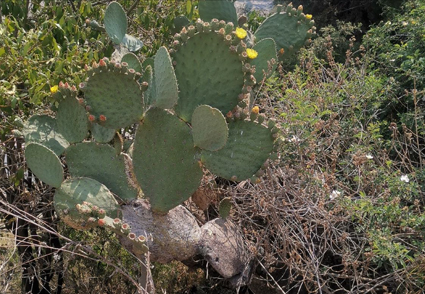
Hybridization allows adaptations to be shared among lineages and may trigger the evolution of new species. This study documents a natural nopal hybrid, Opuntia ×speciosa nothospec. nov., recently discovered in Mexico. It is characterized by a juvenile cladodes, flowers, fruits xoconostle-like and seeds (lenticular). Morphological and molecular evidence confirms its status as a natural hybrid. The phylogenetic analysis placed the new species within the Opuntia s.str. clade with well-supported. Strong bootstrap and Bayesian Inference values affirm these relationships, with notable diversity in Opuntia indicating potential adaptative radiation. Detailed morphological description, photographs, microscopic structure images, and phylogenetic analysis results are provided.
References
- Abbott, R., Albach, D., Ansell, S., Arntzen, J.W., Baird, S.J., Bierne, N., Boughman, J., Brelsford, A., Buerkle, C.A., Buggs, R., Butlin, R.K., Dieckmann, U., Eroukhmanoff, F., Grill, A., Cahan, S.H., Hermansen, J.S., Hewitt, G., Hudson, A.G., Jiggins, C., Jones, J., Keller, B., Marczewski, T., Mallet, J., Martínez-Rodríguez, P., Möst, M., Mullen, S., Nichols, R., Nolte, A.W., Parisod, C., Pfennig, K., Rice, A.M., Ritchie, M.G., Seifert, B., Smadja, C.M., Stelkens, R., Szymura, R.M., Vainöla, R. & Zinner, D. (2013) Hybridization and speciation. Journal of Evolutionary Biology 26 (2): 229–246. https://doi.org/10.1111/j.1420-9101.2012.02599.x
- Aquino, D., Sánchez, D. & Arias, S. (2025) Diversity of Cactaceae in the flora of Bajío and adjacent regions (Mexico). Botanical Sciencies 103 (3): 695–718. https://doi.org/10.17129/botsci.3649
- Arias, S., Gama, S. & Guzmán, U. (1997) Cactaceae. Flora del Valle de Tehuacán-Cuicatlán, Fasc. 14. Instituto de Biología, Universidad Nacional Autónoma de México, México City, 146 pp.
- Arnold, M.L. (1992) Natural hybridization as an evolutionary process. Annual Review of Ecology and Systematics 23: 237–261. https://doi.org/10.1146/annurev.es.23.110192.001321
- Arnold, M.L. (1997) Natural hybridization and evolution. Oxford University Press, New York, 232 pp. https://doi.org/10.1093/oso/9780195099744.001.0001
- Baldwin, B.G. (1992) Phylogenetic utility of the internal transcribed spacers of nuclear ribosomal DNA in plants: An example from the Compositae. Molecular Phylogenetics and Evolution 1: 3–16. https://doi.org/10.1016/1055-7903(92)90030-K
- Bachman, S., Moat, J., Hill, A.W., de la Torre, J. & Scott, B. (2011) Supporting Red List threat assessments with GeoCAT: geospatial conservation assessment tool. ZooKeys 150: 117–126. https://doi.org/10.3897/zookeys.150.2109
- Bell, M. & Travis, M. (2005) Hybridization, transgressive segregation, genetic covariation, and adaptive radiation. Trends in Ecology & Evolution 20 (7): 358–361. https://doi.org/10.1016/j.tree.2005.04.021
- Bock, D.G., Cai, Z., Elphinstone, C., González-Segovia, E., Hirabayashi, K., Huang, K., Keais, G.L., Kim, A., Owens, G.L. & Rieseberg, L.H. (2023) Genomics of plant speciation. Plant Communications 4: 100599. https://doi.org/10.1016/j.xplc.2023.100599
- Bouckaert, R., Heled, J., Kühnert, D., Vaughan, T., Wu, C.-H., Xie, D., Suchard, M.A., Rambaut, A. & Drummond, A.J. (2014) BEAST 2: A software platform for Bayesian Evolutionary analysis. PLOS Computational Biology 10: e1003537. https://doi.org/10.1371/journal.pcbi.1003537
- Bravo-Hollis, H. (1978) Las Cactáceas de México, vol. 1. Universidad Nacional Autónoma de México, México City, 351 pp.
- Britton, N.L. & Rose, J.N. (1919) The Cactaceae: Description and illustrations of plants of the Cactus Family, vol. 1. Carnegie Institution, Washington, 236 pp. https://doi.org/10.5962/bhl.title.45556
- Darriba, D., Posada, D., Kozlov, A.M., Stamatakis, A., Morel, B. & Flouri, T. (2020) ModelTest-NG: a new and scalable tool for the selection of DNA and protein evolutionary models. Molecular Biology and Evolution 37: 291–294. https://doi.org/10.1093/molbev/msz189
- Darwin, C. (1859) On the Origin of Species. John Murray, London.
- Dobzhansky, T.G. (1937) Genetics and the origin of species. ColumbiaUniversity Press, New York.
- Ellstrand, N.C. & Schierenbeck, K.A. (2000) Hybridization as a stimulus for the evolution of invasiveness in plants?. Proceedings of the National Academy of Sciences 97: 7043–7050. https://doi.org/10.1073/pnas.97.13.7043
- Gallegos-Vázquez, C. & Scheinvar, L. (2014) Opuntia tezontepecana, una Nueva Especie de Cactaceae del Estado de Hidalgo, México. Novon: A Journal for Botanical Nomenclature 23 (2): 157–161. https://doi.org/10.3417/2010107
- Gonzalez, I.L., Chambers, C., Gorski, J.L., Stambolian, D., Schmickel, R.D. & Sylvester, J.E. (1990) Sequence and structure correlation of human ribosomal transcribed spacers. Journal of Molecular Biology 212: 27–35. https://doi.org/10.1016/0022-2836(90)90302-3
- Guzmán, U.L., Arias, S. & Dávila, P. (2003) Catálogo de cactáceas mexicanas. Universidad Nacional Autónoma de México, México City, 315 pp.
- Granados-Aguilar, X., Granados Mendoza, C., Cervantes, C.R., Rubén Montes, J. & Arias, S. (2021) Unraveling Reticulate Evolution in Opuntia (Cactaceae) From Southern Mexico. Frontiers in Plant Science 11: 606809. https://doi.org/10.3389/fpls.2020.606809
- Grant, V. (1971) Plant speciation. Columbia University Press, New York.
- Grant, V. (1981) Plant speciation. Columbia University Press, New York.
- Griffith, M.P. (2003) Using molecular data to elucidate reticulate evolution in Opuntia (Cactaceae). Madroño 50: 162–169.
- Hall, T.A. (1999) BioEdit: a user-friendly biological sequence alignment editor and analysis program for Windows 95/98/NT. Nucleic Acids Symposium Series 41: 95–98.
- Hegarty, M.J. & Hiscock, S.J. (2005) Hybrid speciation in plants: new insights from molecular studies. New Phytologist 165: 411–423. https://doi.org/10.1111/j.1469-8137.2004.01253.x
- Hughes, K.W., Petersen, R.H. & Lickey, E.B. (2009) Using heterozygosity to estimate a percentage DNA sequence similarity for environmental species delimitation across basidiomycete fungi. New Phytologist 182: 795–798. https://doi.org/10.1111/j.1469-8137.2009.02802.x
- Hunt, D. (2006) The New cactus lexicon. International Cactaceae Systematics Group, Milbourne Port, 373 pp.
- Hunt, D. (2014) Further Studies in Opuntioideae (Cactaceae). Succulent Plant Research 8: 185–200.
- IUCN (2022) The IUCN Red List of Threatened Species. Version 2022-2. Available from: https://www.iucnredlist.org (accessed 31 July 2025)
- Katoh, K., Misawa, K., Kuma, K. & Miyata, T. (2002) MAFFT: a novel method for rapid multiple sequence alignment based on fast Fourier transform. Nucleic Acids Research 30 (14): 3059–3066. https://doi.org/10.1093/nar/gkf436
- Katoh, K., Rozewicki, J. & Yamada, K.D. (2017) MAFFT online service: multiple sequence alignment, interactive sequence choice and visualization. Briefings in Bioinformatics 20 (4): 1160–1166. https://doi.org/10.1093/bib/bbx108
- Köhler, M., Oakley, L.J., Font, F., Peñas, M.L. Las, & Majure, L.C. (2021) On the continuum of evolution: a putative new hybrid speciation event in Opuntia (Cactaceae) between a native and an introduced species in southern South America. Systematics and Biodiversity 19 (1): 1–14. https://doi.org/10.1080/14772000.2021.1967510
- Korotkova, N., Aquino, D., Arias, S., Eggli, U., Franck, A., Gómez-Hinostrosa, C., Guerrero, P.C., Hernández, H.M., Kohlbecker, A., Köhler, M., Luther, K., Majure, L.C., Müller, A., Metzing, D., Nyffeler, R., Sánches, D., Schlumpberger, B. & Berendsohn, W.G. (2021) Cactaceae at Caryophyllales.org—a dynamic online species-level taxonomic backbone for the family. Willdenowia 51: 251–270. https://doi.org/10.3372/wi.51.51208
- Lodé, J. (2015) Taxonomy of the Cactaceae (Supplement). Alphabetical INDEX of taxa in current usage and their synonyms. Cactus Adventures International, Barcelona, 46 pp.
- López-González, N., Bobo-Pinilla, J., Gutiérrez-Larruscain, D., Martínez-Ortega, M.M. & Rojas-Andrés, B.M. (2021) Hybridization as a biodiversity driver: the case of Veronica × gundisalvi. Mediterranean Botany 42: e67901. https://doi.org/10.5209/mbot.67901
- Maddison, W.P. & Maddison, D.R. (2021) Mesquite: a modular system for evolutionary analysis. Version 3.70. Available from: http://mesquiteproject.org (accessed 16 April 2025)
- Majure, L. (2022) On the origin of the two putative allopolyploids, Opuntia curvispina and O. martiniana (Cactaceae): A case of cryptic speciation in prickly pear cacti. Journal of the Botanical Research Institute of Texas 16 (1): 317–333. https://doi.org/10.17348/jbrit.v16.i1.1235
- Majure, L. & Puente, R. (2014) Phylogenetic relationships and morphological evolution in Opuntia s.str. and closely related members of tribe Opuntieae. Succulent Plant Research 8: 9–30.
- Majure, L., Puente, R., Griffith, M.P., Judd, W.S., Soltis, P.S. & Soltis, D.E. (2012) Phylogeny of Opuntia s.s. (Cactaceae): clade delineation, geographic origins, and reticulate evolution. American Journal of Botany 99: 847–864. https://doi.org/10.3732/ajb.1100375
- Mallet, J. (2005) Hybridization as an invasion of the genome. Trends in Ecology and Evolution 20 (5): 229–237. https://doi.org/10.1016/j.tree.2005.02.010
- Mallet, J. (2007) Hybrid speciation. Nature 446: 279–283. https://doi.org/10.1038/nature05706
- Martínez-González, C.R. (2025) Opuntia ×soumaya (Cactaceae; Opuntioideae), a new hybrid from Mexico based on morphological, micromorphology and molecular evidence. Phytotaxa 717 (1): 31–51. https://doi.org/10.11646/phytotaxa.717.1.2
- Martínez-González, C.R., Gallegos-Vázquez, C., Luna-Vega, I. & García-Sandoval, R. (2015a) Opuntia leiascheinvariana, una nueva especie de Cactaceae del Estado de Hidalgo, México. Botanical Sciences 93 (3): 517–529. https://doi.org/10.17129/botsci.247
- Martínez-González, C.R., Luna-Vega, I., Gallegos-Vázquez, C. & García-Sandoval, R. (2015b) Opuntia delafuentiana (Cactaceae: Opuntioideae), a new xoconostle from central Mexico. Phytotaxa 231 (3): 230–244. https://doi.org/10.11646/phytotaxa.231.3.2
- Martínez-González, C.R., Ramírez-Mendoza, R., Jiménez-Ramírez, J., Gallegos-Vázquez, C. & Luna-Vega, I. (2017) Improved method for genomic DNA extraction for Opuntia Mill. (Cactaceae). Plant Methods 13: 1–10. https://doi.org/10.1186/s13007-017-0234-y
- Martínez-González, C.R., Gallegos-Vázquez, C., Scheinvar, L., Muñiz-Díaz de León, M.E. & Jiménez-Ramírez, J. (2019) Re-evaluation of Opuntia matudae (Cactaceae). Phytotaxa 423 (3): 158–170. https://doi.org/10.11646/phytotaxa.423.3.4
- Martínez-González, C.R., Muñiz-Díaz de León, M.E., González-Martínez, C.A., Jiménez-Ramírez, J., Morales-Sandoval, J. & Gallegos-Vázquez, C. (2020) Phylogenetic placement and new data on macro- and micromorphology of Opuntia joconostle (Cactaceae). Bradleya 38: 158–169. https://doi.org/10.25223/brad.n38.2020.a17
- Martínez-González, C.R., Morales-Sandoval, J., González-Martínez, C.A., Jiménez-Ramírez, J. & Gallegos-Vázquez, C. (2021) Opuntia tehuacana and O. olmeca (Cactaceae, Opuntioideae) are to be considered as ascribed to a single species: morphological and molecular evidences. Phytotaxa 479 (2): 160–172. https://doi.org/10.11646/phytotaxa.479.2.2
- Martínez-González, C.R., Gallegos-Vázquez, C., Mascorro-Gallardo, O. & Barrientos-Priego, A.F. (2022) Molecular and morphological notes on Opuntia ser. Streptacanthae (Cactaceae). Phytotaxa 576 (1): 1–28. https://doi.org/10.11646/phytotaxa.576.1.1
- Mayr, E. (1942) Systematics and the origin of species, from the viewpoint of a zoologist. Harvard University Press, Cambridge.
- Mayr, E. (1963) Animal Species and Evolution. Belknap Press, Cambridge.
- Mendel, G. (1965) Experiments in Plant Hybridisation. Harvard University Press, Cambridge.
- Mori, S.A., Silva, L.A.M., Lisboa, G. & Coradin, L. (1989) Manual de Manejo de Herbário Fanerogamico. 2 ed. Ilhéus, Centro Pesquisas do Cacau.
- Morrone, J.J., Escalante, T. & Rodríguez-Tapia, G. (2017) Mexican biogeographic provinces: map and shapefiles. Zootaxa 4277: 277–279. https://doi.org/10.11646/zootaxa.4277.2.8
- Müller, K., Quandt, D., Müller, J. & Neinhuis, C. (2005) PhyDE®-Phylogenetic data editor. Program distributed by the authors, versión 10.0. Available from: https://www.phyde.de (accessed 16 April 2025)
- Parfitt, B.D. & Pinkava, D.J. (1988) Nomenclatural systematic reassessment of Opuntia engelmanii and Opuntia lindheimeri (Cactaceae). Madroño 35: 342–349.
- Pinkava, D.J. (1996) Nomenclatural changes in Opuntia (Cactaceae). Haseltonia 4: 103–104.
- Pinkava, D.J. (2002) On the evolution of the continental North American Opuntioideae. Studies in the Opuntioideae (Cactaceae). Succulent Plant Research 6: 59–98.
- Rambaut, A. (2018) FigTree-Tree Figure Drawing Tool. Version v.1.4.4. Available from: http://tree.bio.ed.ac.uk/software/figtree/ (accessed 16 April 2025)
- Rambaut, A., Suchard, M.A., Xie, D. & Drummond, A.J. (2014) Tracer v1.6. Available from: http://beast.bio.ed.ac.uk/Tracer (accessed 16 April 2025)
- Rebman, J.P. & Pinkava, D.J. (2001) Opuntia Cacti of North America: An overview. The Florida Entomologist 84: 474–483. https://doi.org/10.2307/3496374
- Reyes-Agüero, J.A., Carlín-Castelán, F., Aguirre, J.R. & Hernández, H. (2007) Preparation of Opuntia herbarium specimens. Haseltonia 13: 76–82. https://doi.org/10.2985/1070-0048(2007)13[76:POOHS]2.0.CO;2
- Rieseberg, L.H. (1997) Hybrid origins of plant species. Annual Review of Ecology and Systematics 28: 359–389. https://doi.org/10.1146/annurev.ecolsys.28.1.359
- Rieseberg, L.H., Ellstrand, N.C. & Arnold, M. (1993) What can molecular and morphological markers tell us about plant hybridization? Critical Reviews in Plant Sciences 12 (3): 213–241. https://doi.org/10.1080/07352689309701902
- Rieseberg, L.H., Archer, M.A. & Wayne, R.K. (1999) Transgressive segregation, adaptation and speciation. Heredity 83 (4): 363–372. https://doi.org/10.1038/sj.hdy.6886170
- Sánchez-Blas, J. (2001) Ixtlahuaca monografía municipal. México, Gobierno del Estado de México, Asociación Mexiquense de Cronistas Municipales A.C. y el Instituto Mexiquense de Cultura.
- Scheinvar, L. (1974) Opuntia heliabravoana, una especie nueva de Cactaceae. Anales del Instituto de Biología, Universidad Nacional Autónoma de México, Serie Botánica 45: 75–86.
- Scheinvar, L. (1981) Especies, variedades y combinaciones nuevas de cactáceas del Valle de México. Phytologia 49: 324–328.
- Scheinvar, L. (1982) Redescubrimiento de la Opuntia spinulifera Salm-Dyck. Anales del Instituto de Biología, Universidad Nacional Autónoma de México, Serie Botánica 47: 1–20.
- Scheinvar, L. (1985) Cactaceae. In: Rzedowski, J. & Calderón de Rzedowski, G. (Eds.) La flora del Valle de México, vol. 2. Instituto de Ecología, A. C. y Escuela Nacional de Ciencias Biológicas, Instituto Politécnico Nacional, City, pp. 93–115.
- Scheinvar, L. (1987) Redescubrimiento de Opuntia oligacantha Forster en el Valle de México y en la Altiplanicie Mexicana. Anales del Instituto de Biología, Universidad Nacional Autónoma de México, Serie Botánica 57: 109–122.
- Scheinvar, L. (1999) Opuntia zamudioi, una nueva especie de Querétaro. Cactáceas y Suculentas Mexicanas 44: 88–93.
- Scheinvar, L. (2002) Opuntia stricta (Haw.) Haw. subsp. esparzae, una nueva subespecie de las dunas del río Concá, Arroyo Seco, Querétaro, México. Cactáceas y Suculentas Mexicanas 47: 94–102.
- Scheinvar, L. (2004) Flora cactológica del estado de Querétaro. Diversidad y riqueza. Fondo de Cultura Económica, México, 390 pp.
- Scheinvar, L. & Manzanero, G. (2009) Opuntia chiangiana, una nueva especie de Cactaceae de Oaxaca, México. Novon: A Journal for Botanical Nomenclature 19: 222–228. https://doi.org/10.3417/2007041
- Scheinvar, L., Olalde, G., Filardo, S. & Beckler, P. (2010) Diez especies mexicanas productoras de xoconostles: Opuntia spp. y Cylindropuntia imbricata (Cactaceae). Universidad Nacional Autónoma de México/Universidad Autónoma del estado de Hidalgo/Universidad Autónoma Metropolitana, Mexico City, 177 pp.
- Scheinvar, L., Gallegos-Vázquez, C., Gámez-Tamariz, N. & Olalde-Parra, G. (2020) Atlas de los Nopales Silvestres Mexicanos. Universidad Nacional Autónoma de México, Mexico City, 607 pp.
- Schmitz-Linneweber, C., Maier, R., Jean-Pierre, A., Cottet, A., Herrmann, R. & Mache, R. (2001) The plastid chromosome of spinach (Spinacia oleracea): complete nucleotide sequence and gene organization. Plant Molecular Biology 45: 307–315. https://doi.org/10.1023/A:1006478403810
- SEMARNAT (Secretaría de Medio Ambiente y Recursos Naturales) (2010) Norma Oficial Mexicana NOM-059-SEMARNAT-2010, Protección ambiental-especies nativas de México de flora y fauna silvestres-Categorías de riesgo y especificaciones para su inclusión o cambio-Lista de especies en riesgo. Diario Oficial de la Federación. Available from: http://www.dof.gob.mx/normasOficiales/4254/semarnat/semarnat.htm (accessed 28 October 2025)
- Stamatakis, A. (2014) RAxML version 8: a tool for phylogenetic analysis and post-analysis of large phylogenies. Bioinformatics 30: 1312–1313. https://doi.org/10.1093/bioinformatics/btu033
- Stebbins, G.L. (1950) Variation and Evolution in Plants. Columbia University Press, New York. https://doi.org/10.7312/steb94536
- Stebbins, G.L. (1959) The role of hybridization in evolution. Proceedings of theAmerican Philosophical Society 103: 231–251.
- Stronen, A.V. & Paquet, P.C. (2013) Perspectives on the conservation of wild hybrids. Biological Conservation 167: 390–395. https://doi.org/10.1016/j.biocon.2013.09.004
- Swofford, D.L. (2002) PAUP*, Phylogenetic Analysis Using Parsimony (* and Other Methods). Version 4.10. Sinauer Associates, Sunderland, Massachusetts.
- Taberlet, P.G., Ludovic, P., Guy, P. & Bouvet, J. (1991) Universal primers for amplification of three non-coding regions of chloroplast DNA. Plant Molecular Biology 17: 1105–1109. https://doi.org/10.1007/BF00037152
- Thiers, B. (2026) Index herbariorum: a global directory of public herbaria and associated staff. New York Botanical Gardenʾs Virtual Herbarium. Available from: http://sweetgum.nybg.org/ih (accessed 17 June 2026)
- Turland, N.J., Wiersema, J.H., Barrie, F.R., Gandhi, K.N., Gravendyck, J., Greuter, W., Hawksworth, D.L., Herendeen, P.S., Klopper, R.R., Knapp, S., Kusber, W.H., Li, D.Z., May, T.W., Monro, A.M., Prado, J., Price, M.J., Smith, G.F. & Zamora Señoret, J.C. (2025) International Code of Nomenclature for algae, fungi, and plants (Madrid Code). Regnum Vegetabile 162. University of Chicago Press, Chicago.
- Vallejo-Marín, M. & Hiscock, S.J. (2016) Hybridization and hybrid speciation under global change. New Phytologist 211: 1170–1187. https://doi.org/10.1111/nph.14004
- Wallace, A.R. (1889) Darwinism: An Exposition of the Theory of Natural Selection with Some of its Applications. Macmillan and Company, New York.
- White, T.J., Bruns, T.D., Lee, S. & Taylor, J.W. (1990) Amplification and direct sequencing of fungal ribosomal RNA genes for phylogenies. In: Innis, M.A., Gelfand, D.H., Sninsky, J.J. & White, T. (Eds.) PCR Protocols: a guide to methods and applications. Academic Press, San Diego, pp. 135–322. https://doi.org/10.1016/B978-0-12-372180-8.50042-1
- Wilcox, C.D., Dove, S., McDavis, W. & Greer, D. (2002) UTHSCSA. Image Tool. version 3.0. University of Texas Health Center, San Antonio, 56 pp.
- Zhang, Z., Schwartz, S., Wagner, L. & Miller, W. (2000) A greedy algorithm for aligning DNA sequences. Journal of Computational Biology 7: 203–214. https://doi.org/10.1089/10665270050081478