
Abstract
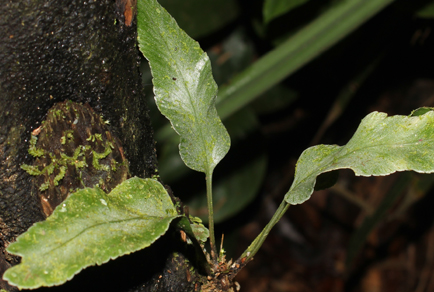
Asplenium (Aspleniaceae) is the most species-rich genus (ca. 700 spp.) of leptosporangiate ferns, with a worldwide distribution. Recent phylogenetic analyses of Asplenium have recovered the Asplenium mucronatum clade as a newly recognized lineage within the genus. This clade was recovered with 11 Neotropical species, ten of which occur in the Brazilian Atlantic Forest of southeastern Brazil, recognized as the center of richness and endemism for the group. In this study, we present a taxonomic treatment of the Asplenium mucronatum clade, including analyses of stem scales and spore morphology. We describe three new species, designate ten lectotypes, recognize two synonymized names as accepted species, and synonymize a previously accepted species. All species are described in detail, and we provide an identification key, preliminary conservation assessments, distribution maps, and additional notes.
References
- Adams, C.D. (1995) Asplenium. In: Moran, R.C. & Riba, R. (Eds.) Flora Mesoamericana: Psilotaceae a Salviniaceae, Vol. 1. Missouri Botanical Garden Scientific Publications, St. Louis, pp. 290–324.
- Bachman, S., Moat, J., Hill, A.W., Torre, J. & Scott, B. (2011) Supporting Red List threat assessments with GeoCAT: geospatial conservation assessment tool. In: Smith, V. & Penev, L. (Eds.) e-Infrastructures for data publishing in biodiversity science. ZooKeys 150: 117–126.
- Barrington, D.S., Paris, C.A. & Ranker, T.A. (1986) Systematic Inferences from Spore and Stomate Size in the Ferns. American Fern Journal 76: 149–159. https://doi.org/10.2307/1547723
- Barrington, D.S., Haufler, C.H. & Werth, C.R. (1989) Hybridization, Reticulation, and Species Concepts in the Ferns. American Fern Journal 79: 55–64. https://doi.org/10.2307/1547160
- Baker, J.G. (1870) Cyatheaceae et Polypodiaceae. In: Martius, C.F.P., Eichler, A.G. & Urban, I. (Eds.) Flora brasiliensis. Vol. 1, pars. 2. Monachii, Lipsiae, apud Frid., Fleischer in Comm., pp. 428–456.
- Bellefroid, E., Rambe, S.K., Leroux, O. & Viane, R.L.L. (2010) The base number of ‘loxoscaphoid’ Asplenium species and its implication for cytoevolution in Aspleniaceae. Annals of Botany 106: 157–171. https://doi.org/10.1093/aob/mcq095
- Brackenridge, W.D. (1854) United States Exploring Expedition, Vol. 16, Botany, Cryptogamia, Filices. C. Sherman, Philadelphia.
- Brade, A.C. (1935) Filices Novae Brasilianae IV. In: Porto, P.C., Borgmeier, T., Grillo, H.V.S. & Penna, L.A. (Eds.) Archivos do Instituto de Biologia Vegetal.
- Brown, R. (1810) Prodromus Florae Novae Hollandiae et Insulae Van-Diemen, exhibens characteres plantarum. London, 590 pp.
- Chang, Y., Li, J., Lu, S. & Schneider, H. (2013) Species diversity and reticulate evolution in the Asplenium normale complex (Aspleniaceae) in China and adjacent areas. Taxon 62: 673–687. https://doi.org/10.12705/624.6
- Christ, K.H.H. (1907) Filicinae. In: Denkschriften der Kaiserlichen Akademie der Wissenschaften/Mathematisch-Naturwissenschaftliche Klasse 79: 7–58.
- Christensen, C. (1905) Index Filicum, sive enumeratio omnium generum specierumque Filicum et Hydropteridum ab anno 1753 ad finem anni 1905 descriptorum. H. Hagerup, Copenhagen.
- Cochran, A.T., Prado, J. & Schuettpelz, E. (2014) Tryonia, a new taenitidoid fern genus segregated from Jamesonia and Eriosorus (Pteridaceae). PhytoKeys 35: 23–43. https://doi.org/10.3897/phytokeys.35.6886
- Copeland, E.B. (1947) Genera filicum. Waltham, Chronica Botanica Co. 247 pp.
- Cremers, G. & Viane, R.L.L. (2008) Lectotypications of Some American Asplenium Taxa (Aspleniaceae - Pteridophyta). Systematics and Geography of Plants 78: 217–229.
- Dyer, R.J., Savolainen, V. & Schneider, H. (2012) Apomixis and reticulate evolution in the Asplenium monanthes fern complex. Annals of Botany 110: 1515–1529. https://doi.org/10.1093/aob/mcs202
- Dyer, R.J., Pellicer, J., Savolainen, V., Leitch, I.J. & Schneider, H. (2013) Genome size expansion and the relationship between nuclear DNA content and spore size in the Asplenium monanthes fern complex (Aspleniaceae). BioMed Central Plant Biology 13: 219. https://doi.org/10.1186/1471-2229-13-219
- Engler, A. (1897) Botanische Jahrbücher fur Systematik, Pflanzengeschichte und Pflanzengeographie. Vol. 22. Leipzig.
- Farwell, O.A. (1931) Fern notes II. Ferns in the herbarium of Parke, Davis & Company. American Midland Naturalist 12: 233–311.
- Fée, A.L.A. (1852) Mémoires sur les Familles des Fougères; Cinquieme Mémoire, Genera Filicum. 387pp.
- Fée, A.L.A. (1869) Cryptogames Vasculaires (Fougéres, Lycopodiacées, Hydroptéridées, Equisétacées) du Bresil 1. V. Berger-Levrault, Strassbourg, 267 pp. Available from: http://catalogue.bnf.fr/ark:/12148/cb30514665n (accessed 30 April 2026)
- Ganem, M.A., Morbelli, M.A., Giudice, G.E., Piñeiro, M.R. & Michelena, I.G. (2001) Las esporas del grupo Asplenium squamosum en América (Aspleniaceae, Pteridophyta). Polen 11: 51–58.
- Ganem, M.A., Giudice, G.E., Luna, M.A. & de la Sota, E.R. (2007) Revisión del grupo « Asplenium squamosum » (Aspleniaceae) en América. Candollea 62: 149–156.
- Ganem, M.A., Luna, M.L. & Giudice, G.E. (2013) Palynological study in Asplenium species (Aspleniaceae) from Argentina. Boletín de la Sociedad Argentina de Botánica 48: 465–476.
- Ganem, M.A., Giudice, G.E. & Luna, M.L. (2016) Aspleniaceae. In: Zuloaga, F. & Belgrano, M. (eds.) Flora Vascular de la República Argentina. Vol. 2. Sigma, Buenos Aires.
- Giudice, G.E., Morbelli, M.A. & Piñeiro, M.R. (2002) Palynological study in Aspleniaceae from North-west Argentina. Boletín de la Sociedad Argentina de Botánica 37: 217–229.
- Gorrer, D.A., Giacosa, J.P.R. & Lupo, L.C. (2023) The Ferns of the Calilegua National Park: a look through their spores. Part I. Acta Botanica Brasilica 37: e20230071. https://doi.org/10.1590/1677-941X-ABB-2023-0071
- Hayata, B. (1927) On the Systematic Importance of the Stelar System in the Filicales, I. Shokubutsugaku Zasshi 41: 697–718. https://doi.org/10.15281/jplantres1887.41.697
- Hieronymus, G. (1915) Hedwigia: Organ für Kryptogamenkunde und Phytopathologie nebst Repertorium für Literatur. Dresden, N.
- Hooker, W.J. (1860) Species Filicum. Vol. 3. London.
- Index Herbariorum (2026). Index Herbariorum: A Global Directory of Public Herbaria and Associated Staff. New York Botanical Garden. [Published online: https://sweetgum.nybg.org/science/ih/]
- IUCN (2025) The IUCN Red List of Threatened Species. Version 2023-1. Available from: https://www.iucnredlist.org (accessed 2 April 2024)
- Karsten, H. (1861) Florae Columbiae: terrarumque adiacentium specimina selecta in peregrinatione duodecim annorum observata. Vol. 1. Berolini.
- Kaulfuss, G.F. (1824) Asplenium. In: Enumeratio Filicum quas in Itinere Circa Terram. Leipzig, Germany, pp. 164–178.
- Kramer, K.U. & Viane, R. (1990) Aspleniaceae. In: Kubitzki, K. (Ed.) The families and genera of vascular plants. Vol. 1.
- Kunze, G. (1839) Asplenium. In: Hoppe, D.H. & Fürnrohr, A.E. (Eds.) Flora 22: 32–48.
- Labiak, P.H. & Moran, R.C. (2018) Phylogeny of Campyloneurum (Polypodiaceae). International Journal of Plant Sciences 179: 36–49. https://doi.org/10.1086/694764
- Lamarck, J.-B. (1786) Encyclopédie méthodique. Botanique. Vol. 2. Paris, Liège. 774 pp.
- Lellinger, D.B. (2002) A modern multilingual glossary for taxonomic pteridology. Pteridologia 3: 1–263.
- Linnaeus, C. (1753) Species Plantarum 2. 1200pp.
- Lino, V. (2019) Hibridação em Asplenium L. (Aspleniaceae) na Floresta Atlântica do Sudeste do Brasil. Dissertação de Mestrado. Museu Nacional-Universidade Federal do Rio de Janeiro, Rio de Janeiro, 72 pp.
- Lino, V., Reis, A., Sylvestre, L. & Mynssen, C.M. (2023a) Asplenium atlanticum (Aspleniaceae), a new endemic fern from the Brazilian Atlantic Forest. Phytotaxa 603: 81–88. https://doi.org/10.11646/phytotaxa.603.1.6
- Lino, V., Reis, A., Canaveze, Y., Farah, M.S., Sylvestre, L.S. & Garcia, B. (2023b) Beyond the physical protection: What can Asplenium glandular scales secrete? Flora 305: 152338. https://doi.org/10.1016/j.flora.2023.152338
- Lino, V. (2024) Sistemática Filogenética do clado Asplenium mucronatum. Tese de Doutorado. Instituto de Pesquisas Jardim Botânico do Rio de Janeiro, 235pp.
- Liu, H.M., Ekrt, L., Koutecky, P., Pellicer, J., Hidalgo, O., Mar-quardt, J., Pustahija, F., Ebihara, A., Siljak-Yakovlev, S., Gibby, M., Leitch, I. & Schneider, H. (2019) Polyploidy does not control all: lineage-specific average chromosome length constrains genome size evolution in ferns. Journal of Systematics and Evolution 57: 418–430. https://doi.org/10.1111/jse.12525
- Link, H.F. (1833) Hortus Regius Botanicus Berolinensis descriptus. Vol. 2. 179 pp.
- Lóriga, J., Regalado, L., Prada, C., Schneider, H. & Heinrichs, J. (2016) Phylogenetic relationships of two Cuban spleenworts with unusual morphology: Asplenium (Schaffneria) nigripes and Asplenium pumilum (Aspleniaceae, leptosporangiate ferns). Plant Systematics and Evolution 303: 165–176. https://doi.org/10.1007/s00606-016-1359-6
- Matos, F.B., Labiak, P.H. & Sylvestre, L.S. (2009) A new brazilian species of the genus Asplenium L. (Aspleniaceae). American Fern Journal 99: 101–105. https://doi.org/10.1640/0002-8444-99.2.101
- Maxon, W.R. (1908) Studies of Tropical American Ferns. In: Contributions from the United States National Herbarium 10: 473–494.
- Moore, T. (1853) Hooker’s Journal of Botany and Kew Garden Miscellany. Vol. 5. London.
- Moran, R.C. & Labiak, P.H. (2015) Phylogeny of the Polybotryoid fern clade (Dryopteridaceae). International Journal of Plant Sciences 176: 880–891. https://doi.org/10.1086/683393
- Moran, R.C. & Labiak, P.H. (2016) Phylogeny and character evolution of the Neotropical fern genus Stigmatopteris (Dryopteridaceae). Brittonia 68: 476–488. https://doi.org/10.1007/s12228-016-9437-1
- Morton, C.V. & Lellinger, D.B. (1966) The Polypodiaceae subfamily Asplenioideae in Venezuela. Memoires of New York Botanical Garden 15: 1–49.
- Murakami, N. & Moran, R.C. (1993) Monograph of the neotropical species of Asplenium sect. Hymenasplenium (Aspleniaceae). Annals of the Missouri Botanical Garden 80: 1–38. https://doi.org/10.2307/2399820
- Murakami, N., Yokoyama, J., Cheng, X., Iwasaki, H., Imaichi, R. & Iwatsuki, K. (1998) Molecular alpha-taxonomy of Hymenasplenium obliquissimum complex (Aspleniaceae) based on rbc L sequence comparisons. Plant Species Biology 13: 51–56. https://doi.org/10.1111/j.1442-1984.1998.tb00247.x
- Murakami, N., Nogami, S., Watanabe, M. & Iwatsuki, K. (1999) Phylogeny of Aspleniaceae inferred from rbc L nucleotide sequences. American Fern Journal 89: 232–243.
- Natural History Museum (2014) Specimens (from Collection specimens) [Data set resource]. Natural History Museum. [https://data.nhm.ac.uk/dataset/collection-specimens/resource/05ff2255-c38a-40c9-b657-4ccb55ab2feb]
- Newman, E. (1844) A History of British Ferns 6. J. van Voorst. Paternoster Row, London, 424 pp.
- Ogura, Y. (1972) Comparative Anatomy of Vegetative Organs of the Pteridophytes. Gebrüder Borntraeger, Berlin, 502 pp.
- Ohlsen, D., Perrie, L., Sheperd, L., Brownsey, P. & Bayly, M. (2014) Phylogeny of the fern family Aspleniaceae in Australasia and the south-western Pacific. Australian Systematic Botany 27: 355–371.
- Oliveira-Filho, A.T. & Fontes, M.A.L. (2000) Patterns of floristic differentiation among Atlantic Forests in southeastern Brazil and the influence of climate. Biotropica 32: 793–810.
- Pichi-Sermolli, R.E.G. (1977) Tentamen Pteridophytorum genera in taxonomicum ordinem redigendi. Webbia 31: 313–512.
- Pichi-Sermolli, R.E.G. & Bizzarri, M.P. (2005) A revision of Raddi’s pteridological collection from Brazil (1817-1818). Webbia: Journal of Plant Taxonomy and Geography 60: 1–403. https://doi.org/10.1080/00837792.2005.10739597
- PPG I (2016) A community-derived classification for extant lycophytes and ferns. Journal of Systematics Evolution 54: 563–603. https://doi.org/10.1111/jse.12229
- Prado, J. & Hirai, R. (2014) Biogeography of the Brazilian Atlantic Forest: Evidence from phylogenetic data sets and perspectives for fern and lycophyte studies. Fern Gazette 19: 241–257.
- Prado, J., Hirai, R.Y. & Morran, R.C. (2015) Proposals concerning inadvertent lectotypifications (and neotypifications), Taxon 64: 651. https://doi.org/10.12705/643.29
- Presl, J.S. & Presl, C.B. (1822) Plantarum Rariorum Siciliae. Deliciae Pragenses, historiam naturalem spectantes 1: 1–190.
- Presl, C. (1836) Tentamen Pteridographiae: 104–121.
- Raddius, J. (1819) Synopsis filicum brasiliensium auctore Josepha Raddio ex XLviris Societatis Italicae Scientiarum aliarumque Academiarum Socia. Bononiae (Typ. Annesii de Nobilibus), pp. 1–19. tav. 1–2. [seors. prae-impr. ex Opusc. Sci. 3 (5): 279–297. tav. XI–XII. 1819]
- Raddius, J. (1825) Plantarum Brasiliensium Nova Genera et species novae, vel minus cognitae. Florentiae.
- Regalado, L. & Sánchez, C. (2002) Spore morphology as a taxonomic tool in the delimitation of three Asplenium L. species complexes (Aspleniaceae: Pteridophyta) in Cuba. Grana 41: 107–113. https://doi.org/10.1080/001731302760156909
- Rosenstock, E. (1905) Einige neue Farne aus Südbrasilien. Festschrift Albert von Bamberg: 56–69.
- Rosenstock, E. (1907) Beiträge zur Pteridophytenflora Südbrasiliens. In: Hieronymus, G. Hedwigia 46: 57–167.
- Rothfels, C.J., Sundue, M.A., Li-Yuang, K., Anders, L., Masahiro, K., Schuettpelz, E. & Pryer, K. (2012) A revised family-level classification for eupolypod II ferns (Polypodiidae: Polypodiales). Taxon 61: 515–533. https://doi.org/10.1002/tax.613003
- Schneider, H. (1997) Root anatomy of Aspleniaceae and the implications for systematics of this fern family. Fern Gazette 15: 160–168.
- Schneider, H., Russell, S.J., Cox, C.J., Bakker, F., Henderson, S., Rumsey, F., Barrett, M.G. & Vogel, J.C. (2004) Chloroplast phylogeny of asplenioid ferns based on rbc L and trn L-F spacer sequences (Polypodiidae, Aspleniaceae) and its implications for biogeography. Systematic Botany 29: 260–274. https://doi.org/10.1600/036364404774195476
- Schneider, C.A., Rasband, W.S. & Eliceiri, K.W. (2012) NIH Image to ImageJ: 25 years of image analysis. Nature methods 9: 671–675. https://doi.org/10.1038/nmeth.2089
- Schneider, H., Navarro-Gomez, A., Russell, S., Ansell, S., Grundmann, M. & Vogel, J. (2013) Exploring the utility of three nuclear regions to reconstruct reticulate evolution in the fern genus Asplenium. Journal of Systematics and Evolution 51: 142–153. https://doi.org/10.1111/j.1759-5831/2012/0026.x
- Schneider, H., Liu, H-M., Chang, Y-F., Ohlsen, D., Perrie, L.R., Shepherd, L., Kessler, M., Karger, D.N., Hennequin, S., Marquardt, J., Russell, S.J., Ansell, S., Lu, N., Kamau, P., Lóriga, J., Regalado, L., Heinrichs, J., Ebihara, A., Smith, A.R. & Gibby, M. (2017) Neo- and Paleopolyploidy contribute to the species diversity of Asplenium—the most species-rich genus of ferns. Journal of Systematics and Evolution 55: 353–364. https://doi.org/10.1111/jse.12271
- Schott, H.W. (1841) Journal of Botany, being a second series of the Botanical Miscellany 4.
- Schuettpelz, E. & Pryer, K.M. (2007) Fern phylogeny inferred from 400 leptosporangiate species and three plastid genes. Taxon 56: 1037–1050. https://doi.org/10.2307/25065903
- Sehnem, A. (1968) Aspleniáceas. In: Reitz, R. (Ed.) Flora Ilustrada Catarinense. Fasc. ASPL, Itajaí, Herb. Barbosa Rodrigues, pp. 96.
- Sessa, E.B., Vicent, M., Chambers, S.M. & Gabriel y Galán, J.M. (2018) Evolution and reciprocal origins in Mediterranean ferns: the Asplenium obovatum and A. adiantum-nigrum complexes. Annals of the Missouri Botanical Garden 103: 175–187. https://doi.org/10.3417/2018108
- Sigel, E.M. (2016) Genetic and genomic aspects of hybridization in ferns. Journal of Systematics and Evolution 54: 638–655. https://doi.org/10.1111/jse.12226
- Smith, A.R., Pryer, K.M., Schuettpelz, E., Korall, P., Schneider, H. & Wolf, P.G. (2006) A classification for extant ferns. Taxon 55: 705–731. https://doi.org/10.2307/25065646
- Souza, J.F., Bueno, M.L. & Salino, A. (2021) Atlantic Forest: centres of diversity and endemism for ferns and lycophytes and conservation status. Biodiversity and Conservation 30: 2207–2222. https://doi.org/10.1007/s10531-021-02194-8
- Stafleu, F.A. & Cowan, R.S. (1976) Taxonomic literature. A selective guide to botanical publications and collections with dates, commentaries and types, Second edition, Volume I: A-G. Regnum vegetabile 94, Bohn, Scheltema & Holkema, Utrecht, pp. 1–1136.
- Stearn, W.T. (1983) Botanical Latin: history, grammar, syntax, terminology, and vocabulary. David & Charles, London and Vermont, 566 pp.
- Stearn, W.T. (2004) Botanical Latin. 4th ed. Timber Press, Portland, 560 pp.
- Suissa, J. & Sundue, M. (2020) Diversity Patterns of Neotropical Ferns: Revisiting Tryon’s Centers of Richness and Endemism. American Fern Journal 110: 211–232. https://doi.org/10.1640/0002-8444-110.4.211
- Suissa, J., Sundue, M. & Testo, W. (2021) Mountains, climate and niche heterogeneity explain global patterns of fern diversity. Journal of Biogeography 48: 1296–1308. https://doi.org/10.1111/jbi.14076
- Sylvestre, L.S. (2001) Revisão taxonômica das espécies de Aspleniaceae A.B. Frank ocorrentes no Brasil. Tese de Doutorado. Universidade de São Paulo, São Paulo, 457 pp.
- Sylvestre, L.S. (2010) Notas nomenclaturais em Aspleniaceae (Polypodiopsida) ocorrentes no Brasil. Rodriguésia 61: 109–114. https://doi.org/10.1590/2175-7860201061112
- Sylvestre, L.S. & Windisch, P.G. (2003) Diversity and distribution patterns of Aspleniaceae in Brazil. In: Chandra, S. & Srivastava, M. (Eds.) Pteridology in the new Millenium. Dordrecht: Kluwer Academic Publishers, pp. 107–120.
- Sylvestre, L., Costa, T.V. & Lino, V. (2025) Aspleniaceae. In: Flora e Funga do Brasil. Jardim Botânico do Rio de Janeiro. Available from: http://floradobrasil.jbrj.gov.br/reflora/floradobrasil/FB90671 (accessed 22 February 2023)
- Tardieu-Blot, M.-L. (1957) Sur un Antigramma de Madagascar et sur la répartition géographique des genres Antigramma et Schaffneria. Naturaliste Malgache 9: 29–32.
- Testo, W. & Sundue, M. (2016) A 4000-species dataset provides new insight into the evolution of ferns. Molecular Phylogenetics and Evolution 105: 200–211. https://doi.org/10.1016/j.ympev.2016.09.003
- Testo, W.L., Sessa, E. & Barrington, D.S. (2018) The rise of the Andes promoted rapid diversification in Neotropical Phlegmariurus (Lycopodiaceae). New Phytologist 604–613. https://doi.org/10.1111/nph.15544
- Tryon, A.F. & Lugardon, B. (1991) Spores of the Pteridophyta. Springer-Verlag, New York, 156 pp. https://doi.org/10.1007/978-1-4613-8991-0
- Tryon, R.M. & Tryon, A.F. (1982) Ferns and allied plants: with special reference to tropical America. Springer-Verlag, New York, 857 pp. https://doi.org/10.1007/978-1-4613-8162-4
- Viane, R. & Van Cotthem, W. (1977) Spore morphology and stomatal characters of some Kenyan Asplenium species. Berichte der Deutschen Botanischen Gesellschaft 90: 219–339.
- Wagner, W.H. (1954) Reticulate Evolution in the Appalachian Aspleniums. Evolution 8: 103–118.
- Wetzel, M.L.R., Sylvestre, L., Barros, C. & Vieira, R.C. (2017) Vegetative Anatomy of Aspleniaceae Newman from Brazilian Atlantic rainforest and its application in taxonomy. Flora – Morphology Distribution Functional Ecology of Plants 233: 118–126. https://doi.org/10.1016/j.flora.2017.05.010
- Willdenow, C.L. (1804) Anleitung zum Selbststudium der Botanik.
- Xu, K.-W., Zhou, X.-M., Yin, Q.-Y., Zhang, L., Lu, N.T., Knapp, R., Luong, T.T., He, H., Fan, Q., Zhao, W.-Y., Gao, X.-F., Liao, W.-B. & Zhang, L.-B. (2018) A global plastid phylogeny uncovers extensive cryptic speciation in the fern genus Hymenasplenium (Aspleniaceae). Molecular Phylogenetics and Evolution 127: 203–216. https://doi.org/10.1016/j.ympev.2018.05.021
- Xu, K.-W., Zhang, L., Rothfels, C.J., Smith, A.R., Viane, R., Lorence, D., Wood, K.R., Chen, C.W., Knapp, R., Zhou, L., Lu, N.T., Zhou, X.-M., Wei, H.J., Fan, Q., Chen, S.F., Cicuzza, D., Gao, X.-F., Liao, W.-B. & Zhang, L.-B. (2020) A global plastid phylogeny of the fern genus Asplenium (Aspleniaceae). Cladistics 36: 22–71. https://doi.org/10.1111/cla.12384
- Yatabe, Y., Shinohara, W., Matsumoto, S. & Murakami, N. (2009) Patterns of hybrid formation among cryptic species of bird‐nest fern, Asplenium nidus complex (Aspleniaceae), in West Malesia. Botanical Journal of the Linnean Society 160: 42–63. https://doi.org/10.1111/j.1095-8339.2009.00964.x
- Ybert, J.-P., Sylvestre, L., Rezende, R., Costa, F. & Carvalho, M. (2016) Esporos de samambaias do Estado do Rio de Janeiro, Brasil: Anemiaceae, Aspleniaceae. Museu Nacional, Universidade Federal do Rio de Janeiro, 118 pp.
- Zegarra, R.F., Castillo, C.E.C., Peréz, G.M.C., Rojas, M.E.H., Lovaton, R.L. & Holgado, D.P. (2020) Development of circinated fronds and nutritional value of food ferns in the Ampay-Apurímac National Sanctuary. Sociedad Botánica del Cusco. Q’euña 11: 23–28.