
Abstract
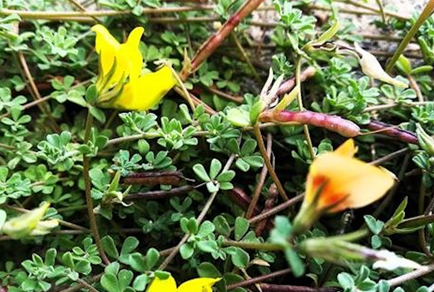
In terms of taxonomy and morphology, the genus Lotus L. is one of the most intruiguing clades in the Atlantic islands of Macaronesia. Specifically, the members of section Pedrosia have undergone a remarkable radiation in the Canary Islands, colonizing virtually all habitats and elevations except for the alpine zone on the highest mountain peaks. The current taxonomical concept includes five lineages that incorporate the 11 or 12 endemic species within the section, five of which occur on Tenerife. However, the number of taxa and their affilitation to islands are somewhat controversial, and long-term field observations presented in this study conflict with some conceptual results. Recent phylogenetic approaches to the Canarian lineages have shed new, and partly confusing, light on molecular and biogeographic aspects of Pedrosia, pointing to the existence of hitherto taxonomically undescribed populations in the western Canary Islands. To provide a robust framework for species delimitation, this study examines geographic variation of Pedrosia members, using live material and exsiccates housed in the botanical collections of the Universidade de La Laguna and the Botanical Garden Orotava, Puerto de la Cruz, and in private herbaria. As a result, five species from Tenerife, L. brezalis sp. nov., L. dunkelii sp. nov., L. frailensis sp. nov., L. pseudodumetorum sp. nov. and L. reyes-betancorti sp. nov., and one subspecies from El Hierro, L. campylocladus hierrensis subsp. nov., can now be described as being new to science. Their main discriminating characteristics refer to indumentum of stems and leaves, number of flowers per umbel, shape and length ratio of leaflets, rachis length ands fruit morphology. A key is included for all taxa from the three islands under special focus, Tenerife, El Hierro and La Palma. Present distributional and chorological data, and population trends reveal that four species are in danger of extinction, and that two taxa are endangered, which can be attributed to a variety of risk factors, such as land-use by agriculture, roadside trimming, goat-grazing and overgrowth by dominant species. Also, the status and distribution of some other critical taxa are reevaluated, yielding that L. tenellus is restricted to Tenerife, and L. callis-viridis Bramwell & D.H.Davis and L. leptophyllus (Lowe) K.Larsen are endemic to Gran Canaria. Moreover, the taxon L. hillebrandii Christ, found only on La Palma, should be best included as a subspecies in L. campylocladus Webb & Berthel..
References
- Aedo, C., Medina, L. & Fernández‐Albert, M. (2013) Species richness and endemicity in the Spanish vascular flora. Nordic Journal of Botany 31 (4): 478–488.
- Allan, G.J., Francisco-Ortega, J., Santos-Guerra, A., Boerner, E. & Zimmer, E.A. (2004) Molecular phylogenetic evidence for the geographic origin and classification of Canary Island Lotus (Fabaceae: Loteae). Molecular Phylogenetics and Evolution 32: 123–138.
- del Arco Aguilar, M.J. & Rodríguez Delgado, O. (2018) Vegetation of the Canary Islands. Springer, Berlin, 429 pp.
- Arechavaleta, M., Rodríguez, S., Zurita, N. & García, A. (2010) Lista de especies silvestres de Canarias. Hongos, plantas y animales terrestres. 2009. Gobierno de Canarias, Santa Cruz de Tenerife, 579 pp.
- Arévalo, J.R., Delgado, J.D., Otto, R., Naranjo, A., Salas, M. & Fernández-Palacios, J.M. (2005) Distribution of alien vs. native plant species in roadside communities along an altitudinal gradient in Tenerife and Gran Canaria (Canary Islands). Perspectives in Plant Ecology, Evolution and Systematics 7: 185–202. https://doi.org/10.1016/j.ppees.2005.09.003
- Aymerich, P. & Sáez, L. (2019) Checklist of the vascular alien flora of Catalonia (northeastern Iberian Peninsula, Spain). Mediterranean Botany 40 (2): 215.
- Bañares Baudet, A. (2015) Las plantas succulentas (Crassulaceae) endémicas de las Islas Canarias. Edita Publicaciones Turquesa, S.L., Santa Cruz de Tenerife, 280 pp.
- Beierkuhnlein, C., Walentowitz, A. & Welss, W. (2021) FloCan - a revised checklist for the flora of the Canary Islands. Diversity 13 (10): 480. https://doi.org/10.3390/d13100480
- Ben Mahmoud, K., Mezzapesa, G.N., Abdelkefi, F. & Perrino, E.V. (2024) Nutritional value and functional properties of an underexploited Tunisian wild beet (Beta macrocarpa Guss.) in relation to soil characteristics. Euro-Mediterranean Journal for Environmental Integration 9: 705–720. https://doi.org/10.1007/s41207-024-00468-5
- BioCan—Banco de Dato de Biodiversidad de Canarias. Gobierno de Canarias & European Union. (2025) BioCan – Banco de Dato de Biodiversidad de Canarias. Available from: https://www.biodiversidadcanarias.es (accessed 10 September 2025)
- Bramwell, D. (1971) Studies in the Canary Islands flora: the vegetation of Punta de Teno, Tenerife. Cuadernos de Botanica Canaria 11: 4–37.
- Bramwell, D. (1972) A new Lotus species from Gran Canaria. Botanica Macaronésica 22: 113–116.
- Bramwell, D. & Davies, P.H. (1972) A contribution to the study of Lotus from Gran Canaria. Cuadernos de Botanica Canaria 16: 51–54.
- Bramwell, D. & Bramwell, Z. (2001) Wild flowers of the Canaries. 2nd ed. Rueda SL, Alcorcón, 437 pp.
- Burchard, O. (1909) Eine neue Lotus-Art auf Teneriffa. Repertorium specierum novarum regni vegetabilis 7: 328–329.
- De Candolle, A.P. (1813) Catalogus plantarum Horti Botanici Monspeliensis, addito observationum circa species novas aut non satis cognitas fascículo. J. Martel, Montpellier, 155 pp.
- Degtjareva, G.V., Kramina, T.E., Sokoloff, D.D., Samigullin, T.H., Sandral, G. & Valiejo-Roman, C.M. (2008) New data on nrITS phylogeny of Lotus (Leguminosae, Loteae). Wulfenia 15: 35–49.
- Fois, M., Burguera, C., Aksoy, N., Bacchetta, G., Bagella, S., Barone, G., Bazos, I., Ben Haj Jilani, I., Camilleri, L., Capó, M., Christodoulou, C.S., Daoud-Bouattour, A., Debono, K., Diadema, K., Domina, G., Fournaraki, C., Fraga, P., Gazaix, A., Kadis, C., Lanfranco, S., Lansdown, R.V., Lazzaro, L., Médail, F., Minissale, P., Muller, S.D., Nikolić, T., Panitsa, M., Pasta, S., Perrino, E.V., Stinca, A., Troia, A. & Cuena-Lombraña, A. (2026) Global and regional conservation status of vascular wetland plants in Mediterranean islands: a collaborative network to improve knowledge and awareness. Biological Conservation 313: 111595. https://doi.org/10.1016/j.biocon.2025.111595
- Fernàdez-Palacios, J.M., Schrader, J., Nascimento, L.de, Irl, S.D.H., Sánchez-Pinto, L. & Otto, R. (2022) Are plant communities on the Canary Islands resistant to plant invasion? Diversity & Distributions 29 (1): 51–60. https://doi.org/10.1111/ddi.13650
- García-Romero, L., Marrero-Rodríguez, N., Dóniz-Páez, J., Peña-Alonso, C., Pérez-Chacón Espino, E. & Pereira da Silva, C. (2024) Use and transformation of beaches as a tourism resource by promoters and managers in oceanic islands. A conflict for geoheritage conservation and social preferences in the Canary Islands. Ocean & Coastal Management 258: 107378. https://doi.org/10.1016/j.ocecoaman.2024.107378
- Garzón-Machado, V., del Arco Aguilar, M.J., González, F.V. & Pérez de Paz, P.L. (2012) Fire as a threatening factor for endemic plants of the Canary Islands. Biodiversity and Conservation 21: 2621–2632. https://doi.org/10.1007/s10531-012-0321-3
- Hohenester, A. & Welss, W. (1993) Exkursionsflora für die Kanarischen Inseln. Ulmer-Verlag, Stuttgart, 374 pp.
- IUCN (2012) Red list categories and criteria Version 3.1. 2nd ed. International Union for Conservation of Nature and Natural Resources, Gland (accessed 15 November 2025)
- Jaén-Molina, R., Marrero-Rodríguez, Á., Caujapé-Castells, J. & Ojeda, D.I. (2021) Molecular phylogenetics of Lotus (Leguminosae) with emphasis in the tempo and patterns of colonization in the Macaronesian region. Molecular Phylogenetics and Evolution 154. https://doi.org/10.1016/j.ympev.2020.106970
- Kramina, T.E., Degtjareva, G.V., Samigullin, T.H., Valiejo-Roman, C.M., Kirkbride, J.H., Volis, S., Deng, T. & Sokoloff, D.D. (2016) Phylogeny of Lotus (Leguminosae: Loteae): Partial incongruence between nrITS, nrETS and plastid markers and biogeographic implications. Taxon 65 (5): 997–1018. https://doi.org/10.12705/655.4
- Larsen, K. (1960) Cytological and experimental studies on the flowering plants of the Canary Islands. Biologiske Skrifter 11 (3): 1–60.
- Linné, C. v. (1753) Species plantarum, exhibentes plantas rite cognitas, ad genera relatas, cum differentiis specificis, nominibus trivialibus, synonymis selectis, locis natalibus, secundum systema sexuale digestas. 1st ed. L. Salvius, Stockholm.
- Liu, H.-Y. (1989) Systematics of Aeonium (Crassulaceae). Special Publications National Museum of Natural Science, Taiwan 3: 1–102.
- Lowe, R.T. (1862) Pedrosia Lowe. A manual flora of Madeira and the adjacent islands of Porto Santo and the Desertas, Vol. 1: Dichlamydeae. J. van Voorst, London, 618 pp.
- Mancebo, J.M.G., Bello-Rodríguez, V., Cubas, J., Parada-Díaz, J., Bañares-Baudet, Á., Palomares, Á., Martín-Esquivel, J.L. & del Arco, M.J. (2023) Assessing global warming vulnerability of restricted and common plant species in alpine habitats on two Oceanic Islands. Biodiversity and Conservation 32: 4831–4851. https://doi.org/10.1007/s10531-023-02731-7
- Marrero, Á. (2013) Cariologic and taxonomic review of the Sideritis brevicaulis complex on the Teno Massif in Tenerife (Canary Islands). Vieraea 41: 293–317.
- Ojeda, D.I., Santos-Guerra, A., Jaén-Molina, R., Oliva-Tejera, F., Caujapé-Castells, J. & Cronk, Q. (2012) The origin of bird pollination in Macaronesian Lotus (Loteae, Leguminosae). Molecular Phylogenetics and Evolution 62: 306–318. https://doi.org/10.1016/j.ympev.2011.10.001
- Ojeda, D.I., Santos-Guerra, A., Oliva-Tejera, F., Valido, A., Xue, X., Marrero, A., Caujapé-Castells, J. & Cronk, Q. (2013) Bird-pollinated Macaronesian Lotus (Leguminosae) evolved within a group of entomophilous ancestors with post-anthesis flower color change. Perspectives in Plant Ecology, Evolution and Systematics 15 (4): 193–204. https://doi.org/10.1016/j.ppees.2013.05.002
- Murray, R.P. (1897) Notes on species of Lotus § Pedrosia. Journal of Botany 35: 381–387.
- Naranjo Gómez, J.M., Lousada, S., Garrido Velarde, J., Castanho, R.A. & Loures, L. (2020) Land-use changes in the Canary archipelago using the CORINE data: a retrospective analysis. Land 9 (7): 232. https://doi.org/10.3390/land9070232
- Nogales, M., Guerrero-Campos, M., Boulesteix, T., Taquet, N., Beierkuhnlein, C., Campion, R., Fajardo, S., Zurita, N., Arechavaleta, M., García, R., Weiser, F. & Medina, F.M. (2022) The fate of terrestrial biodiversity during an oceanic island volcanic eruption. Science Reports 12 (1): 19344. https://doi.org/10.1038/s41598-022-22863-0
- Pérez de Paz, P.L. & Negrín, L. (1992) Revisión taxonómica de Sideritis L. subgénero Marrubiastrum (Moench) Mend.-Heuer (endemismo Macaronésico). In: Cramer, J. (Ed.) Phanerogamarum Monographiae, Tomus XX. Berlin, pp. 1–327.
- Perrino, E.V., Wagensommer, R.P., Silletti, G.N., Signorile, G. & Angiulli, F. (2013) Nuovi dati distributivi e relazione con la Direttiva 92/43/CEE di taxa critici pugliesi dalla Provincia di Bari. Informatore Botanico Italiano 45 (1): 53–62.
- Perrino, E.V. & Calabrese, G. (2018) Endangered segetal species in southern Italy: distribution, conservation status, trends, actions and ethnobotanical notes. Genetic Resource and Crop Evolution 65 (8): 2107–2134. https://doi.org/10.1007/s10722-018-0678-6
- Portero Álvarez, A.M., Martín-Carbajal González, J., Reyes-Betancort, J.A. & Mesa Coello, R.A. (2019) Lotus gomerythus (FABACEAE-LOTEAE) spec. nova. Botanica Macaronésica 30: 89–98.
- Puppo, P., Curto, M., Gusmão-Guedes, J., Cochofel, J., Pérez de Paz, P.L., Bräuchler, C. & Meimberg, H. (2015) Molecular phylogenetics of Micromeria (Lamiaceae) in the Canary Islands, diversification and inter-island colonization patterns inferred from nuclear genes. Molecular Phylogenetics and Evolution 89: 160–170. https://doi.org/10.1016/j.ympev.2015.04.017
- Puppo, P., Pérez de Paz, P.L., Curto, M. & Meimberg, H. (2023) Micromeria tenensis (Lamiaceae), a new species from Tenerife, Canary Islands. Phytotaxa 626: 1–7. https://doi.org/10.11646/phytotaxa.626.1.1
- Sandral, G., Santos Guerra, A. & Sokoloff, D.D. (2006a) A new combination in Lotus section Pedrosia (Leguminosae, Loteae). Wulfenia 13: 93–95.
- Sandral, G., Remizowa, M.V. & Sokoloff, D.D. (2006b) A taxonomic survey of Lotus section Pedrosia (Leguminosae, Loteae). Wulfenia 13: 97–192.
- Sauerbier, H., Cabrera Calixto, C. & Muer, T. (2023) Flora Vascular de Canarias. Publicaciones Turquesa, S.L., El Cardonal - San Cristobal de La Laguna, 1514 pp.
- Schäfer, H. (2003) Chorology and diversity of the Azorean flora. Dissertationes Botanicae 374. J. Cramer, Stuttgart.
- Sokoloff, D.D. (2003) On system and phylogeny of the tribe Loteae DC. (Leguminosae). Bulletin of Moscow Society of Naturalists, Biological Series 108 (3): 35–48.
- Sperling, F.N., Washington, R. & Whittaker, R.J. (2004) Future climate change of the subtropical North Atlantic: implications for the cloud forests of Tenerife. Climatic Change 65: 103–123.
- Stierstorfer, C. & Gaisberg, M.v. (2006) Annotated checklist and distribution of vascular plants of El Hierro, Canary Islands, Spain. Englera 27: 1–227.
- Stinca, A., Chianese, G., D’Auria, G., Fascetti, S., Ravo, M., Romano, V.A., Salerno, G., Astuti, G., Bartolucci, F., Bernardo, L., Bonari, G., Bouvet, D., Cancellieri, L., Carli, E., Caruso, G., Catalano, I., Cennamo, G.D., Ciaschetti, G., Conti, F., Di Pietro, R., Fortini, P., Gangale, C., Lapenna, M.R., Lattanzi, E., Marcucci, R., Peccenini, S., Pennesi, R., Perrino, E.V., Peruzzi, L., Roma-Marzio, F., Scoppola, A., Tilia, A., Villani, M. & Rosati, L. (2019) Contribution to the floristic knowledge of eastern Irpinia and Vulture-Melfese area. Italian Botanist 8: 1–16. https://doi.org/10.3897/italianbotanist.8.37818
- Trigas, P., Tsiftsis, S., Tsiripidis, I. & Iatrou, G. (2012) Distribution patterns and conservation perspectives of the endemic flora of Peloponnese (Greece). Folia Geobotanica 47 (4): 421–439.
- Valdés, B. (1999) Lotus sect. Pedrosia (R. Lowe) Brand ex B. Valdés. Lagascalia 21: 254–255.
- Wagensommer, R.P., Marrese, M., Perrino, E.V., Bartolucci, F., Cancellieri, L., Carruggio, F., Conti, F., Di Pietro, R., Fortini, P., Galasso, G., Lattanzi, E., Lavezzo, P., Longo, D., Peccenini, S., Rosati, L., Russo, G., Salerno, G., Scoppola, A., Soldano, A., Stinca, A., Tilia, A., Turco, A., Medagli, P. & Forte, L. (2014) Contributo alla conoscenza floristica della Puglia: resoconto dell’escursione del Gruppo di Floristica (S.B.I.) nel 2011 nel settore meridionale dei Monti della Daunia. Informatore Botanico Italiano 46 (2): 175–208.
- Wagensommer, R.P., Medagli, P., Turco, A. & Perrino, E.V. (2020) IUCN Red List Evaluation of the Orchidaceae endemic to Apulia Region (Italy) and considerations on the application of the IUCN protocol to rare species. Nature Conservation Research 5 (Suppl.1). https://doi.org/10.24189/ncr.2020.033
- Webb, P.B. & Berthelot, S. (1842) Histoire Naturelle des Iles Canaries, Volume 3: Deuxième Partie; Phytographia Canarienses, Sectio II. Ministère de l`Instruction Publique, Paris, 504 pp.
- Weller, A.-A. (2016) New and noteworthy records of vascular plants from the Canary Islands, with remarks on biogeography, ecology, morphology and status. Vieraea 44: 53–66.
- Yang, J.Y., Ojeda, D.I., Santos‐Guerra, A., Jaén Molina, R., Caujapé‐Castells, J. & Cronk, Q. (2018) Population differentiation in relation to conservation: nuclear microsatellite variation in the Canary Island endemic Lotus sessilifolius (Fabaceae). Conservation Genetics Resources 10: 219–227. https://doi.org/10.1007/s12686-017-0778-1