

Abstract
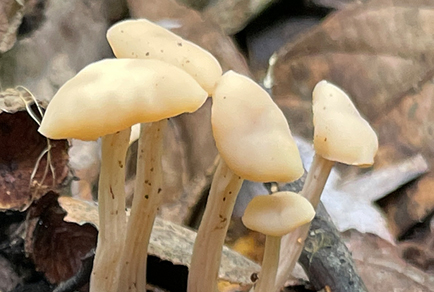
The genus Cudonia in the family Cudoniaceae is widely distributed in the temperate regions of the Northern Hemisphere, and has a limited distribution in subtropical regions. A key characteristic of this genus is its ascocarps, which are typically rounded and club-shaped. This study introduces a novel species and a known species of Cudonia from Yunnan, China, based on morphological characteristics and molecular phylogenetic analysis using rDNA of internal transcribed spacer (ITS). The new species Cudonia cangshanensis, is characterized by its stipe long clavate, slightly swollen at the base, clearly striated longitudinally at the upper part, the hymenium is relatively thick, ascospores are relatively large. Additionally, a new collection of Cudonia gracilistipitata from Dali Autonomous Prefecture is reported as well. Detailed descriptions and illustrations of the new species are provided.
References
- Burenbaatar, G., Chen, Z.Q. & Bau, T. (2025) Cudonia mongolica sp. nov. (Cudoniaceae, Rhytismatales) from Mongolia. Phytotaxa 683 (2): 156–164. https://doi.org/10.11646/phytotaxa.683.2.6
- Botanischer Verein der Provinz Brandenburg. (1870) Verhandlungen des Botanischen Vereins für die Provinz Brandenburg. Kommissions-Verlag von R. Gaertner 46, pp. 118. [https://www.biodiversitylibrary.org/page/33738300]
- Darriba, D., Taboada, G.L., Doallo, R., Posada, D. (2012) jModelTest 2: more models, new heuristics and parallel computing. Nature Methods 9: 772. https://doi.org/10.1038/nmeth.2109
- Durand, E.J. (1908) The Geoglossaceas of North America. Annales Mycologici 6 (5): 387–477.
- Fries, E.M. (1849) Summa vegetabilium Scandinaviae. Holmiae A Bonnier 2: 259–572. https://doi.org/10.5962/bhl.title.47008
- Feng, B. & Yang, Z. (2018) Studies on diversity of higher fungi in Yunnan, southwestern China: A review. Plant diversity 40 (4): 165–171. https://doi.org/10.1016/j.pld.2018.07.001
- Ge, Z.W., Yang, Z.L., Pfister, D.H., Carbone, M., Bau, T., Smith, M.E. (2014) Multigene Molecular Phylogeny and Biogeographic Diversification of the Earth Tongue Fungi in the Genera Cudonia and Spathularia (Rhytismatales, Ascomycota). PLoS ONE 9 (8): e103457. https://doi.org/10.1371/journal.pone.0103457
- Guindon, S., Gascuel, O. (2003) A simple, fast, and accurate algorithm to estimate large phylogenies by maximum likelihood. Systematic Biology 52 (5): 696–704. https://doi.org/10.1080/10635150390235520
- Hall, T.A. (1999) BioEdit: A user-friendly biological sequence alignment editor and analysis program for Windows 95/98/NT. In: Nucleic Acids Symposium Series 41 (41): 95–98.
- He, J., Han, X., Luo, Z.L., Li, E.X., Tang, S.M., Luo, H.M., Niu, K.Y., Su, X.J., Li, S.H. (2022) Species diversity of Ganoderma (Ganodermataceae, Polyporales) with three new species and a key to Ganoderma in Yunnan Province, China. Frontiers in Microbiology 13: 1035434. https://doi.org/10.3389/fmicb.2022.1035434
- Hyde, K.D., Wijesinghe, S.N., Afshari, N., Aumentado, H.D., Bhunjun, C.S., Boonmee, S., Camporesi, E., Chethana, K.W.T., Doilom, M., Dong, W., Du, T.Y., Farias, A.R.G., Gao, Y., Jayawardena, R.S., Karimi, O., Karunarathna, S.C., Kularathnage, N.D., Lestari, A.S., Li, C.J.Y., Li, Y.X., Liao, C.F., Liu, X.F., Lu, L., Lu, Y.Z., Luo, Z.L., Ma, J., Mamarabadi, M., Manawasinghe, I.S., Mapook, A., Mi, L.X., Niranjan, M., Senanayake, I.C., Shen, H.W., Su, H.L., Tibpromma, S., Xu, R.J., Yan, J.Y., Yang, Y.H., Yang, Y.Y., Yu, F.Q., Kang, J.C. & Zhang, J.Y. (2024) Mycosphere Notes 469–520. Mycosphere 15 (1): 1294–1454. https://doi.org/10.5943/mycosphere/15/1/11
- Imai, S. (1936) Studies on the Geoglossaceae of Japan. III The Genus Cudonia. Shokubutsugaku Zasshi 50 (600): 671–676. https://doi.org/10.15281/jplantres1887.50.671
- Imai, S. (1955) Contributiones ad studia monographica Geoglossacearum. II. Science Reports of the Yokohama National University.
- Katoh, K. & Standley, D.M. (2013) MAFFT multiple sequence alignment software version 7: improvements in performance and usability. Molecular Biology and Evolution 30 (4): 772–780. https://doi.org/10.1093/molbev/
- Kirk, P., Cannon, P., David, J. & Staplers, J.A. (2001) Bisby’s Dictionary of the Fungi. 672 pp.
- Lantz, H., Johnston, P.R., Park, D. & Minter, D.W. (2011) Molecular phylogeny reveals a core clade of Rhytismatales. Mycologia 103 (1): 57–74. https://doi.org/10.3852/10-060
- Mains, E.B. (1956) North American species of the Geoglossaceae. Tribe Cudonieae. Mycologia 48 (5): 694–710. https://doi.org/10.1080/00275514.1956.12024583
- Miller, M.A., Pfeiffer, W. & Schwartz, T. (2010) Creating the CIPRES Science Gateway for inference of large phylogenetic trees. In: 2010 Gateway Computing Environments Workshop, pp. 1–8. https://doi.org/10.1109/GCE.2010.5676129
- Nannfeldt, J.A. (1942) Tile Geoglossaceae of Sweden. Arkiv för Botanik 30A (4): 1–67.
- Niu, K.Y., He, J., Tang, S.M., Su, X.J. & Luo, Z.L. (2024) Morphological and phylogenetic analyses reveal three novel species of Sanguinoderma (Ganodermataceae, Basidiomycota) from Yunnan Province, China. Journal of Fungi 10 (8): 589. https://doi.org/10.3390/jof10080589
- Nylander, J.A.A. (2004) Modeltest 2.0. Program distributed by the author. Evolutionary Biology Centre, Uppsala University.
- Ohenoja, E. (1975) Leotia, Cudonia, Spathularia and Neolecta (Ascomycetes) in Finland. In: Annales Botanici Fennici. pp. 123–130.
- Qiang, T.T. (2022) Taxonomy and Molecular Phylogeny of Macrofungiin Main Forest Regions of San. Qinghai University. https://doi.org/10.27740/d.cnki.gqhdx.2022.000483
- Rannala, B., Yang, Z. (1996) Probability distribution of molecular evolutionary trees: a new method of phylogenetic inference. Journal of Molecular Evolution 43: 304–311. https://doi.org/10.1007/BF02338839
- Ronquist, F., Teslenko, M., Van, D.M.P., Ayres, D.L., Darling, A., Höhna, S., Larget, B., Liu, L., Suchard, M.A. & Huelsenbeck, J.P. (2012) MrBayes 3.2: efficient Bayesian phylogenetic inference and model choice across a large model space. Systematic Biology 61 (3): 539–542. https://doi.org/10.1093/sysbio/sys029
- Shen, H.W., Luo, Z.L., Bao, D.F., Luan, S., Bhat, D.J., Boonmee, S., Wang, W.P., Su, X.J., Li, Y.X., Al-Otibi, F., Lu, Y.Z., Yang, L.Q. & Hyde, K.D. (2024) Lignicolous freshwater fungi from China IV: Morphology and phylogeny reveal new species of Pleosporales from plateau lakes in Yunnan Province, China. Mycosphere 15 (1): 6439–6524.
- Stamatakis, A. (2014) RAxML version 8: a tool for phylogenetic analysis and post-analysis of large phylogenies. Bioinformatics 30 (9): 1312–1313. https://doi.org/10.1093/bioinformatics/btu033
- Swofford, D.L. (2002) Phylogenetic Analysis Using Parsimony (and Other Methods). Sinauer Associates, Sunderland, UK.
- Tang, S.M., Yu, F.M., Karunarathna, S.C., Luo, Z.L., Niu, K.Y., Li, R.Y., Li, L., Su, X.J. & Li, S.H. (2025) Morpho-phylogenetic analyses of two novel edible mushrooms from China and a mini review of Lyophyllum (Agaricales, Lyophyllaceae) cultivation and bioactivities. MycoKeys 112: 307–334. https://doi.org/10.3897/mycokeys.112.141615
- Tang, S.M., Vadthanarat, S., Raghoonundon, B., Luo, Z.L., Zhu, X.Y., Yu, F.M., He, J. & Li, S.H. (2024) New species and new records of Laccaria (Agaricales, Basidiomycota) from Northern Thailand. MycoKeys 107: 189–217. https://doi.org/10.3897/mycokeys.107.127907
- Vaidya, G., Lohman, D.J. & Meier, R. (2011) SequenceMatrix: concatenation software for the fast assembly of multi-gene datasets with character set and codon information. Cladistics 27 (2): 171–180. https://doi.org/10.1111/j.1096–0031.2010.00329.x
- Vu, D., Groenewald, M., De Vries, M., Gehrmann, T., Stielow, B., Eberhardt, U., Al-Hatmi, A., Groenewald, J.Z., Cardinali, G., Houbraken, J., Boekhout, T., Crous, P.W., Robert, V. & Verkley, G.J.M. (2019) Large-scale generation and analysis of filamentous fungal DNA barcodes boosts coverage for kingdom fungi and reveals thresholds for fungal species and higher taxon delimitation. Studies in mycology 92 (1): 135–154. https://doi.org/10.1016/j.simyco.2018.05.001
- Wang, Z., Binder, M. & Hibbett, D.S. (2002) A new species of Cudonia based on morphological and molecular data. Mycologia 94 (4): 641–650. https://doi.org/10.1080/15572536.2003.11833192
- Wang, Z., Johnston, P.R., Yang, Z.L. & Townsend, J.P. (2009) Evolution of Reproductive Morphology in Leaf Endophytes. PLoS ONE 4 (1): e4246. https://doi.org/10.1371/journal.pone.0004246
- White, T.J. (1990) Amplification and direct sequencing of fungal ribosomal RNA genes for phylogenetics. In: PCR Protocols: A guide to methods and applications. Academic Press, Inc, pp. 315–322.
- Yang, Z.L. (2023) Two new species of Cudonia (Rhytismatales) from southwestern China. Mycosystema 42 (1): 179–186. https://doi.org/10.13346/j.mycosystema.220412
- Yang, Z.L. (2005) Diversity and biogeography of higher fungi in China. In: Xu, J. (Ed.) Evolutionary Genetics of Fungi. Horizon Bioscience, Norfolk, pp. 35–62.