
Abstract
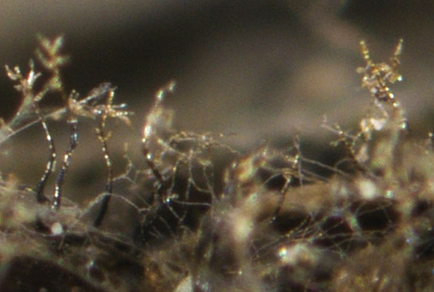
Saprobic hyphomycetes exhibit high diversity on decaying plant materials. During an investigation of fungi associated with tea (Camellia sinensis) in Sichuan Province, China, two hyphomycetous taxa were isolated from dead tea twigs. Morphological characteristics placed both taxa within the genus Helminthosporium, a polyphyletic group in the family Massarinaceae (Pleosporales). This genus is characterized by septate, erect conidiophores producing acro-pleurogenous, distoseptate conidia with a distinct ring-shaped scar at the base. Based on morphological comparison and multi-locus phylogenetic analyses of the ITS, LSU, SSU, rpb2, and tef1-α gene regions, one isolate was identified as a novel species, H. camelliae-sinensis sp. nov., while the other was confirmed as H. velutinum, representing a new host record on C. sinensis. Detailed morphological descriptions, illustrations and an updated phylogeny of Helminthosporium are provided to support the taxonomic placement and enriching the understanding of its species diversity.
References
- Alcorn, J.L. (1988) The taxonomy of “Helminthosporium” species. Annual Review of Phytopathology 26: 37–56. https://doi.org/10.1146/annurev.py.26.090188.000345
- Boonmee, S., Wanasinghe, D.N., Calabon, M.S., Huanraluek, N., Chandrasiri, S.K.U., Jones, G.E.B., Rossi, W., Leonardi, M., Singh, S.K., Rana, S., Singh, P.N., Maurya, D.K., Lagashetti, A.C., Choudhary, D., Dai, Y.C., Zhao, C.L., Mu, Y.H., Yuan, H.S., He, S.H., Phookamsak, R., Jiang, H.B., Martín, M.P., Dueñas, M., Telleria, M.T., Kałucka, I.L., Jagodziński, A.M., Liimatainen, K., Pereira, D.S., Phillips, A.J.L., Suwannarach, N., Kumla, J., Khuna, S., Lumyong, S., Potter, T.B., Shivas, R.G., Sparks, A.H., Vaghefi, N., Abdel-Wahab, M.A., Abdel-Aziz, F.A., Li, G.J., Lin, W.F., Singh, U., Bhatt, R.P., Lee, H.B., Nguyen, T.T.T., Kirk, P.M., Dutta, A.K., Acharya, K., Sarma, V.V., Niranjan, M., Rajeshkumar, K.C., Ashtekar, N., Lad, S., Wijayawardene, N.N., Bhat, D.J., Xu, R.J., Wijesinghe, S.N., Shen, H.W., Luo, Z.L., Zhang, J.Y., Sysouphanthong, P., Thongklang, N., Bao, D.F., Aluthmuhandiram, J.V.S., Abdollahzadeh, J., Javadi, A., Dovana, F., Usman, M., Khalid, A.N., Dissanayake, A.J., Telagathoti, A., Probst, M., Peintner, U., Garrido-Benavent, I., Bóna, L., Merényi, Z., Boros, L., Zoltán, B., Stielow, J.B., Jiang, N., Tian, C.M., Shams, E., Dehghanizadeh, F., Pordel, A., Javan-Nikkhah, M., Denchev, T.T., Denchev, C.M., Kemler, M., Begerow, D., Deng, C.Y., Harrower, E., Bozorov, T., Kholmuradova, T., Gafforov, Y., Abdurazakov, A., Xu, J.C., Mortimer, P.E., Ren, G.C., Jeewon, R., Maharachchikumbura, S.S.N., Phukhamsakda, C., Mapook, A. & Hyde, K.D. (2021) Fungal diversity notes 1387–1511: taxonomic and phylogenetic contributions on genera and species of fungal taxa. Fungal Diversity 111 (1): 1–335. https://doi.org/10.1007/s13225-021-00489-3
- Capella-Gutierrez, S., Silla-Martinez, J.M. & Gabaldon, T. (2009) TrimAl: a tool for automated alignment trimming in large-scale phylogenetic analyses. Bioinformatics 25: 1972–1973. https://doi.org/10.1093/bioinformatics/btp348
- Castañeda-Ruiz, R.F., Li, D.W., Zhang, X.G., Kendrick, B., Ramos-García, B., Pérez-Martínez, S. & Sosa, D. (2018) Ellismarsporium gen. nov. and Stanhughesiella gen. nov. to accommodate atypical Helminthosporium and Corynesporella species. Mycotaxon 132: 759–766. https://doi.org/10.5248/132.759
- Chen, Y.P., Tian, W.H., Guo, Y.B., Madrid, H. & Maharachchikumbura, S.S.N. (2022) Synhelminthosporium gen. et sp. nov. and two new species of Helminthosporium (Massarinaceae, Pleosporales) from Sichuan Province, China. Journal of Fungi 8: 712. https://doi.org/10.3390/jof8070712
- Chomnunti, P., Hongsanan, S., Aguirre-Hudson, B., Tian, Q., Peršoh, D., Dhami, M.K., Alias, A.S., Xu, J.C., Liu, X.Z., Stadler, M. & Hyde, K.D. (2014) The sooty moulds. Fungal Diversity 66: 1–36. https://doi.org/10.1007/s13225-014-0278-5
- Crous, P.W., Gams, W., Stalpers, J.A., Robert, V. & Stegehuis, G. (2004) MycoBank: an online initiative to launch mycology into the 21st century. Studies in Mycology 50: 19–22.
- Crous, P.W., Wingfield, M.J., Burgess, T.I., Hardy, G.E.S.J., Gené, J., Guarro, J., Baseia, I.G., García, D., Gusmão, L.F.P., Souza-Motta, C.M., Thangavel, R., Adamčík, S., Barili, A., Barnes, C.W., Bezerra, J.D.P., Bordallo, J.J., Cano-Lira, J.F., de Oliveira, R.J.V., Ercole, E., Hubka, V., Iturrieta-González, I., Kubátová, A., Martín, M.P., Moreau, P.A., Morte, A., Ordoñez, M.E., Rodríguez, A., Stchigel, A.M., Vizzini, A., Abdollahzadeh, J., Abreu, V.P., Adamčíková, K., Albuquerque, G.M.R., Alexandrova, A.V., Álvarez, Duarte, E., Armstrong-Cho, C., Banniza, S., Barbosa, R.N., Bellanger, J.M., Bezerra, J.L., Cabral, T.S., Caboň, M., Caicedo, E., Cantillo, T., Carnegie, A.J., Carmo, L.T., Castañeda-Ruiz, R.F., Clement, C.R., Čmoková, A., Conceição, L.B., Cruz, R.H.S.F., Damm, U., da Silva, B.D.B., da Silva, G.A., da Silva, R.M.F., Santiago, A.L.C.M.A., de Oliveira, L.F., de Souza, C.A.F., Déniel, F., Dima, B., Dong, G., Edwards, J., Félix, C.R., Fournier, J., Gibertoni, T.B., Hosaka, K., Iturriaga, T., Jadan, M., Jany, J.L., Jurjević, Ž., Kolařík, M., Kušan, I., Landell, M.F., Leite, Cordeiro, T.R., Lima, D.X., Loizides, M., Luo, S., Machado, A.R., Madrid, H., Magalhães, O.M.C., Marinho, P., Matočec, N., Mešić, A., Miller, A.N., Morozova, O.V., Neves, R.P., Nonaka, K., Nováková, A., Oberlies, N.H., Oliveira-Filho, J.R.C., Oliveira, T.G.L., Papp, V., Pereira, O.L., Perrone, G., Peterson, S.W., Pham, T.H.G. & Raja, H.A. (2018) Fungal Planet description sheets. Persoonia 40 (1): 240–393. https://doi.org/10.3767/persoonia.2018.40.10
- Cubeta, M.A., Echandi, E., Abernethy, T. & Vilgalys, R. (1991) Characterization of anastomosis groups of binucleate Rhizoctonia species using restriction analysis of an amplified ribosomal RNA gene. Phytopathology 81: 1395–1400. https://doi.org/10.1094/Phyto-81-1395
- Dissanayake, A.J., Bhunjun, C.S., Maharachchikumbura, S.S.N. & Liu, J.K. (2020) Applied aspects of methods to infer phylogenetic relationships amongst fungi. Mycosphere 11: 2652–2676. https://doi.org/10.5943/mycosphere/11/1/18
- Drechsler, C. (1934) Phytopathological and taxonomical aspects of Ophilobolus, Pyrenophora, Helminthosporium and a new genus Cochliobolus. Phytopathology 24 (9): 953–981.
- Ellis, M.B. (1960) Dematiaceous Hyphomycetes. I. Mycological Papers 76: 1–36.
- Ellis, M.B. (1971) Dematiaceous Hyphomycetes. Commonwealth Mycological Institute, Kew, Surrey, England, 608 pp. https://doi.org/10.1079/9780851986180.0000
- Errampalli, D., Saunders, J.M. & Holley, J.D. (2001) Emergence of silver scurf (Helminthosporium solani) as an economically important disease of potato. Plant Pathology 50: 141–153. https://doi.org/10.1046/j.1365-3059.2001.00555.x
- Farr, D.F. & Rossman, A.Y. (2022) U.S. National Fungus Collections; USDA: Washingtin, DC, USA. Fungal Databases.
- Gao, Y., Liu, F. & Cai, L. (2016) Unravelling Diaporthe species associated with Camellia. Systematics and Biodiversity 14 (1): 102–117. https://doi.org/10.1080/14772000.2015.1101027
- Hall, T. (2006) Bioedit 7.5.0.3. Department of Microbiology, North Carolina State University. Available from: [http://www.mbio.ncsu.edu/BioEdit/Bioedit.html].
- Hibbett, D.S. (1996) Phylogenetic evidence for horizontal transmission of group I introns in the nuclear ribosomal DNA of mushroom forming fungi. Molecular Biology and Evolution 13 (7): 903–917. https://doi.org/10.1093/oxfordjournals.molbev.a025658
- Hongsanan, S., Hyde, K.D., Phookamsak, R., Wanasinghe, D.N., McKenzie, E.H.C., Sarma, V.V., Lücking, R., kli, S., Bhat, J.D., Liu, N.G., Tennakoon, D.S., Pem, D., Karunarathna, A., Jiang, S.H., Jones, G.E.B., Phillips, A.J.L., Manawasinghe, I.S., Tibpromma, S., Jayasiri, S.C., Sandamali, D., Jayawardena, R.S., Wijayawardene, N.N., Ekanayaka, A.H., Jeewon, R., Lu, Y.Z., Phukhamsakda, C., Dissanayake, A.J., Zeng, X.Y., Luo, Z.L., Tian, Q., Thambugala, K.M., Dai, D., Samarakoon, M.C., Chethana, K.W.T., Ertz, D., Doilom, M., Liu, J.K.(Jack), Pérez-Ortega, S., Suija, A., Senwanna, C., Wijesinghe, S.N., Niranjan, M., Zhang, S.N., Ariyawansa, H.A., Jiang, H.B., Zhang, J.F., Norphanphoun, C., De Silva, N.I., Thiyagaraja, V., Zhang, H., Bezerra, J.D.P., Miranda-González, R., Aptroot, A., Kashiwadani, H., Harishchandra, D., Sérusiaux, E., Abeywickrama, P.D., Bao, D.F., Devadatha, B., Wu, H.X., Moon, K.H., Gueidan, C., Schumm, F., Bundhun, D., Mapook, A., Monkai, J., Bhunjun, C.S., Chomnunti, P., Suetrong, S., Chaiwan, N., Dayarathne, M.C., Yang, J., Rathnayaka, A.R., Xu, J.C., Zheng, J., Liu, G., Feng, Y. & Xie, N. (2020) Refined families of Dothideomycetes: Orders and families incertae sedis in Dothideomycetes. Fungal Diversity 105: 17–318. https://doi.org/10.1007/s13225-020-00462-6
- Hongsanan, S., Zeng, Y., Hyde, K.D. & Xie, N. (2018) Familial status of Lophiotremataceae and its related families in Pleosporales. Phytotaxa 383 (1): 93. https://doi.org/10.11646/phytotaxa.383.1.5
- Hu, Y.F., Liu, J.W., Xu, Z.H., Castañeda-Ruíz, R.F., Zhang, K. & Ma, J. (2023) Morphology and Multigene Phylogeny Revealed Three New Species of Helminthosporium (Massarinaceae, Pleosporales) from China. Journal of Fungi 9: 280. https://doi.org/10.3390/jof9020280
- Huelsenbeck, J.P. & Ronquist, F. (2001) MRBAYES: Bayesian inference of phylogenetic trees. Bioinformatics 17: 754–755. https://doi.org/10.1093/bioinformatics/17.8.754
- Jayasiri, S.C., Hyde, K.D., Ariyawansa, H.A., Bhat, J., Buyck, B., Cai, L., Dai, Y.C., Abd-Elsalam, K.A., Ertz, D., Hidayat, I., Jeewon, R., Jones, E.B.G., Bahkali, A.H., Karunarathna, S.C., Liu, J.K., Luangsa-ard, J.J., Lumbsch, H.T., Maharachchikumbura, S.S.N., McKenzie, E.H.C., Moncalvo, J.M., Ghobad-Nejhad, M., Nilsson, H., Pang, K.L., Pereira, O.L., Phillips, A.J.L., Raspé, O., Rollins, A.W., Romero, A.I., Etayo, J., Selçuk, F., Stephenson, S.L., Suetrong, S., Taylor, J.E., Tsui, C.K.M., Vizzini, A., Abdel-Wahab, M.A., Wen, T.C., Boonmee, S., Dai, D.Q., Daranagama, D.A., Dissanayake, A.J., Ekanayaka, A.H., Fryar, S.C., Hongsanan, S., Jayawardena, R.S., Li, W.J., Perera, R.H., Phookamsak, R., de Silva, N.I., Thambugala, K.M., Tian, Q., Wijayawardene, N.N., Zhao, R.L., Zhao, Q. & Kang, J.C. & Promputtha, I. (2015) The Faces of Fungi database: fungal names linked with morphology, phylogeny and human impacts. Fungal Diversity 74: 3–18. https://doi.org/10.1007/s13225-015-0351-8
- Katoh, K. & Standley, D.M. (2013) MAFFT multiple sequence alignment software version 7: improvements in performance and usability. Molecular Biology and Evolution 30: 772–780. https://doi.org/10.1093/molbev/mst010
- Konta, S., Hyde, K.D., Karunarathna, S.C., Mapook, A., Senwanna, C., Dauner, L.A.P., Nanayakkara, C.M., Xu, J., Tibpromma, S. & Lumyong, S. (2021) Multi-gene phylogeny and morphology reveal Haplohelminthosporium gen. nov. and Helminthosporiella gen. nov. associated with Palms in Thailand and a checklist for Helminthosporium reported worldwide. Life 11: 454. https://doi.org/10.3390/life11050454
- Link, H.F. (1809) Observationes in Ordines plantarum naturales. Dissertatio prima complectens Anandrarum ordines Epiphytas, Mucedines, Gastromycos et Fungos. Gesellschaft Natur 3: 3–42.
- Liu, F., Weir, B.S., Damm, U., Crous, P.W., Wang, Y., Liu, B., Wang, M., Zhang, M. & Cai, L. (2015) Unravelling Colletotrichum species associated with Camellia: employing ApMat and GS loci to resolve species in the C. gloeosporioides complex. Persoonia 35: 63–86. https://doi.org/10.3767/003158515X687597
- Liu, J., Hu, Y., Luo, X., Castaneda-Ruíz, R.F. & Ma, J. (2022) Three novel species of Helminthosporium (Massarinaceae, Pleosporales) from China. MycoKeys 94: 73–89. https://doi.org/10.3897/mycokeys.94.95888
- Liu, J.K., Chomnunti, P., Cai, L., Phookamsak, R., Chukeatirote, E., Jones, E.B.G., Moslem, M. & Hyde, K.D. (2010) Phylogeny and morphology of Neodeightonia palmicola sp. nov. from palms. Sydowia 62: 261–276.
- Luttrell, E.S. (1964) Systematics of Helminthosporium and related genera. Mycologia 56: 119–132. https://doi.org/10.2307/3756405
- Miller, M.A., Pfeiffer, W. & Schwartz, T. (2010) Creating the CIPRES science gateway for inference of large phylogenetic trees. 2010 Gateway Computing Environments Workshop (GCE 2010) 1–8. https://doi.org/10.1109/GCE.2010.5676129
- Nylander, J.A.A. (2004) Mrmodeltest v2. program distributed by the author. [http://www.abc.se/~nylander/mrmodeltest2/mrmodeltest2.html].
- Onlamun, T., Boonthavee, A. & Brooks, S. (2023) Diversity and Advantages of Culturable Endophytic Fungi from Tea (Camellia sinensis). Journal of Fungi 9 (12): 1191. https://doi.org/10.3390/jof9121191
- Rannala, B. & Yang, Z. (1996) Probability distribution of molecular evolutionary trees: a new method of phylogenetic inference. Journal of Molecular Evolution 43: 304–311. https://doi.org/10.1007/BF02338839
- Rayner, R.W. (1970) A mycological colour chart.
- Saleh, A.S., Abdul, O.N. & Masratul, H.M. (2022) Neopestalotiopsis clavispora and Pseudopestalotiopsis camelliae-sinensis causing grey blight disease of tea (Camellia sinensis) in Malaysia. European journal of plant pathology 162: 709–724. https://doi.org/10.1007/s10658-021-02433-2
- Senanayake, I.C., Rathnayaka, A.R., Marasinghe, D.S., Calabon, M.S., Gentekaki, E., Lee, H.B., Hurdeal, V.G., Pem, D., Dissanayake, L.S., Wijesinghe, S.N., Bundhun, D., Nguyen, T.T., Goonasekara, I.D. , Abeywickrama, P.D., Bhunjun, C.S. , Jayawardena, R.S., Wanasinghe, D.N. , Jeewon, R. & Bhat, D.J., Xiang, M.M. (2020) Morphological approaches in studying fungi: collection, examination, isolation, sporulation and preservation. Mycosphere 11 (1): 2678–2754. https://doi.org/10.5943/mycosphere/11/1/20
- Subramanian, C.V. & Sekar, G. (1987) Three bitunicate ascomycetes and their tretic anamorphs. Kavaka 15: 87–97.
- Tanaka, K., Hirayama, K., Yonezawa, H., Sato, G., Toriyabe, A., Kudo, H., Hashimoto, A., Matsumura, M., Harada, Y., Kurihara, Y., Shirouzu, T. & Hosoya, T. (2015) Revision of the Massarineae (Pleosporales, Dothideomycetes). Studies in Mycology 82: 75–136. https://doi.org/10.1016/j.simyco.2015.10.002
- Tian, W.H., Jin, Y., Liao, Y.C., Faraj, T.K., Guo, X.Y. & Maharachchikumbura, S.S.N. (2024) Phylogenetic Insights Reveal New Taxa in Thyridariaceae and Massarinaceae. Journal of Fungi 10 (8): 542. https://doi.org/10.3390/jof10080542
- Tsuda, M., Ueyama, A. & Nishihara, N. (1977) Pseudocochliobolus Nisikadoi, the perfect state of Helminthosporium Coicis. Mycologia 69: 1109–1120. https://doi.org/10.1080/00275514.1977.12020169
- Vaidya, G., Lohman, D.J. & Meier, R. (2011) SequenceMatrix: concatenation software for the fast assembly of multi-gene datasets with character set and codon information. Cladistics 27 (2): 171–180. https://doi.org/10.1111/j.1096-0031.2010.00329.x
- Vilgalys, R. & Hester, M. (1990) Rapid genetic identification and mapping of enzymatically amplified ribosomal DNA from several Cryptococcus species. Journal of Bacteriology 172: 4238–4246. https://doi.org/10.1128/jb.172.8.4238-4246.1990
- Voglmayr, H. & Jaklitsch, W.M. (2017) Corynespora, Exosporium and Helminthosporium revisited—New species and generic reclassification. Studies in Mycology 87: 43–76. https://doi.org/10.1016/j.simyco.2017.05.001
- Voglmayr, H., Akulov, O.Y. & Jaklitsch, W.M. (2016) Reassessment of Allantonectria, phylogenetic position of Thyronectroidea, and Thyronectria caraganae sp. nov. Mycological Progress 15 (9): 921–937. https://doi.org/10.1007/s11557-016-1218-4
- Wang, M., Liu, F., Crous, P.W. & Cai, L. (2017) Phylogenetic reassessment of Nigrospora: Ubiquitous endophytes, plant and human pathogens. Persoonia 39: 118–142. https://doi.org/10.3767/persoonia.2017.39.06
- White, T.J., Bruns, T.D., Lee, S.B. & Taylor, J.W. (1990) Amplification and direct sequencing of fungal ribosomal RNA genes for phylogenetics. In: Innis, M.A., Gelfand, D.H., Sninsky, J.J. & White, T.J. (Eds.) PCR protocols: a guide to methods and applications, Academic Press Inc, New York, pp. 315–322. https://doi.org/10.1016/B978-0-12-372180-8.50042-1
- Wijayawardene, N., Hyde, K., Dai, D., SánchezGarcía, M., Goto, B., Saxena, R., Erdogdu, M., Selçuk, F., Rajeshkumar, K. & Aptroot, A. (2022) Outline of Fungi and fungus‐like taxa‐2021. Mycosphere 13 (1): 53–453. https://doi.org/10.5943/mycosphere/13/1/2
- Xia, J.W., Ma, Y.R., Li, Z. & Zhang, X.G. (2017) Acrodictys-like wood decay fungi from southern China, with two new families Acrodictyaceae and Junewangiaceae. Scientific Reports 7 (1): 78–88. https://doi.org/10.1038/s41598-017-08318-x
- Zhang, K., Zhang, H., Li, D.W. & Castañeda-Ruiz, R.F. (2020) Mirohelminthosporium gen. nov. for an atypical Helminthosporium species and H. matsushimaenom nov. Mycotaxon 135 (4): 777–783. https://doi.org/10.5248/135.777
- Zhao, N., Luo, Z.L., Hyde, K.D., Su, H.Y., Bhat, D.J., Liu, J.K., Bao, D.F. & Hao, Y.E. (2018) Helminthosporium submersum sp. nov. (Massarinaceae) from submerged wood in north-western Yunnan Province of China. Phytotaxa 348 (4): 269–278. https://doi.org/10.11646/phytotaxa.348.4.3
- Zhaxybayeva, O. & Gogarten, J.P. (2002) Bootstrap, Bayesian probability and maximum likelihood mapping: exploring new tools for comparative genome analyses. BMC Genomics 3 (1): 4. https://doi.org/10.1186/1471-2164-3-4
- Zhu, D., Luo, Z.L., Baht, D.J., Mckenzie, E.H., Bahkali, A.H., Zhou, D.Q., Su, H.Y. & Hyde, K. (2016) Helminthosporium velutinum and H. aquaticum sp. nov. from aquatic habitats in Yunnan Province, China. Phytotaxa 253: 179–190. https://doi.org/10.11646/phytotaxa.253.3.1