

Abstract
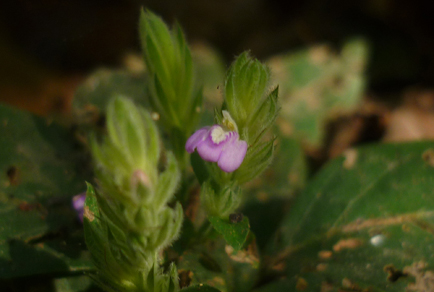
Justicia s.l. is the most species-rich genus in Acanthaceae, comprising more than 700 species worldwide. During taxonomic studies of the genus in the state of Goiás, central Brazil, three new species—Justicia dissimulata, J. kalunga, and J. oreadica—are described. Regarding their distribution, J. dissimulata potentially extends to Mato Grosso, J. kalunga is endemic to Goiás, and J. oreadica also occurs in the Federal District. Detailed illustrations, photographic plates, distribution maps, and comments on morphological delimitation and conservation status are provided. In addition, two new nomenclatural combinations, lectotypifications, and the recognition of new synonymies are proposed. Data on geographic distribution, habitat, phenology, and diagnostic morphological characters are also presented.
References
- Bachman, S., Moat, J., Hill, A., de la Torre, J. & Scott, B. (2011) Supporting Red List threat assessments with GeoCAT: geospatial conservation assessment tool. ZooKeys 150: 117–126. https://doi.org/10.3897/zookeys.150.2109
- Bentham (1841) Plantas Hartwegianas imprimis Mexicanas adjectis nonnullis Grahamianis enumerat novasque describit. W. Pamplin, London, 393 pp. https://doi.org/10.5962/bhl.title.437
- Bentham, G. (1876) Acanthaceae. In: Bentham, G. & Hooker, J.D. (Eds.) Genera plantarum 2 (2). Reeve & Co. and Williams & Norgate, London, pp. 1060–1122.
- Bremekamp, C.E.B. (1948) Notes on the Acanthaceae of Java. Verhandelingen der Koninklijke Nederlandsche Akademie van Wetenschappen, Afdeling Natuurkunde, Tweede Sectie 45: 1–78.
- Bremekamp, C.E.B. (1969) Proceedings of the Koninklijke Nederlandse Akademie van Wetenschappen, Series C: Biological and Medical Sciences 72: 427.
- Daniel, T.F. (2016) Vascular plants of Arizona: Acanthaceae acanthus or shrimp-plant family. Canotia 12: 22–54.
- Daniel, T.F. (2011) Justicia (Acanthaceae) in Texas. Journal of the Botanical Research Institute of Texas 5: 595–618.
- Ezcurra, C. (2002) El género Justicia (Acanthaceae) en Sudamérica austral. Annals of the Missouri Botanical Garden 89: 225–280. https://doi.org/10.2307/3298565
- Flora e Funga do Brasil (2025) Acanthaceae. In: Flora e Funga do Brasil. Jardim Botânico do Rio de Janeiro. Available from: https://floradobrasil.jbrj.gov.br/FB33 (accessed 16 August 2025)
- Graham, V.A.W. (1988) Delimitation and infra-generic classification of Justicia (Acanthaceae). Kew Bulletin 43: 551–624. https://doi.org/10.2307/4129957
- Harris, J.G. & Harris, M.W. (1994) Plant identification terminology: an illustrated glossary. Spring Lake Publishing, Utah, 197 pp.
- IUCN (2012) IUCN Red List Categories and Criteria, Version 3.1. Gland, Switzerland and Cambridge, U.K. IUCN Species SurvivalCommission, 38 pp. Available from: http://cmsdocs.s3.amazonaws.com/RedListGuidelines.pdf (accessed 10 June 2022)
- IUCN (2022) Guidelines for using the IUCN Red List Categories and Criteria, version 15.1. IUCN, Gland & Cambridge.
- Kiel, C.A., Daniel, T.F. & McDade, L.A. (2018) Phylogenetics of New World “justicioids” (Justicieae: Acanthaceae): major lineages, morphological patterns, and widespread incongruence with classification. Systematic Botany 43: 459–484. https://doi.org/10.1600/036364418x697201
- Kuntze, O. (1891) Vascularium omnium atque cellularium multarum secundum leges nomenclaturae internationales. Revisio Generum Plantarum 2. Leipzig, pp. 377–1011. https://doi.org/10.5962/bhl.title.124064
- Lindau, G.B. (1898) Acathaceae. In: Engler, A. (Ed.) Botanische Jahrbücher für Systematik, Pflanzengeschichte und Pfanzengeographie, Lipzig 25, Beibl. 60: 44–51.
- Lindau, G. (1895) Acanthaceae. In: Engler, H.G.A. & Prantl, K.A.E. (Eds.) Die natürlichen Pflanzenfamilien 4 (3b). pp. 274–354.
- Lindau, G. (1898) Acanthaceae. In: Urban, I. Plantae novae Americanae imprimis Glaziovianae II. Botanische Jahrbücher für Systematik 25: 44–50.
- Lindau, G. (1904) Acanthaceae Americanae III. Bulletin du L’Herbier Boissier 4: 313–328.
- Linnaeus, C. (1753) Species plantarum 1. Salvius, Stockholm, 560 pp. https://doi.org/10.5962/bhl.title.669
- Mercadante, M., Rosa, P.O., Romão, D.R. & Zanatta, M.R.V. (2025) Flora do Cerrado no Jardim Botânico de Brasília: ervas e arbustos: guia de campo. Jardim Botânico de Brasília, Brasília, 664 pp. https://doi.org/10.70271/241024.1035
- Nees von Esenbeck, C.G. (1847a) Acanthaceae. In: Martius, K.F.P. von, Eichler, A.G. & Urban, I. (Eds.) Flora Brasiliensis, vol. 9. Typographia Regia, Mónaco, pp. 1–164, pls. 1–31.
- Nees von Esenbeck, C.G. (1847b) Acanthaceae. In: Candolle, A.P. de (Ed.) Prodromus systematis naturalis regni vegetabilis 11. Masson, Paris, pp. 46–519. https://doi.org/10.5962/bhl.title.286
- QGIS Development Team (2018) QGIS 2.14.19 Brighton software. Geographic Information System. Open Source Geospatial Foundation Project. Available from: http://doc.qgis.org (accessed 20 June 2022)
- Radford, E., Dickison, W.C., Massey, J.R. & Bell, C.R. (1974) Vascular plant systematics 2nd ed.. Harper and Row, New York, 891 pp.
- Ribeiro, J.F. & Walter, B.M.T. (2008) As principais fitofisionomias do Bioma Cerrado. In: Sano, S.M., Almeida, S.P. & Ribeiro, J.F. (Eds.) Embrapa Cerrados Vol 1 (6). Embrapa Informação Tecnológica, Brasília, pp. 153–154.
- Rizzini, C.T. (1956) Carlos Toledo Rizzini (1956) Notulae de Acanthaceis novis seu minus cognitis. Dusenia 7 (6): 299–300.
- Sartin, R.D. (2015) The genus Justicia L. (Acanthaceae) in the State of Goiás, Brazil. Universidade de São Paulo, São Paulo, 135 pp. https://doi.org/10.33594/000000072
- Souza, V.C., Flores, T.B., Colleta, G.D. & Coelho, R.L.G. (2018) Guia das plantas do Cerrado. Taxon Brasil Editora e Livraria, Piracicaba, 583 pp.
- Turland, N.J., Wiersema, J.H., Barrie, F.R., Greuter, W., Hawksworth, D.L., Herendeen, P.S., Knapp, S., Kusber, W.-H., Li, D.-Z., Marhold, K., May, T.W., McNeill, J., Monro, A.M., Prado, J., Price, M.J. & Smith, G.F. (2025) International Code of Nomenclature for algae, fungi, and plants (Madrid Code) adopted by the Twentieth International Botanical Congress Madrid, Spain, July 2024. Regnum Vegetabile. https://doi.org/10.12705/code.2018
- Vilar, T.S., Kameyama, C. & Cavalcanti, T.B. (2010) Acanthaceae. In: Cavalcanti, T.B. & Batista, M.F. (orgs.) Flora do Distrito Federal. Vol. 8. Brasília: Embrapa Recursos Genéticos e Biotecnologia, pp. 15–53.
- Wasshausen, D.C. & Ezcurra, C. (1997) New names and new combinations in Justicia sects. Simonisia, Plagiacanthus and Orthotactus (Acanthaceae) from southern South America. Candollea 52: 171–179.
- Wasshausen, D.C. & Wood, J.R.I. (2004) Acanthaceae of Bolivia. Contributions from the United States National Herbarium 49: 1–152.