
Abstract
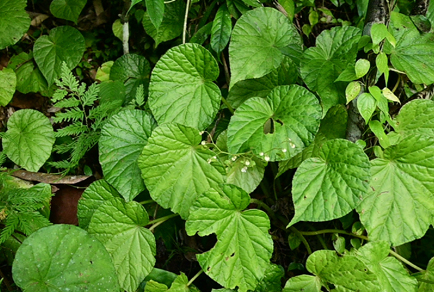
Two new species of Begonia section Baryandra, both endemic to islands in the Visayas, Philippines are described and illustrated. Begonia camugao from Bohol island and B. matulis from Cebu island were both observed in shaded forest areas with exposed limestone formations, a habitat typically preferred by most Begonia sect. Baryandra species. Morphological characterization of the species shows multiple characters which distinguish these species from their congeners. Phylogenetic placement of the species based on the nuclear ribosomal ITS region (ITS1, ITS2, and 5.8S gene) shows their distinctiveness, nested within a clade of Visayas islands species. Current progress in the knowledge of Begonia species in the Visayas islands is crucial for understanding the diversity of plants in the country, since these areas are blind spots for studies of Begonia diversity. Diagnostic characters of both species and illustrations are provided.
References
- Bachman, S., Moat, J., Hill, A.W., De La Torre, J. & Scott, B. (2011) Supporting Red List threat assessments with GeoCAT: geospatial conservation assessment tool. ZooKeys 150: 117. https://doi.org/10.3897/zookeys.150.2109
- Bucay, M.A.C., Tandang, D.N., Chen, H.-W., Rubite, R.R. & Chung, K.-F. (2025a) Morpho-anatomical description of new Begonia species (sect. Baryandra, Begoniaceae) from Butuan City, Mindanao Island, Philippines. Phytotaxa 681 (1): 102–108. https://doi.org/10.11646/phytotaxa.681.1.8
- Bucay, M.A.C., Tandang, D.N., Chen, H.-W., Tsai, L.-W., Rubite, R.R. & Chung, K.-F. (2025b) Morphological and molecular analyses revealed two new species of Begonia sect. Baryandra in the Eastern Mindanao Biodiversity Corridor, Philippines. Phytotaxa 698 (4): 245–256. https://doi.org/10.11646/phytotaxa.698.4.4
- Chapman, A.D. (2020) Current best practices for generalizing sensitive species occurrence data. GBIF Secretariat, Copenhagen. https://doi.org/10.15468/doc-5jp4-5g10
- Chung, K.-F., Leong, W.-C., Rubite, R.R., Repin, R., Kiew, R., Liu, Y. & Peng, C.-I. (2014) Phylogenetic analyses of Begonia sect. Coelocentrum and allied limestone species of China shed light on the evolution of Sino-Vietnamese karst flora. Botanical Studies 55: e1. https://doi.org/10.1186/1999-3110-55-1
- Delos Angeles, M.D., Rubite, R.R., Chung, K.-F., Buot Jr., I.E. & Tandang, D.N. (2022) Begonia normaaguilariae (section Baryandra, Begoniaceae), a new species from the limestone forests of Samar Island, Philippines. Phytotaxa 541 (1): 49–56. https://doi.org/10.11646/phytotaxa.541.1.4
- Hughes, M., Rubite, R.R., Blanc, P., Chung, K.-F. & Peng, C.-I. (2015) The Miocene to Pleistocene colonization of the Philippine archipelago by Begonia sect. Baryandra (Begoniaceae). American Journal of Botany 102 (5): 695–706. https://doi.org/10.3732/ajb.1400428
- IUCN Standards and Petitions Subcommittee (2024) Guidelines for using the IUCN Red List Categories and Criteria. Version 16. Available from: https://www.iucnredlist.org/documents/RedListGuidelines.pdf (accessed 30 April 2026)
- Liu, S.-H., Tseng, Y.-H., Zure, D., Rubite, R.R., Balangcod, T.D., Peng, C.-I. & Chung, K.-F. (2019) Begonia balangcodiae sp. nov. from northern Luzon, the Philippines and its natural hybrid with B. crispipila, B. × kapangan nothosp. nov. Phytotaxa 407 (1): 5–21. https://doi.org/10.11646/phytotaxa.407.1.3
- Merrill, E.D. (1912 [1911]) The Philippine species of Begonia. Philippine Journal of Science, section C, Botany 6 (6): 369–406.
- Pelser, P.B., Barcelona, J.F. & Nickrent, D.L. (2011 onwards) Co’s Digital Flora of the Philippines. [www.philippineplants.org]
- Peng, C.-I., Rubite, R.R., Lin, C.-W., Hughes, M., Kono, Y. & Chung, K.-F. (2017) Three new species of Begonia sect. Baryandra from Panay Island, Philippines. Botanical Studies 58. https://doi.org/10.1186/s40529-017-0182-x
- Rambaut, A. (2018) FigTree v1.4.4, a graphical viewer of phylogenetic trees. Available from: https://tree.bio.ed.ac.uk/software/figtree/ (accessed 30 April 2026)
- Rubite, R.R., Justo, C.A.D.G., Villaseñor, P.C., Angeles, M.D.D., Tandang, D.N. & Lin, C.-W. (2021) Three new species of Begonia (section Baryandra, Begoniaceae) from Samar Island, the Philippines. Phytotaxa 516 (3): 263–234. https://doi.org/10.11646/phytotaxa.516.3.5