

Abstract
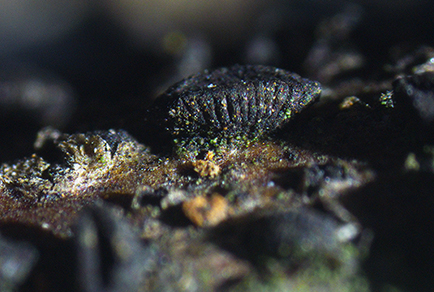
Global research on saprophytic fungi associated with Tetradium ruticarpum remains limited. In a survey of fungal diversity on T. ruticarpum in southeastern China, six Rhytidhysteron specimens were collected from Anhui, Hunan, and Jiangxi provinces. Phylogenetic analyses, employing Maximum-likelihood and Bayesian inference, were conducted on a combined dataset of LSU, ITS, SSU, and tef1-α sequences. Both morphological and phylogenetic evidence confirmed two new host records of Rhytidhysteron on Tetradium ruticarpum: Rhytidhysteron subrufulum and R. hongheense. Additionally, three isolates previously identified as R. rufulum were reclassified as R. subrufulum based on phylogenetic analyses and morphological characteristics.
References
- Bhagat, J., Kaur, A., Sharma, M., Saxena, A.K. & Chadha, B.S. (2012) Molecular and functional characterization of endophytic fungi from traditional medicinal plants. World Journal of Microbiology and Biotechnology 28 (3): 963–971. https://doi.org/10.1007/s11274-011-0894-0
- Boehm, E.W.A., Schoch, C.L. & Spatafora, J.W. (2009) On the evolution of the Hysteriaceae and Mytilinidiaceae (Pleosporomycetidae, Dothideomycetes, Ascomycota) using four nuclear genes. Mycological Research 113 (4): 461–479. https://doi.org/10.1016/j.mycres.2008.12.001
- Cao, W.L., Wei, B.Y., Cao, L., Li, L.P. & Xu, L.S. (2011) Screening of endophytic fungi in Euodia ruticarpa to producing evodiamine, rutaecarpine or theirs structural analogs. Hunan Agricultural Sciences 23 (12): 16–24. https://doi.org/10.16498/j.cnki.hnnykx.2011.23.030
- Carbone, I. & Kohn, L.M. (1999) A method for designing primer sets for speciation studies in filamentous ascomycetes. Mycologia 91 (3): 553–556. https://doi.org/10.1080/00275514.1999.12061051
- Chander, J., Singla, N., Kundu, R., Handa, U. & Chowdhary, A. (2017) Phaeohyphomycosis caused by Rhytidhysteron rufulum and review of literature. Mycopathologia 182 (3–4): 403–407. https://doi.org/10.1007/s11046-016-0064-x
- Cheek, M., Nic Lughadha, E.N., Kirk, P., Lindon, H., Carretero, J., Looney, B., Douglas, B., Haelewaters, D., Gaya, E., Llewellyn, T., Ainsworth, A.M., Gafforov, Y., Hyde, K.D., Crous, P., Hughes, M., Walker, B.E., Forzza, R.C., Wong, K.M. & Niskanen, T. (2020) New scientific discoveries: Plants and fungi. Plants, People, Planet 2 (5): 371–388. https://doi.org/10.1002/ppp3.10148
- Chen, C.Y. & Hsieh, W.H. (1996) Two new species and some new records of ascomycetes from Taiwan. Botanical Bulletin of Academia Sinica 37.
- Clements, F.E. & Shear, C.L. (1931) The Genera of Fungi. Hafner Publishing Co., New York, 632 pp.
- Chethana, K.W.T., Manawasinghe, I.S., Hurdeal, V.G., Bhunjun, C.S., Appadoo, M.A., Gentekaki, E., Raspé, O., Promputtha, I. & Hyde, K.D. (2021) What are fungal species and how to delineate them? Fungal Diversity 109: 1–25. https://doi.org/10.1007/s13225-021-00483-9
- Cobos-Villagrán, A., Valenzuela, R., Hernández-Rodríguez, C., Calvillo-Medina, R.P., Villa-Tanaca, L., Mateo-Cid, L.E., Pérez-Valdespino, A., Martínez-González, C.R. & Raymundo, T. (2021a) Three new species of Rhytidhysteron (Dothideomycetes, Ascomycota) from Mexico. MycoKeys 83: 123–144. https://doi.org/10.3897/mycokeys.83.68582
- Cobos-Villagrán, A., Raymundo, T., Calvillo-Medina, R.P. & Valenzuela, R. (2021b) Rhytidhysteron mexicanum sp. nov. (Dothideomycetes, Ascomycota) from the Sierra of Guadalupe, Trans Mexican Volcanic Belt. Phytotaxa 479: 275–286. https://doi.org/10.11646/phytotaxa.479.3.4
- Dai, D.Q., Suwannarach, N., Bamunuarachchige, T.C. & Karunarathna, S.C. (2023) Editorial: Plant-fungal interactions. Frontiers in Microbiology 14: 1236394. https://doi.org/10.3389/fmicb.2023.1236394
- De Silva, N.I., Tennakoon, D.S., Thambugala, K.M., Karunarathna, S.C., Lumyong, S. & Hyde, K.D. (2020) Morphology and multigene phylogeny reveal a new species and a new record of Rhytidhysteron (Dothideomycetes, Ascomycota) from China. Asian Journal of Mycology 3 (1): 295–306. https://doi.org/10.5943/ajom/3/1/4
- De Silva, N.T., Thambugala, K.M., Yasanthika, W. & Ekanayaka, A.H. (2026) Sri Lanka, a new hotspot for Rhytidhysteron (Hysteriaceae): a novel species and three new records. Phytotaxa 742 (1): 55–75. https://doi.org/10.11646/phytotaxa.742.1.3
- Dingle, T.C., Jansen, B., Walker, C., Sam, M., Verity, B., Purdy, D., Paul, P. & Schwartz, I.S. (2022) Implantation subcutaneous phaeohyphomycosis caused by Rhytidhysteron rufulum: A case report. Medical Mycology Case Reports 36: 16–18. https://doi.org/10.1016/j.mmcr.2022.03.002
- Doilom, M., Dissanayake, A.J., Wanasinghe, D.N., Boonmee, S., Liu, J.K., Bhat, D.J., Taylor, J.E., Bahkali, A.H., McKenzie, E.H.C. & Hyde, K.D. (2017) Microfungi on Tectona grandis (teak) in Northern Thailand. Fungal Diversity 82: 107–182. https://doi.org/10.1007/s13225-016-0368-7
- Doyle, J.J. & Doyle, J.L. (1987) A rapid DNA isolation procedure for small quantities of fresh leaf tissue. Phytochemical Bulletin 19 (1): 11–15.
- Du, T.Y., Dai, D.Q., Mapook, A., Lu, L., Stephenson, S.L., Suwannarach, N., Elgorban, A.M., Al-Rejaie, S., Karunarathna, S.C. & Tibpromma, S. (2023) Additions to Rhytidhysteron (Hysteriales, Dothideomycetes) in China. Journal of Fungi 9 (2). https://doi.org/10.3390/jof9020148
- Glez-Peña, D., Gómez-Blanco, D., Reboiro-Jato, M., Fdez-Riverola, F. & Posada, D. (2010) ALTER: program-oriented format conversion of DNA and protein alignments. Nucleic Acids Research 38 (Web Server issue): W14–W18. https://doi.org/10.1093/nar/gkq321
- Guindon, S., Dufayard, J.F., Lefort, V., Anisimova, M., Hordijk, W. & Gascuel, O. (2010) New algorithms and methods to estimate maximum-likelihood phylogenies: assessing the performance of PhyML 3.0. Systematic Biology 59 (3): 307–321. https://doi.org/10.1093/sysbio/syq010
- Hall, T.A. (1999) BioEdit: A User-Friendly Biological Sequence Alignment Editor and Analysis Program for Windows 95/98/NT. Nucleic Acids Symposium Series 41: 95–98.
- Ho, M.Y., Chung, W.C., Huang, H.C. & Chung, W.H. (2012) Identification of endophytic fungi of medicinal herbs of Lauraceae and Rutaceae with antimicrobial property. Taiwania 57 (3): 229–241. https://doi.org/10.6165/tai.2012.57(3).229
- Hoang, D.T., Chernomor, O., von Haeseler, A., Minh, B.Q. & Vinh, L.S. (2017) UFBoot2: Improving the Ultrafast bootstrap approximation. Molecular Biology and Evolution 35 (2): 518–522. https://doi.org/10.1093/molbev/msx281
- Hongsanan, S., Khuna, S., Manawasinghe, I.S., Tibpromma, S., Chethana, K.W.T., Xie, N., Bagacay, J.F.E., Calabon, M.S., Chen, C., Doilom, M., Du, H.Y., Gafforov, Y., Huang, S.K., Li, J.X., Luangharn, T., Luo, Z.L., Opiña, L.A.D., Pem, D., Sadaba, R.B., Singh, R., Tan, Q., Tang, S.M., Wang, W.P., Wen, T.C., Xia, G., Zhao, Q., Bhunjun, C.S., Cao, B., Chen, Y.P., de Silva, N.I., Dai, D.Q., Dong, W., Du, T.Y., Ferreira‑Sá, A.S., Gao, Y., Gui, H., Han, L.S., Han, M.Y., Han, X.X., Jayawardena, R.S., Khyaju, S., Kumar, S., Lei, L., Leonardo‑Silva, L., Li, H., Li, Y.X., Liao, C.F., Liu, J.W., Liu, X.F., Lu, L., Lu, W.H., Luo, M., Maharachchikumbura, S.S.N., Meng, Q.F., Mi, L.X., Norphanphoun, C., Peng, X.C., Su, H.L., Tennakoon, D.S., Thiyagaraja, V., Tun, Z.L., Wijayawardene, N.N., Xavier‑Santos, S., Xiong, Y.R., Xu, R.F., Yadav, S., Yang, T., Yang, Y.H., Yarasheva, M., Zeng, X.Y., Zhang, H., Zhang, G.Q., Zhang, X., Zhao, H.J., Zhao, R.L., Zheng, D.G., Wanasinghe, D.N. & Karunarathna, S.C. (2025) Mycosphere Notes 521–571: A special edition of fungal biodiversity to celebrate Kevin D. Hyde’s 70th birthday and his exceptional contributions to Mycology. Mycosphere 16: 1–178. https://doi.org/10.5943/mycosphere/16/2/1
- Hyde, K.D., Dong, Y., Phookamsak, R., Jeewon, R., Bhat, D.J., Jones, E.B.G., Liu, N.G., Abeywickrama, P.D., Mapook, A., Wei, D., Perera, R.H., Manawasinghe, I.S., Pem, D., Bundhun, D., Karunarathna, A., Ekanayaka, A.H., Bao, D.F., Li, J., Samarakoon, M.C., Chaiwan, N., Lin, C.G., Phutthacharoen, K., Zhang, S.N., Senanayake, I.C., Goonasekara, I.D., Thambugala, K.M., Phukhamsakda, C., Tennakoon, D.S., Jiang, H.B., Yang, J., Zeng, M., Huanraluek, N., Liu, J.K., Wijesinghe, S.N., Tian, Q., Tibpromma, S., Brahmanage, R.S., Boonmee, S., Huang, S.K., Thiyagaraja, V., Lu, Y.Z., Jayawardena, R.S., Dong, W., Yang, E.F., Singh, S.K., Singh, S.M., Rana, S., Lad, S.S., Anand, G., Devadatha, B., Niranjan, M., Sarma, V.V., Liimatainen, K., Aguirre-Hudson, B., Niskanen, T., Overall, A., Alvarenga, R.L.M., Gibertoni, T.B., Pfliegler, W.P., Horváth, E., Imre, A., Alves, A.L., Santos, A.C.d.S., Tiago, P.V., Bulgakov, T.S., Wanasinghe, D.N., Bahkali, A.H., Doilom, M., Elgorban, A.M., Maharachchikumbura, S.S.N., Rajeshkumar, K.C., Haelewaters, D., Mortimer, P.E., Zhao, Q., Lumyong, S., Xu, J. & Sheng, J. (2020) Fungal diversity notes 1151–1276: taxonomic and phylogenetic contributions on genera and species of fungal taxa. Fungal Diversity 100 (1): 5–277. https://doi.org/10.1007/s13225-020-00439-5
- Hyde, K.D., Jones, E.B.G., Liu, J.K., Ariyawansa, H., Boehm, E., Boonmee, S., Braun, U., Chomnunti, P., Crous, P.W., Dai, D.Q., Diederich, P., Dissanayake, A., Doilom, M., Doveri, F., Hongsanan, S., Jayawardena, R., Lawrey, J.D., Li, Y.M., Liu, Y.X., Lücking, R., Monkai, J., Muggia, L., Nelsen, M.P., Pang, K.L., Phookamsak, R., Senanayake, I.C., Shearer, C.A., Suetrong, S., Tanaka, K., Thambugala, K.M., Wijayawardene, N.N., Wikee, S., Wu, H.X., Zhang, Y., Aguirre-Hudson, B., Alias, S.A., Aptroot, A., Bahkali, A.H., Bezerra, J.L., Bhat, D.J., Camporesi, E., Chukeatirote, E., Gueidan, C., Hawksworth, D.L., Hirayama, K., De Hoog, S., Kang, J.C., Knudsen, K., Li, W.J., Li, X.H., Liu, Z.Y., Mapook, A., McKenzie, E.H.C., Miller, A.N., Mortimer, P.E., Phillips, A.J.L., Raja, H.A., Scheuer, C., Schumm, F., Taylor, J.E., Tian, Q., Tibpromma, S., Wanasinghe, D.N., Wang, Y., Xu, J.C., Yacharoen, S., Yan, J.Y. & Zhang, M. (2013) Families of Dothideomycetes. Fungal Diversity 63: 1–313. https://doi.org/10.1007/s13225-013-0263-4
- Jayasiri, S.C., Hyde, K.D., Jones, E.B.G., Peršoh, D., Camporesi, E. & Kang, J.C. (2018) Taxonomic novelties of hysteriform Dothideomycetes. Mycosphere 9 (4): 803–837. https://doi.org/10.5943/mycosphere/9/4/8
- Jeewon, R. & Hyde, K.D. (2016) Establishing species boundaries and new taxa among fungi: recommendations to resolve taxonomic ambiguities. Mycosphere 7: 1669–1677. https://doi.org/10.5943/mycosphere/7/11/4
- Kumar, V., Cheewangkoon, R., Thambugala, K.M., Jones, G.E., Brahmanage, R.S., Doilom, M., Jeewon, R. & Hyde, K.D. (2019) Rhytidhysteron mangrovei (Hysteriaceae), a new species from mangroves in Phetchaburi Province, Thailand. Phytotaxa 401: 166–178. https://doi.org/10.11646/phytotaxa.401.3.2
- Li, M. & Wang, C. (2020) Traditional uses, phytochemistry, pharmacology, pharmacokinetics and toxicology of the fruit of Tetradium ruticarpum: A review. Journal of Ethnopharmacology 263: 113231. https://doi.org/10.1016/j.jep.2020.113231
- Li, X.J.Y., Ge, J.D., Zheng, Q., Zhang, J.X., Sun, R. & Liu, R.P. (2020) Evodiamine and rutaecarpine from Tetradium ruticarpum in the treatment of liver diseases. Phytomedicine: International Journal of Phytotherapy and Phytopharmacology 68: 153180. https://doi.org/10.1016/j.phymed.2020.153180
- Li, Z.X., Wu, X.H., Wei, B.Y., Cao, L., Huang, D. & Li, S.X. (2011) Screening and identification of endophytic fungus producing structural analogues of evodiamine. Central South Pharmacy 9 (2). https://doi.org/10.3969/j.issn.1672-2981.2011.02.012
- Lücking, R. (2019) Stop the abuse of time! Strict temporal banding is not the future of rank-based classifications in Fungi (including lichens) and Other Organisms. Critical Reviews in Plant Sciences 38: 199–253. https://doi.org/10.1080/07352689.2019.1650517
- Mapook, A., Hyde, K.D., McKenzie, E.H.C., Jones, E.B.G., Bhat, D.J., Jeewon, R., Stadler, M., Samarakoon, M.C., Malaithong, M., Tanunchai, B., Buscot, F., Wubet, T. & Purahong, W. (2020) Taxonomic and phylogenetic contributions to fungi associated with the invasive weed Chromolaena odorata (Siam weed). Fungal Diversity 101 (1): 1–175. https://doi.org/10.1007/s13225-020-00444-8
- Mi, L.X., Song, H.Y., Hyde, K.D., Eungwanichayapant, P.D., Mapook, A., Chen, M.S. & Hu, D.M. (2025a) Morphological and phylogenetic characterization of a new Cyphellophora (Chaetothyriales, Cyphellophoraceae) species associated with Tetradium ruticarpum from Guangxi Province, China. Phytotaxa 704 (3): 239–254. https://doi.org/10.11646/phytotaxa.704.3.3
- Mi, L.X., Song, H.Y., Hyde, K.D., Eungwanichayapant, P.D., Mapook, A., Chen, M.S. & Hu, D.M. (2026a) First report on the asexual morphology of Nigrograna jinghongensis (Nigrogranaceae, Pleosporales) with a new host record from China. New Zealand Journal of Botany 64 (1): e70004. https://doi.org/10.1002/nzb2.70004
- Mi, L.X., Song, H.Y., Eungwanichayapant, P.D. & Hu, D.M. (2025b) Integrative taxonomy reveals Pseudokeissleriella tetradii sp. nov. (Lentitheciaceae, Pleosporales) associated with Tetradium ruticarpum in Anhui Province, China. Phytotaxa 710 (2): 165–183. https://doi.org/10.11646/phytotaxa.710.2.2
- Mi, L.X., Hu, D.M., Hyde, K.D., Eungwanichayapant, P.D., Mapook, A., Tennakoon, D.S., Zhang, J.Y. & Song, H.Y. (2026b) Funiliomycetaceae fam. nov. (Amphisphaeriales, Ascomycota) accommodating Funiliomyces, including F. jiangxiensis sp. nov. from Tetradium ruticarpum and ten new combinations. IMA Fungus 17: e179140. https://doi.org/10.3897/imafungus.17.179140
- Mishra, K., Das, S., Goyal, S., Gupta, C., Rai, G., Ansari, M.A., Saha, R. & Singal, A. (2014) Subcutaneous mycoses caused by Rhytidhysteron species in an immunocompetent patient. Medical mycology case reports 5: 32–34. https://doi.org/10.1016/j.mmcr.2014.07.002
- Mugambi, G.K. & Huhndorf, S.M. (2009) Parallel evolution of hysterothecial ascomata in ascolocularous fungi (Ascomycota, Fungi). Systematics and Biodiversity 7 (4): 453–464. https://doi.org/10.1017/S147720000999020X
- Murillo, C., Federico, J.A., Julieta, C., Thorsten, L. & Giselle, T. (2009) Molecular data indicate that Rhytidhysteron rufulum (Ascomycetes, Patellariales) in Costa Rica consists of four distinct lineages corroborated by morphological and chemical characters. Mycological Research 113 (4): 405–416. https://doi.org/10.1016/j.mycres.2008.09.003
- Nylander, J.A.A. (2004) MrModeltest v2. Program distributed by the author, Evolutionary Biology Centre, Uppsala University, Uppsala.
- Rambaut, A. (2018) FigTree, a graphical viewer of phylogenetic trees (Version 1.4.4). Institute of Evolutionary Biology, University of Edinburgh, Edinburgh, UK.
- Rathnayaka, A.R., Tennakoon, D.S., Jones, G.E., Wanasinghe, D.N., Bhat, D.J., Priyashantha, A.H., Stephenson, S.L., Tibpromma, S. & Karunarathna, S.C. (2025) Significance of precise documentation of hosts and geospatial data of fungal collections, with an emphasis on plant-associated fungi. New Zealand Journal of Botany 63 (2–3): 462–489. https://doi.org/10.1080/0028825X.2024.2381734
- Ren, G.C., Wanasinghe, D.N., Jeewon, R., Monkai, J., Mortimer, P.E., Hyde, K.D., Xu, J.C. & Gui, H. (2022) Taxonomy and phylogeny of the novel rhytidhysteron-like collections in the Greater Mekong Subregion. MycoKeys 86: 65–85. https://doi.org/10.3897/mycokeys.86.70668
- Ronquist, F., Teslenko, M., van der Mark, P., Ayres, D.L., Darling, A., Höhna, S., Larget, B., Liu, L., Suchard, M.A. & Huelsenbeck, J.P. (2012) MrBayes 3.2: Efficient bayesian phylogenetic Inference and model choice across a large model space. Systematic Biology 61: 539–542. https://doi.org/10.1093/sysbio/sys029
- Samuels, G.J. & Muller, E. (1979) Life history studies of Brazilian ascomycetes. 7. Rhytidhysteron rufulum and the genus Eutryblidiella. Sydowia 32: 277–292.
- Senanayake, I.C., Rathnayaka, A.R., Marasinghe, D.S., Calabon, M.S., Gentekaki, E., Lee, H.B., Hurdeal, V.G., Pem, D., Dissanayake, L.S., Wijesinghe, S.N., Bundhun, D., Nguyen, T.T., Goonasekara, I.D., Abeywickrama, P.D., Bhunjun, C.S., Jayawardena, R.S., Wanasinghe, D.N., Jeewon, R., Bhat, D.J. & Xiang, M.M. (2020) Morphological approaches in studying fungi: Collection, examination, isolation, sporulation and preservation. Mycosphere 11: 2678–2754. https://doi.org/10.5943/mycosphere/11/1/20
- Senwanna, C., Suwannarach, N., Phookamsak, R., Kumla, J. & Hongsanan, S. (2023) New host and geographical records of Rhytidhysteron in northern Thailand, and species synonymization. Phytotaxa 601: 157–173. https://doi.org/10.11646/phytotaxa.601.2.3
- Sirinthipaporn, A. & Jiraungkoorskul, W. (2017) Wound healing property review of Siam weed, Chromolaena odorata. Pharmacognosy Reviews 11 (21): 35–38. https://doi.org/10.4103/phrev.phrev_53_16
- Species Fungorum. (2026) Species Fungorum. Available from: https://www.speciesfungorum.org/names/Names.asp (accessed 3 March 2026)
- Spegazzini, C. (1881) Fungi argentini additis nonnullis brasiliensibus montevideensibusque. Pugillus quartus (Continuacion). Anales de la Sociedad Científica Argentina 12: 174–189.
- Swofford, D.L. (2002) PAUP*: phylogenetic analysis using parsimony (*and other methods), version 4.0b10. Sinauer Associates, Sunderland.
- Thambugala, K.M., Hyde, K.D., Eungwanichayapant, P.D. & Liu, Z.Y. (2016) Additions to the Genus Rhytidhysteron in Hysteriaceae. Cryptogamie, Mycologie 37 (1): 99–116. https://doi.org/10.7872/crym/v37.iss1.2016.99
- Trifinopoulos, J., Nguyen, L.T., von Haeseler, A. & Bui, M.Q. (2016) W-IQ-TREE: a fast online phylogenetic tool for maximum likelihood analysis. Nucleic Acids Research 44 (W1): W232–W235. https://doi.org/10.1093/nar/gkw256
- Vilgalys, R. & Hester, M. (1990) Rapid genetic identification and mapping of enzymatically amplified ribosomal DNA from several Cryptococcus species. Journal of bacteriology 172: 4238–4246. https://doi.org/10.1128/jb.172.8.4238-4246.1990
- Vu, D., Groenewald, M., De Vries, M., Gehrmann, T., Stielow, B., Eberhardt, U., Al-Hatmi, A., Groenewald, J.Z., Cardinali, G., Houbraken, J., Boekhout, T., Crous, P.W., Robert, V. & Verkley, G.J.M. (2019) Large-scale generation and analysis of filamentous fungal DNA barcodes boosts coverage for kingdom fungi and reveals thresholds for fungal species and higher taxon delimitation. Studies in Mycology 91: 23–36. https://doi.org/10.1016/j.simyco.2018.05.001
- Wanasinghe, D.N., Mortimer, P.E. & Xu, J. (2021) Insight into the systematics of microfungi colonizing dead woody twigs of Dodonaea viscosa in Honghe (China). Journal of Fungi 7 (3): 180. https://doi.org/10.3390/jof7030180
- Wang, F.H., Xu, X.L., Zeng, Q., Liu, L.J., Liu, F., Deng, Y., Sun, Q.R., Yan, Y.Q., Li, X.Y., Xiang, S.S., Shuai, Q., Liu, Y.G., Li, S.J., Yang, H., Han, S., Liu, L. & Yang, C.L. (2025) Microfungi associated with walnut trees in southwestern China. Mycosphere 16 (1): 2002–2258. https://doi.org/10.5943/mycosphere/16/1/12
- Wang, Z.C., Wang, L., Pan, Y.P., Zheng, X.P., Liang, X.N., Sheng, L.L., Zhang, D., Sun, Q. & Wang, Q. (2023) Research advances on endophytic fungi and their bioactive metabolites. Bioprocess and Biosystems Engineering 46 (2): 165–170. https://doi.org/10.1007/s00449-022-02840-7
- White, T.J., Bruns, T., Lee, S. & Taylor, J. (1990) Amplification and direct sequencing of fungal ribosomal RNA genes for phylogenetics. In: Innis, M.A., Gelfand, D.H., Sninsky, J.J. & White, T.J. (Eds.) PCR Protocols. A Guide to Methods and Applications. Academic Press, New York, pp. 315–322. https://doi.org/10.1016/B978-0-12-372180-8.50042-1
- Wipf, P., Lynch, S.M., Birmingham, A., Tamayo, G., Jiménez, A., Campos, N. & Powis, G. (2004) Natural product based inhibitors of the thioredoxin-thioredoxin reductase system. Organic & Biomolecular Chemistry 2 (11): 1651–1658. https://doi.org/10.1039/b402431a
- Xiao, S.J., Xu, X.K., Chen, W., Xin, J.Y., Yuan, W.L., Zu, X.P. & Shen, Y.H. (2023) Traditional Chinese medicine Euodiae Fructus: botany, traditional use, phytochemistry, pharmacology, toxicity and quality control. Natural Products and Bioprospecting 13 (1): 6. https://doi.org/10.1007/s13659-023-00369-0
- Xie, J.M., Chen, Y.R., Cai, G.J., Cai, R.L., Hu, Z. & Wang, H. (2023) Tree Visualization By One Table (tvBOT): a web application for visualizing, modifying and annotating phylogenetic trees. Nucleic Acids Research 51 (W1): W587–W592. https://doi.org/10.1093/nar/gkad359
- Xu, X.L., Xiao, Q.G., Yang, C.L., Jeewon, R. & Liu, Y.G. (2022) Multigene phylogenetic support for novel Rhytidhysteron speg. species (Hysteriaceae) from Sichuan Province, China. Cryptogamie, Mycologie 43 (3). https://doi.org/10.5252/cryptogamie-mycologie2022v43a3
- Yu, J.S., Zheng, Y.X., Song, C. & Chen, S.L. (2024) New insights into the roles of fungi and bacteria in the development of medicinal plant. Journal of Advanced Research 65: 137152. https://doi.org/10.1016/j.jare.2023.12.007
- Zhang, D., Gao, F.L., Jakovlić, I., Zou, H., Zhang, J., Li, W.X. & Wang, G.T. (2020) PhyloSuite: An integrated and scalable desktop platform for streamlined molecular sequence data management and evolutionary phylogenetics studies. Molecular Ecology Resources 20: 348–355. https://doi.org/10.1111/1755-0998.13096
- Zhang, J.F., Liu, J.K., Hyde, K.D., Chen, Y.Y., Ran, H.Y. & Liu, Z.Y. (2023) Ascomycetes from karst landscapes of Guizhou Province, China. Fungal Diversity 122 (1): 1160. https://doi.org/10.1007/s13225-023-00524-5
- Zhao, G.L., Lu, Y.Z., Xiao, X.J., Liu, Y., Chen, Q. & Liu, N.G. (2025a) Morphological and phylogenetic analyses reveal three new species associated with Pueraria from Xizang Autonomous Region, China. MycoKeys 125: 347–368. https://doi.org/10.3897/mycokeys.125.174645
- Zhao, L.L., Zhang, L., Jiao, N., Li, M. & Zhang, Y. (2025b) Branch blight and dieback of walnut (Juglans regia L.) caused by Rhytidhysteron juglandis sp. nov. and its endophytic biocontrol agent Granulobasidium vellereum. Phytotaxa 705 (1): 19–34. https://doi.org/10.11646/phytotaxa.705.1.2
- Zhu, Q.L. (2007) The study on second metabolites of an endophytic fungus from Evodia rutaecarpa and chemical constituents of Lysimachia lobelioides Wall. Guizhou University, China, pp. 33–34.