
Abstract
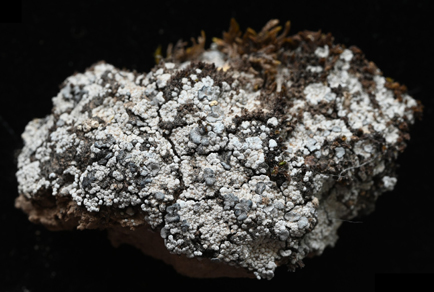
The lichen genus Thalloidima (Ramalinaceae, Ascomycota) is reported as new to China, with specimens primarily collected from the Qinghai-Tibetan Plateau. Through an integrative approach combining morphological, chemical, and molecular phylogenetic analyses of nrDNA ITS sequences, three species new to science are described: T. lobulatum Yu X. Gan & Xin Y. Wang, T. qinghaiense Yu X. Gan & Xin Y. Wang, and T. triseptatum Yu X. Gan & Xin Y. Wang. Additionally, T. sedifolium and T. squamatum are recorded in China for the first time. These discoveries bring the total number of recognised species within Thalloidima to 21. Critical diagnostic characters, including ascospore septation, thallus pruina development, and substrate specificity, are detailed and illustrated. A comprehensive taxonomic key to all currently known species of the genus is also provided.
References
- Ai, M., Li, L.J., Worthy, F.R., Yin, A.C., Zhong, Q.Y., Wang, S.Q., Wang, L.S. & Wang, X.Y. (2022) Taxonomy of Buellia epigaea-group (Caliciales, Caliciaceae), revealing a new species and two new records from China. MycoKeys 92: 45–62. https://doi.org/10.3897/mycokeys.92.83939
- CLH (Consortium of Lichen Herbaria) (2025) Consortium of Lichen Herbaria database. University of Colorado Museum of Natural History, Boulder, Colorado. Available from: http://lichenportal.org/ (accessed 28 May 2026)
- Culberson, C.F. (1972) Improved conditions and new data for identification of lichen products by standardized thin-layer chromatographic methods. Journal of Chromatography 72: 113–125. https://doi.org/10.1016/0021-9673(72)80013-X
- Del-Prado, R., Buaruang, K., Lumbsch, H.T., Crespo, A. & Divakar, P.K. (2019) DNA sequence-based identification and barcoding of a morphologically highly plastic lichen forming fungal genus (Parmotrema, Parmeliaceae) from the tropics. The Bryologist 122 (2): 281–291. https://doi.org/10.1639/0007-2745-122.2.281
- Ekman, S. (2001) Molecular phylogeny of the Bacidiaceae (Lecanorales, lichenized Ascomycota). Mycological Research 105: 783–797. https://doi.org/10.1017/S0953756201004269
- Elix, J.A. (2014) A Catalogue of Standardized Chromatographic Data and Biosynthetic Relationships for Lichen Substances. Australian Biological Resources Study, Canberra, Australia, 178 pp.
- Fries, T.M. (1874) Lichenographia Scandinavica sive dispositio lichenum in Dania, Suecia, Norvegia, Fennia, Lapponia Rossica hactus collectorum. Vol. I Archilichenes discocarpos continens. Pars II. Upsaliae, pp. 325–639.
- Gardes, M. & Bruns, T.D. (1993) ITS primers with enhanced specificity for basidiomycetes-application to the identification of mycorrhizae and rusts. Molecular Ecology 2: 113–118. https://doi.org/10.1111/j.1365-294X.1993.tb00005.x
- Katoh, K., Kuma, K., Toh, H. & Miyata, T. (2005) MAFFT version 5: improvement in accuracy of multiple sequence alignment. Nucleic Acids Research 33: 511–518. https://doi.org/10.1093/nar/gki198
- Kistenich, S., Timdal, E., Bendiksby, M. & Ekman, S. (2018) Molecular systematics and character evolution in the lichen family Ramalinaceae (Ascomycota: Lecanorales). Taxon 67: 871–904. https://doi.org/10.12705/675.1
- Massalongo, A.B. (1852) Ricerche sull’autonomia dei licheni crostosi. Tipografia di A. Frizierio, Verona, Italy.
- Meyer, B. & Printzen, C. (2000) Proposal for a standardized nomenclature and characterization of insoluble lichen pigments. Lichenologist 32 (6): 571–583. https://doi.org/10.1006/lich.2000.0294
- Moberg, R. (2011) The lichen genus Heterodermia (Physciaceae) in South America–a contribution including five new species. Nordic Journal of Botany 29 (2): 129–147. https://doi.org/10.1111/j.1756-1051.2009.00519.x
- Nguyen, L.T., Schmidt, H.A., von Haeseler, A. & Minh, B.Q. (2015) IQ-TREE: a fast and effective stochastic algorithm for estimating maximum likelihood phylogenies. Molecular Biology and Evolution 32: 268–274. https://doi.org/10.1093/molbev/msu300
- Orange, A., James, P.W. & White, F.J. (2001) Microchemical Methods for the Identification of Lichens. British Lichen Society, London.
- Ronquist, F., Teslenko, M., van der Mark, P., Ayres, D.L., Darling, A., Höhna, S., Larget, B., Liu, L., Suchard, M.A. & Huelsenbeck, J.P. (2012) MrBayes 3.2: Efficient Bayesian phylogenetic inference and model choice across a large model space. Systematic Biology 61 (3): 539–542. https://doi.org/10.1093/sysbio/sys029
- Talavera, G. & Castresana, J. (2007) Improvement of phylogenies after removing divergent and ambiguously aligned blocks from protein sequence alignments. Systematic Biology 56: 564–577. https://doi.org/10.1080/10635150701472164
- Timdal, E. & Rui, S. (2024) Contributions to the lichen flora of the province of Alberta, Canada, with the description of two new species and revised status for the subspecies of Toninia tristis. Opuscula Philolichenum 23: 33–81. https://doi.org/10.5962/p.440660
- Timdal, E. (1991) A monograph of the genus Toninia (Lecideaceae, Ascomycetes). Opera Botanica 110: 1–137.
- Westberg, M., Ekman, S., Briegel-Williams, L., Fernandez-Brime, S., Wedin, M. & Timdal, E. (2023) Thalloidima squamatum comb. nov. A distinct and common but overlooked lichen in Europe. Plant and Fungal Systematics 68: 353–363. https://doi.org/10.35535/pfsyst-2023-0019
- White, T.J., Bruns, T.D., Lee, S.B. & Taylor, J.W. (1990) Amplification and direct sequencing of fungal ribosomal RNA genes for phylogenetics. In: Innis, M.A., Gelfand, D.H., Sninsky, J.J. & White, T.J. (Eds.) PCR Protocols: A Guide to Methods and Applications. Academic Press, San Diego, pp. 315–322. https://doi.org/10.1016/B978-0-12-372180-8.50042-1
- Zahlbruckner, A. (1926) Catalogus Lichenum Universalis. Borntraeger, Leipzig, pp. 1–480.
- Zahlbruckner, A. (1927) Catalogus Lichenum Universalis. Borntraeger, Leipzig, pp. 481–754, 1–160.
- Zhang, Y.Y., Clancy, J., Jensen, J., McMullin, R.T., Wang, L.S. & Leavitt, S.D. (2022) Providing scale to a known taxonomic unknown: At least a 70-fold increase in species diversity in a cosmopolitan nominal taxon of lichen-forming fungi. Journal of Fungi 8 (5): 490. https://doi.org/10.3390/jof8050490
- Zheng, T., Wang, L.S., Ai, M., Gan, Y.X., Fan, R., Zhang, Y.J., Worthy, F.R., Jin, J.Z., Meng, W.P., Zhang, S.B. & Wang, X.Y. (2025) Taxonomic revision of Solorina (Peltigeraceae, Ascomycota), reveals a new genus and three new species. Journal of Fungi 11 (3): 169. https://doi.org/10.3390/jof11030169
- Zhong, Q.Y., Ai, M., Worthy, F.R., Yin, A.C., Jiang, Y., Wang, L.S. & Wang, X.Y. (2023) Rediscovery of five Rinodina species originally described from Southwest China and one new species. Diversity 15: 705. https://doi.org/10.3390/d15060705