
Abstract
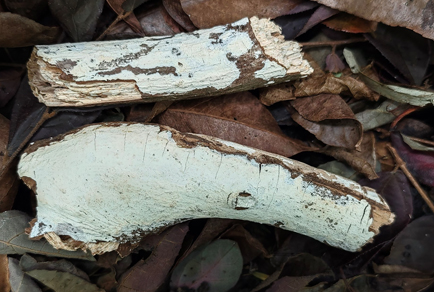
The wood-inhabiting fungi play an important role in forest ecosystem processes and functions. Hymenochaetales is one of the fungal orders mainly composed of wood-inhabiting macrofungi within the class Agaricomycetes, Basidiomycota. A new wood-inhabiting fungus, Lyomyces ruiliensis, found in Yunnan Province, Southwestern China, is proposed based on a combination of morphological features and molecular evidence. Lyomyces ruiliensis is characterized by its coriaceous and slightly cracked basidiomata, a monomitic hyphal system with clamped generative hyphae, and ellipsoid basidiospores measuring 4.5–5 × 3–3.5 µm. Phylogenetic analyses of the new species are carried out based on the nuclear ribosomal internal transcribed spacer (ITS) and the nuclear large subunit (nLSU) of ribosomal DNA. Based on the ITS+nLSU sequences, the phylogenetic trees indicate that the new species belongs to the genus Lyomyces, and is retrieved as a sister to L. juniperi. A description, illustrations, and phylogenetic analysis results for the new species are provided. The present study contributes to understanding the species diversity, taxonomy, and phylogeny of Lyomyces in southwestern China.
References
- Bernicchia, A. & Gorjón, S.P. (2010) Fungi Europaei 12: Corticiaceae s.l.. Edizioni Candusso, Alassio, Italy, 1008 pp.
- Cui, B.K., Li, H.J., Ji, X., Zhou, J.L., Song, J., Si, J., Yang, Z.L. & Dai, Y.C. (2019) Species diversity, taxonomy and phylogeny of Polyporaceae (Basidiomycota) in China. Fungal Diversity 97 (1): 137–392. https://doi.org/10.1007/s13225-019-00427-4
- Chen, J.Z. & Zhao, C.L. (2020) Morphological and molecular identification of four new resupinate species of Lyomyces (Hymenochaetales) from southern China. MycoKeys 65: 101–118. https://doi.org/10.3897/mycokeys.65.48660
- Dai, Y.C. (2010) Hymenochaetaceae (Basidiomycota) in China. Fungal Diversity 45: 131–343. https://doi.org/10.1007/s13225-010-0066-9
- Dong, J.H., Li, Q., Yuan, Q., Luo, Y.X., Zhang, X.C., Dai, Y.F., Zhou, Q., Deng, Y.L., Zhou, H.M., Muhammad, A. & Zhao, C.L. (2024) Species diversity, taxonomy, molecular systematics and divergence time of wood-inhabiting fungi in Yunnan-Guizhou Plateau, Asia. Mycosphere 15 (1): 1110–1293. https://doi.org/10.5943/mycosphere/15/1/10
- Dai, Y.C., Yang, Z.L., Cui, B.K., Wu, G., Yuan, H.S., Zhou, L.W., He, S.H., Ge, Z.W., Wu, F., Wei, Y.L., Yuan, Y. & Si, J. (2021) Diversity and systematics of the important macrofungi in Chinese forests. Mycosystema 40: 770–805. https://doi.org/10.13346/j.mycosystema.210036
- Dai, Y.F., Yuan, Q., Yang, X., Liu, R., Liu, D.F., Yuan, H.S. & Zhao, C.L. (2025) Morphological characteristics and phylogenetic analyses reveal five new species of Hymenochaetales (Agaricomycetes, Basidiomycota) from southwestern China. MycoKeys 114: 133–175. https://doi.org/10.3897/mycokeys.114.143851
- Deng, Y.L., Chen, M., Liu, L.F., Li, Q.Z., Zhang, S.C., Yuan, H.S. & Zhao, C.L. (2025) Morphological and molecular analyses revealed four new wood-inhabiting fungal species (Hymenochaetales, Basidiomycota) from Yunnan. MycoKeys 117: 29–66. https://doi.org/10.3897/mycokeys.117.146236
- Felsenstein, J. (1985) Confidence intervals on phylogenetics: An approach using bootstrap. Evolution 39 (4): 783–791. https://doi.org/10.2307/2408678
- Fernández-López, J., Martín, M.P., Dueñas, M. & Telleria, M.T. (2018) Multilocus phylogeny reveals taxonomic misidentification of the Schizopora paradoxa (KUC8140) representative genome. MycoKeys 38: 121–127. https://doi.org/10.3897/mycokeys.38.28497
- Gafforov, Y., Riebesehl, J., Ordynets, A., Langer, E.J., Yarasheva, M., Ghobad-Nejhad, M., Zhou, L.W., Wang, X.W. & Gugliotta, A.M. (2017) Hyphodontia (Hymenochaetales, Basidiomycota) and similar taxa from Central Asia. Botany 95 (11): 1041–1056. https://doi.org/10.1139/cjb-2017-0115
- Guan, Q.X., Huang, J., Huang, J. & Zhao, C.L. (2023) Five new species of Schizoporaceae (Basidiomycota, Hymenochaetales) from East Asia. MycoKeys 96: 25–56. https://doi.org/10.3897/mycokeys.96.99327
- Hopple, J.S. (1994) Phylogenetic investigations in the genus Coprinus based on morphological and molecular characters. Ph.D. thesis, Duke University, Durham.
- Hjortstam, K. & Ryvarden, L. (2004) Some new and noteworthy corticioid fungi (Basidiomycotina, Aphyllophorales) from Japan. Synopsis Fungorum 18: 8–13.
- Hibbett, D.S., Binder, M., Bischoff, J.F., Blackwell, M., Cannon, P.F., Eriksson, O.E., Huhndorf, S., James, T., Kirk, P.M., Lücking, R., Lumbsch, H.T., Lutzoni, F., Matheny, P.B., McLaughlin, D.J., Powell, M.J., Redhead, S., Schoch, C.L., Spatafora, J.W., Stalpers, J.A., Vilgalys, R., Aime, M.C., Aptroot, A., Bauer, R., Begerow, D., Benny, G.L., Castlebury, L.A., Crous, P.W., Dai, Y.C., Gams, W., Geiser, D.M., Griffith, G.W., Gueidan, C., Hawksworth, D.L., Hestmark, G., Hosaka, K., Humber, R.A., Hyde, K.D., Ironside, J.E., Kõljalg, U., Kurtzman, C.P., Larsson, K.H., Lichtwardt, R., Longcore, J., Miadlikowska, J., Miller, A., Moncalvo, J.M., Mozley-Standridge, S., Oberwinkler, F., Parmasto, E., Reeb, V., Rogers, J.D., Roux, C., Ryvarden, L., Sampaio, J.P., Schüssler, A., Sugiyama, J., Thorn, R.G., Tibell, L., Untereiner, W.A., Walker, C., Wang, Z., Weir, A., Weiss, M., White, M.M. & Winka, K., Yao, Y.J. & Zhang, N. (2007) A higher-level phylogenetic classification of the Fungi. Nature Microbiology 6 (5): 540–548. https://doi.org/10.1038/s41564-021-00888-x
- Luo, K.Y. & Zhao, C.L. (2021) Fasciodontia yunnanensis (Schizoporaceae, Hymenochaetales), a new species from southern China. Annales Botanici Fennici 58 (4–6): 259–266. https://doi.org/10.5735/085.058.0411
- Luo, K.Y., Qu, M.H. & Zhao, C.L. (2021a) Additions to the knowledge of Corticioid Xylodon (Schizoporaceae, Hymenochaetales): Introducing three new Xylodon species from southern China. Diversity 13 (11): 581. https://doi.org/10.3390/d13110581
- Luo, X., Chen, Y.H. & Zhao, C.L. (2021b) Lyomyces fissuratus and L. fumosus (Schizoporaceae, Hymenochaetales), new species from southern China. Annales Botanici Fennici 4 (4–6): 58. https://doi.org/10.5735/085.058.0404
- Liu, S.L., Wang, X.W., Li, G.J., Deng, C.Y., Rossi, W., Leonardi, M., Liimatainen, K., Kekki, T., Niskanen, T., Smith, M.E., Ammirati, J., Bojantchev, D., Abdel-Wahab, M., Zhang, M., Tian, E., Lu, Y.Z., Zhang, J.Y., Ma, J., Dutta, A.K., Acharya, K., Du, T.Y., Jize, X., Kim, J.S., Lim, Y.W., Gerlach, A.D.C.L., Zeng, N.K., Han, Y.X., Razaghi, P., Raza, M., Cai, L., Calabon, M., Jones, E.B.G., Saha, R., Kumar, T.K.A., Krishnapriya, K., Thomas, A., Kaliyaperumal, M., Kezo, K., Gunaseelan, S., Singh, S.K., Singh, P.N., Lagashetti, A.C., Pawar, K., Jiang, S.H., Zhang, C., Zhang, H., Qing, Y., Bau, T., Peng, X.C., Wen, T.C., Ramirez, N.A., Niveiro, N., Li, M.X., Yang, Z.L., Wu, G., Tarafder, E., Tennakoon, D.S., Kuo, C.H., Silva, T.M.D., Souza-Motta, C.M.D., Bezerra, J., He, G., Ji, X.H., Suwannarach, N., Kumla, J., Lumyong, S., Wannathes, N., Rana, S., Hyde, K. & Zhou, L.W. (2024) Fungal diversity notes 1717–1817: Taxonomic and phylogenetic contributions on genera and species of fungal taxa. Fungal Diversity 124 (1): 1–216. https://doi.org/10.1007/s13225-023-00529-0
- Li, Q., Luo, Y.X. & Zhao, C.L. (2024) Molecular systematics and taxonomy reveal three new wood‑inhabiting fungal species (Basidiomycota) from Yunnan Province, southern China. Mycological Progress 23: 30. https://doi.org/10.1007/s11557-024-01968-y
- Liu, Z.B., Yuan, Y., Dai, Y.C., Liu, H.G., Vlasák, J., Zeng, G.Y., He, S.H. & Wu, F. (2025) Global diversity and systematics of Hymenochaetaceae with non-poroid hymenophore. Fungal Diversity 131: 1–97. https://doi.org/10.1007/s13225-025-00552-3
- Miller, M.A., Pfeiffer, W. & Schwartz, T. (2012) The CIPRES science gateway. In: Proceedings of the 1st Conference of the Extreme Science and Engineering Discovery Environment: Bridging from the Extreme to the Campus and Beyond, Chicago, IL, USA. pp. 1–39. https://doi.org/10.1145/2335755.2335836
- Nylander, J.A.A. (2004) MrModeltest v.2. Program distributed by the author; Evolutionary Biology Centre, Uppsala University, Uppsala, Sweden.
- Petersen, J.H. (1996) Farvekort. In: The Danish Mycological Society’s Colour-Chart, Foreningen til Svampekundskabens Fremme: Greve, Germany pp. 1–6.
- Qin, G.F., Qin, W.M., Wang, H.C., Zhao, J., Korhonen, K., Chen, J., Dai, Y.C. & Yuan, Y. (2025) Phylogeny and species diversity of Armillaria in China based on morphological, mating test, and GCPSR criteria. Mycology 16 (2): 777–811. https://doi.org/10.1080/21501203.2024.2404121
- Ronquist, F., Teslenko, M., van der Mark, P., Ayres, D.L., Darling, A., Hohna, S., Larget, B., Liu, L. & Suchard, M.A. & Huelsenbeck, J.P. (2012) Mrbayes 3.2: efficient bayesian phylogenetic inference and model choice across a large model space. Molecular Systems Biology 61: 539–542. https://doi.org/10.1093/sysbio/sys029
- Riebesehl, J. & Langer, E. (2017) Hyphodontia s.l. (Hymenochaetales, Basidiomycota): 35 new combinations and new keys to currently all 120 species. Mycological Progress 16 (6): 637–666. https://doi.org/10.1007/s11557-017-1299-8
- Riebesehl, J., Yurchenko, E., Nakasone, K.K. & Langer, E. (2019) Phylogenetic and morphological studies in Xylodon (Hymenochaetales, Basidiomycota) with the addition of four new species. MycoKeys 47: 97–137. https://doi.org/10.3897/mycokeys.47.31130
- Rathnayaka, A.R., Tennakoon, D.S., Jones, G.E., Wanasinghe, D.N., Bhat, D.J., Priyashantha, A.H., Stephenson, S.L. & Tibpromma, S. & Karunarathna, S.C. (2025) Significance of precise documentation of hosts and geospatial data of fungal collections, with an emphasis on plant-associated fungi. New Zealand Journal of Botany 63 (2–3): 462–489.
- Si, J., Li, W., Cui, B.K. & Dai, Y.C. (2011) Advances of research on characteristic, molecular biology and applications of laccase from fungi. Biotechnology Bulletin 223: 48–55.
- Sun, Y.F., Costa-Rezende, D.H., Xing, J.H., Zhou, J.L., Zhang, B., Gibertoni, T.B., Gates, G., Glen, M., Dai, Y.C. & Cui, B.K. (2020) Multi-gene phylogeny and taxonomy of Amauroderma s. lat. (Ganodermataceae). Persoonia 44: 206–239. https://doi.org/10.3767/10.3767/persoonia.2020.44.08
- Vilgalys, R. & Hester, M. (1990) Rapid genetic identification and mapping of enzymatically amplified ribosomal DNA from several Cryptococcus species. Journal of Bacteriology 172 (8): 4238–4246. https://doi.org/10.1128/jb.172.8.4238-4246.1990
- Viner, I., Bortnikov, F., Ryvarden, L. & Miettinen, O. (2021) On six African species of Lyomyces and Xylodon. Fungal Systematics and Evolution 8: 163–178. https://doi.org/10.3114/fuse.2021.08.13
- Viner, I. & Miettinen, O. (2022) Lyomyces denudatus, a new species with a disjunct distribution. Lilloa 59 (Suplemento): 377–385. https://doi.org/10.30550/j.lil/2022.59.S/2022.09.14
- White, T.J., Bruns, T., Lee, S. & Taylor, J. (1990) Amplification and direct sequencing of fungal ribosomal RNA genes for phylogenetics. In: Innis, M.A., Gelfand, D.H., Sninsky, J.J. & White, T.J. (Eds.) PCR protocols: A guide to methods and applications. Academic Press, San Diego, pp. 315–322. https://doi.org/10.1016/B978-0-12-372180-8.50042-1
- Wang, W., Yuan, T.Q., Cui, B.K. & Dai, Y.C. (2013) Investigating lignin and hemicellulose in white rot fungus-pretreated wood that affect enzymatic hydrolysis. Bioresource Technology 134: 381–385. https://doi.org/10.1016/j.biortech.2013.02.042
- Wang, X.W., May, T.W., Liu, S.L. & Zhou, L.W. (2021) Towards a natural classification of Hyphodontia sensulato and the trait evolution of basidiocarps within Hymenochaetales (Basidiomycota). Journal of Fungi 7 (6): 478. https://doi.org/10.3390/jof7060478
- Wu, F., Zhou, L.W., Vlasák, J. & Dai, Y.C. (2022a) Global diversity and systematics of Hymenochaetaceae with poroid hymenophore. Fungal Diversity 113 (1): 1–192. https://doi.org/10.1007/s13225-021-00496-4
- Wu, F., Man, X.W., Tohtirjap, A. & Dai, Y.C. (2022b) A comparison of polypore fungal and species composition in forest ecosystems of China, North America, and Europe. Forest Ecosystems 9: 100051. https://doi.org/10.1016/j.fecs.2022.100051
- Wang, X.W., Liu, S.L. & Zhou, L.W. (2023a) An updated taxonomic framework of Hymenochaetales (Agaricomycetes, Basidiomycota). Mycosphere 14 (1): 452–496. https://doi.org/10.5943/mycosphere/14/1/6
- Wang, C.G., Zhao, H., Liu, H.G., Zeng, G.Y., Yuan, Y. & Dai, Y.C. (2023b) A multi‑gene phylogeny clarifies species diversity, taxonomy, and divergence times of Ceriporia and other related genera in Irpicaceae (Polyporales, Basidiomycota). Mycosphere 14 (1): 1665–1729. https://doi.org/10.5943/mycosphere/17/1/9
- Wang, C.G., Dai, Y.C., Kout, J., Gates, G.M., Liu, H.G., Yuan, Y. & Vlasák, J. (2024) Multi-gene phylogeny and taxonomy of Physisporinus (Polyporales, Basidiomycota). Mycosphere 15: 1455–1521. https://doi.org/10.1080/21501203.2024.2379476
- Xu, J. (2020) Fungal species concepts in the genomics era. Genome 63 (9): 459–468. https://doi.org/10.1139/gen-2020-0022
- Yurchenko, E. & Wu, S.H. (2013) Three new species of Hyphodontia with peg-like hyphal aggregations. Mycological Progress 13 (3): 533–545. https://doi.org/10.1007/s11557013-0935-1
- Yurchenko, E. & Wu, S.H. (2014) Three new species of Hyphodontia with peg-like hyphal aggregations. Mycological Progress 13: 533–545. https://doi.org/10.1007/s11557-013-0935-1
- Yurchenko, E. & Wu, S.H. (2016) A key to the species of Hyphodontia sensu lato. MycoKeys 12: 1–27. https://doi.org/10.3897/mycokeys.12.7568
- Yurchenko, E., Riebesehl, J. & Langer, E. (2017) Clarification of Lyomyces sambuci complex with the descriptions of four new species. Mycological Progress 16 (9): 865–876. https://doi.org/10.1007/s11557-017-1321-1
- Yurchenko, E., Riebesehl, J. & Langer, E. (2020) Fasciodontia gen. nov. (Hymenochaetales, Basidiomycota) and the taxonomic status of Deviodontia. Mycological Progress 19: 171–184. https://doi.org/10.1007/s11557-019-01554-7
- Yan, S., Zhong, M., Luo, B.Q. & Li, W. (2021) Innovation-driven high-level conservation of biodiversity in Yunnan. Journal of West China Forestry Science 50: 5–8. https://doi.org/10.16473/j.carolcarrollnkixblykx1972.2021.05.002
- Yuan, Y., Bian, L.S., Wu, Y.D., Chen, J.J., Wu, F., Liu, H.G., Zeng, G.Y. & Dai, Y.C. (2023) Species diversity of pathogenic wood-rotting fungi (Agaricomycetes, Basidiomycota) in China. Mycology 14 (3): 204–226. https://doi.org/10.1080/21501203.2023.2238779
- Yurchenko, E., Langer, E. & Riebesehl, J. (2024) A high species diversity of Lyomyces (Basidiomycota, Hymenochaetales) in Central and South America, revealed after morphological and molecular analysis. MycoKeys 109: 131–169. https://doi.org/10.3897/mycokeys.109.127606
- Yuan, Q., Li, Y.C., Dai, Y.F., Wang, K.Y., Wang, Y.X. & Zhao, C.L. (2024) Morphological and molecular identification for four new wood-inhabiting species of Lyomyces (Basidiomycota) from China. MycoKeys 110: 67–92. https://doi.org/10.3897/mycokeys.110.133108
- Yuan, Q. & Zhao, C.L. (2024) Morphology and multigene phylogeny revealed four new species of Xylodon (Schizoporaceae, Basidiomycota) from southern China. MycoKeys 107: 161–187. https://doi.org/10.3897/mycokeys.107.128223
- Yang, Y., Xu, Y., Wang, L., Jiang, Q.Q., Su, J.Q., Li, R., Zhou, H.M. & Zhao, C.L. (2025) Multigene phylogeny of seven wood-inhabiting fungal orders in Basidiomycota, and proposal of a new genus and thirteen new species. Mycosphere 16 (1): 245–295. https://doi.org/10.5943/mycosphere/16/1/4
- Zhao, C.L. & Wu, Z.Q. (2017) Ceriporiopsis kunmingensis sp. nov. (Polyporales, Basidiomycota) evidenced by morphological characters and phylogenetic analysis. Mycological Progress 16 (1): 93–100. https://doi.org/10.1007/s11557-016-1259-8
- Zhao, C.L., Qu, M.H., Huang, R.X. & Karunarathna, S.C. (2023) Multi‐Gene phylogeny and taxonomy of the wood‐rotting fungal genus Phlebia sensu lato (Polyporales, Basidiomycota). Journal of Fungi 9: 320. https://doi.org/10.3390/jof9030320
- Zhou, M., Dai, Y.C., Vlasák, J., Liu, H.G. & Yuan, Y. (2023) Updated systematics of Trichaptum s.l. (Hymenochaetales, Basidiomycota). Mycosphere 14 (1): 815–917. https://doi.org/10.5943/mycosphere/14/1/11
- Zhao, H., Wu, Y.D., Yang, Z.R., Liu, H.G., Wu, F., Dai, Y.C. & Yuan, Y. (2024) Polypore funga and species diversity in tropical forest ecosystems of Africa, America and Asia, and a comparison with temperate and boreal regions of the Northern Hemisphere. Forest Ecosystem 11: 100200. https://doi.org/10.1016/j.fecs.2024.100200