

Abstract
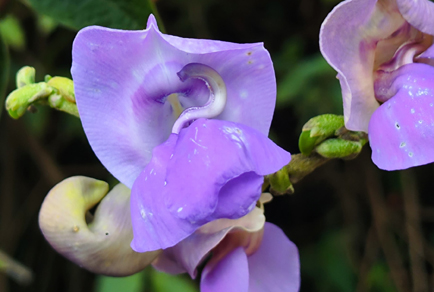
The Parque Nacional do Caparaó is a region recognised for its biodiversity within the Brazilian Atlantic Forest and as an important conservation area. Within the park, a new species of Ancistrotropis was found, which we formally propose here as A. pulchra. Based on morphological data, we found sufficient evidence to classify it within the genus and to distinguish it from other known taxa of Ancistrotropis. Furthermore, we highlight the importance of conserving these areas of high endemism and the need to centralise information on the species protected within the park.
References
- Andrade, R.S. & Freitas, L. (2021) Impact of an IUCN national Red List of threatened flora on scientific attention. Endangered Species Research 46: 175–184. https://doi.org/10.3354/esr01154
- Beentje, H. (2014) The Kew plant glossary: an illustrated dictionary of plant terms. Royal Botanic Gardens, Kew, Richmond, Surrey, UK, 160 pp.
- Ben Mahmoud, K., Mezzapesa, G.N., Abdelkefi, F. & Perrino, E.V. (2024) Nutritional value and functional properties of an underexploited Tunisian wild beet (Beta macrocarpa Guss.) in relation to soil characteristics. Euro-Mediterranean Journal for Environmental Integration 9: 705–720. https://doi.org/10.1007/s41207-024-00468-5
- Brullo, S., Tomaselli, V. & Wagensommer, R.P. (2015) A new species of Odontites (Orobanchaceae) from southern Italy. Phytotaxa 213 (3): 271–281. https://doi.org/10.11646/phytotaxa.213.3.7
- Camelo, M.C., Coelho, M.A.N., Leoni, L.S. & Temponi, L.G. (2020) Araceae do Parque Nacional do Caparaó, MG-ES, Brasil. Rodriguésia 71: e01742018. https://doi.org/10.1590/2175-7860202071065
- Cardoso, D., Pennington, R.T., Queiroz, L.P. de, Boatwright, J.S., Van Wyk, B.-E., Wojciechowski, M.F. & Lavin, M. (2013) Reconstructing the deep-branching relationships of the papilionoid legumes. South African Journal of Botany 89: 58–75. https://doi.org/10.1016/j.sajb.2013.05.001
- Choi, I.-S., Cardoso, D., Queiroz, L.P., Lima, H.C., Lee, C., Ruhlman, T.A., Jansen, R.K. & Wojciechowski, M.F. (2022) Highly resolved papilionoid legume phylogeny based on plastid phylogenomics. Frontiers in Plant Science (Lausanne) 13: 823190. https://doi.org/10.3389/fpls.2022.823190
- Delgado-Salinas, A. (2023) Ancistrotropis A. Delgado. In: Flora of North America Editorial Committee (Org.) Flora of North America north of Mexico. Oxford University Press, New York, vol. 11: pp. 408–409.
- Delgado-Salinas, A., Thulin, M., Pasquet, R., Weeden, N. & Lavin, M. (2011) Vigna (Leguminosae) sensu lato: The names and identities of the American segregate genera. American Journal of Botany 98: 1694–1715. https://doi.org/10.3732/ajb.1100069
- Deshmukh, U.B., Shende, M.B., Reddy, E.S. & Mungole, A.J. (2023) Delgadoana, a new replacement name for Delgadoa F.S.Santos, Snak & L.P.Queiroz (Phaseolinae: Leguminosae). Feddes Repertorium 135: 76–77. https://doi.org/10.1002/fedr.202300023
- Dillenberger, M.S. & Kadereit, J.W. (2014) Maximum polyphyly: Multiple origins and delimitation with plesiomorphic characters require a new circumscription of Minuartia (Caryophyllaceae). Taxon 63: 64–88. https://doi.org/10.12705/631.5
- Di Pietro, R., Di Marzio, P., Medagli, P., Misano, G., Silletti, G.N., Wagensommer, R.P. & Fortini, P. (2016) Evidence from multivariate morphometric study of the Quercus pubescens complex in southeast Italy. Botanica Serbica 40: 83–100. https://doi.org/10.5281/zenodo.48865
- Fenu, G., Bacchetta, G., Bernardo, L., Calvia, G., Citterio, S., Foggi, B., Fois, M., Gangale, C., Galasso, G., Gargano, D., Gennai, M., Gentili, R., Larroux, G., Perrino, E.V., Peruzzi, L., Roma-Marzio, F., Uzunov, D., Vagge, I., Viciani, D., Wagensommer, R.P. & Orsenigo, S. (2016) Global and Regional IUCN Red List Assessments: 2. Italian Botanist 2: 93–115. https://doi.org/10.3897/italianbotanist.2.10975
- Flora e Funga do Brasil (2025) Jardim Botânico do Rio de Janeiro. Available from: http://floradobrasil.jbrj.gov.br/ (accessed 28 March 2025)
- Góes-Neto, L.A.A. & Salino, A. (2018) Selaginella kriegeriana (Selaginellaceae—Lycopodiopsida), uma nova espécie endêmica do Brasil com notas sobre o gênero no Parque Nacional do Caparaó. Systematic Botany 43: 920–929. https://doi.org/10.1600/036364418X697643
- Góes-Neto, L.A., Heringer, G. & Salino, A. (2015) Selaginella salinoi (Selaginellaceae), uma nova espécie do Brasil. Phytotaxa 224 (3): 291–295. https://doi.org/10.11646/phytotaxa.224.3.8
- IUCN (2024) Guidelines for Using the IUCN Red List Categories and Criteria, version 16. Prepared by the Standards and Petitions Committee. Available from: https://www.iucnredlist.org/resources/redlistguidelines (accessed 28 March 2025)
- Leoni, L.S. (2009) Flora Fanerogâmica do Parque Nacional do Caparaó: Hypoxidaceae. Pabstia 20: 2–4.
- Leoni, L.S. & Chautems, A. (2004) Flora Fanerogâmica do Parque Nacional do Caparaó: Gesneriaceae. Pabstia 15: 1–11.
- Leoni, L.S. & Souza, V.C. (1999) Espécies endêmicas ocorrentes no Parque Nacional do Caparaó—Minas Gerais. Pabstia 10: 1–14.
- Maréchal, R., Mascherpa, J. & Stainier, F. (1978) Etude taxonomique d’un groupe complexe d’espècies des genres Phaseolus et Vigna (Papilionoideae) sur la base de donées morphologiques et polliniques, traitées par l’analyse informatique. Boissiera 28: 273 pp.
- Marques, M.C.M. & Grelle, C.E.V. (2021) The Atlantic Forest: History, Biodiversity, Threats and Opportunities of the Mega-diverse Forest. Springer, Switzerland, 517 pp. https://doi.org/10.1007/978-3-030-55322-7
- Moraes, M.A., Borges, R.A.X., Martins, E.M., Fernandes, R.A., Messina, T. & Martinelli, G. (2014) Categorizing threatened species: an analysis of the Red List of the flora of Brazil. Oryx 48 (2): 258–265. https://doi.org/10.1017/S003060531200018X
- Moreira, M.M., Carrijo, T.T., Alves-Araújo, A.G., Rapini, A., Salino, A., Firmino, A.D., Chagas, A.P., Versiane, A.F.A., Amorim, A.M.A., Silva, A.V.S., Tuler, A.C., Peixoto, A.L., Soares, B.S., Cosenza, B.A.P., Delgado, C.N., Lopes, C.R., Silva, C., Barbosa, D.E.F., Monteiro, D., Marques, D., Couto, D.R., Gonzaga, D.R., Dalcin, E., Lírio, E.J., Meyer, F.S., Salimena, F.R.G., Oliveira, F.A., Souza, F.S., Matos, F.B., Depiantti, G., Antar, G.M., Heiden, G., Dias, H.M., Sousa, H.C.F., Lopes, I.T.F.V., Rollim, I.M., Luber, J., Prado, J., Nakajima, J.N., Lanna, J., Zorzanelli, J.P.F., Freitas, J., Baumgratz, J.F.A., Pereira, J.B.S., Oliveira, J.R.P.M., Antunes, K., Sylvestre, L.S., Pederneiras, L.C., Freitas, L., Giacomin, L.L., Meireles, L.D., Silva, L.N., Pereira, L.C., Silva, L.A.E., Menini Neto, L., Monge, M., Trovó, M.L.O., Reginato, M., Sobral, M.E.G., Gomes, M., Garbin, M.L., Morim, M.P., Soares, N.D., Labiak, P.H.E., Viana, P.L., Cardoso, P.H., Moraes, P.L.R., Schwartsburd, P.B., Moraes, Q.S., Zorzanelli, R.F., Nichio-Amaral, R., Goldenberg, R., Furtado, S.G., Feletti, T., Dutra, V.F., Bueno, V.R., Dittrich, V.A.O. & Forzza, R.C. (2020) A list of land plants of Parque Nacional do Caparaó, Brazil, highlights the presence of sampling gaps within this protected area. Biodiversity Data Journal 8: e59664. https://doi.org/10.3897/BDJ.8.e59664
- Oliveira, U., Soares-Filho, B.S., Paglia, A.P., Brescovit, A.D., de Carvalho, C.J.B., Silva, D.P., Rezende, D.T., Leite, F.S.F., Batista, J.A.N., Barbosa, J.P.P.P., Stehmann, J.R., Ascher, J.S., de Vasconcelos, M.F., De Marco, P., Löwenberg-Neto, P., Ferro, V.G. & Santos, A.J. (2017) Biodiversity conservation gaps in the Brazilian protected areas. Scientific Reports 7: 9141. https://doi.org/10.1038/s41598-017-08707-2
- Orsenigo, S., Bacchetta, G., Calevo, J., Castello, M., Cogoni, D., Gennai, M., Licht, W., Montagnani, C., Perrino, E.V., Pinna, S.M., Silletti, G.N., Vela, E., Viciani, D., Vidali, M., Wagensommer, R.P., Zappa, E. & Fenu, G. (2016) Global and Regional IUCN Red List Assessments: 1. Italian Botanist 1: 61–85. https://doi.org/10.3897/italianbotanist.1.8647
- Oyebanji, O., Zhang, R., Chen, S.-Y. & Yi, T.-S. (2020) New insights into the plastome evolution of the Millettioid/Phaseoloid clade (Papilionoideae, Leguminosae). Frontiers in Plant Science (Lausanne) 11: 151. https://doi.org/10.3389/fpls.2020.00151
- Pereira, J.B.D.S., Salino, A., Arruda, A. & Stützel, T. (2016) Two new species of Isoetes (Isoetaceae) from northern Brazil. Phytotaxa 272 (2): 141–148. https://doi.org/10.11646/phytotaxa.272.2.5
- Pereira, J. & Prado, J. (2022) Taxonomy of Cryptic Isotes Species from the Brazilian Semi-Arid Region, with a Note about the Putative Maternal Origin of Polyploids. American Fern Journal 112: 190–206. https://doi.org/10.1640/0002-8444-112.3.190
- Perrino, E.V., Silletti, G.N., Erben, M. & Wagensommer, R.P. (2018) Viola cassinensis subsp. lucana (Violaceae), a new subspecies from the Lucanian Apennine, southern Italy. Phyton (Horn, Austria) 58: 109–115. https://doi.org/10.12905/0380.phyton58(2)-2018-0109
- Perrino, E.V., Wagensommer, R.P., Mezzapesa, G.N. & Trani, A. (2024) Stachys italica Mill.: synecology, functional compounds and potential use of an Italian endemic taxon. Planta 260: 138. https://doi.org/10.1007/s00425-024-04571-3
- Piper, C.V. (1926) Studies in American Phaseolinae. In: Hitchcok, Chaser, Piper, Standley & Leonard (Eds.) Contributions from the United States National Herbarium. Washington, D.C, Smithsonian Institution Press, pp. 663–701.
- Queiroz, L.P. & Snak, C. (2020) Revisiting the taxonomy of Dioclea and related genera (Leguminosae, Papilionoideae), with new generic circumscriptions. PhytoKeys 164: 67–114. https://doi.org/10.3897/phytokeys.164.55441
- Radford, A.E., Dickison, W.C., Massey, J.R. & Bell, C.R. (1976) Vascular Plant Systematics. Harper and Row, New York, 104 pp.
- Rezende, C.L., Scarano, F.R., Assad, E.D., Joly, C.A., Metzger, J.P., Strassburg, B.B.N., Tabarelli, M., Fonseca, G.A. & Mittermeier, R.A. (2018) Do hotspot ao hopespot: Uma oportunidade para a Mata Atlântica brasileira. Perspectivas em Ecologia e Conservação 16: 208–214. https://doi.org/10.1016/j.pecon.2018.10.002
- Santos, E.M.B. (2004) Parque Nacional do Caparaó: histórias de um lugar. HALAC 3: 117–143. [Halacsolcha.org]
- Santos, F.S., Snak, C., Ribeiro, C.L, Silva, C. & Queiroz, L.P. (2022) Phylogenetic analyses of Phaseolinae (Leguminosae) reveal a new genus endemic to limestone outcrops in Seasonally Dry Forests of Bahia, Brazil. Taxon 72: 64–77. https://doi.org/10.1002/tax.12819
- Santos, F.S., Snak, C., Ribeiro, C.L., Oliveira, J.F.C., Soares, K.A. & Queiroz, L.P. (2024) A new species of Sigmoidotropis (Papilionoideae, Leguminosae) from Atlantic Forest, Eastern Brazil. Phytotaxa 666 (2): 146–154. https://doi.org/10.11646/phytotaxa.666.2.5
- Särkinen, T., Bohs, L., Olmstead, R.G. & Knapp, S. (2012) A phylogenetic framework for evolutionary study of the nightshades (Solanaceae): a dated 1000-tip tree. BMC Evolutionary Biology 13: 214. https://doi.org/10.1186/1471-2148-13-214
- Siti-Munirah, M.Y. & Dome, N. (2023) Thismia kenyirensis (Thismiaceae), a new species from Taman Negeri Kenyir, Terengganu, Peninsular Malaysia. PhytoKeys 221: 61–72. https://doi.org/10.3897/phytokeys.221.98571
- Souza, J.P. & Souza, V.C. (2002) Flora fanerogâmica do Parque Nacional do Caparaó: Plantaginaceae. Pabstia 13: 1–5.
- Steudel, E.T. (1841) Nomenclator botanicus, seu, Synonymia plantarum universalis: enumerans ordine alphabetico nomina atque synonyma, tum generica tum specifica, et a Linnaeo et a recentioribus de re botanica scriptoribus plantis phanerogamis imposita. Editio secunda ex nova elaborata et aucta. Stuttgardiae et Tubingae: Typis et sumptibus J.G. Cottae, 810 pp. https://doi.org/10.5962/bhl.title.655
- Stinca, A., Chianese, G., D’Auria, G., Fascetti, S., Ravo, M., Romano, V.A., Salerno, G., Astuti, G., Bartolucci, F., Bernardo, L., Bonari, G., Bouvet, D., Cancellieri, L., Carli, E., Caruso, G., Catalano, I., Cennamo, G.D., Ciaschetti, G., Conti, F., Di Pietro, R., Fortini, P., Gangale, C., Lapenna, M.R., Lattanzi, E., Marcucci, R., Peccenini, S., Pennesi, R., Perrino, E.V., Peruzzi, L., Roma-Marzio, F., Scoppola, A., Tilia, A., Villani, M. & Rosati, L. (2019) Contribution to the floristic knowledge of eastern Irpinia and Vulture-Melfese area. Italian Botanist 8: 1–16. https://doi.org/10.3897/italianbotanist.8.37818
- Thiers, B. (2025 [continuously updated]) Index Herbariorum: A global directory of public herbaria and associated staff. New York Botanical Garden’s Virtual Herbarium. Available from: http://sweetgum.nybg.org/ih/ (accessed 28 March 2025)
- Zhao, Y., Zhang, R., Jiang, K.-W., Qi, J., Hu, Y., Guo, J., Zhu, R., Zhang, T., Egan, A.N., Yi, T.-S., Huang, C.-H. & Ma, H. (2021) Nuclear phylotranscriptomics and Phylogenomics support numerous polyploidization events and hypotheses for the evolution of rhizobal nitrogen-fixing symbiosis in Fabaceae. Molecular Plant 14: 748–773. https://doi.org/10.1016/j.molp.2021.02.006