

Abstract
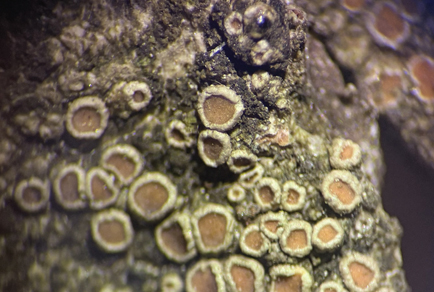
During this study we investigate two new species of crustose lichen Lecanora ahmadii sp. nov. and Lecanora haripurensis sp. nov. from district Haripur and Murree, Pakistan. Based on morphological and molecular phylogenetic analysis. Lecanora haripurensis sp. nov. is characterized by light greyish white to rough white thallus, lecanorine, black sessile, irregular apothecia, falls in sister clade to species Lecanora epibryon. The other specimen Lecanora ahmadii sp. nov. is characterized by verruculose dark greyish green thallus with light brown apothecia and phylogenetic resemblance to Lecanora pseudargentata. Thus, two new species have been added to lichen flora of Pakistan. They are new additions to science as well.
References
- Adedze, Y.M.N., Lu, X., Xia, Y., Sun, Q., Nchongboh, C.G., Alam, M.A., Liu, M., Yang, X., Zhang, W. & Deng, Z. (2021) Agarose-resolvable InDel markers based on whole genome re-sequencing in cucumber. Scientific Reports 11 (1): 3872.
- Ahmed, S., Qadir, A., Khan, M.A., Khan, T. & Zafar, M. (2021) Assessment of groundwater intrinsic vulnerability using GIS-based DRASTIC method in District Haripur, Khyber Pakhtunkhwa, Pakistan. Environmental monitoring and assessment 193: 1–17. https://doi.org/10.1007/s10661-021-09263-z
- Ameen, I., Kashif, M., Hameed, H. & Nida, H. (2024) Trend analysis of extreme weather indices in different districts of Punjab, Pakistan. Agrobiological Records 18: 29–40.
- Ansari, L., Ahmad, W., Saleem, A., Imran, M., Malik, K., Hussain, I., Tariq, H. & Munir, M. (2022) Forest cover change and climate variation in subtropical Chir pine forests of murree through GIS. Forests 13 (10): 1576.
- Aptroot, A. & Iqbal, S.H. (2010) Annotated checklist of the lichens of Pakistan, with reports of new records. Herzogia 25 (2): 211–229. https://doi.org/10.13158/heia.25.2.2010.211
- Arup, U. & Grube, M. (2000) Is Rhizoplaca (Lecanorales, lichenized Ascomycota) a monophyletic genus? Canadian Journal of Botany 78 (3): 318–327.
- Bhattacharya, D., Friedl, T. & Helms, G. (2002) Vertical evolution and intragenic spread of lichen-fungal group I introns. Journal of molecular evolution 55 (1): 74–84. https://doi.org/10.1007/s00239-001-2305-x
- Boruah, T., Dulal, K. & Das, P.N. (2024) Ecology of Lichen. In: Das, A.K., Sharma, A., Kathuria, D., Ansari, M.J. & Bhardwaj, G. (Eds.) Chemistry, Biology and Pharmacology of Lichen. pp. 49–69. https://doi.org/10.1002/9781394190706.ch5
- Bouckaert, R., Heled, J., Kühnert, D., Vaughan, T., Wu, C.-H., Xie, D., Suchard, M.A., Rambaut, A. & Drummond, A.J. (2014) BEAST 2: a software platform for Bayesian evolutionary analysis. PLoS computational biology 10 (4): e1003537.
- Chen, X., Feng, J., Yu, L. & Zhang, T. (2024) Diversity of lichen mycobionts and photobionts and their relationships in the Ny-Ålesund region (Svalbard, High Arctic). Extremophiles 28 (3): 40. https://doi.org/10.1007/s00792-024-01355-1
- Crespo, A., Lumbsch, H.T., Mattsson, J.-E., Blanco, O., Divakar, P.K., Articus, K., Wiklund, E., Bawingan, P.A. & Wedin, M. (2007) Testing morphology-based hypotheses of phylogenetic relationships in Parmeliaceae (Ascomycota) using three ribosomal markers and the nuclear RPB1 gene. Molecular Phylogenetics and Evolution 44 (2): 812–824. https://doi.org/10.1016/j.ympev.2006.11.029
- Daminova, A., Galeeva, E., Rakhmatullina, D., Viktorova, L. & Minibayeva, F. (2024) Morphological, Physiological, and Biochemical Traits of Melanized Thallus of the Cetraria islandica Lichen. Russian Journal of Plant Physiology 71 (3): 92. https://doi.org/10.1134/s1021443724606104
- Davydov, E.A., Yakovchenko, L.S., Hollinger, J., Bungartz, F., Parrinello, C. & Printzen, C. (2021) The new genus Pulvinora (Lecanoraceae) for species of the ‘Lecanora pringlei’group, including the new species Pulvinora stereothallina. The Bryologist 124 (2): 242–256. https://doi.org/10.1639/0007-2745-124.2.242
- de la Rosa, I.N., Passo, A., Rodriguez, J.M., Chiapella, J.O. & Messuti, M.I. (2016) A new species and new records of Lecanora (Lecanoraceae, lichenized Ascomycota) with usnic acid from the Antarctic region. Phytotaxa 261 (2): 185–193. https://doi.org/10.11646/phytotaxa.261.2.8
- Ferguson, J., Duran, J., Killinen, W., Wagner, J., Kulesza, C., Chatterley, C. & Li, Y. (2020) A field-deployable and low-cost PCR (FLC-PCR) thermocycler for the rapid detection of environmental E. coli. In: 2020 42nd Annual International Conference of the IEEE Engineering in Medicine & Biology Society. https://doi.org/10.1109/embc44109.2020.9176519
- Grube, M. & Baloch, E. (2004) A phylogenetic study of the Lecanora rupicola group (Lecanoraceae, Ascomycota). Mycological Research 108 (5): 506–514. https://doi.org/10.1017/s0953756204009888
- Grube, M. & Blaha, J. (2003) On the phylogeny of some polyketide synthase genes in the lichenized genus Lecanora. Mycological Research 107 (12): 1419–1426. https://doi.org/10.1017/s0953756203008724
- Hall, T., Biosciences, I. & Carlsbad, C. (2011) BioEdit: an important software for molecular biology. GERF bull biosci 2 (1): 60–61.
- Hofmeister, J., Pouska, V., Palice, Z., Šoun, J., Gloor, R., Brabec, M. & Vondrák, J. (2024) Hot-spots of epiphytic and epixylic lichens in fragmented temperate forests are underpinned by microhabitat heterogeneity and spatiotemporal habitat continuity. Biological Conservation 292: 110563. https://doi.org/10.1016/j.biocon.2024.110563
- Iqbal, M.S. & Khalid, A.N. (2024) Lecanora darelensis, a new species of Lecanoraceae from Darel Valley, Gilgit Baltistan, Pakistan. Telopea 27 (1): 117–124.
- Ivanovich, C., Dolnik, C., Otte, V., Palice, Z., Sohrabi, M. & Printzen, C. (2021) A preliminary phylogeny of the Lecanora saligna-group, with notes on species delimitation. The Lichenologist 53 (1): 63–79. https://doi.org/10.1017/s0024282921000074
- Jehan, Z., Husnain, A., Waseem, M., Ahmad, S. & Leta, M.K. (2025) Sustainable Development and Flood Risk Assessment in Haripur District: A Multicriteria Analysis Using AHP and Geospatial Techniques. International Journal of Geophysics 2025 (1): 6480655. https://doi.org/10.1155/ijge/6480655
- Kaltenböck, M., Hafellner, J., Malíček, J. & Mayrhofer, H. (2022) A contribution to the diversity of lichens and lichenicolous fungi in North Macedonian mountainous areas. Herzogia 35 (2): 541–563. https://doi.org/10.13158/heia.35.2.2022.541
- Katoh, K. & Standley, D.M. (2013) MAFFT multiple sequence alignment software version 7: improvements in performance and usability. Molecular biology and evolution 30 (4): 772–780. https://doi.org/10.1093/molbev/mst010
- Kelly, L.J., Hollingsworth, P.M., Coppins, B.J., Ellis, C.J., Harrold, P., Tosh, J. & Yahr, R. (2011) DNA barcoding of lichenized fungi demonstrates high identification success in a floristic context. New Phytologist 191 (1): 288–300. https://doi.org/10.1111/j.1469-8137.2011.03677.x
- Khan, A., Ahmed, M., Ahmed, F., Saeed, R. & Sıddıquı, F. (2020) Vegetation of highly disturbed conifer forests around Murree, Pakistan. Turkish Journal of Biodiversity 3 (2): 43–53. https://doi.org/10.38059/biodiversity.708154
- Khatoon, R., Anwar, A., Khalil, S. & Habiba, U. (2022) Distribution and diet composition of two sympatric mongoose species in Murree Kahuta Kotli Sattian National Park, Pakistan. JAPS: Journal of Animal & Plant Sciences 32 (5). https://doi.org/10.36899/japs.2022.5.0553
- Kim, J.-H., Ahn, I.-Y., Hong, S.-G., Andreev, M., Lim, K.-M., Oh, M.-J., Koh, Y.-J. & Hur, J.-S. (2006) Lichen flora around the Korean Antarctic Scientific Station, King George Island, Antarctic. Journal of Microbiology 44 (5): 480–491.
- Kondratyuk, S., Jeong, M.-H., Galanina, I., Yakovchenko, L., Yatsyna, A. & Hur, J.-S. (2015) Molecular phylogeny of placodioid lichen-forming fungi reveal a new genus, Sedelnikovaea. Mycotaxon 129 (2): 269–282. https://doi.org/10.5248/129.269
- Li, Ju,Y. & Jia, Z. (2023) Chaenothecopsis xishuiensis sp. nov. to Science and Lecanora pseudargentata Newly Reported from China. Diversity 15 (8): 893.
- Li, L., Wang, L. & Printzen, C. (2023) A new species and new combination of Lecanora s. str.(Lecanoraceae) from China. The Lichenologist 55 (3–4): 115–124.
- Li, M., Ju, Y. & Jia, Z. (2023) Chaenothecopsis xishuiensis sp. nov. to Science and Lecanora pseudargentata Newly Reported from China. Diversity 15 (8): 893.
- Lumbsch, H., Feige, G. & Elix, J. (1994) Chemical variation in two species of the Lecanora subfusca group (Lecanoraceae, lichenized Ascomycotina). Plant Systematics and Evolution 191: 227–236. https://doi.org/10.1007/bf00984667
- MALÍČEK, J. (2014) A revision of the epiphytic species of the Lecanora subfusca group (Lecanoraceae, Ascomycota) in the Czech Republic. The Lichenologist 46 (4): 489–513. https://doi.org/10.1017/s0024282914000139
- Malíček, J., Berger, F., Palice, Z. & Vondrak, J. (2017) Corticolous sorediate Lecanora species (Lecanoraceae, Ascomycota) containing atranorin in Europe. The Lichenologist 49 (5): 431–455. https://doi.org/10.1017/s002428291700038x
- Mark, K., Cornejo, C., Keller, C., Flück, D. & Scheidegger, C. (2016) Barcoding lichen-forming fungi using 454 pyrosequencing is challenged by artifactual and biological sequence variation. Genome 59 (9): 685–704. https://doi.org/10.1139/gen-2015-0189
- Martínez, I., Aragón, G. & Lumbsch, H.T. (1999) Lecanora paramerae, a new lichen from Spain. The Lichenologist 31 (4): 315–318. https://doi.org/10.1006/lich.1998.0199
- Mavrodiev, E.V., Dervinis, C., Whitten, W.M., Gitzendanner, M.A., Kirst, M., Kim, S., Kinser, T.J., Soltis, P.S. & Soltis, D.E. (2021) A new, simple, highly scalable, and efficient protocol for genomic DNA extraction from diverse plant taxa. Applications in plant sciences 9 (3): e11413. https://doi.org/10.1002/aps3.11413
- Miller, M.A., Pfeiffer, W. & Schwartz, T. (2010) Creating the CIPRES Science Gateway for inference of large phylogenetic trees. In: 2010 gateway computing environments workshop (GCE). https://doi.org/10.1109/gce.2010.5676129
- Nash, T.H. (2002) Lichen flora of the Greater Sonoran Desert Region: most of the microlichens, balance of the macrolichens, and the lichenicolous fungi (Vol. 2). Lichens Unlimited, Arizona State University.
- Nisar, U.B., Ehsan, S.A., Farooq, M., Pant, R.R., Khan, N.G., Qaiser, F.U.R. & Butt, F.M. (2023) Integrated Geoelectrical and Geological Investigation of a Quaternary Paleo‐Depositional Environment in the Haripur Basin, Northern Pakistan: Implications for Groundwater System. Geofluids 2023 (1): 1057457. https://doi.org/10.1155/2023/1057457
- Rahman, A., Gürbüz, E., Chen, J. & Ekercin, S. (2022) Spatial diversity, patterns of forest vegetation, and sustainability analysis of the Murree Mountains of Western Himalayas. In: Biodiversity, Conservation and Sustainability in Asia: Volume 2: Prospects and Challenges in South and Middle Asia. Springer, pp. 267–286. https://doi.org/10.1007/978-3-030-73943-0_15
- Roux, C., Coste, C., Navarro-Rosinés, P., Vänskä, H., Uriac, P., Monnat, J.-Y. & Poumarat, S. (2019) Lecanora lecideopsis Cl. Roux et C. Coste sp. nov. Bulletin de la Société linnéenne de Provence 70: 91–105.
- Sayers, E.W., Agarwala, R., Bolton, E.E., Brister, J.R., Canese, K., Clark, K., Connor, R., Fiorini, N., Funk, K. & Hefferon, T. (2019) Database resources of the national center for biotechnology information. Nucleic acids research 47 (D1): D23–D28.
- Schoch, C.L., Seifert, K.A., Huhndorf, S., Robert, V., Spouge, J.L., Levesque, C.A., Chen, W., Consortium, F.B., List, F.B.C.A. & Bolchacova, E. (2012) Nuclear ribosomal internal transcribed spacer (ITS) region as a universal DNA barcode marker for Fungi. Proceedings of the national academy of Sciences 109 (16): 6241–6246.
- Siddique, Z., Shad, N., Shah, G.M., Naeem, A., Yali, L., Hasnain, M., Mahmood, A., Sajid, M., Idrees, M. & Khan, I. (2021) Exploration of ethnomedicinal plants and their practices in human and livestock healthcare in Haripur District, Khyber Pakhtunkhwa, Pakistan. Journal of ethnobiology and ethnomedicine 17: 1–22.
- Singh, G., Kukwa, M., Dal Grande, F., Łubek, A., Otte, J. & Schmitt, I. (2019) A glimpse into genetic diversity and symbiont interaction patterns in lichen communities from areas with different disturbance histories in Białowieża forest, Poland. Microorganisms 7 (9): 335.
- Spribille, T., Fryday, A.M., Hampton-Miller, C.J., Ahti, T., Dillman, K., Thor, G., Tonsberg, T. & Schirokauer, D. (2023) Compendium of the lichens and associated fungi of Alaska. J. Cramer in der Gebruder Borntraeger Verlagsbuchhandlung. https://doi.org/10.1127/bibl_lich/2023/112
- Stamatakis, A. (2014) RAxML version 8: a tool for phylogenetic analysis and post-analysis of large phylogenies. Bioinformatics 30 (9): 1312–1313. https://doi.org/10.1093/bioinformatics/btu033
- Watts, J.L., Raynor, S.J., Li, Y., Meier, R., Cook, C., Casini, G., Chadwick, E. & Manzitto-Tripp, E.A. (2024) Lecanora exspersa: A new lichen record for North America and a key to sorediate Lecanora (Lecanoraceae) in western North America. The Bryologist 127 (4): 427–440. https://doi.org/10.1639/0007-2745-127.4.427
- Wirth, V., Sipman, H.J. & Curtis-Scott, O. (2018) A sketch of the lichen biota in a Renosterveld vegetation habitat. Carolinea 76: 35–55.
- Zhao, X., Leavitt, S.D., Zhao, Z.T., Zhang, L.L., Arup, U., Grube, M., Pérez-Ortega, S., Printzen, C., Śliwa, L. & Kraichak, E. (2016) Towards a revised generic classification of lecanoroid lichens (Lecanoraceae, Ascomycota) based on molecular, morphological and chemical evidence. Fungal Diversity 78: 293–304.