
Abstract
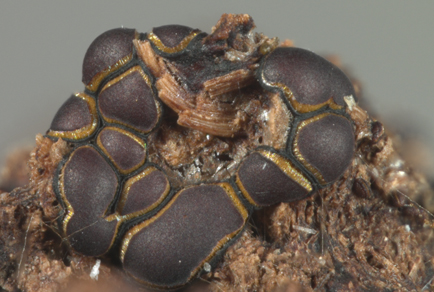
An assessment of the biodiversity of myxomycetes was carried out for the first time in the xerophilous scrubland of the Mapimí Biosphere Reserve, Mexico in 2007. This research is a contribution to the Neotropical myxobiota associated with xeric vegetation and adapted to arid conditions. Mapimí Reserve is one of the first biosphere reserves established in Mexico and Latin America, and it is considered a representative region of the Chihuahuan Desert. Investigations were conducted using moist chamber cultures and direct collecting of myxomycetes in the field. The relative abundance of species was calculated to determine the specificity or preference for some substrates by the myxomycetes. A total of 44 species and 15 genera of myxomycetes were recorded from 371 specimens, 217 field samples, and 154 samples from moist chamber cultures. We provide an annotated list of species with taxonomic comments on rare or common species. All species represent the first records for the Mapimí Reserve. Didymium and Physarum genera had the greatest richness of myxomycetes species, coinciding with results previously reported for arid zones from America. Among recorded species, Physarum dudlianum is reported for the first time in America, Collaria biasperospora is a new record for the Neotropics, and Echinostelium brooksii is the second record for Mexico. The microenvironmental analysis suggested that the pH range for development of myxomycetes species oscillated between 6.5 and 9.5. Values of water holding capacity for the substrates used in this study present values up to almost three times their weight in water, except for Prosopis glandulosa bark. These findings are valuable for plant ecology and symbiosis research, as they reveal how microorganisms utilize plant debris as microhabitats. Understanding these interactions can inform studies on plant decomposition, microbial colonization, and the role of succulent plants in supporting microbial communities in arid ecosystems.
References
- Adl, S.M., Simpson, A.G.B., Lane, C.E., Lukeš, J., Bass, D., Bowser, S.S., Brown, M.W., Burki, F., Dunthorn, M., Hampl, V., Heiss, A., Hoppenrath, M., Lara, E., le Gall, L., Lynn, D.H., McManus, H., Mitchell, E.A.D., Mozley-Stanridge, S.E., Parfrey, L.W., Pawlowski, J., Rueckert, S., Shadwick, L., Schoch, C.L., Smirnov, A. & Spiegel, F.W. (2012) The revised classification of Eukaryotes. The Journal of Eukaryotic Microbiology 59: 429–493. https://doi.org/10.1111/j.1550-7408.2012.00644.x
- Arriaga, I., Espinoza, J.M., Aguilar, C., Martínez, E., Gómez, L. & Loa, E. (2000) Regiones terrestres prioritarias de México. Comisión Nacional para el Conocimiento y Uso de la Biodiversidad (CONABIO), Ciudad de México, México.
- Baldauf, S.L. (2008) An overview of the phylogeny and diversity of Eukaryotes. Journal of Systematics and Evolution 46: 263–273.
- Beltrán-Tejera, E., Mosquera, J. & Lado, C. (2010) Myxomycetes diversity from arid and semiarid zones of the Canary Island (Spain). Mycotaxon 113: 439–442. https://doi.org/10.5248/113.439
- Blackwell, M. & Gilbertson, R.L. (1980a) Didymium eremophilum: a new myxomycete from the Sonoran Desert. Mycologia 72: 791–797. https://doi.org/10.1080/00275514.1980.12021248
- Blackwell, M. & Gilbertson, R.L. (1980b) Sonoran desert Myxomycetes. Mycotaxon 11: 139–149.
- Blackwell, M. & Gilbertson, R.L. (1984) Distribution and sporulation phenology of myxomycetes in the Sonora desert of Arizona. Microbial Ecology 10: 369–377. https://doi.org/10.1007/BF02015561
- Estrada-Torres, A., Lado, C. & Rodríguez-Palma, M. (2001) Two new species of myxomycetes from a tropical deciduous forest of Mexico. Mycologia 93: 744–750. https://doi.org/10.1080/00275514.2001.12063206
- Estrada-Torres, A., Wrigley de Basanta, D., Conde, E. & Lado, C. (2009) Myxomycetes associated with dryland ecosystems of the Tehuacán-Cuicatlán Valley Biosphere Reserve, Mexico. Fungal Diversity 36: 17–55.
- Evenson, A.E. (1961) A preliminary report of myxomycetes of southern Arizona. Mycologia 53: 136–144. https://doi.org/10.1080/00275514.1961.12017944
- Farr, M.L. (1976) Myxomycetes. Flora Neotropica 16. Cramer, New York, 304 pp.
- Gallina-Tessaro, S., Sánchez-Rojas, G., Hernández-Silva, D., Pérez-Solano, L.A., García-Feria, L. & Esparza-Carlos, J.P. (2019) The mule deer of the Mapimí Biosphere Reserve. In: Gallina-Tessaro, S. (Ed.) Ecology and Conservation of Tropical Ungulates in Latin America. Springer, Cham, Switzerland, pp. 43–70. https://doi.org/10.1007/978-3-030-28868-6_3
- García-Arévalo, A. (2002) Vascular plants of the Mapimí Biosphere Reserve, México: a checklist. SIDA, Contributions to Botany 20: 797–807.
- García-Cunchillos, I., Zamora, J.C., Ryberg, M. & Lado, C. (2022) Phylogeny and evolution of morphological structures in a highly diverse lineage of fruiting-body-forming amoebae, order Trichiales (Myxomycetes, Amoebozoa). Molecular Phylogenetics and Evolution 177: 107609. https://doi.org/10.1016/j.ympev.2022.107609
- Gottsberger, G. & Nannenga-Bremekamp, N.E. (1971) A new species of Didymium from Brazil. Proceedings of the Koninklijke Nederlandse Akademie van Wetenschappen 74: 264–268.
- Halffter, G. (1981) The Mapimí Biosphere Reserve: local participation in conservation and development. Ambio 10: 93–96.
- Ing, B. (1994) The phytosociology of myxomycetes. New Phytologist 129: 175–202. https://doi.org/10.1111/j.1469-8137.1994.tb03937.x
- Kang, S., Tice, A.K., Spiegel, F.W., Silberman, J.D., Pánek, T., Čepička, I. et al (2017) Between a pod and a hard test: the deep evolution of amoebae. Molecular Biology and Evolution 34: 2258–2270. https://doi.org/10.1093/molbev/msx162
- Keller, H.W. & Brooks, T. (1976) Corticolous Myxomycetes V: observations on the genus Echinostelium. Mycologia 68: 1204–1220. https://doi.org/10.1080/00275514.1976.12020010
- Keller, H.W. & Eliasson, U.H. (1992) Taxonomic evaluation of Perichaena depressa and P. quadrata based on controlled cultivation, with additional observations on the genus. Micological Research 96: 1085–1097.
- Kowalski, D.T. (1970) The species of Lamproderma. Mycologia 52: 621–672. https://doi.org/10.1080/00275514.1970.12019010
- Lado, C. & Pando, F. (1997) Myxomycetes, I. Cetariomixales, Echinosteliales, Liceales, Trichiales. CSIC y J. Cramer, Madrid, 323 pp.
- Lado, C. & Wrigley de Basanta, D. (2008) A review of Neotropical myxomycetes (1828–2008). Anales del Jardín Botánico de Madrid 65: 211–254. https://doi.org/10.3989/ajbm.2008.v65.i2.293
- Lado, C., Mosquera, J. & Beltrán-Tejera, E. (1999a) Cribraria zonatispora, development of a new myxomycete with unique spores. Mycologia 91: 157–165. https://doi.org/10.1080/00275514.1999.12061005
- Lado, C., Mosquera, J., Estrada-Torres, A., Beltrán-Tejera, E., Wrigley Lado, C., Rodríguez-Palma, M. & Estrada-Torres, A. (1999b) Myxomycetes from a seasonal tropical forest on the Pacific coast of Mexico. Mycotaxon 71: 307–321.
- Lado, C., Estrada-Torres, A. & Stephenson, S.L. (2007a) Myxomycetes collected in the first phase of a north-south transect of Chile. Fungal Diversity 25: 81–101.
- Lado, C., Mosquera, J., Estrada-Torres, A., Beltrán-Tejera, E. & Wrigley de Basanta, D. (2007b) Description and culture of a new succulenticolous Didymium (Myxomycetes). Mycologia 99: 602–611. https://doi.org/10.1080/15572536.2007.11832554
- Lado, C., Wrigley de Basanta, D., Estrada-Torres, A., García Carvajal, E., Aguilar, M. & Hernández-Crespo, J.C. (2009) Description a new species of Perichaena (Myxomycetes) from arid areas of Argentina. Anales del Jardín Botánico de Madrid 66: 63–70. https://doi.org/10.3989/ajbm.2229
- Lado, C., Wrigley de Basanta, D. & Estrada-Torres, A. (2011) Biodiversity of the myxomycetes from the Monte Desert of Argentina. Anales del Jardín Botánico de Madrid 68: 61–95. https://doi.org/10.3989/ajbm.2266
- Lado, C., Wrigley de Basanta, D., Estrada-Torres, A. & Stephenson, S.L. (2013) The biodiversity of myxomycetes in central Chile. Fungal Diversity 59: 3–32. https://doi.org/10.1007/s13225-012-0159-8
- Lado, C., Wrigley de Basanta, D., Estrada-Torres, A. & Stephenson, S.L. (2016) Myxomycete diversity in the coastal desert of Peru with emphasis on the lomas formations. Anales del Jardín Botánico de Madrid 73: e032. https://doi.org/10.3989/ajbm.2436
- Lado, C., Wrigley de Basanta, D., Estrada-Torres, A., Stephenson, S.L. & Treviño-Zevallos, I.F. (2019) Diversity of Myxomycetes in arid zones of Peru part II: the cactus belt and transition zones. Anales del Jardín Botánico de Madrid 76: e083. https://doi.org/10.3989/ajbm.2520
- Lakhanpal, T.N. & Mukerjii, K.G. (1981) Taxonomy of the Indian Myxomycetes. J. Cramer, Vaduz, 530 pp.
- Lister, A. (1925) A monograph of the Mycetozoa. Order of the trustees of the British Museum, London, 296 pp.
- Liu, Q.S., Yan, S.Z. & Chen, S.L. (2015) Species diversity of myxomycetes associated with different terrestrial ecosystems, substrata (microhabitats) and environmental factors. Mycological Progress 14: 1–13. https://doi.org/10.1007/s11557-015-1048-9
- Lizárraga, M., Moreno, G. & Illana, C. (1997) The myxomycetes of Baja California (México). I. Mycotaxon 63: 287–300.
- Lizárraga, M., Illana, C. & Moreno, G. (1998a) Didymium subreticulosporum (Myxomycetes), a new species for America. Mycotaxon 67: 313–316.
- Lizárraga, M., Moreno, G. & Illana, C. (1998b) First records of myxomycetes in the state of Sinaloa, Mexico. Mycologia e Vegetazione Mediterranea 13: 167–176.
- Lizárraga, M., Illana, C. & Moreno, G. (1999) SEM studies of Myxomycetes from the peninsula of Baja California (Mexico). II Hemitrichia to Trichia. Annales Botanici Fennici 36: 187–210.
- Lizárraga, M., Moreno, G., Singer, H. & Illana, C. (2003) Myxomycetes from Chihuahua, Mexico. Mycotaxon 88: 409–424.
- Lizárraga, M., Moreno, G., Esqueda, M., Sánchez, A. & Coronado, M. (2007) Myxomycetes from Sonora, Mexico. 3: National forest and wildlife refuge, Ajos-Bavispe. Mycotaxon 99: 291–301.
- Lizárraga, M., Moreno, G. & Escobar-Zapata, S. (2015) Myxomycetes del área urbana de Ciudad Juárez, Chihuahua, México. Boletín de la Sociedad Micológica de Madrid 39: 83–92.
- Lizárraga, M., Moreno, G. & Esqueda, M. (2016) New records of myxomycetes from México. Mycotaxon 131: 511–520. https://doi.org/10.5248/131.511
- Lizárraga, M., Moreno, G. & Esqueda, M. (2017) A new species of Macbrideola (Myxomycetes) from Mexico. Boletín de la Sociedad Micológica de Madrid 41: 37–41.
- Lizárraga, M., Moreno, G. & Flores-Romero, I. (2019) Perichaena acetabulifera sp. nov. from Juarez City, Mexico. Mycotaxon 134: 307–312. https://doi.org/10.5248/134.307
- López, A., Sosa, A. & Villarreal, L. (1981) Myxomycetes del Estado de Veracruz. II. Biótica 6: 43–50.
- Martin, G.W. & Alexopoulos, C.J. (1969) The Myxomycetes. University Iowa Press, Iowa City, 560 pp.
- Martínez-Ojeda, E. & Morello, J. (1977) El medio físico y las unidades fisonómico-florísticas del Bolsón de Mapimí. Instituto de Ecología A.C., Ciudad de México, México, 63 pp.
- Martínez-Tagüeña, N., Huber-Sannwald, E., Mata Páez, R.I., Reyes Gómez, V.M., Villarreal Wislar, C., Cázares Reyes, R., Urquidi Macías, J. & López Pardo, J.J. (2020) Conservation and development in the Biosphere Reserve of Mapimí: a transdisciplinary and participatory project to understand climate change adaptation. Stewardship of Future Drylands and Climate Change in the Global South: Challenges and Opportunities for the Agenda 2030: 163–178. https://doi.org/10.1007/978-3-030-22464-6_10
- Mitchell, D.W. (2001) Sinkey. Synoptic keys to myxomycetes. CD-ROM. Walton Cottage, Upper Hartfield, Sussex, UK.
- Morafka, D.J. (1972) The status and distribution of the Bolson tortoise (Gopherus flavomarginatus). In: Bury, R. (Ed.) North American Tortoises: Conservation and Ecology. Wildlife Research Report 12. Washington, D.C., pp. 71.
- Moreno, G., Lizárraga, M. & Illana, C. (1997) A rare Didymium from Mexico (Myxomycetes). Crytogamie Mycologie 18: 327–331. https://doi.org/10.5962/p.354469
- Moreno, G., Lizárraga, M., Castillo, A. & Oltra, M. (2000) Hemitrichia agaves sp. nov. A new Myxomycetes of grasses in Mexico and Spain. Rivista de Micología 1: 5–16.
- Moreno, G., Illana, C. & Lizárraga, M. (2001) SEM studies of Myxomycetes from the peninsula of Baja California (Mexico), III Additions. Annales Botanici Fennici 38: 225–247.
- Moreno, G., Lizárraga, M., Esqueda, M., Pérez-Silva, E. & Herrera, T. (2006) Myxomycetes de Sonora, México. II: Reserva forestal nacional y refugio de fauna silvestre Ajos-Bavispe. Revista Mexicana de Micología 22: 13–23.
- Moreno, G., Lizárraga, M. & Illana, C. (2007) Catalogue of the Myxomycetes from Mexico. Boletín de la Sociedad Micológica de Madrid 31: 187–229.
- Moreno, G., Illana, C., Lizárraga, M. & Castillo, A. (2012) Didymium umbilicatum a synonym of D. mexicanum. Boletín de la Sociedad Micológica de Madrid 36: 65–71.
- Moreno, G., Castillo, A., López-Villalba, A. & Sánchez, A. (2017) A new species of Hemitrichia in succulent plants. Boletín de la Sociedad Micológica de Madrid 41: 31–35.
- Moreno, G., Lizárraga, M., Flores-Romero, I. & Jiménez-Vega, F. (2018) Una nueva especie de Physarum (Myxomycetes) de Chihuahua, Mexico. Boletín de la Sociedad Micológica de Madrid 42: 21–26.
- Morgan, A.P. (1983) The myxomycetes of the Miami Valley, Ohio. The Journal of Cincinnati Society of Natural History 15: 127–143.
- Mosquera, J., Lado, C., Estrada-Torres, A. & Beltrán-Tejera, E. (2000) Trichia perichenoides, a new myxomycete associated with decaying succulent plants. Mycotaxon 75: 319–328.
- Mosquera, J., Lado, C., Estrada-Torres, A., Beltrán-Tejera, E. & Wrigley de Basanta, D. (2003) Description and culture of a new myxomycete, Licea succulenticola. Anales del Jardin Botánico de Madrid 60: 3–10. https://doi.org/10.3989/ajbm.2002.v60.i1.67
- Nannenga-Bremekamp, N. (1962) Notes on myxomycetes VI. Acta Botanica Neerlandica 11: 23–34. https://doi.org/10.1111/j.1438-8677.1962.tb00071.x
- Nannenga-Bremekamp, N. (1991) A guide to temperate myxomycetes. Biopress, Bristol, 409 pp.
- Nannenga-Bremekamp, N. & Yamamoto, Y. (1983) Additions to the myxomycetes of Japan I. Proceedings Konienklijke Nederlandse Akademie van Wetenschappen. Series C 86: 207–241.
- Neubert, H., Nowotny, W. & Baumann, K. (1993) Die Myxomyceten. Band 1. Ceratiomyxales, Echinosteliales, Liceales, Trichiales. Karlheinz Baumann Verlag, Gomaringen.
- Neubert, H., Nowotny, W. & Baumann, K. (1995) Die Myxomyceten. Band 2. Physarales. Karlheinz Baumann Verlag, Gomaringen.
- Neubert, H., Nowotny, W. & Baumann, K. (2000) Die Myxomyceten. Band 3. Stemonitales. Karheinz Baumann Verlag, Gomaringen.
- Novozhilov, Y.K., Mitchell, D.W. & Schnittler, M. (2003) Myxomycete biodiversity of the Colorado Plateau. Mycological Progress 2: 243–258. https://doi.org/10.1007/s11557-006-0062-3
- Pando, F. & Lado, C. (1988) Two new species of corticolous myxomycetes from Spain. Mycotaxon 31: 299–303.
- Pezzani, F., Montaña, C. & Guevara, R. (2006) Associations between arbuscular mycorrhizal fungi and grasses in the successional context of a two-phase mosaic in the Chihuahuan Desert. Mycorrhiza 16: 285–295. https://doi.org/10.1007/s00572-006-0044-y
- Rivera García, E. (2006) An annotated checklist of some orthopteroid insects of Mapimí Biosphere Reserve (Chihuahuan Desert), Mexico. Acta Zoológica Mexicana 22: 131–149. https://doi.org/10.21829/azm.2006.2232029
- Rodríguez-Palma, M., Varela-García, A. & Lado, C. (2002) Corticolous myxomycetes associated with four tree species in Mexico. Mycotaxon 81: 345–355.
- Rodríguez-Palma, M., Estrada-Torres, A., Montes, J.R., Hernández-Cuevas, L. & Lado, C. (2009) Myxomycetes del estado de Hidalgo. In: Estudios científicos en el estado de Hidalgo y zonas aledañas. Vol. 1. Universidad Autónoma de Estado de Hidalgo, Pachuca, pp. 85–97.
- Rojas, C., Zúñiga, J.M. & Stephenson, S.L. (2015) Ecological niche modeling of some Costa Rican myxomycetes. Current Research in Environmental and Applied Mycology 5: 153–159. https://doi.org/10.5943/cream/5/2/10
- Rollins, A.W. & Stephenson, S.L. (2013) Myxomycetes associated with grasslands of the western central United States. Fungal Diversity 59: 147–158. https://doi.org/10.1007/s13225-012-0204-7
- Ronikier, A. & Ronikier, M. (2009) How ‘alpine’are nivicolous myxomycetes? A worldwide assessment of altitudinal distribution. Mycologia 101: 1–16. https://doi.org/10.3852/08-090
- Snell, K. & Keller, H.W. (2003) Vertical distribution and assemblages of corticolous myxomycetes on five tree species in the Great Smoky Mountains National Park. Mycologia 95: 565–576. https://doi.org/10.1080/15572536.2004.11833060
- Steinmann, V. (2002) Diversidad y endemismo de la familia Euphorbiacea en México. Acta Botánica Mexicana 61: 61–93. https://doi.org/10.21829/abm61.2002.909
- Stephenson, S.L. & Stempen, H. (1994) Myxomycetes. A handbook of slime molds. Timber Press, Portland, Oregon, 183 pp.
- UNESCO. (1991) Ecology chronicle: Twenty-four windows on the Man and Biosphere Programme 1989–1990. United Nations Educational, Scientific and Cultural Organization (UNESCO), Paris.
- Valdez-Lares, R., Martínez, R.M., Gadsden, H., León, G.A., Gaytán, G.C. & Trápaga, R.G. (2013) Checklist of amphibians and reptiles of the state of Durango, México. Check List 9: 714–724. https://doi.org/10.15560/9.4.714
- Walse, C., Berg, B. & Sverdrup, H. (1998) Review and synthesis of experimental data on organic matter decomposition with respect to the effect of temperature, moisture, and acidity. Environmental Reviews 6: 25–40. https://doi.org/10.1139/a98-001
- Whitney, K.D. (1980) The myxomycetes genus Echinostelium. Mycologia 72: 950–987. https://doi.org/10.1080/00275514.1980.12021270
- Winsett, K.E., dela Cruz, T.E.E. & Wrigley de Basanta, D. (2017) Myxomycetes in education: the use of these organisms in promoting active and engaged learning. In: Rojas, C. & Stephenson, S.L. (Eds.) Myxomycetes: Biology, Systematics, Biogeography and Ecology. Academic Press, New York, pp. 389–412. https://doi.org/10.1016/C2020-0-01675-0
- Wrigley de Basanta, D. (2004) The effect of simulated acid rain on corticolous myxomycetes. Systematics and Geography of Plants 74: 175–181.
- Wrigley de Basanta, D., Estrada-Torres, A. & Lado, C. (2019) Licea aurea a new Myxomycete from the Peruvian Andes. Phytotaxa 391: 218. https://doi.org/10.11646/phytotaxa.391.3.5
- Wrigley de Basanta, D., Estrada-Torres, A., García-Cunchillos, I., Cano Echevarria, A. & Lado, C. (2017) Didymium azorellae, a new myxomycete from cushion plants of cold arid areas of South America. Mycologia 109: 993–1002. https://doi.org/10.1080/00275514.2018.1426925
- Wrigley de Basanta, D., Lado, C. & Estrada-Torres, A. (2008a) Morphology and life cycle of a new species of Didymium (Myxomycetes) from arid areas of Mexico. Mycologia 100: 921–929. https://doi.org/10.3852/07-168
- Wrigley de Basanta, D., Lado, C., Estrada-Torres, A. & Stephenson, S.L. (2009) Description and life cycle of a new Didymium (Myxomycetes) from arid areas of Argentina and Chile. Mycologia 101: 707–716. https://doi.org/10.3852/08-227
- Wrigley de Basanta, D., Lado, C. & Estrada-Torres, A. (2010) A new myxomycete from arid areas of the South America. Mycologia 102: 1185–1192. https://doi.org/10.3852/09-309
- Wrigley de Basanta, D., Lado, C. & Estrada-Torres, A. (2011) Spore to spore culture of Didymium operculatum, a new Myxomycete from the Atacama Desert of Chile. Mycologia 103: 895–903. https://doi.org/10.3852/10-363
- Wrigley de Basanta, D., Lado, C. & Estrada-Torres, A. (2012) Description and life cycle of a new Physarum (Myxomycetes) from the Atacama Desert in Chile. Mycologia 104: 1206–1212. https://doi.org/10.3852/11-427
- Wrigley de Basanta, D., Lado, C., García-Martín, J.M. & Estrada-Torres, A. (2015) Didymium xerophilum, a new myxomycete from the tropical Andes. Mycologia 107: 157–168. https://doi.org/10.3852/14-058
- Wrigley de Basanta, D., Stephenson, S.L., Lado, C., Estrada-Torres, A. & Nieves-Rivera, A.M. (2008b) Lianas as a microhabitat for myxomycetes in tropical forests. Fungal Diversity 28: 109–125.
- Yatsiuk, I., Leontyev, D., Schnittler, M., Ehlers, T., Mikryukov, V. & Kõljalg, U. (2024) Arcyria and allied genera: taxonomic backbone and character evolution. Fungal Systematics and Evolution 15: 97–118. https://doi.org/10.3114/fuse.2025.15.04
- Zeinsteger, P.A. & Gurni, A.A. (2004) Plantas tóxicas que afectan el aparato digestivo de caninos y felinos. Revista Veterinaria 15: 35–44. https://doi.org/10.30972/vet.1512011