

Abstract
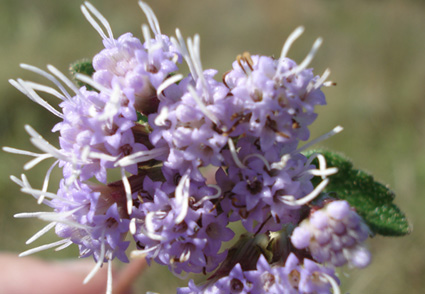
Taxonomic treatments for species complexes are a continuing challenge, in which new information and further questions are constantly being formulated. Regarding the Chromolaena congesta complex, recent studies with morphological data, geographic distribution and climatic niche have shed light on needed changes in the recognition and identification of some species. This paper presents a synopsis and an identification key of the species complex, which now consists of 11 taxa. Taxonomic novelties presented in this paper include a new combination for Eupatorium caaguazuense var. nervosum, re-established from the synonymy of C. squarrulosa and now treated as a distinct species, and the description of a cryptic new species from Southern Brazil with unique morphological traits. Furthermore, we propose the synonymy of C. xylorhiza under C. ascendens and provide updated information regarding distribution and evaluation of conservation status for each species. Finally, we included some insights on further studies to be conducted in the C. congesta complex to answer questions that still hamper the taxonomy and systematics of these species.
References
- Andriamihaja, C.F., Botomanga, A., Misandeau, C., Ramarosandratana, A.V., Grisoni, M., da Silva, D., Pailler, T., Jeannoda, V.H. & Besse, P. (2022) Integrative taxonomy and phylogeny of leafless Vanilla orchids from South-West Indian Ocean region reveal two new Malagasy species. Journal of Systematics and Evolution 61: 80–98. https://doi.org/10.1111/jse.12858
- Bachman, S., Moat, J., Hill, A.W., de la Torre, J. & Scott, B. (2011) Supporting Red List threat assessments with GeoCAT: Geospatial conservation assessment tool. ZooKeys 150: 117–126. https://doi.org/10.3897/zookeys.150.2109
- Baker, J.G. (1876) Compositae, II. Eupatoriaceae. In: Martius, C.F.P. de & Eichler, A.G. (Eds.) Flora Brasiliensis enumeratio plantarum in Brasilia hactenus detectarum quas suis aliorumque botanicorum studiis descriptas et methodo naturali digestas partim icone illustratas, vol. 6 (2). F.Fleischer, Leipzig, pp. 182–398.
- Barroso, G.M. (1950) Considerações sobre o gênero Eupatorium. Arquivos do Jardim Botânico do Rio de Janeiro 10: 13–116.
- Beentje, H. (2010) The Kew Plant Glossary: an illustrated dictionary of plant terms. Royal Botanic Gardens, Kew, 160 pp.
- Cabrera, A.L. & Klein, R.M. (1989) Compostas 4—Tribo: Eupatorieae. In: Reitz, R. (Ed.) Flora Ilustrada Catarinense. Herbário Barbosa Rodrigues, Itajaí, pp. 415–750.
- Cabrera, A.L., Holmes, W.C. & McDaniel, S. (1996) Compositae III. Asteroideae, Eupatorieae. In: Spichiger, R., Ramella, L. (Eds.) Flora del Paraguay, vol. 25. Conservatoire et Jardin Botaniques de la Ville de Genève, Genève, pp. 1–349.
- Candolle, A.P. de (1836) Prodromus systematis naturalis regni vegetabilis, vol. 5. Treuttel & Würtz, Paris, 706 pp.
- Chodat, R.H. (1902) Plantae Hasslerianae soit énumération des plantes récoltées au Paraguay par le Dr Émile Hassler, d‘Aarau (Suisse) de 1885–1895 et de 1898–1900 et déterminées par le Prof. Dr R. Chodat avec l‘aide de plusieurs collaborateurs (Suite). Bulletin de L’Herbier Boissier, sér. 2, 2 (4): 382–403.
- Christ, A.L. & Rebouças, N.C. (2020) Chromolaena in Flora do Brasil 2020. Jardim Botânico do Rio de Janeiro, Rio de Janeiro. Available from: http://floradobrasil.jbrj.gov.br/reflora/floradobrasil/FB16052 (accessed: 31 January 2024).
- Christ, A.L. & Ritter, M.R. (2018) Typifications in Chromolaena and Praxelis (Asteraceae: Eupatorieae). Phytotaxa 362 (1): 112–114. https://doi.org/10.11646/phytotaxa.362.1.10
- Christ, A.L. & Ritter, M.R. (2019) A taxonomic study of Praxelinae (Asteraceae-Eupatorieae) in Rio Grande do Sul, Brazil. Phytotaxa 393 (2): 141–197. https://doi.org/10.11646/phytotaxa.393.2.5
- Christ, A.L., Saraiva, D.D., Nakajima, J.N. & Ritter, M.R. (2023a) Morphometric studies suggest taxonomic changes in a species complex in Chromolaena (Asteraceae, Eupatorieae, Praxelinae). Acta Botanica Brasilica 37: e20220126. https://doi.org/10.1590/1677-941x-abb-2022-0126
- Christ, A.L., Reginato, M., Nakajima, J.N. & Ritter, M.R. (2023b) Species distribution modelling and climatic niche as tools to aid in the integrative taxonomy of a South American species complex in Chromolaena (Asteraceae, Eupatorieae). Australian Journal of Botany 71: 492–505. https://doi.org/10.1071/BT23013
- Dayrat, B. (2005) Towards integrative taxonomy. Botanical Journal of the Linnean Society 85: 407–415. https ://doi.org/10.1111/j.1095-8312.2005.00503.x
- de Queiroz, K. (2005) A unified concept of species and its consequences for the future of taxonomy. Proceedings of the California Academy of Sciences 56 (18): 196–215.
- de Queiroz, K. (2007) Species concepts and species delimitation. Systematic Biology 56 (6): 879–886. https://doi.org/10.1080/10635150701701083
- Esteves, R.L. (2001) O gênero Eupatorium s.l. (Compositae—Eupatorieae) no estado de São Paulo—Brasil. PhD Thesis. Universidade Estadual de Campinas, Campinas, 314 pp.
- Fedosov, V.E., Shkurko, A.V., Fedorova, A.V., Ignatova, E.A., Solovyeva, E.N., Brinda, J.C., Ignatov, M.S. & Kucera, J. (2022) Need for split: integrative taxonomy reveals unnoticed diversity in the subaquatic species of Pseudohygrohypnum (Pylaisiaceae, Bryophyta). PeerJ 10: e13260. https://doi.org/10.7717/peerj.13260
- Freire, S.E. & Ariza Espinar, L. (2014) Chromolaena DC. In: Zuloaga, F.O., Belgrano, M.J. & Anton, A.M.R. (Eds.) Flora Argentina, Flora Vascular de la República Argentina, Dicotyledoneae, Asteraceae, vol. 7 (1). Estudio Sigma S.R.L., Buenos Aires, pp. 327–342.
- Hieronymus, G.H.E.W. (1897) Erster Beitrag zur Kenntnis der Siphonogamenflora der Argentina und der angrenzenden Länder, besonders von Uruguay, Paraguay, Brasilien und Bolivien. Botanische Jahrbücher für Systematik, Pflanzengeschichte und Pflanzengeographie 22: 672–798.
- Hooker, W.J. & Arnott, G.A.W. (1836) Contributions towards a flora of South America and the islands of the Pacific. Companion to the Botanical Magazine 1: 234–244.
- IUCN Standards and Petitions Committee (2022) Guidelines for Using the IUCN Red List Categories and Criteria. Version 15. Prepared by the Standards and Petitions Committee. Available from: https://www.iucnredlist.org/documents/RedListGuidelines.pdf (accessed: 31 January 2024).
- King, R.M. & Robinson, H. (1970) Studies in the Eupatorieae (Compositae). XXIX. The genus Chromolaena. Phytologia 20 (3): 196–209. https://doi.org/10.5962/bhl.part.7118
- King, R.M. & Robinson, H. (1980) Studies in the Eupatorieae (Asteraceae). CC. Additions to the genus Chromolaena. Phytologia 47: 230–251. https://doi.org/10.5962/bhl.part.4456
- Külkamp, J., Heiden, G. & Iganci, J.R.V. (2018) Endemic plants from the Southern Brazilian Highland Grasslands. Rodriguésia 69 (2): 429–440. https://doi.org/10.1590/2175-7860201869214
- Leme, E.M.C., Zizka, G., de Souza, E.H., Paule, J., de Carvalho, J.D.T., Mariath, J.E.A., Halbritter, H. & Ribeiro, O.B.C. (2022) New genera and a new species in the “Cryptanthoid Complex” based on the morphology of recently discovered species, seed anatomy, and improvements in molecular phylogeny. Phytotaxa 544 (2): 128–170. https://doi.org/10.11646/phytotaxa.544.2.2
- Matzenbacher, N.I. (1979) Estudo taxonômico do gênero Eupatorium L. (Compositae) no Rio Grande do Sul—Brasil. MSc Thesis, Universidade Federal do Rio Grande do Sul, Porto Alegre, 310 pp.
- McKenzie, R.J. & Barker, N.P. (2022) Revised taxonomy of the Arctotis Annual Clade (Arctotidae, Asteraceae) from Southern Africa: integration of molecular phylogenetic and morphological evidence. Systematic Botany 47 (1): 6–40. https://doi.org/10.1600/036364422X16442668423347
- Nakajima, J.N. et al. (2013) Asteraceae. In: Martinell, G. & Moraes, M.A. (Eds.) Livro Vermelho da Flora do Brasil. Instituto de Pesquisas do Jardim Botânico do Rio de Janeiro, Rio de Janeiro, pp. 203–286.
- Padial, J.M., Miralles, A., De La Riva, I. & Vences, M. (2010) The integrative future of taxonomy. Frontiers in Zoology 7: e16. https://doi.org/10.1186/1742-9994-7-16
- Pante, E., Schoenlick, C. & Puillandre, N. (2015) From integrative taxonomy to species description: one step beyond. Systematic Biology 64 (1): 152–160. https://doi.org/10.1093/sysbio/syu083
- Perez, C. (2019) Revisión taxonómica Chromolaena DC. (Asteraceae: Eupatorieae) en Uruguay. MSc Thesis, Universidad de la República, Montevideo, 69 pp.
- Queiroz, L.N.L., Christ, A.L. & Marzinek, J. (2025) Micromorphology and anatomy of the cypselae of a complex of South American species in Chromolaena (Asteraceae, Eupatorieae, Praxelinae). Phytotaxa 683 (3): 229–240. https://doi.org/10.11646/phytotaxa.683.3.4
- Robinson, B.L. (1923) Records preliminary to a general treatment of the Eupatorieae—III. Contributions from the Gray Herbarium of Harvard University 68: 3–42. https://doi.org/10.5962/p.336050
- Rouhan, G. & Gaudeul, M. (2021) Plant taxonomy: a historical perspective, current challenges, and perspectives. In: Besse, P. (Ed.) Molecular Plant Taxonomy: methods and protocols. Spinger, New York, pp. 1–38. https://doi.org/10.1007/978-1-0716-0997-2_1
- Schlick-Steiner, B.C., Steiner, F.M., Seifert, B., Stauffer, C., Christian, E. & Crozier, R.H. (2010) Integrative taxonomy: a multisource approach to exploring diversity. Annual Review of Entomology 55: 421–438. https://doi.org/10.1146/annurev-ento-112408-085432
- Thiers, B. (2024 [continuously updated]) Index Herbariorum: A global directory of public herbaria and associated staff. New York Botanical Garden’s Virtual Herbarium. Available from: http://sweetgum.nybg.org/science/ih/ (accessed 31 January 2024)
- Yezzi, A., Nebbia, A. & Zalba, S. (2021) Fragmentation of coastal grasslands by plantations and spontaneous spread of invasive plants in Southern Pampa. Diversity 13: e637. https://doi.org/10.3390/d13120637