
Abstract
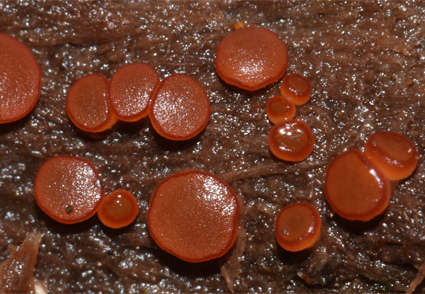
La Esperanza is an Oaxacan relic area of the Tertiary, dominated by the big tree Oreomunnea mexicana (Juglandaceae). The forest is part of the priority region for the conservation of La Chinantla and constitutes one of the most conserved Mexican tropical montane cloud forests. We studied the Ascomycetes fungi and found 63 species, of which 32 are new records for Oaxaca. Ascocoryne inflata, Calyculosphaeria macrospora, Cercophora costaricensis, Chaetosphaeria ellisii, Coccomyces limitatus, Lasiosphaeria ovina, Leptogidium dendriscum, Marthamyces quadrifidus, Stereocaulon didymicum and Thelonectria lucida are new records for Mexico. Xylaria was the most diverse genus with 12 species. The most abundant species were Xylaria arbuscula and Lachnum apalum. The main growth habit was lignicolous. The tropical montane cloud forest of La Esperanza has unique characteristics allowing great taxonomic diversity of Ascomycetes.
References
Almaraz-Almaraz, M.E., León-Cortés, J.L. & Molina-Martínez, A. (2013) The population ecology and conservation of Pterourus esperanza (Insecta: Lepidoptera): an ancestral swallowtail butterfly in the northern Sierra of Oaxaca, Mexico. Annals of the Entomological Society of America 106 (6): 753–760. https://doi.org/10.1603/AN12107
Angulo, A., Rueda-Almonacid, J.V., Rodríguez-Mahecha, May, J. & La Marca, E. (eds.) (2006) Técnicas de inventario y monitoreo para los anfibios de la región tropical andina. Conservación Internacional. Serie Manuales de Campo Nº 2. Panamericana Formas e Impresos S.A., Bogotá D.C. pp. 135–137.
Becerril-Navarrete, A.M., Gómez-Reyes, V.M., Palestina Villa, E.N. & Medel-Ortiz, R. (2018) New records of Xylaria (Xylariaceae) for the state of Michoacán, Mexico. Scientia Fungorum 48: 61–75. https://doi.org/10.33885/sf.2018.48.1199
Beltrán-Tejera, E. Fungi. In: Izquierdo, I., Martín, J.L., Zurita, N. & Archavaleta, M.A. (eds.) (2004) Lista de especies silvestres de Canarias (hongos, plantas y animales terrestres). Consejería de medio Ambiente y ordenación territorial, Gobierno de Canarias, Tenerife. 500 pp.
Boehm, E.W.A., Mugambi, G.K., Miller, A.N., Huhndorf, S.M., Marincowitz, S. Spatafora, J.W. & Schoch, C.L. (2009) A molecular phylogenetic reappraisal of the Hysteriaceae, Mytilinidiaceae and Gloniaceae (Pleosporomycetidae, Dothideomycetes) with key to the world species. Studies in Mycology 64: 49–83. https://doi.org/10.3114/sim.2009.64.03
Bouly de Lesdain, M. (1929) Lichens du Mexique recueillis par le Frere Amable St. Pierre. Annual Cryptology Exotic 2: 217–255.
Breitenbach, J. & Kränzlin, F. (1984) Fungi of Switzerland, Vol. I. Ascomycetes. Verlag Mykologia, Lucerna.
Brodo, I.M., Sharnoff, S.D. & Sharnoff, S. (2001) Lichens of North America. Yale University Press. https://doi.org/10.29173/bluejay5827
Büdel, B. (2001) Biological soil crusts in European temperate and Mediterranean regions. In: Biological soil crusts: structure, function and management. Springer, Berlin, Heidelberg. pp. 75–86. https://doi.org/10.1007/978-3-642-56475-8_6
Calderón-Aguilera, L.E., V.H. Rivera-Monroy, V.H., Porter-Bolland, L., Martínez-Yrízar, A., Ladah, L.B., Martínez-Ramos, M., Alcocer, J., Santiago-Pérez, A.L., Hernández-Arana, H.A., Reyes-Gómez, V.M. & Pérez-Salicrup, D. (2012) An assessment of natural and human disturbance effects on Mexican ecosystems: current trends and research gaps. Biodiversity and Conservation 21: 589–617. https://doi.org/10.1007/s10531-011-0218-6
Canseco-Márquez, L. & González-Bernal, E. (2017) Discovery of another new species of Charadrahyla (Anura, Hylidae) from the cloud forest of northern Oaxaca, Mexico. Zootaxa 4329 (1): 64–72. https://doi.org/10.11646/zootaxa.4329.1.2
Chacón, S. (2005) El género Diatrype especies poco conocidas y nuevos registros. Revista Mexicana de Micología 20: 5–12. https://doi.org/10.7872/crym/v37.iss2.2016.193
Chacón, S. & Medel, R. (1993) Los hongos registrados en el bosque mesófilo de montaña de México. In: Marmolejo, J. & Garza-Ocañas, F. (eds.) Contribuciones micológicas en homenaje al biólogo José Castillo Tovar, por su labor en pro de la micología mexicana. Special Number 13. Facultad de Ciencias Forestales, Universidad Autónoma de Nuevo León. Linares, México. pp. 61–110.
Chaverri, P., Huhndorf, S., Rogers, J.D. & Samuels, G.J. (2011) Microhongos comunes de Costa Rica y otras regiones tropicales. 1ª ed. INBIO. Costa Rica. pp. 215–226.
Chen, C.Y. & Hsieh, W.H. (2004) Byssosphaeria and Herpotrichia from Taiwan, with notes on the taxonomic relationship between these two genera. Sydowia 56: 24–38.
CONABIO. (2010) El bosque mesófilo de montaña en México: amenazas y oportunidades para su conservación y manejo sostenible. Comisión Nacional para el Conocimiento y Uso de la Biodiversidad. México, D.F. 2010, pp. 108.
Córdova, C.O., Castillo, C.G., Pérez, P.R.E., García, F.J.G. & Cáceres, M.E.S. (2016) Alpha diversity of lichens associated with Quercus laurina in a mountain cloud forest at Cofre de Perote eastern slope (La Cortadura), Veracruz, Mexico. Cryptogamie Mycologie 37: 1–12. https://doi.org/10.7872/crym/v37.iss2.2016.193
de Lesdain, M.B. (1914) Lichens du Mexique (états de Puebla et du Michoacán) recueillis par le Frère Arsène Brouard. Imprenta I. Escalante, sa.
Dennis, R.W.G. (1981) British Ascomycetes Supplement. Vaduz, Cramer. 1959 pp.
Ellis, M.B. & Ellis, J.P. (1997) Microfungi on land plants: and identification handbook. Slough, UK, Richmond Publishing. 750 pp.
Espinosa-Ramírez, M.K., Luna-Krauletz, M.D., Alfonso-Corrado, C. & Clark-Tapia, R. (2017) Registros recientes de felinos en el bosque de niebla en Santiago Comaltepec, Sierra Norte de Oaxaca, México. Acta Zoológica Mexicana 33 (2): 398–401. https://doi.org/10.21829/azm.2017.3321079
Fitzpatrick, H.M. (1923) Monograph of the Nitschkieae. Mycologia 15: 23–67. https://doi.org/10.2307/3753648
Flakus, A., Sipman, H.J., Bach, K., Flakus, P.R., Knudsen, K., Ahti, T., Sthiefelbein, U., Palice, Z., Jab?o?ska, A., Oset, M., Meneses, R.I. & Kukwa, M. (2013) Contribution to the knowledge of the lichen biota of Bolivia. 5. Polish Botanical Journal 58: 697–733. https://doi.org/10.2478/pbj-2013-0073
Galloway, D.J. & Thomas, M.A. (2004) Sticta. In: Nash III, T.H., Ryan, B.D., Diederich, P., Gries, C. & Bungartz, F. (eds.) Lichen flora of the greater Sonoran Desert region. Vol. 2. Lichens Unlimited, Arizona State University, González, M.C. & Hanlin, R.T. (2008) Distribution and occurrence of Ascomycetes in Mexico. North American Fungi 3: 139–145. https://doi.org/10.2509/naf2008.003.0077
Guzmán-Guillermo, J., Díaz-Escandón, D. & Medel-Ortiz, R. (2019) Leucodermia guzmaniana sp. nov. (Physciaceae, Lecanorales), a new species from Mexican cloud forest, and a key to Leucodermia in Mexico. Asian Journal of Mycology 2: 209–212. https://doi.org/10.5943/ajom/2/1/11
Hafellner, J. (1979) Karschia. Revision einer Sammelgattung an der Grenze von lichenisierten und nichlichenisiertenc Ascomyceten. Beihefte zur Nova Hedwigia 62: 248.
Hou, C.-L. (2009) New species and new records of Rhytismatales from Panama. Mycologia 4: 565–572. https://doi.org/10.3852/08-216
Huhndorf, S.M. & Fernández, F.A. (2005) Teleomorph-anamorph connections: Chaetosphaeria raciborskii and related species, and their Craspedodidymum-like anamorphs. Fungal Diversity 19: 23–49.
Huhndorf, S.M., Miller, A.N. & Fernández, F.A. (2004) Molecular systematics of the Coronophorales and new species of Bertia, Lasiobertia and Nitschkia. Mycological Research 108: 1384–1398. https://doi.org/10.1017/S0953756204001273
INEGI. (2020) Censo General de Población y Vivienda 2020. Mexico.
Jørgensen, P.M. & Nash III, T.H. (2004) Leptogium. Lichen flora of the Greater Sonoran Desert region. Vol. 2. pp. 330–350.
Kanouse, B.B. (1948) The genus Plectania and its segregates in North America. Mycologia 40: 482–497. https://doi.org/10.2307/3755155
Kanouse, B.B. (1949) Studies in the genus Otidea. Mycologia 41: 660–677. https://doi.org/10.1080/00275514.1949.12017810
Kirk, P., Cannon, P.F., Minter, D.W. & Stalpers, J.A. (2008) Ainsworth & Bisby’s dictionary of the Fungi. 10th ed. CAB International, Wallingford, UK. https://doi.org/10.1079/9780851998268.0000
Kornerup, A. & Wanscher, J.H. (1978) Methuen handbook of colour. 3a. ed. Eyre Methuen, London.
Kukwa, M., Sipman, H.J.M., Etayo, J., Bach, K., Guzow-Krzemi?ska, B., Jab?o?ska, A., Olszewska, S., Rodriguez Flakus, P. & Flakus, A. (2014) The lichen order Peltigerales in Bolivia—the first assessment of the biodiversity. Herzogia 27: 321–345. https://doi.org/10.13158/heia.27.2.2014.321
León-González, D. & Pérez-Pérez, R.E. (2020) Líquenes epífitos en Juniperus flaccida (Cupressaceae) – componente importante de los bosques templados de Oaxaca, México. Acta Biologica Colombiana 25: 1900–1649. https://doi.org/10.15446/abc.v25n2.77238
Luis-Martínez, A., Llorente-Bousquets, J., Warren, A.D. & Vargas-Fernández, I. (2004) Lepidópteros: papilionoideos y hesperioideos. In: García-Mendoza, A.J., Ordoñez, M.J. & Briones-Salas, M. (eds.) Biodiversidad de Oaxaca. Instituto de Biología, Universidad Nacional Autónoma de México-Fondo oaxaqueño para la conservación de la naturaleza- World Wildlife Fund. Mexico City. pp. 335–355.
Mains, E.B. (1954) North American species of Geoglossum and Trichoglossum. Mycologia 46: 586–631. https://doi.org/10.1080/00275514.1954.12024398
Mains, E.B. (1955) North American hyaline-spored species of the Geoglossaceae. Mycologia 47: 846–877. https://doi.org/10.2307/3755508
Mardones-Hidalgo, M. & Iturriaga, T. (2011) Diversity and substrate partitioning of Discomycetes in a cloud forest in Venezuela. Mycosphere 2: 617–625. https://doi.org/10.5943/mycosphere/2/6/2
Martin, G.J., Camacho-Benavides, C., del Campo-García, C.A., Anta-Fonseca, S., Chapela-Mendoza, F. & González-Ortiz, M.A. (2011) Indigenous and community conserved areas in Oaxaca, Mexico. Management of Environmental Quality 22 (2): 250–266. https://doi.org/10.1108/14777831111113419
Meave, J.A., Rincón-Gutiérrez, A., Ibarra-Manríquez, G., Gallardo-Hernández, C. & Romero-Romero, M.A. (2017) Checklist of the vascular flora of a portion of the hyper-humid region of La Chinantla, Northern Oaxaca Range, Mexico. Botanical Sciences 95 (4): 722–759. https://doi.org/10.17129/botsci.1812
Medardi, G. (2006) Atlante fotográfico degli Ascomiceti d’Italia. Fondazione Centro Studi Micologici dell’Associazione Micologica Bresadola. 356 pp.
Medel, R. (2013) Hongos ascomicetos del bosque mesófilo de montaña en México. Acta Botanica Mexicana 105: 87–106. https://doi.org/10.21829/abm105.2013.224
Medel, R., Guzmán, G. & Castillo, J. (2010) Adiciones al conocimiento de Xylaria (Ascomycota, Xylariales) en México. Revista Mexicana de Micología 31: 9–18.
Moreno, G. & Manjón, J.L. (2010) Guía de hongos de la Península Ibérica. Omega. Barcelona.
Mugambi, G.K. & Huhndorf, S.M. (2010) Multigene phylogeny of the Coronophorales: morphology and new species in the order. Mycologia 102: 185–210. https://doi.org/10.3852/09-043
Muggia, L., Nelson, P., Wheeler, T., Yakovchenko, LS., Tønsberg, T. & Spribille, T. (2011) Convergent evolution of a symbiotic duet: the case of the lichen genus Polychidium (Peltigerales, Ascomycota). American Journal of Botany 98: 1647–1656. https://doi.org/10.3732/ajb.1100046
Nannfeldt, J.A. (1975) Stray studies in the Coronophorales (Pyrenomycetes) 4–8. Svensk Botanisk Tidskrift 69: 289–335.
Oliveira dos Santos, May, M., Rodrigues-Barbosa, F., Martins, E.D., Santos, N., Vieira, I.Z. & Bezerra, J.L. (2019) Rhysmataceae in leaf litter of the Atlantic Forest in Southern Bahia, Brazil. Rodriguesia 70: 1–6. https://doi.org/10.1590/2175-7860201970087
Ortega-López, I., Valenzuela, R., Gay-González, A.D., Lara-Chávez, B.N., López-Villegas, E.O. & Raymundo, T. (2019) La familia Sarcoscyphaceae (Pezizales, Ascomycota) en México. Acta Botanica Mexicana 126: 1–41. https://doi.org/10.21829/abm126.2019.1430
Pérez, P.R.E. & Herrera, C.M.A. (2004) Macrolíquenes de la Sierra de Juárez. In: García, M.A.J., Ordóñez, M.J. & Briones, S.M. (eds.) Biodiversidad de Oaxaca. México: Instituto de Biología, Universidad Nacional Autónoma de México – Fondo Oaxaqueño para la Conservación de la Naturaleza - World Wildlife Fund. pp. 327–332.
Pérez, P.R.E., Castillo, C.G. & Cáceres, M.E.S. (2015) Diversity of corticolous lichens in cloud forest remnants in La Cortadura, Coatepec, Veracruz, Mexico in relation to phorophytes and habitat fragmentation. Cryptogamie Mycologie 36: 79–92. https://doi.org/10.7872/crym.v36.iss1.2015.79
Rashmi, M., Kushveer, J.S. & Sharma, V.V. (2019) A worldwide list of endophytic fungi with notes on ecology and diversity. Mycosphere 10: 798–1079. https://doi.org/10.5943/mycosphere/10/1/19
Raymundo, T., Aguirre-Acosta, E., Bautista-Hernández, S., Contreras-Pacheco, M, Garma, P., León-Avendaño, H. & Valenzuela, R. (2013) Catálogo de Ascomycota en los bosques de Santa Martha Latuvi, Sierra Norte Oaxaca, México. Boletín de la Sociedad Micológica de Madrid 37: 13–29.
Raymundo, T., Soto-Agudelo, R., Bautista-Hernández, S., Morales-Campos, A.R. & Valenzuela, R. (2016) Catálogo de los ascomicetos del bosque mesófilo de montaña de Tlanchinol, Hidalgo. Boletín de la Sociedad Micológica de Madrid 40: 83–108.
Raymundo, T., Valenzuela, R., Ramírez-Martínez, J.C., Martínez-Pineda, M., Cobos Villagrán, A., Trejo-Arana, A., Sánchez Flores, M., Gay-González, A.D. & Luna-Vega, I. (2020) New records of Ascomycetes from the tropical montane cloud forests of eastern Mexico. Phytotaxa 454: 161–185. https://doi.org/10.11646/phytotaxa.454.3.1
Rincón-Espitia, A. & Mateus, N. (2013) Morphological and anatomical characterization of the genus Stereocaulon Hoffmann (lichenized Ascomycetes) in Colombia. Caldasia 35: 241–260.
Rincón-Gutiérrez, A. (2007) Estructura y composición de los bosques tropicales húmedos de montaña de Santa Cruz Tepetotutla, Oaxaca, México. Bachellor thesis. Facultad de Ciencias, Universidad Nacional Autónoma de México.
Rubio, E., Suárez, A., Miranda, M.A. & Linde, J. (2005) Catálogo provisional de los macromicetos (setas) de Asturias. Real Instituto de Estudios Asturianos. pp. 8.
Ruiz-Jiménez, C.A., Téllez-Valdés, O. & Luna-Vega, I. (2012) Clasificación de los bosques mesófilos de montaña de México: afinidades de la flora. Revista Mexicana de Biodiversidad 83: 1110–1144. https://doi.org/10.22201/ib.20078706e.2012.4.1012
Rzedowki, J. & Palacios-Chávez, R. (1977) El bosque de Engelhardtia (Oreomunnea) mexicana en la región de la Chinantla (Oaxaca, México). Una reliquia del Cenozoico. Boletín de la Sociedad Botanica de Mexico 36: 93–123. https://doi.org/10.17129/botsci.1161
Saitta, A., Bernicchia, A., Gorjón, S.P., Altobelli, E., Granito, V.M. & Losi, C. (2011) Biodiversity of wood-decay fungi in Italy. Plant Biosystems 145: 961–971. https://doi.org/10.1080/11263504.2011.633114
San Martín, F. & Rogers, J.D. (1989) A preliminary account of Xylaria of Mexico. Mycotaxon 34: 283–374.
San Martín, F. & Rogers, J.D. (1993) Biscogniauxia and Camillea in Mexico. Mycotaxon 47: 229–258.
San Martín, F. & Rogers, J.D. (1996) A preliminary list of xylariaceous fungi at El Cielo Biosphere reserve in Tamaulipas, Mexico. Acta Botanica Mexicana 37: 23–31. https://doi.org/10.21829/abm37.1996.766
San Martín, F., Ju, Y.M. & Rogers, J.D. (1999) Algunas especies de Hypoxylon (Pyrenomycetes, Xylariaceae) de México. Acta Botanica Mexicana 47: 31–53. https://doi.org/10.21829/abm47.1999.823
Seaver, F.J. (1928) The North American cup-fungi (Operculates). Lubrecht & Cramer, Monticello, New York. pp. 377.
Secretaría de Finanzas de Oaxaca. (2010) Plan municipal de desarrollo Santiago Comaltepec, Ixtlán, Oaxaca. Ayuntamiento de Santiago Comaltepec, Oaxaca, Mexico. [https://www.finanzasoaxaca.gob.mx/pdf/inversion_publica/pmds/08_10/458.pdf]
SEMARNAT (2010) Norma Oficial Mexicana NOM-059-SEMARNAT-2010, Protección ambiental – Especies nativas de México de flora y fauna silvestres – Categorías de riesgo y especificaciones para su inclusión, exclusión o cambio – ANEXO NORMATIVO III. Lista de especies en riesgo. Diario Oficial de la Federación 14 Noviembre, 2019.
Senn-Irlet, B., Murner, R., Martini, E., Kuffer, N., De Marchi, R. & Bieri, G. (2012) Saprobic fungi on wood and litter of Alnus alnobetula in the Swiss Alps. Mycotaxon 120: 1–34.
Sierra-López, D. (2006) Contribución al estudio de los ascomicetos bitunicados de Cataluña. Acta Botánica Barcelónica 50: 5–434.
Sipman, H.J.M. (2002) Key to the Stereocaulon species in the Neotropics [online]. Version 4.0. Berlin (Germany): Botanischer Garten und Botanisches Museum Berlin-Dahlem, Freie Universität Berlin. [www.bgbm.org/sipman/keys/ Neostereo.html]
Sipman, H.J.M. & Wolf, J.H. (1998) Provisional checklist for the lichens of Chiapas. Acta Botanica Mexicana 5: 1–29. https://doi.org/10.21829/abm45.1998.808
Soto-Medina, E. & Bolaños-Rojas, A.C. (2013) Hongos macroscópicos en un bosque de niebla intervenido, vereda Chicoral, Valle de Cauca, Colombia. Biota Colombiana 14: 1–12.
Tempe, A.Z. & Gómez-Peralta, M. (1992) Contribución al conocimiento de los líquenes del campo geotérmico Los Azufres, Michoacán, México. Acta Botanica Mexicana 18: 31–53. https://doi.org/10.21829/abm18.1992.642
Toledo-Aceves, T., Meave, J.A., González-Espinosa, M. & Ramírez-Marcial, N. (2011) Tropical montane cloud forests: current threats and opportunities for their conservation and sustainable management in Mexico. Journal of Environmental Management 92: 974–981. https://doi.org/10.1016/j.jenvman.2010.11.007
Valenzuela, R. (1990) El género Chlorociboria en México. Revista Mexicana de Micología 6: 125–131.
Wang, Y.-Z. (2007) Chlorosplenium chlora, a new discomycete to Taiwan. Fungal Science 22: 59–62.
Zheludeva, E. (2015) Lichen species from north-eastern Priokhotye (Okhotsk Sea region) new for Magadan region. Turczaninowia 18 (4): 5–15. https://doi.org/10.14258/turczaninowia.18.4.1