

Abstract
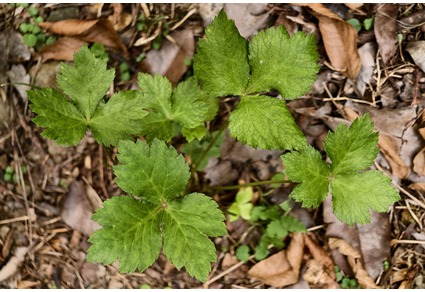
The study provides quantitative evidence refuting the traditional tripartite infraspecific classification of Cryptotaenia japonica complex (Apiaceae) in East Asia, whose taxonomic status is controversial because its leaf‑shape variation has historically been divided into three infraspecific forms (f. japonica, f. dissecta, f. pinnatisecta) based on qualitative assessments, and it is unclear if these forms represent discrete lineages or a continuous response to environmental gradients. The authors analyzed 1,061 leaf specimens from 72 East Asian populations and 9 North American C. canadensis samples using geometric morphometrics and fractal dimension analysis. Unsupervised multivariate approaches (PCA, hierarchical clustering, silhouette analysis) were applied to assess the intrinsic structure of the data without any a priori taxonomic assignment. The results revealed a continuous morphological gradient, with PCA capturing 68.63% of the total variance. The low Adjusted Rand Index (ARI = 0.088) statistically refuted the three‑form classification. Generalized additive modelling (GAM) identified a significant nonlinear relationship between leaf complexity (PC1) and altitude (adj. R²= 0.0559, P < 0.001), with an inflection point occurring at 850 m s.l.m. These findings demonstrate that the three traditional infraspecific forms are not discrete taxa, but rather arbitrary segments along a continuous altitudinal phenotypic cline. Multivariate analyses statistically reject the tripartite classification, leaf complexity increases non‑linearly with elevation (threshold ~850 m s.l.m), and the phenotypic contrasts between East Asian C. japonica and North American C. canadensis suggest divergent evolutionary strategies. Consequently, we propose reducing f. dissecta and f. pinnatisecta to synonyms under C. japonica, reflecting altitudinal morphological variation within a single, polymorphic taxon.
References
- Arbizu, C., Reitsma, K.R., Simon, P.W. & Spooner, D.M. (2014) Morphometrics of Daucus (Apiaceae): A counterpart to a phylogenomic study. American Journal of Botany 101: 2005–2016. https://doi.org/10.3732/ajb.1400252
- Backes, A.R., Casanova, D. & Bruno, O.M. (2009) Plant leaf identification based on volumetric fractal dimension. International Journal of Pattern Recognition and Artificial Intelligence 23: 1145–1160. https://doi.org/10.1142/S0218001409007508
- Backhaus, A., Kuwabara, A., Bauch, M., Monk, N., Sanguinetti, G. & Fleming, A. (2010) Leafprocessor: a new leaf phenotyping tool using contour bending energy and shape cluster analysis. New Phytologist 187: 251–261. https://doi.org/10.1111/j.1469-8137.2010.03266.x
- Bakhtiari, M., Formenti, L., Caggìa, V., Glauser, G. & Rasmann, S. (2019) Variable effects on growth and defense traits for plant ecotypic differentiation and phenotypic plasticity along elevation gradients. Ecology and Evolution 9: 3740–3755. https://doi.org/10.1002/ece3.4999
- Banasiak, Ł., Wojewódzka, A., Baczyński, J., Reduron, J.P., Piwczyński, M., Kurzyna-Młynik, R., Gutaker, R., Czarnocka-Cieciura, A., Kosmala-Grzechnik, S. & Spalik, K. (2016) Phylogeny of Apiaceae subtribe Daucinae and the taxonomic delineation of its genera. Taxon 65: 563–585. https://doi.org/10.12705/653.8
- Bayirli, M., Selvi, S. & Cakilcioglu, U. (2015) Determining different plant leaves’ fractal dimensions: a new approach to taxonomical study of plants. Bangladesh Journal of Botany 43: 267–275. https://doi.org/10.3329/bjb.v43i3.21593
- Bellin, N., Calzolari, M., Magoga, G., Callegari, E., Bonilauri, P., Lelli, D., Dottori, M., Montagna, M. & Rossi, V. (2022) Unsupervised machine learning and geometric morphometrics as tools for the identification of inter and intraspecific variations in the Anopheles Maculipennis complex. Acta Tropica 233: 106585. https://doi.org/10.1016/j.actatropica.2022.106585
- Borkowski, W. (1999) Fractal dimension based features are useful descriptors of leaf complexity and shape. Canadian Journal of Forest Research 29: 1301–1310. https://doi.org/10.1139/cjfr-29-9-1301
- Bruno, O.M., de Oliveira Plotze, R., Falvo, M. & de Castro, M. (2008) Fractal dimension applied to plant identification. Information Sciences 178: 2722–2733. https://doi.org/10.1016/j.ins.2008.01.023
- Chen, Y., Jabbour, F., Novikov, A., Wang, W. & Gerber, S. (2018) A study of floral shape variation in Delphinieae (Ranunculaceae) using geometric morphometrics on herbarium specimens. Botany Letters 165: 368–376. https://doi.org/10.1080/23818107.2018.1427145
- Chevin, L.-M. & Hoffmann, A.A. (2017) Evolution of phenotypic plasticity in extreme environments. Philosophical Transactions of the Royal Society B: Biological Sciences 372 (1723): 20160138. https://doi.org/10.1098/rstb.2016.0138
- Cope, J.S., Corney, D., Clark, J.Y., Remagnino, P. & Wilkin, P. (2012) Plant species identification using digital morphometrics: a review. Expert Systems with Applications 39: 7562–7573. https://doi.org/10.1016/j.eswa.2012.01.073
- Corbit, J. & Garbary, D. (1995) Fractal dimension as a quantitative measure of complexity in plant development. Proceedings of the Royal Society of London B: Biological Sciences 262: 1–6. https://doi.org/10.1098/rspb.1995.0168
- Debat, V. & David, P. (2001) Mapping phenotypes: canalization, plasticity and developmental stability. Trends in Ecology & Evolution 16: 555–561. https://doi.org/10.1016/S0169-5347(01)02266-2
- Dehghan-Seresht, M., Khadivi, A. & Tunç, Y. (2025) Morphological and pomological characterizations of olive (Olea europaea L.) cultivars. Genetic Resources and Crop Evolution 72: 5735–5751. https://doi.org/10.1007/s10722-024-02303-w
- Di Pietro, R., Di Marzio, P., Medagli, P., Misano, G., Silletti, G.N., Wagensommer, R.P. & Fortini, P. (2016) Evidence from multivariate morphometric study of the Quercus pubescens complex in southeast Italy. Botanica Serbica 40 (1): 83–100. https://doi.org/10.5281/zenodo.48865
- Díaz, S., Kattge, J., Cornelissen, J.H.C., Wright, I.J., Lavorel, S., Dray, S., Reu, B., Kleyer, M., Wirth, C., Prentice, I.C., Garnier, E., Bönisch, G., Westoby, M., Poorter, H., Reich, P.B., Moles, A.T., Dickie, J., Zanne, A.E., Chave, J. & Zotz, G. (2022) The global spectrum of plant form and function: enhanced species-level trait dataset. Scientific Data 9 (1): 167–171. https://doi.org/10.1038/s41597-022-01774-9
- Downie, S.R., Katz-Downie, D.S., Sun, F.-J. & Lee, C.-S. (2008) Phylogeny and biogeography of Apiaceae tribe Oenantheae inferred from nuclear rDNA ITS and cpDNA psbI–5′trnK(UUU) sequences, with emphasis on the North American Endemics clade. Botany 86: 1039–1064. https://doi.org/10.1139/B08-055
- Downie, S.R., Katz‐Downie, D.S. & Watson, M.F. (2000) A phylogeny of the flowering plant family Apiaceae based on chloroplast DNA rpl16 and rpoC1 intron sequences: towards a suprageneric classification of subfamily Apioideae. American Journal of Botany 87: 273–292. https://doi.org/10.2307/2656915
- Du, J., Zhai, C.-M. & Wang, Q.-P. (2013) Recognition of plant leaf image based on fractal dimension features. Neurocomputing 116: 150–156. https://doi.org/10.1016/j.neucom.2012.03.028
- Florindo, J.B., Landini, G. & Bruno, O.M. (2015) Texture descriptors by a fractal analysis of three-dimensional local coarseness. Digital Signal Processing: A Review Journal 42: 70–79. https://doi.org/10.1016/j.dsp.2015.03.013
- Gage, E. & Wilkin, P. (2008) A morphometric study of species delimitation in Sternbergia lutea (Alliaceae, Amaryllidoideae) and its allies S. sicula and S. greuteriana. Botanical Journal of the Linnean Society 158: 460–469. https://doi.org/10.1111/j.1095-8339.2008.00903.x
- Gardner, A.G., Fitz Gerald, J.N., Menz, J., Shepherd, K.A., Howarth, D.G. & Jabaily, R.S. (2016) Characterizing Floral Symmetry in the Core Goodeniaceae with Geometric Morphometrics. PLoS ONE 11: e0154736. https://doi.org/10.1371/journal.pone.0154736
- Geange, S.R., Briceño, V.F., Aitken, N.C., Ramirez-Valiente, J.A., Holloway-Phillips, M.-M. & Nicotra, A.B. (2017) Phenotypic plasticity and water availability: responses of alpine herb species along an elevation gradient. Climate Change Responses 4: 5. https://doi.org/10.1186/s40665-017-0033-8
- Hara, H. (1962) Racial differences in widespread species, with special reference to those common to Japan and North America. American Journal of Botany 49: 647–652. https://doi.org/10.1002/j.1537-2197.1962.tb14994.x
- Harandi, N., Vandenberghe, B., Vankerschaver, J., Depuydt, S. & Van Messem, A. (2023) How to make sense of 3D representations for plant phenotyping: a compendium of processing and analysis techniques. Plant Methods 19 (1): 60. https://doi.org/10.1186/s13007-023-01031-z
- Hawkins, T.S., Baskin, J.M. & Baskin, C.C. (2005) Life cycles and biomass allocation in seed- and ramet-derived plants of Cryptotaenia canadensis (Apiaceae), a monocarpic species of eastern North America. Canadian Journal of Botany 83: 518–528. https://doi.org/10.1139/b05-031
- Heenan, P.B., McGlone, M.S., Mitchell, C.M., Cheeseman, D.F. & Houliston, G.J. (2021) Genetic variation reveals broad‐scale biogeographic patterns and challenges species’ classification in the Kunzea ericoides (kānuka; Myrtaceae) complex from New Zealand. New Zealand Journal of Botany 60: 2–26. https://doi.org/10.1080/0028825X.2021.1903946
- Hodač, L., Karbstein, K., Tomasello, S., Wäldchen, J., Bradican, J.P. & Hörandl, E. (2023) Geometric Morphometric Versus Genomic Patterns in a Large Polyploid Plant Species Complex. Biology 12: 418. https://doi.org/10.3390/biology12030418
- Hodač, L., Karbstein, K., Kösters, L., Rzanny, M., Wittich, H.C., Boho, D., Šubrt, D., Mäder, P. & Wäldchen, J. (2024) Deep learning to capture leaf shape in plant images: Validation by geometric morphometrics. Plant Journal 120: 1343–1357. https://doi.org/10.1111/tpj.17053
- Hussein, B.R., Malik, O.A., Ong, W.-H. & Slik, J.W.F. (2021) Automated Extraction of Phenotypic Leaf Traits of Individual Intact Herbarium Leaves from Herbarium Specimen Images Using Deep Learning Based Semantic Segmentation. Sensors 21 (13): 4549. https://doi.org/10.3390/s21134549
- Jonckheere, I., Nackaerts, K., Muys, B., van Aardt, J. & Coppin, P. (2006) A fractal dimension-based modelling approach for studying the effect of leaf distribution on LAI retrieval in forest canopies. Ecological Modelling 197: 179–195. https://doi.org/10.1016/j.ecolmodel.2006.02.036
- Kaushik, P., Plazas, M., Prohens, J., Vilanova, S. & Gramazio, P. (2018) Diallel genetic analysis for multiple traits in eggplant and assessment of genetic distances for predicting hybrids performance. PLOS ONE 13: e0199943. https://doi.org/10.1371/journal.pone.0199943
- Klingenberg, C.P. (2016) Size, shape, and form: concepts of allometry in geometric morphometrics. Development Genes and Evolution 226: 113–137. https://doi.org/10.1007/s00427-016-0539-2
- Liou, S.L. (1990) New Taxa of Umbelliferae from China. Available from: https://www.jse.ac.cn/EN/Y1990/V28/I2/145 (accessed 28 March 2025)
- Liu, B. & Hong, D. (2016) A taxonomic revision of the Pourthiaea villosa complex (Rosaceae). Phytotaxa 244: 201. https://doi.org/10.11646/phytotaxa.244.3.1
- Manacorda, C.A. & Asurmendi, S. (2018) Arabidopsis phenotyping through geometric morphometrics. GigaScience 7. https://doi.org/10.1093/gigascience/giy073
- Mandelbrot, B.B. (1985) Self-Affine Fractals and Fractal Dimension. Physica Scripta 32: 257–260. https://doi.org/10.1088/0031-8949/32/4/001
- Menini Neto, L., Van den Berg, C. & Forzza, R.C. (2019) Linear and geometric morphometrics as tools to resolve species circumscription in the Pseudolaelia vellozicola complex (Orchidaceae, Laeliinae). Plant Ecology and Evolution 152: 53–67. https://doi.org/10.5091/plecevo.2019.1531
- Mitteroecker, P. & Gunz, P. (2009) Advances in Geometric Morphometrics. Evolutionary Biology 36: 235–247. https://doi.org/10.1007/s11692-009-9055-x
- Musarella, C.M., Cano-Ortiz, A., Piñar Fuentes, J.C., Navas-Ureña, J., Pinto Gomes, C.J., Quinto-Canas, R., Cano, E. & Spampinato, G. (2018) Similarity analysis between species of the genus Quercus L. (Fagaceae) in southern Italy based on the fractal dimension. PhytoKeys 113: 79–95. https://doi.org/10.3897/phytokeys.113.30330
- Nicotra, A.B., Leigh, A., Boyce, C.K., Jones, C.S., Niklas, K.J., Royer, D.L. & Tsukaya, H. (2011) The evolution and functional significance of leaf shape in the angiosperms. Functional Plant Biology 38: 535. https://doi.org/10.1071/FP11057
- Okuno, Y., Marumoto, S. & Miyazawa, M. (2017) Comparison of Essential Oils from Three Kinds of Cryptotaenia japonica Hassk (Kirimitsuba, Nemitsuba, and Itomitsuba) used in Japanese Food. Journal of Oleo Science 66: 1273–1276. https://doi.org/10.5650/jos.ess17133
- Padial, J.M., Miralles, A., De la Riva, I. & Vences, M. (2010) The integrative future of taxonomy. Frontiers in Zoology 7: 16. https://doi.org/10.1186/1742-9994-7-16
- Pan, Z., Watson, M., Wu, Z. & Peter, H. (2005) Flora of China. Science Press; Missouri Botanical Garden Press, Beijing; St. Louis.
- Pham, D.T. & Musielak, Z.E. (2022) Spectra of Reduced Fractals and Their Applications in Biology. Fractal and Fractional 7 (1): 28. https://doi.org/10.3390/fractalfract7010028
- Pigliucci, M., Murren, C.J. & Schlichting, C.D. (2006) Phenotypic plasticity and evolution by genetic assimilation. Journal of Experimental Biology 209: 2362–2367. https://doi.org/10.1242/jeb.02070
- Plotze, R.de O., Falvo, M., Pádua, J.G., Bernacci, L.C., Vieira, M.L.C., Oliveira, G.C.X. & Bruno, O.M. (2005) Leaf shape analysis using the multiscale Minkowski fractal dimension, a new morphometric method: a study with Passiflora (Passifloraceae). Canadian Journal of Botany 83: 287–301. https://doi.org/10.1139/b05-002
- Qi, M., Du, F.K., Guo, F., Yin, K. & Tang, J. (2024) Species identification through deep learning and geometrical morphology in oaks (Quercus spp.): Pros and cons. Ecology and Evolution 14: e11032. https://doi.org/10.1002/ece3.11032
- Savriama, Y. (2018) A Step-by-Step Guide for Geometric Morphometrics of Floral Symmetry. Frontiers in Plant Science 9: 1433. https://doi.org/10.3389/fpls.2018.01433
- Shan, R., Sheh, M. & Committee, E. (1985) Flora Reipublicae Popularis Sinicae. Science Press, Beijing.
- Siegal, M.L. & Bergman, A. (2002) Waddington’s canalization revisited: Developmental stability and evolution. Proceedings of the National Academy of Sciences of the United States of America 99: 10528–10532. https://doi.org/10.1073/pnas.102303999
- Spalik, K. & Downie, S.R. (2007) Intercontinental disjunctions in Cryptotaenia (Apiaceae, Oenantheae): an appraisal using molecular data. Journal of Biogeography 34: 2039–2054. https://doi.org/10.1111/j.1365-2699.2007.01752.x
- Taraschi, G. & Florindo, J.B. (2020) Computing fractal descriptors of texture images using sliding boxes: An application to the identification of Brazilian plant species. Physica A: Statistical Mechanics and its Applications 545: 123651. https://doi.org/10.1016/j.physa.2019.123651
- Valladares, F., Gianoli, E. & Gómez, J.M. (2007) Ecological limits to plant phenotypic plasticity. New Phytologist 176: 749–763. https://doi.org/10.1111/j.1469-8137.2007.02275.x
- Velotta, J.P., Ivy, C.M., Wolf, C.J., Scott, G.R. & Cheviron, Z.A. (2018) Maladaptive phenotypic plasticity in cardiac muscle growth is suppressed in high‐altitude deer mice. Evolution 72: 2712–2727. https://doi.org/10.1111/evo.13626
- de Villemereuil, P., Mouterde, M., Gaggiotti, O.E. & Till‐Bottraud, I. (2018) Patterns of phenotypic plasticity and local adaptation in the wide elevation range of the alpine plant Arabis alpina. Journal of Ecology 106: 1952–1971. https://doi.org/10.1111/1365-2745.12955
- Vogel Ely, C., Andrade, B.O., Iganci, J.R.V. & Boldrini, I.I. (2018) Integrative taxonomy improves delimitation in Hypericum subspecies. Perspectives in Plant Ecology, Evolution and Systematics 34: 68–76. https://doi.org/10.1016/j.ppees.2018.08.005
- Wiens, J.J. & Servedio, M.R. (2000) Species delimitation in systematics: inferring diagnostic differences between species. Proceedings of the Royal Society B: Biological Sciences 267 (1444): 631–636. https://doi.org/10.1098/rspb.2000.1049
- Wilkin, P. (1999) A Morphometric Study of Dioscorea quartiniana (Dioscoreaceae). Kew Bulletin 54: 1. https://doi.org/10.2307/4111020
- Wu, B., Liu, Q., Zhou, W. & Song, C. (2014) Analysis on contents of nutritional components and mineral elements of Cryptotaenia plants in Apiaceae. Journal of Plant Resources and Environment 23: 114–116. https://doi.org/10.3969/j.issn.1674-7895.2014.03.17
- Wu, B., Wen, J., Lu, R. & Zhou, W. (2024) Genetic diversity, population structure, and phylogenetic relationships of a widespread East Asia herb, Cryptotaenia japonica Hassk. (Apiaceae) based on genomic SNP data generated by dd-RAD sequencing. Frontiers in Genetics 15: 1368760. https://doi.org/10.3389/fgene.2024.1368760
- Yamamoto, M., Nishikawa, N., Mayama, H., Nonomura, Y., Yokojima, S., Nakamura, S. & Uchida, K. (2015) Theoretical Explanation of the Lotus Effect: Superhydrophobic Property Changes by Removal of Nanostructures from the Surface of a Lotus Leaf. Langmuir 31: 7355–7363. https://doi.org/10.1021/acs.langmuir.5b00670
- Yucedag, C., Karaman, E.K. & Gailing, O. (2026) Leaf shape differentiation between Quercus vulcanica and Q. frainetto using geometric morphometrics. Dendrobiology 95: 66–76. https://doi.org/10.12657/denbio.095.005
- Zapata, F. & Jiménez, I. (2012) Species Delimitation: Inferring Gaps in Morphology across Geography. Systematic Biology 61 (2): 179. https://doi.org/10.1093/sysbio/syr084
- Zhu, H., Zhu, S.X., Li, Y.F., Yi, X.G., Duan, Y.F.e & Wang, X.R. (2018) Leaf phenotypic variation in natural populations of Cerasus dielsiana. Chinese Journal of Plant Ecology 42: 1168–1178. https://doi.org/10.17521/cjpe.2018.0196
- Licensed under Creative Commons Attribution-N.C. 4.0 International https://creativecommons.org/licenses/by-nc/4.0/
- Licensed under Creative Commons Attribution-N.C. 4.0 International https://creativecommons.org/licenses/by-nc/4.0/