

Abstract
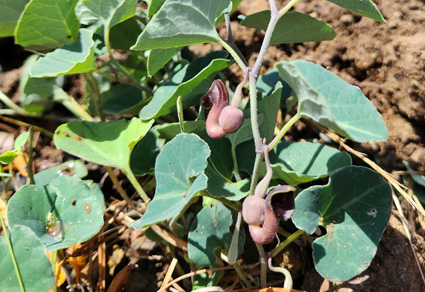
The genus Aristolochia Linnaeus which exhibits a wide global distribution with over 500 species, is represented in Türkiye by approximately 30 taxa, the majority of which are endemic. In Hatay province, 6 species of the genus are known to occur. The new species described herein was discovered and collected during botanical field surveys aimed at documenting the Aristolochia species in Hatay. Aristolochia hatayensis is described as a species new to science from Hatay, Türkiye. Important morphological and micromorphological characters of A. hatayensis are discussed and compared with those of closely the related species A. altanii İlçim & Behçet. The new species is distinguished from latter by the length, shape and indumentum of the perianth, limb, leaf and capsule characters and the micromorphology of the seeds.
References
- Bai, X., Wang, G., Ren, Y., Su, Y. & Han, J. (2023) Insights into taxonomy and phylogenetic relationships of eleven Aristolochia species based on chloroplast genome. Frontiers in Plant Science 14: 1119041. https://doi.org/10.3389/fpls.2023.1119041
- Bona, M. (2015) Centaurea goksivriensis (Asteraceae), a new species from Turkey. Phytotaxa 203 (1): 63–68. https://doi.org/10.11646/phytotaxa.203.1.6
- Bona, M. (2016) Centaurea amanosensis (Asteraceae), a new species from Turkey. Plant Biosystems-An International Journal Dealing with all Aspects of Plant Biology 150 (5): 1083–1086. https://doi.org/10.1080/11263504.2014.1001465
- Corner, E.J.H. (1976) The seeds of dicotyledons, Vols 1 and 2. Cambridge University Press, Cambridge, pp.
- Cronquist, A. (1981) An integrated system of classification of flowering plants. Columbia University Press.
- Davis, P.H. & Khan, M.S. (1982) Aristolochia. In: Davis, P.H. (Eds.) Flora of Turkey and East Eagean Islands, Vol. 7. Edinburgh Univ. Press, Edinburgh, pp. 552–565.
- De Groot, H., Wanke, S. & Neinhuis, C. (2006) Revision of the genus Aristolochia (Aristolochiaceae) in Africa, Madagascar and adjacent islands. Botanical Journal of the Linnean Society 151 (2): 219–238. https://doi.org/10.1111/j.1095-8339.2006.00511.x
- Naumann, J., Salomo, K., Der, J.P., Wafula, E.K., Bolin, J.F., Maass, E. & Wanke, S. (2013) Single-copy nuclear genes place haustorial Hydnoraceae within Piperales and reveal a Cretaceous origin of multiple parasitic angiosperm lineages. Systematic Botany 40 (3): 671–691. https://doi.org/10.1371/journal.pone.0079204
- Eker, İ. & Koyuncu, M. (2008) Muscari babachii sp. nov. (Hyacinthaceae) from south Anatolia. Nordic Journal of Botany 26 (1‐2): 49–52. https://doi.org/10.1111/j.1756-1051.2008.00299.x
- Faegri, K. & Iversen, J. (1975) Text book of pollenanalysis. Hafner Pres, New York.
- Freitas, J., dos Santos, F.D.A.R. & Alves-Araújo, A. (2023) Pollen morphology of Brazilian Aristolochia subgenera Aristolochia (Aristolochiaceae) and its taxonomical significance. Authorea Preprints. https://doi.org/10.22541/au.168986653.31165545/v1
- González, F. & Stevenson, D.W. (2000) Perianth development and systematics of Aristolochia. Flora 195 (4): 370–391. https://doi.org/10.1016/S0367-2530(17)30995-7
- González, F., Wagner, S.T., Salomo, K., Symmank, L., Samain, M.S., Isnard, S., Rowe, N.P., Neinhuis, C. & Wanke, S. (2014) Present transPacific disjunct distribution of Aristolochia subgenus Isotrema (Aristolochiaceae) was shaped by dispersal, vicariance and extinction. Journal Biogeography 41: 380–391. https://doi.org/10.1111/jbi.12198
- Güzel, Y. (2022) Centaurea ptosimopappa var. elegans Güzel. A new Centaurea L. (Asteraceae) from Turkey with taxonomical notes on sect. Ptosimopappus and with lectotypification. Anadolu Ege Tarımsal Araştırma Enstitüsü Dergisi 32 (2): 287–300. https://doi.org/10.18615/anadolu.1216309
- Hesse, M. & Silvia, U. (2012) Pollen. Biologie in unserer Zeit 42 (1): 34. https://doi.org/10.1002/biuz.201210468
- Huang, S., Kelly, L. & Gilbert, M. (2003) Aristolochiaceae. Flora China 5: 246–269.
- Huber, H. (1993) Aristolochiaceae. In: Kubitzki, K. (Eds.) Flowering Plants Dicotyledons: Magnoliid, Hamamelid and Caryophyllid Families. Springer, Berlin, pp. 129–137. https://doi.org/10.1007/978-3-662-02899-5_10
- İlçim, A., Behçet, L. & Tosunoğlu, A. (2015) Aristolochia altanii (Aristolochiaceae), a new species from Turkey. Turkish Journal of Botany 39 (5): 835–840. https://doi.org/10.3906/bot-1407-69
- Johri, B.M. & Bhatnagar, S.P. (1955) A contribution to the morphology and life history of Aristolochia. Phytomorphology 3: 123–137.
- Mahfoud, H.M. (2010) Evolution of the genus Aristolochia (Aristolochiaceae) in the Eastern Mediterranean including the Near East and Caucasia. PhD Thesis. Dresden, Techn. Univ., Diss.
- Mohana Rao, P.R. (1989) Seed and fruit anatomy in Aristolochia and Asarum with a discussion on the affinities of Aristolochiaceae. Journal of the Swamy Botanical Club 6: 105–119.
- Mulder, C.H. (2003) Aristolochiaceae. Review of Palaeobotany and Palynology 123 (1–2): 47–55. https://doi.org/10.1016/S0034-6667(02)00153-7
- Murata, J., Ohi-Thoma, T., Wu, S., Darnaedi, D., Sugawara, T., Nakanishi, T. & Murata, H. (2001) Molecular phylogeny of Aristolochia (Aristolochiaceae) inferred from matK sequences. Acta phytotaxonomica et geobotanica 52: 75–83.
- Naumann, J., Salomo, K., Der, J.P., Wafula, E.K., Bolin, J.F., Maass, E., Frenzke, L., Samain, M.-S., Neinhuis, C., dePamphilis, C.W. & Wanke, S. (2013) Single-copy nuclear genes place haustorial Hydnoraceae within Piperales and reveal a cretaceous origin of multiple parasitic angiosperm lineages. PLoS One 8: e79204. https://doi.org/10.1371/journal.pone.0079204
- Neinhuis, C., Wanke, S., Hilu, K.W., Müller, K. & Borsch, T. (2005) Phylogeny of Aristolochiaceae based on parsimony, likelihood, and Bayesian analyses of trnL-trnF sequences. Plant Systematic and Evolution 250 (1–2): 7–26. https://doi.org/10.1007/s00606-004-0217-0
- Punt, W., Hoen, P.P., Blackmore, S., Nilsson, S. & Le Thomas, A. (2007) Glossary of pollen and spore terminology. Review of Palaeobotany and Palynology 143: 1–81. https://doi.org/10.1016/j.revpalbo.2006.06.008
- Song, J.H., Yang, S. & Choi, G. (2020) Taxonomic implications of leaf micromorphology using microscopic analysis: A tool for identification and authentication of Korean Piperales. Plants 9 (5): 566. https://doi.org/10.3390/plants9050566
- Takhtadzhian, A.L. (1997) Diversity and classification of flowering plants. Columbia University Press.
- Tosunoglu, A. & Malyer, H. (2014) Aristolochia adalica (Aristolochiaceae), a new species from Anatolia, Turkey. Annales Botanici Fennici 51: 161–166. https://doi.org/10.5735/085.053.0103
- Tosunoğlu, A. & Malyer, H. (2018) Aristolochia L. In: Güner, A., Kandemir, A., Menemen, Y., Yıldırım, H., Aslan, S., Ekşi, G., Güner, İ. & Çimen, A.Ö. (Eds.) Resimli Türkiye Florası, vol. 2. ANG Vakfı Nezahat Gökyiğit Botanik Bahçesi Yayınları, İstanbul, pp. 426–480.
- Wagner, S.T., Hesse, L., Isnard, S., Samain, M.-S., Bolin, J., Maass, E., Neinhuis, C., Rowe, N.P. & Wanke, S. (2014) Major trends in stem anatomy and growth forms in the perianth-bearing Piperales, with special focus on Aristolochia. Annals of Botany 113: 1139–1154. https://doi.org/10.1093/aob/mcu044
- Wanke, S., González, F. & Neinhuis, C. (2006) Systematics of pipevines: combining morphological and fast‐evolving molecular characters to investigate the relationships within subfamily Aristolochioideae (Aristolochiaceae). International Journal of Plant Science 167 (6): 1215–1227. https://doi.org/10.1086/508024
- Werker, E. (1997) Seed anatomy (Encyclopedia of Plant Anatomy Bd. 10). Gebrüder Borntraeger, Berlin, pp.
- Xin-Xin, Z., Guo-Bin, J., Xin-Xin, Z., Zi-Yue, L., Yi, H., Gang-Tao, W. & Rui-Jiang, W. (2019) Isotrema plagiostomum (Aristolochiaceae), a new species from Guangdong, South China. Phytotaxa 405: 221. https://doi.org/10.11646/phytotaxa.405.4.7
- Wodehouse, R.P. (1935) Pollen grains. McGraw-Hill, New York.
- Yıldırım, H. & Ekşen, M. (2021) Fritillaria arsusiana (Lilieae, Liliaceae), a new species from southern Anatolia. Phytotaxa 502 (2): 149–159. https://doi.org/10.11646/phytotaxa.502.2.3
- Zhu, X.X., Li, X.Q., Liao, S., Du, C., Wang, Y., Wang, Z.H., Yan, J., Zuo, Y.J. & Ma, J.S. (2019) Reinstatement of Isotrema, a new generic delimitation of Aristolochia subgen. Siphisia (Aristolochiaceae). Phytotaxa 401 (1): 1–23. https://doi.org/10.11646/phytotaxa.401.1.1