
Abstract
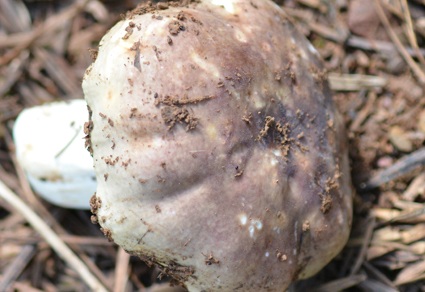
Russula lilaceopruinosa (Russulaceae, Russulales) is described as a new species based on collections from the Wumeng Mountains, Southwest China. It is morphologically characterized by a distinctive lilac pruinose pileus, cream-colored lamellae, and subreticulate to reticulate basidiospores. Molecular phylogenetic analyses of a concatenated dataset (ITS, nrLSU, mtSSU, and RPB2) place the new species within the crown clade of Russula subg. Russula. Russula lilaceopruinosa forms a distinct monophyletic lineage (MLB = 100%; BPP = 1.00) in R. subsect. Auratinae, separate from the R. aurea lineage and the R. wielangtae lineage, supporting its recognition as an independent evolutionary lineage. A comprehensive description and comparisons with similar taxa are provided.
References
- Adamčík, S. & Marhold, K. (2000) Taxonomy of the Russula xerampelina group. I. Morphometric study of the Russula xerampelina group in Slovakia. Mycotaxon 76: 463–479. https://doi.org/10.5962/p.414746
- Adamčík, S., Cai, L., Chakraborty, D., Chen, X.H., Cotter, H.V.T., Dai, D.Q., Dai, Y.C., Das, K., Deng, C.Y., Ghobad-Nejhad, D., Hyde, K.D., Langer, E., Latha, K.P.D., Liu, F., Liu, S.L., Liu, T.T., Lv, W., Lv, S.X., Machado, A.R., Pinho, D.B., Pereira, O.L., Prasher, I.B., Rosado, A.W.C., Qin, J., Qin, W.M., Verma, R.K., Wang, Q., Yang, Z.L., Yu, X.D., Zhou, L.W. & Buyck, B. (2015) Fungal Biodiversity Profiles 1–10. Cryptogamie, Mycologie 36 (2): 121–166. https://doi.org/10.7872/crym/v36.iss2.2015.121
- Adamčík, S., Jančovičová, S. & Buyck, B. (2018) The Russulas Described by Charles Horton Peck. Cryptogamie, Mycologie 39 (1): 3–108. https://doi.org/10.7872/crym/v39.iss1.2018.3
- Adamčík, S., Looney, B.P., Caboň, M., Jančovičová, S., Adamčíková, K., Avis, P.G., Barajas, M., Bhatt, R.P., Corrales, A., Das, K., Hampe, F., Ghosh, A., Gates, G., Kälviäinen, V., Khalid, A.N., Kiran, M., De Lange, R., Lee, H., Lim, Y.W., Kong, A., Manz, C., Ovrebo, C.L., Saba, M., Taipale, T., Verbeken, A., Wisitrassameewong, K. & Buyck, B. (2019) The quest for a globally comprehensible Russula language. Fungal Diversity 99: 369–449. https://doi.org/10.1007/s13225-019-00437-2
- Acharya, K., Tarafder, E., Dutta, A.K., Nandi, S., Pradhan, P., Sarkar, J., Paloi, S., Sikder, R. & Roy, A. (2017a) Contribution to the Macromycetes of West Bengal, India: 8–12. Research Journal of Pharmacy and Technology 10 (3): 823. https://doi.org/10.5958/0974-360X.2017.00155.X
- Acharya, K., Tarafder, E., Pradhan, P., Dutta, A.K., Paloi, S., Datta, M. & Roy, A. (2017b) Contribution to the Macromycetes of West Bengal, India: 18–22. Research Journal of Pharmacy and Technology 10 (9): 3061. https://doi.org/10.5958/0974-360X.2017.00543.1
- Burland, T.G. (2000) DNASTAR’s Lasergene sequence analysis software. Methods in Molecular Biology 132: 71–91. https://doi.org/10.1385/1-59259-192-2:71
- Burlingham, G.S. (1924) Notes on species of Russula. Mycologia 16: 16–23. https://doi.org/10.1080/00275514.1924.12020425
- Buyck, B. (1989) Valeur taxonomique du bleu de crésyl pour le genre Russula. Bulletin de la Société Mycologique de France 105: 1–6.
- Buyck, B. (1991) The study of microscopic features in Russula 2. Sterile cells of the hymenium. Russulales News 1: 62–85.
- Buyck, B., Hofstetter, V., Eberhardt, U., Verbeken, A. & Kauff, F. (2008) Walking the thin line between Russula and Lactarius: the dilemma of Russula subsect. Ochricompactae. Fungal Diversity 28: 15–40.
- Buyck, B., Zoller, S. & Hofstetter, V. (2018) Walking the thin line… ten years later: the dilemma of above- versus belowground features to support phylogenies in the Russulaceae. Fungal Diversity 89 (1): 267–292. https://doi.org/10.1007/s13225-018-0397-5
- Buyck, B., Wang, X.H., Adamčíková, K., Caboň, M., Jančovičová, S., Hofstetter, V., Dima, B. & Antonín, V. (2020) One step closer to unravelling the origin of Russula: subgenus Glutinosae subgen. nov. Mycosphere 11 (1): 285–304. https://doi.org/10.5943/mycosphere/11/1/6
- Buyck, B., Horak, E., Cooper, J.A. & Wang, X.H. (2024) Russula subgen. Cremeoochraceae subgen. nov.: a very small and ancient lineage sharing with Multifurca (Russulaceae) an identical, largely circum-Pacific distribution pattern. Fungal Systematics and Evolution 14: 109–126. https://doi.org/10.3114/fuse.2024.14.07
- Cao, B., Phurbu, D., Ralaiveloarisoa, A., Liimatainen, K., Niskanen, T., Ramírez-Cruz, V., Bradshaw, A.J., Dentinger, B.T.M., Ramírez-Guillén, F., Cortés-Pérez, A., Guzmán-Dávalos, L., Villalobos-Arámbula, A.R., Castro-Jauregui, O., Santos da Silva, P., Day, R., Davoodian, N., Lebel, T., Castellano, M., May, T.W., Toome, M., Vasey, J., Hofer, K., Thangavel, R., Braithwaite, M., Braithwaite, L., Dutta, A.K., Chattopadhyay, P., Roy, N., Tanti, B., Biswas, P.R., Arumugam, E., Kezo, K., Kaliyaperumal, M., Murugadoss, R., Ji, J.X., Kakishima, M., Cooper, J., Nuytinck, J., Luo, Z.L., Wang, W.P., Zhang, X., Wen, T.C., Jia, A.L., Fan, X.L., Jiang, N., Jiao, N., Zhang, Y., Manawasinghe, I.S., Li, H., Xiong, Y.R., Zhou, T., Tan, Q.L., Hoshino, T., Lagaet, P., De Lange, R., Verbeken, A., Tondeleir, L., Manz, C., Hampe, F., Zhao, C.L., Yang, Y., Zhang, G.Q., Dai, D.Q., Tomšovský, M., Denchev, T.T., Denchev, C.M., Léveillé-Bourret, É., Kemler, M., Chen, Y.P., Maharachchikumbura, S.S.N., Feng, Z.X., Wang, L., Wang, Q.M., Wan, S.P., Yu, F.Q., Liu, J.K., Du, H.Z., Wu, N., Hu, H.L., Su, J.Y., Wang, Z.H., Hu, Y.P., Yu, H., Wang, J., Yang, Y.H., Dong, W., Shu, Y.X., Zhao, H.J., Wang, C.Q., Xia, W.X., Liao, C.F., Doilom, M., Li, G.J., Suwannarach, N., Senwanna, C., Gafforov, Y., Flakus, A., Suchan, T., Plata, O., Rodriguez-Flakus, P., Tamang, J., Acharya, K., Yang, H.D., Jayawardena, R.S., Tiendrebeogo, A., Decock, C., Somda, I., Legrève, A., Yang, Y., Xiao, Y.P., Zhou, X.Z., Li, J.X., Thongklang, N., Han, X.X., Yang, W.Q., Wang, S.H., He, M.Q., Hyde, K.D. & Zhao, R.L. (2025) Fungal diversity notes 1919–2016: taxonomic and phylogenetic contributions to fungal taxa. Fungal Diversity. https://doi.org/10.1007/s13225-025-00556-z
- Chen, B., Liang, J.F., Jiang, X.M. & Song, J. (2022) Morphological Characters and Molecular Phylogeny Reveal Three New Species of Subgenus Russula from China. Life 12 (480): 1–19. https://doi.org/10.3390/life12040480
- Chen, Y.L., An, M.Y., Liang, J.Y., Li, W.J., Deng, C.Y., Wang, J., Li, Y.K. & Liang, J.F. (2023) Morphological Characteristics and Molecular Evidence Reveal Four New Species of Russula subg. Brevipedum from China. Journal of Fungi 9 (1): 61. https://doi.org/10.3390/jof9010061
- Chen, Y.L., Liang, J.F., Wang, S.K., An, M.Y., Zhang, J.H., Liang, J.Y., Wang, Y.X., Gao, X.L. & Liang, R.X. (2024a) Notes on two new species of Russula subsect. Cyanoxanthinae (Russulaceae, Russulales) from southern China. Mycological Progress 23 (1): 52. https://doi.org/10.1007/s11557-024-01987-9
- Chen, Y.L., Chen, B., Liang, R.X., Wang, S.K., An, M.Y., Zhang, J.H., Liang, J.Y., Wang, Y.X., Gao, X.L. & Liang, J.F. (2024b) Four new species of Russula subsect. Cyanoxanthinae from China (Russulales, Russulaceae). MycoKeys 107: 21–50. https://doi.org/10.3897/mycokeys.107.123304
- Clericuzio, M. & Vizzini, A. (2019) Terpenoids of Russula (Basidiomycota), with Emphasis on Cucurbitane Triterpenes. In: Sridhar, K.R. & Deshmukh, S.K. (Eds.) Advances in Macrofungi: Diversity, Ecology and Biotechnology. CRC Press, Boca Raton, pp. 226–248.
- Co-David, D., Langeveld, D. & Noordeloos, M.E. (2009) Molecular phylogeny and spore evolution of Entolomataceae. Persoonia 23: 147–176. https://doi.org/10.3767/003158509X480944
- Deng, C.Y., Shi, L.Y., Wang, J., Xiang, Z., Li, S.M., Li, G.J. & Yang, H. (2020) Species diversity of the Russula virescens complex “qingtoujun” in southern China. Mycosystema 39 (9): 1661–1683. https://doi.org/10.13346/j.mycosystema.200145
- Dutta, A.K., Nandi, S., Tarafder, E., Sikder, R., Roy, A. & Acharya, K. (2017) Trogia benghalensis (Marasmiaceae, Basidiomycota), a new species from India. Phytotaxa 331 (2): 273–278. https://doi.org/10.11646/phytotaxa.331.2.11
- Dutta, A.K., Bera, S., Paloi, S., Rakshit, S., Tarafder, E., Sherpa, A.R. & Acharya, K. (2020) Lepiotaceous fungi of West Bengal, India: the genus Chlorophyllum. Phytotaxa 451 (2): 113–131. https://doi.org/10.11646/phytotaxa.451.2.2
- Fungorum, I. (2026) Index Fungorum home page. Available from: http://www.indexfungorum.org (accessed 1 June 2026)
- Gardes, M. & Bruns, T.D. (1993) ITS primers with enhanced specificity for basidiomycetes—application to the identification of mycorrhizae and rusts. Molecular Ecology 2: 113–118. https://doi.org/10.1111/j.1365-294X.1993.tb00005.x
- Ghosh, A., Buyck, B., Chakraborty, D., Hembrom, M.E., Bera, I. & Das, K. (2023) Three new species of genus Russula Pers. from Sal dominated forests of tropical India based on morphotaxonomy and multigene phylogenetic analysis. Cryptogamie, Mycologie 44: 27–50. https://doi.org/10.5252/cryptogamie-mycologie2023v44a3
- Han, Y.X., Liang, Z.Q. & Zeng, N.K. (2023) Notes on four species of Russula subgenus Heterophyllidiae (Russulaceae, Russulales) from southern China. Frontiers in Microbiology 14: 1140127. https://doi.org/10.3389/fmicb.2023.1140127
- Huang, L.H., Wang, J., Li, S.H., Li, G.J., Buyck, B., Deng, C.Y., Xiang, Z. & Li, Y. (2023) Clarifying the identity of marketed edible Huotanjun (Burnt Charcoal Mushroom) in southern China. Mycological Progress 22: 80. https://doi.org/10.1007/s11557-023-01927-z
- Izumi, H. (2024) Host selection in European ectomycorrhizal Basidiomycetes affects their estimated spore volumes. bioRxiv 2024.07.22.604628. https://doi.org/10.1101/2024.07.22.604628
- Kalyaanamoorthy, S., Minh, B.Q., Wong, T.K.F., von Haeseler, A. & Jermiin, L.S. (2017) ModelFinder: Fast model selection for accurate phylogenetic estimates. Nature Methods 14: 587–589. https://doi.org/10.1038/nmeth.4285
- Katoh, K. & Standley, D.M. (2013) MAFFT multiple sequence alignment software version 7: improvements in performance and usability. Molecular Biology and Evolution 30: 772–780. https://doi.org/10.1093/molbev/mst010
- Kornerup, A. & Wanscher, J.H. (1978) Methuen Handbook of Color. Eyre Methuen, London.
- Kumar, S., Stecher, G. & Tamura, K. (2016) MEGA7: Molecular Evolutionary Genetics Analysis Version 7.0 for Bigger Datasets. Molecular Biology and Evolution 33: 1870–1874. https://doi.org/10.1093/molbev/msw054
- Li, F., Li, G.J., Zhang, J., Gao, H., Shi, R.S. & Deng, C.Y. (2021) Russula fanjing, a new species of Russula subsect. Russula (Russulaceae, Russulales) from Guizhou province, China. Phytotaxa 480: 139–151. https://doi.org/10.11646/phytotaxa.480.2.3
- Li, G.J. (2014) Taxonomy of Russula from China. Ph.D. dissertation. Institute of Microbiology, Chinese Academy of Sciences & University of Chinese Academy of Sciences, Beijing, 558 pp.
- Li, G.J., Liu, T.Z., Li, S.M., Zhao, S.Y., Niu, C.Y., Liu, Z.Z., Xie, X.J., Zhang, X., Shi, L.Y., Guo, Y.B., Wang, K., Cao, B., Zhao, R.L., Li, M., Deng, C.Y. & Wei, T.Z. (2023) Four New Species of Russula Subsection Sardoninae from China. Journal of Fungi 9 (2): 199. https://doi.org/10.3390/jof9020199
- Looney, B.P., Ryberg, M., Hampe, F., Sánchez-García, M. & Matheny, P.B. (2016) Into and out of the tropics: global diversification patterns in a hyperdiverse clade of ectomycorrhizal fungi. Molecular Ecology 25: 630–647. https://doi.org/10.1111/mec.13506
- Maire, R. (1910) Les bases de la classification dans le genre Russula. Bulletin de la Société Mycologique de France 26: 49–125.
- Marchese, C. (2015) Biodiversity hotspots: A shortcut for a more complicated concept. Global Ecology and Conservation 3: 297–309. https://doi.org/10.1016/j.gecco.2014.12.008
- Matheny, P.B. (2005) Improving phylogenetic inference of mushrooms with RPB1 and RPB2 nucleotide sequences (Inocybe; Agaricales). Molecular Phylogenetics and Evolution 35 (1): 1–20. https://doi.org/10.1016/j.ympev.2004.11.014
- McNabb, R.F.R. (1973) Russulaceae of New Zealand 2. Russula Pers. ex S.F. Gray. New Zealand Journal of Botany 11: 673–730. https://doi.org/10.1080/0028825X.1973.10430308
- Miller, S.L. & Buyck, B. (2002) Molecular phylogeny of the genus Russula in Europe with a comparison of modern infrageneric classifications. Mycological Research 106 (3): 259–276. https://doi.org/10.1017/S0953756202005610
- Miller, S.L., Aime, M.C. & Henkel, T.W. (2024) Russulaceae of the Pakaraima Mountains of Guyana 5. Two newly described diminutive species in a novel lineage of the crown clade of Russula (Russulaceae). Phytotaxa 668 (2): 117–129. https://doi.org/10.11646/phytotaxa.668.2.1
- Minh, B.Q., Nguyen, M.A. & von Haeseler, A. (2013) Ultrafast approximation for phylogenetic bootstrap. Molecular Biology and Evolution 30: 1188–1195. https://doi.org/10.1093/molbev/mst024
- Nguyen, L.T., Schmidt, H.A., von Haeseler, A. & Minh, B.Q. (2015) IQ-TREE: A fast and effective stochastic algorithm for estimating maximum-likelihood phylogenies. Molecular Biology and Evolution 32 (1): 268–274. https://doi.org/10.1093/molbev/msu300
- Niu, C.Y., Liu, T.Z., Zhao, S.Y., Ren, J., Zhao, Y., Kang, X., Qin, W.Q., Xie, X.J., Zhang, X., Wei, T.Z., Tian, J.H., Li, X., Li, M., Li, S.M. & Li, G.J. (2024) Multi-gene analysis of the Russula crown clade (Russulales, Basidiomycota) revealed six new species and Alboflavinae subsect. nov. from Fagaceae forests in China. Frontiers in Plant Science 15: 1454035. https://doi.org/10.3389/fpls.2024.1454035
- Peck, C.H. (1879) Report of the Botanist. Annual Report of the New York State Museum of Natural History 32: 2–72.
- Quélet, L. (1888) Flore mycologique de la France et des pays limitrophes. Octave Doin, Paris.
- Rambaut, A. (2018) FigTree 1.4.4 software. Institute of Evolutionary Biology, University of Edinburgh.
- Romagnesi, H. (1987) Status et noms nouveaux pour les taxa infragénériques dans le genre Russula. Documents Mycologiques 18 (69): 39–40.
- Ronquist, F., Teslenko, M., van der Mark, P., Ayres, D.L., Darling, A., Höhna, S., Larget, B., Liu, L., Suchard, M.A. & Huelsenbeck, J.P. (2012) MrBayes 3.2: efficient Bayesian phylogenetic inference and model choice across a large model space. Systematic Biology 61: 539–542. https://doi.org/10.1093/sysbio/sys029
- Sarnari, M. (1998) Monografia illustrate del genere Russula in Europa. Vol. 2. AMB, Centro Studi Micologici, Trento.
- Schaeffer, J. (1935) Le système naturel des Russules. Bulletin de la Société Mycologique de France 51: 263–276.
- Schoch, C.L., Robbertse, B., Robert, V., Vu, D., Cardinali, G., Irinyi, L., Meyer, W., Nilsson, R.H., Hughes, K., Miller, A.N., Kirk, P.M., Abarenkov, K., Aime, M.C., Ariyawansa, H.A., Bidartondo, M., Boekhout, T., Buyck, B., Cai, Q., Chen, J., Crespo, A., Crous, P.W., Damm, U., De Beer, Z.W., Dentinger, B.T., Divakar, P.K., Duenas, M., Feau, N., Fliegerova, K., Garcia, M.A., Ge, Z.W., Griffith, G.W., Groenewald, J.Z., Groenewald, M., Grube, M., Gryzenhout, M., Gueidan, C., Guo, L., Hambleton, S., Hamelin, R., Hansen, K., Hofstetter, V., Hong, S.B., Houbraken, J., Hyde, K.D., Inderbitzin, P., Johnston, P.R., Karunarathna, S.C., Koljalg, U., Kovacs, G.M., Kraichak, E., Krizsan, K., Kurtzman, C.P., Larsson, K.H., Leavitt, S., Letcher, P.M., Liimatainen, K., Liu, J.K., Lodge, D.J., Luangsa-ard, J.J., Lumbsch, H.T., Maharachchikumbura, S.S., Manamgoda, D., Martin, M.P., Minnis, A.M., Moncalvo, J.M., Mule, G., Nakasone, K.K., Niskanen, T., Olariaga, I., Papp, T., Petkovits, T., Pino-Bodas, R., Powell, M.J., Raja, H.A., Redecker, D., Sarmiento-Ramirez, J.M., Seifert, K.A., Shrestha, B., Stenroos, S., Stielow, B., Suh, S.O., Tanaka, K., Tedersoo, L., Telleria, M.T., Udayanga, D., Untereiner, W.A., Dieguez Uribeondo, J., Subbarao, K.V., Vagvolgyi, C., Visagie, C., Voigt, K., Walker, D.M., Weir, B.S., Weiss, M., Wijayawardene, N.N., Wingfield, M.J., Xu, J.P., Yang, Z.L., Zhang, N., Zhuang, W.Y. & Federhen, S. (2014) Finding needles in haystacks: linking scientific names, reference specimens and molecular data for Fungi. Database (Oxford) 2014: bau061. https://doi.org/10.1093/database/bau061
- Singer, R. (1935) Supplemente zu meiner Monographie der Gattung Russula. Annales Mycologici 33: 297–352.
- Smith, M.E., Trappe, J.M., Rizzo, D.M. & Miller, S.L. (2006) Gymnomyces xerophilus sp. nov. (sequestrate Russulaceae), an ectomycorrhizal associate of Quercus in California. Mycological Research 110 (5): 575–582. https://doi.org/10.1016/j.mycres.2006.03.001
- Song, J., Li, H.J., Wu, S.J., Chen, Q.Q., Yang, G., Zhang, J.Y., Liang, J.F. & Chen, B. (2022) Morphological and Molecular Evidence for Two New Species within Russula Subgenus Brevipes from China. Diversity 14 (2): 112. https://doi.org/10.3390/d14020112
- Tarafder, E., Dutta, A.K., Sarkar, J. & Acharya, K. (2018) A new species of Agaricus sect. Brunneopicti from Eastern India. Phytotaxa 374 (2): 139–146. https://doi.org/10.11646/phytotaxa.374.2.5
- Tarafder, E., Dutta, A.K. & Acharya, K. (2022) New species and new record in Agaricus subg. Minores from India. Turkish Journal of Botany 46: 183–195. https://doi.org/10.55730/1300-008X.2681
- Tarafder, E., Dutta, A.K., Karunarathna, S.C., He, M.Q., Tian, F. & Acharya, K. (2023) Agaricus sect. Xanthodermatei (Agaricales) of West Bengal, India. Phytotaxa 630 (4): 245–265. https://doi.org/10.11646/phytotaxa.630.4.1
- Tarafder, E., Karunarathna, S.C., Das, D., Elgorban, A.M., Wen, T.C. & Acharya, K. (2025a) New species of Rhodocybe (Entolomataceae, Agaricales) from India. New Zealand Journal of Botany 63 (5): 2120–2137. https://doi.org/10.1080/0028825x.2025.2477703
- Tarafder, E., Karunarathna, S.C., Dutta, A.K., Elgorban, A.M., Tian, F.H. & Acharya, K. (2025b) Morphology and phylogeny reveal two new species and a new geographical record of Agaricus sect. Rubricosi (Agaricales) from West Bengal, India. Scientific Reports 15 (1): 25190. https://doi.org/10.1038/s41598-025-08102-2
- Tarafder, E., Hoque, E., Sherpa, A.R., Karunarathna, S.C., Wang, M., Wijayawardene, N.N., Li, Q., Yu, F., Dai, D.Q. & Watsuntorn, W. (2026) Taxonomy and phylogeny reveal new species of Volvariella (Volvariellaceae, Agaricales) and Volvopluteus (Pluteaceae, Agaricales) from eastern India. MycoKeys 130: 185–208. https://doi.org/10.3897/mycokeys.130.183859
- Teasdale, S.E., Beulke, A.K., Guy, P.L. & Orlovich, D.A. (2013) Environmental barcoding of the ectomycorrhizal fungal genus Cortinarius. Fungal Diversity 58 (1): 299–310. https://doi.org/10.1007/s13225-012-0218-1
- Temmerman, I. (2021) A search for the perfect match: host specificity as a character in Russula phylogeny. Master's dissertation, Ghent University, Ghent, 1–59.
- Verbeken, A., van de Putte, K. & De Crop, E. (2012) New combinations in Lactifluus. 3. L. subgenera Lactifluus and Piperati. Mycotaxon 120: 443–450. https://doi.org/10.5248/120.443
- Vidal, J.M., Alvarado, P., Loizides, M., Konstantinidis, G., Chachuła, P., Mleczko, P., Moreno, G., Vizzini, A., Krakhmalnyi, M., Paz, A., Cabero, J., Kaounas, V., Slavova, M., Moreno-Arroyo, B. & Llistosella, J. (2019) A phylogenetic and taxonomic revision of sequestrate Russulaceae in Mediterranean and temperate Europe. Persoonia 42: 127–185. https://doi.org/10.3767/persoonia.2019.42.06
- Wang, S.H., Li, G.J., Phurbu, D., He, M.Q., Zhang, M.Z., Zhu, X.Y., Li, J.X., Zhao, R.L. & Cao, B. (2024) Four new species of Russula from the Xizang Autonomous Region and other provinces of China. Mycology 15 (2): 210–237. https://doi.org/10.1080/21501203.2023.2265667
- White, T.J., Bruns, T., Lee, S. & Taylor, J. (1990) Amplification and direct sequencing of fungal ribosomal RNA genes for phylogenies. In: Innis, M.A., Gelfand, D.H., Sninsky, J.J. & White, T.J. (Eds.) PCR Protocols: A Guide to Methods and Applications. Academic Press, San Diego, pp. 315–322. https://doi.org/10.1016/b978-0-12-372180-8.50042-1
- Zhao, D., Ye, T., Gao, F., Jakovlić, I., La, Q., Tong, Y., Liu, X., Song, R., Liu, F., Lian, Z., Zou, H., Li, W.X., Wang, G.T., Zeng, B. & Zhang, D. (2025) PhyloSuite v2: the development of an all‑in‑one, efficient and visualization‑oriented suite for molecular dating analysis and other advanced features. iMeta 4: e70095. https://doi.org/10.1002/imt2.70095
- Zhou, H., Cheng, G.Q., Wang, Q.T., Guo, M.J., Zhuo, L., Yan, H.F., Li, G.J. & Hou, C.L. (2022a) Morphological Characteristics and Phylogeny Reveal Six New Species in Russula Subgenus Russula (Russulaceae, Russulales) from Yanshan Mountains, North China. Journal of Fungi 8 (12): 1283. https://doi.org/10.3390/jof8121283
- Zhou, J.J., Xie, M.L., Li, G.J., Song, J., Abdula, D., Xing, P.J., Li, Y., Ji, R.Q. & Zhang, Z.H. (2022b) Russula quercina, a new species of Russula subsect. Integroidinae (Russulaceae, Russulales) from the Quercus mongolica forest in Heilongjiang Province, China. Phytotaxa 549: 77–86. https://doi.org/10.11646/phytotaxa.549.1.6
- Zhou, H., Shen, X.Y. & Hou, C.L. (2023) A new species of Russula subgenus Russula (Russulaceae, Russulales) from Yanshan Mountains, North China. Phytotaxa 609 (3): 195–208. https://doi.org/10.11646/phytotaxa.609.3.3