
Abstract
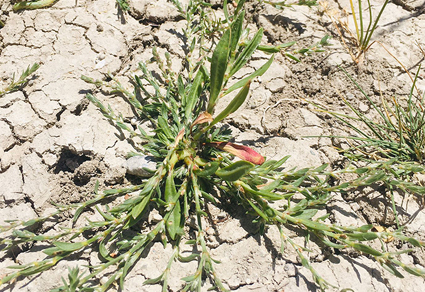
Polygonum halophilum is described as a species new to science from Erzurum Province (Eastern Anatolia, Türkiye). It is morphologically similar to P. acerosum and P. cappadocicum, but differs in having densely fibrous roots, elliptic or lanceolate leaf, 2−3-nerved ocreae, and 6 stamens. In addition, the habitat of the newly described species, which is semi-saline and ranges from damp to drying swamp, is distinctly different from that of the closely related taxa. While nuclear ribosomal DNA Internal Transcribed Spacer data support the new described taxa at specific level, they provide insufficient resolution for its sectional classification. This paper also provides an updated key to the relative species in Türkiye, photographic illustrations, and fruit (nut) anatomy, nut and leaf micromorphology and palynological features of the new species together with a discussion of conservation issues.
References
- Atalay, İ. (1983) A general survey of the vegetation of north-eastern Anatolia. Ege Coğrafya Dergisi 1: 14–39.
- Avcı, M. (1993) The floristic regions of Turkey and a geographical approach for Anatolian Diagonal. Turkish Journal of Geography 28: 232–235.
- Bachman, S., Moat, J., Hill, A.W., De La Torre, J. & Scott, B. (2011) Supporting Red List threat assessments with GeoCAT: geospatial conservation assessment tool. ZooKeys 150: 117–126. https://doi.org/10.3897/zookeys.150.2109
- Barthlott, W. (1981) Epidermal and seed surface characters of plants: systematic applicability and some evolutionary aspects. Nordic Journal of Botany 1: 345–355. https://doi.org/10.1111/j.1756-1051.1981.tb00704.x
- Behçet, L., Gülbasan, İ.H. & Gökçimen, S.S. (2025) Polygonum elazigense sp. nov. (Polygonaceae), a new species from Eastern Anatolia (Türkiye). Phytotaxa 696 (2): 181–191. https://doi.org/10.11646/phytotaxa.696.2.7
- Boissier, E. (1867) Flora Orientalis Enumeratio Plantarum in Oriente a Graecia et Aegypto ad Indiae Fines Hucusgue Observatarum, vol. 1. H. Georg, Basileae & Eumdem, Genevae, 1017 pp. https://doi.org/10.5962/bhl.title.20323
- Chen, M.L., Wang, X.Y. & Funke, A.L. (2018) Floral polymorphism in Polygonum bistorta L. Bangladesh Journal of Plant Taxonomy 25: 1–11. https://doi.org/10.3329/bjpt.v25i1.37174
- Choudhary, R.K., Park, S.H. & Lee, J. (2012) Phylogeny and systematics of Indian Polygonum sensu lato in the subfamily Polygonoideae based on ITS sequences of nuclear ribosomal DNA. Genetics and Molecular Research 11 (4): 4370–4382. https://doi.org/10.4238/2012.October.4.1
- Coode, M.J.E. & Cullen, J. (1966) Polygonum L. In: Davis, P.H. (Ed.) Flora of Turkey and the east Aegean Islands, vol. 2. Edinburgh University Press, Edinburgh, pp. 269–280.
- Coşkunçelebi, K., Kandemir, A. & Beyazoğlu, O. (2000) Scanning electron microscopic examination of the seeds of Ornithogalum (Liliaceae) species distributed in the Black Sea Region of Turkey. Biologia (Bratislava) 55: 397–401.
- Coşkunçelebi, K., Kundakçı, S., Gültepe, M. & Makbul, S. (2024) A new species of Polygonum sect. Polygonum (Polygonaceae) from southwest Türkiye. Turkish Journal of Botany 48 (6): 338–350. https://doi.org/10.55730/1300-008X.2821
- Darriba, D., Taboada, G.L., Doallo, R. & Posada, D. (2012) jModelTest 2: more models, new heuristics and parallel computing. Nature Methods 9 (8): 772. https://doi.org/10.1038/nmeth.2109
- Davis, P.H., Tan, K. & Mill, R.R. (1988) Polygonum L. In: Davis, P.H. (Ed.) Flora of Turkey and the East Aegean Islands, vol. 10 (suppl. 1). Edinburgh University Press, Edinburgh, pp. 84–85.
- Decraene, L.P.R., Hong, S.P. & Smets, E. (2000) Systematic significance of fruit morphology and anatomy in tribes Persicarieae and Polygoneae (Polygonaceae). Botanical Journal of the Linnean Society 134 (1–2): 301–337. https://doi.org/10.1111/j.1095-8339.2000.tb02356.x
- Doyle, J.J. & Doyle, J.L.A. (1987) rapid DNA isolation procedure for small quantities of fresh leaf tissue. Phytochemical Bulletin 19: 11–15.
- Edgar, R.C. (2004) MUSCLE: multiple sequence alignment with high accuracy and high throughput. Nucleic Acids Research 32 (5): 1792–1797. https://doi.org/10.1093/nar/gkh340
- Eker, İ. & Keskin, M. (2025) Polygonum anatolicum (Polygonaceae): a new unique species from Türkiye. Phytotaxa 696 (2): 192–200. https://doi.org/10.11646/phytotaxa.696.2.8
- Erdtman, G. (1952) On pollen and spore terminology. Journal of Palaeosciences 1: 169–176. https://doi.org/10.54991/jop.1952.382
- Galasso, G., Banfi, E., De Mattia, F., Grassi, F., Sgorbati, S. & Labra, M. (2009) Molecular phylogeny of Polygonum L. sl (Polygonoideae, Polygonaceae), focusing on European taxa: preliminary results and systematic considerations based on rbcL plastidial sequence data. Atti della Società italiana di scienze naturali e del Museo civico di storia naturale di Milano 150 (1): 113–148.
- Gemici, Y. & Tan, K. (2014) Polygonum melihae sp. nov. (Polygonaceae) from inner west Anatolia, Turkey. Nordic Journal of Botany 32 (5): 540–542. https://doi.org/10.1111/j.1756-1051.2013.00296.x
- Ghimire, B., Choi, G.E., Jeong, M.J., Lee, H., Lee, K.M., Son, S.W., Lee, C.H. & Suh, G.U. (2016) Fruit morphology and anatomy of Persicaria chinensis (Polygonaceae). Journal of Japanese Botany 91: 218–225.
- Griffith, T.M. & Sultan, S. (2006) Plastic and constant developmental traits contribute to adaptive differences in co-occurring Polygonum species. Oikos 114: 5–14. https://doi.org/10.1111/j.2006.0030-1299.14472.x
- Gültepe, M., Makbul, S., Güzel, M., Türker, Z. & Coşkunçelebi, K. (2024) A new species of Tragopogon from Anatolia: Tragopogon davut-turanii. Preprints. https://doi.org/10.22541/au.170664087.73132707/v1
- Halbritter, H., Ulrich, S., Grímsson, F., Weber, M., Zetter, R., Hesse, M. & Frosch-Radivo, A. (2018) Pollen morphology and ultrastructure. In: AA.VV. (Eds.) Illustrated pollen terminology. Springer, Cham, pp. 37–65. https://doi.org/10.1007/978-3-319-71365-6_3
- Hedberg, O. (1946) Pollen morphology in the genus Polygonum L. s.l. and its taxonomical significance. Svensk Botanisk Tidskrift 40: 371–404.
- Hong, S.P., Oh, I.C. & Ronse DeCraene, L.R.D. (2005) Pollen morphology of the genera Polygonum s.str. and Polygonella (Polygoneae: Polygonaceae). Plant Systematics and Evolution 254: 13–30. https://doi.org/10.1007/s00606-005-0334-4
- IUCN (2024) Guidelines for application of IUCN Red List criteria at regional and national levels: Version 4.0 (Transl. H. Reşit Akçakaya). Gland, Switzerland and Cambridge, United Kingdom, 41 pp.
- Jaubert, H.F. & Spach, É. (1845) Illustrationes Plantarum Orientalium. Vol. 2 (13). Paris, pp. 33, tab. 124.
- Kanwal, D., Abid, R. & Qaiser, M. (2016) The seed atlas of Pakistan–XIV. Polygonaceae. Pakistan Journal of Botany 48: 1833–1848.
- Keshavarzi, M., Gholami, A. & Bokaee, Z.N. (2017) Micromorphological study of some annual Polygonum L. (Polygonaceae) in Iran. Nova Biologica Reperta 3: 362–372. https://doi.org/10.21859/acadpub.nbr.3.4.362
- Keskin, M. (2012) Polygonum L. In: Güner, A., Aslan, S., Ekim, T., Vural, M. & Babaç, M.T. (Eds.) Türkiye Bitkileri Listesi (Damarlı Bitkiler). Nezahat Gökyiğit Bahçesi ve Flora Araştırmaları Derneği Yayını, Istanbul, pp. 758–761.
- Keskin, M. & Severoğlu, Z. (2022) Novelties in the genus Polygonum (Polygonaceae) in Turkey. Phytotaxa 538: 113–123. https://doi.org/10.11646/phytotaxa.538.2.3
- Keskin, M., Karahan, F. & Severoğlu, Z. (2022) Polygonum mersinicum (Polygonaceae), a new species from Turkey. Annales Botanici Fennici 59: 317–322. https://doi.org/10.5735/085.059.0145
- Keskin, M. (2025) Polygonum oktaysinanoglui sp. nov. (Polygonaceae) from Türkiye and Multi-Access Key to Turkish Polygonum. Phytotaxa 716 (1): 45–54. https://doi.org/10.11646/phytotaxa.716.1.5
- Kim, S.T. & Donoghue, M.J. (2008) Molecular phylogeny of Persicaria (Persicarieae, Polygonaceae). Systematic Botany 33 (1): 77–86. https://doi.org/10.1600/036364408783887302
- Komarov, V.L. (1936) Polygonum L. In: Komarov, V.L. (Ed.) Flora USSR, vol. 5. Academy of Sciences of the USSR, Moscow & Leningrad, pp. 594–726. [in Russian]
- Kumar, S., Stecher, G., Li, M., Knyaz, C. & Tamura, K. (2018) MEGA X: Molecular Evolutionary Genetics Analysis across computing platforms. Molecular Biology and Evolution 35 (6): 1547–1549. https://doi.org/10.1093/molbev/msy096
- Kundakçı, S., Hamzaoğlu, E., Makbul, S., Gültepe, M. & Coşkunçelebi, K. (2025) Rediscovery of the endemic Polygonum cappadocicum (Özge Madımak) Species After Decades in Sivas, Türkiye. Bağbahçe Bilim Dergisi 12 (3): 125–133.
- Leblebici, E. (1990) The genus Polygonum L. in Turkey. Doga Turkish Journal of Botany 14: 203–214.
- Li, A.J., Bojian, B., Grabovskaya-Borodina, A.E., Hong, S.P., McNeill, J., Mosyakin, S.L., Ohba, H. & Park, C.W. (2003) Polygonaceae. In: Zhengyi, W., Raven, P.H. & Deyuan, H. (Eds.) Flora of China, vol. 5, pp. 277–350.
- Makbul, S., Kundakçı, S., Gültepe, M., Güzel, M.E. & Coşkunçelebi, K. (2023) Polygonum terzioglui sp. nov. (Polygonaceae), from Northeast Turkey. Phytotaxa 625: 248–264. https://doi.org/10.11646/phytotaxa.625.3.2
- Meikle, R.D. (1985) Polygonaceae. In: Bentham-Moxon, T. (Ed.) Flora of Cyprus. Royal Botanic Gardens, Kew, pp. 1398–1404.
- Menemen, Y., Aytaç, Z. & Kandemir, A. (2016) Türkçe bilimsel bitki adları yönergesi. Bağbahçe Bilim Dergisi 3 (3): 1–3.
- Müller, K., Müller, J. & Quandt, D. (2010) PhyDE: Phylogenetic Data Editor, version 0.9971. Available from: http://www.phyde.de/index.html (accessed 19 December 2025)
- Nowicke, J.W. & Skvarla, J.J. (1977) Pollen morphology and the relationship of the Plumbaginaceae, Polygonaceae and Primulaceae to the order Centrospermae. Smithsonian Contributions to Botany 37: 1–64. https://doi.org/10.5479/si.0081024X.37
- Paul, P. & Chowdhury, M. (2020) Pollen morphology of selected Indian species from subfamily Polygonoideae (Polygonaceae). Biologia 75 (8): 1083–1095. https://doi.org/10.2478/s11756-020-00449-3
- POWO (2026) Plants of the World Online. Facilitated by the Royal Botanic Gardens, Kew. Available from: https://www.plantsoftheworldonline.org (accessed 15 January 2026)
- Qaiser, M. (2001) Polygonaceae Juss. In: Ali, S.I. & Qaiser, M. (Eds.) Flora of Pakistan, vol. 205, pp. 1–179. University of Karachi, Karachi.
- Raei Niaki, N.A., Attar, F., Mirtadzadini, M., Mahdigholi, K. & Sheidai, M. (2019) Micromorphological studies of the leaf epidermis of Iranian Cotoneaster Medik. Nordic Journal of Botany 37 (2): 1–12. https://doi.org/10.1111/njb.02074
- Rechinger, K.H. & Schiman-Czeika, M. (1968) Polygonaceae. In: Rechinger, K.H. (Ed.) Flora Iranica, vol. 56. Akademische Druck-U. Verlagsantalt, Graz, pp. 1–88.
- Ronse Decraene, L.P.R., Hong, S.P. & Smets, E. (2000) Systematic significance of fruit morphology and anatomy in tribes Persicarieae and Polygoneaae (Polygonaceae). Botanical Journal of the Linnean Society 134 (1–2): 301–337. https://doi.org/10.1111/j.1095-8339.2000.tb02356.x
- Ronquist, F., Teslenko, M., Van der Mark, P., Ayres, D.L., Darling, A., Höhna, S., Larget, B., Liu, L., Marc, A.S. & Huelsenbeck, J.P. (2012) MrBayes 3.2: Efficient Bayesian Phylogenetic Inference and Model Choice Across a Large Model Space. Systematic Biology 61: 539–542.
- Sanchez, A., Schuster, T.M. & Kron, K.A. (2009) A large-scale phylogeny of Polygonaceae based on molecular data. International Journal of Plant Sciences 170 (8): 1044–1055. https://doi.org/10.1086/605121
- Schuster, T.M., Reveal, J.L. & Kron, K.A. (2011) Phylogeny of Polygoneae (Polygonaceae: Polygonoideae). Taxon 60 (6): 1653–1666. https://doi.org/10.1002/tax.606010
- Schuster, T.M., Reveal, J.L., Bayly, M.J. & Kron, K.A. (2015) An updated molecular phylogeny of Polygonoideae (Polygonaceae): Relationships of Oxygonum, Pteroxygonum, and Rumex, and a new circumscription of Koenigia. Taxon 64: 1188–1208. https://doi.org/10.12705/646.5
- Stöver, B.C. & Müller, K.F. (2010) Tree Graph 2: combining and visualizing evidence from different phylogenetic analyses. BMC Bioinformatics 11 (7): 1–9. https://doi.org/10.1186/1471-2105-11-7
- Swofford, D.L. (2003) PAUP*. Phylogenetic analysis using parsimony (*and other methods), ver. 4.0b 10. Sinauer Associates, Sunderland MA, 144 pp.
- Sultan, S.E. (2001) Phenotypic plasticity for fitness components in Polygonum species of contrasting ecological breadth. Ecology 82: 328–343. https://doi.org/10.1890/0012-9658(2001)082[0328:PPFFCI]2.0.CO;2
- Tavakkoli, S., Kazempour Osaloo, S., Mozaffarian, V. & Maassoumi, A.A. (2015) Molecular phylogeny of Atraphaxis and the woody Polygonum species (Polygonaceae): taxonomic implications based on molecular and morphological evidence. Plant Systematics and Evolution 301 (4): 1157–1170. https://doi.org/10.1007/s00606-014-1140-7
- Thiers, B. (2026) [continuously updated] Index herbariorum, a global directory of public herbaria and associated staff. Available from: http://sweetgum.nybg.org/ih/ (accessed 19 December 2025)
- Voylokova, V.N., Yurtseva, O.V., Bobrova, V.K. & Troitsky, A.V. (2009) Morphological and molecular evidences of hybrid origin of Polygonum aschersonianum H. Gross and Polygonum samarense H. Gross (Polygonaceae). Botanicheskiĭ Zhurnal 94 (2): 161–187.
- Webb, D.A. & Chater, A.O. (1964) Polygonum L. In: Tutin, T.G., Heywood, J.H., Burger, N.A., Valentine, D.H., Walters, S.M. & Webb, D.A. (Eds.) Flora Europaea vol. 1. Cambridge University Press, Cambridge, pp. 76–80.
- Wodehouse, R.P. (1931) Pollen grains in the identification and classification of plants VI. Polygonaceae. American Journal of Botany 18: 749–764. https://doi.org/10.1002/j.1537-2197.1931.tb04946.x
- Yasmin, G., Khan, M.A. & Shaheen, N. (2010) Pollen morphology of selected Polygonum L. species (Polygonaceae) from Pakistan and its taxonomic significance. Pakistan Journal of Botany 42: 3693–3703.
- Yurtseva, O.V. (2001) Ultrasculpture of achene surface in Polygonum section Polygonum (Polygonaceae) in Russia. Nordic Journal of Botany 21 (5): 513–528. https://doi.org/10.1111/j.1756-1051.2001.tb00805.x
- Yurtseva, O.V., Troitsky, A.V., Bobrova, V.K. & Voylokova, V.N. (2010) On taxonomical revision of Polygonum L. s.str. (Polygonaceae): phylogenetic and morphological data. Botanicheskii Zhurnal 95 (2): 226–247.
- Yurtseva, O.V., Levina, M.S., Severova, E.E. & Troitsky, A.V. (2012) Morphology and taxonomy of Polygonum cognatum Meisn., P. alpestre C.A.Mey. and allied taxa from Central Asia and the Caucasus (Polygonaceae). Wulfenia 19: 141–180.
- Yurtseva, O.V., Kuznetsova, O.I., Mavrodieva, M.E. & Mavrodiev, E.V. (2016) What is Atraphaxis L. (Polygonaceae, Polygoneae): cryptic taxa and resolved taxonomic complexity instead of the formal lumping and the lack of morphological synapomorphies. PeerJ 4: e1977. https://doi.org/10.7717/peerj.1977
- Yurtseva, O.V. & Mavrodiev, E.V. (2019) Caelestium genus novum (Polygonaceae, Polygoneae): evidence based on the results of molecular phylogenetic analyses of tribe Polygoneae, established with consideration of the secondary structure of the ITS nrDNA regions. Novosti Sistematiki Vysshikh Rastenii 50: 47–79. https://doi.org/10.31111/novitates/2019.50.47
- Yurtseva, O.V., Severova, E.E., Deviatov, A.G., Olonova, M.V. & Samigullin, T.H. (2021) Polygonum schischkinii is a member of Atraphaxis (Polygonaceae, Polygoneae): evidences from morphological and molecular analyses. Phytotaxa 491 (3): 193–216. https://doi.org/10.11646/phytotaxa.491.3.1
- Yurtseva, O.V., Deviatov, A.G. & Sokoloff, D.D. (2022) Exocarp structure in the genus Atraphaxis (Polygonaceae, Polygoneae). Plant Systematics and Evolution 308: 1–32. https://doi.org/10.1007/s00606-022-01824-0
- Zhang, X.X., Xiong, X.H., Xu, F., Deng, L.N., Wang, K.M. & Hou, Y.T. (2011) Exocarp anatomy of Polygonum and related species from Shandong Province. Plant Science Journal 529: 554–561.
- Zhou, Z.Z., Lu, R. & Zheng, Y. (1999) Parallel evolution of aperture numbers and arrangement of Polygonaceae in China. Journal of the University of Science and Technology of China 29: 569–577.
- Zhu, S.X., Qin, H.N. & Shih, C. (2006) Achene wall anatomy and surface sculpturing of Lactuca L. and related genera (Compositae: Lactuceae) with notes on their systematic significance. Journal of Integrative Plant Biology 48: 390–399. https://doi.org/10.1111/j.1744-7909.2006.00245.x