

Abstract
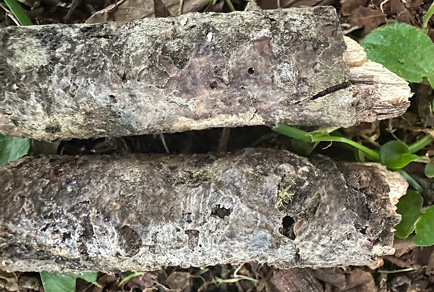
Wood-inhabiting fungi represent a highly diverse group of macrofungi that play essential roles in forest ecosystems, they are considered as the “key player” in wood decomposition, because of their ability to produce lignocellulosic enzymes breaking down lignin, cellulose and hemicellulose. In the present study, a new wood-inhabiting fungal genus, Ceraceocium gen. nov., and a new species, C. vitreum sp. nov., found from southwestern China, are proposed based on a combination of morphological characteristics and molecular evidence. The new genus Ceraceocium is characterized by gelatinous basidiomata with smooth hymenial surface, a monomitic hyphal system and generative hyphae bearing clamp connections, and broadly ellipsoid basidiospores. Sequences of the internal transcribed spacers (ITS) and the large subunit (nrLSU) of the nuclear ribosomal DNA (rDNA) markers of the studied samples were generated. Phylogenetic analyses were conducted using Maximum Likelihood (ML) and Bayesian Inference (BI) methods. Phylogenetic analyses based on combined ITS+nrLSU datasets indicated that Ceraceocium vitreum gen. et sp. formed a distinct monophyletic lineage within the order Auriculariales.
References
- Acharya, K., Tarafder, E., Dutta, A.K., Nandi, S., Pradhan, P., Sarkar, J., Paloi, S., Sikder, R. & Roy, A. (2017) Contribution to the Macromycetes of West Bengal, India: 8–12. Research Journal of Pharmacy and Technology 10 (3): 823. https://doi.org/10.5958/0974-360X.2017.00155.X
- Alvarenga, R.L.M. & Gibertoni, T.B. (2021) Crystallodon Alvarenga gen. nov., a new genus of the Auriculariales from the Neotropics. Cryptogamie Mycologie 42 (2): 17–24. https://doi.org/10.5252/cryptogamie-mycologie2021v42a2
- Alvarenga, R.L.M., Naves, L.R.R. & Xavier-Santos, S. (2015) The Genus Auricularia Bull. ex Juss. (Basidiomycota) in Cerrado (Brazilian Savanna) areas of Goiás state and the Federal District, Brazil. Mycosphere 6: 532–541. https://doi.org/10.5943/mycosphere/6/5/3
- Alvarenga, R.L.M., Spirin, V., Malysheva, V., Gibertoni, T.B. & Larsson, K.H. (2019) Two new genera and six other novelties in Heterochaete sensu lato (Auriculariales, Basidiomycota). Botany 97 (8): 439–451. https://doi.org/10.1139/cjb-2019-0046
- Case, N.T., Gurr, S.J., Fisher, M.C., Blehert, D.S., Boone, C., Casadevall, A., Chowdhary, A., Cuomo, C.A., Currie, C.R., Denning, D.W., Ene, I.V., Fritz-Laylin, L.K., Gerstein, A.C., Gow, N.A.R., Gusa, A., Iliev, I.D., James, T.Y., Jin, H.L., Kahmann, R., Klein, B.S., Kronstad, J.W., Ost, K.S., Peay, K.G., Shapiro, R.S., Sheppard, D.C., Shlezinger, N., Stajich, J.E., Stukenbrock, E.H., Taylor, J.W., Wright, G.D., Cowen, L.E., Heitman, J. & Segre, J.A. (2025) Fungal impacts on Earth's ecosystems. Nature 638: 49–57. https://doi.org/10.1038/s41586-024-08419-4
- Crous, P.W., Groenewald, J.Z., Bensch, K., Gené, J. & Guarro, J. (2025) Genera of phytopathogenic fungi known from culture: 1–379. Studies in Mycology 112: 261–633. https://doi.org/10.3114/sim.2025.112.05
- Cui, Y.Y., Fan, X.P., Guo, L.J. & Yang, Z.L. (2024) New elements of funga from southwestern China: species of Tremellodendropsis and Guepinia. Mycosystema 43: 230266. https://doi.org/10.13346/j.mycosystema.230266
- Dai, Y.C., Wei, Y.L. & Zhang, X.Q. (2004) An annotated checklist of non-poroid Aphyllophorales in China. Annales Botanicci Fennici 41: 233–247.
- Dai, Y.C. (2011) A revised checklist of corticioid and hydnoid fungi in China for 2010. Mycoscience 52: 69–79. https://doi.org/10.1007/S10267-010-0068-1
- Dai, Y.C., Yang, Z.L., Cui, B.K., Wu, G., Yuan, H.S., Zhou, L.W., He, S.H., Ge, Z.W., Wu, F., Wei, Y.L., Yuan, Y. & Si, J. (2021) Diversity and systematics of the important macrofungi in Chinese forests. Mycosystema 40: 770–805. https://doi.org/10.13346/j.mycosystema.210036
- Deng, Y.L., Chen, M., Zhang, S.C., Wang, K.S., Liu, W.T., Qiu, Y.H., Dou, Y.T., Liu, X.F., Wijesinghe, A.S.N., Zhou, H.M., Jabeen, S. & Zhao, C.L. (2026) Notes, taxonomy, and phylogeny of wood-inhabiting fungi in Russulales. Mycosphere 17: e003. https://doi.org/10.48130/mycosphere-0026-0003
- Dissanayake, A.J., Bhunjun, C.S., Maharachchikumbura, S.S. & Liu, J.K. (2020) Applied aspects of methods to infer phylogenetic relationships amongst fungi. Mycosphere 11: 2652–76. https://doi.org/10.5943/mycosphere/11/1/18
- Dong, J.H., Chen, M.L., Chen, M., Li, Q., Zhu, Y.J., Zhang, X.C., Zhou, C.Q., Li, W., Muhammad, A., Zhou, H.M., Jabeen, S. & Zhao, C.L. (2025b) Notes, outline, taxonomy and phylogeny of wood-inhabiting Agaricales. Mycosphere 16: 2599–2711. https://doi.org/10.5943/mycosphere/16/1/16
- Dong, J.H., Li, Q., Su, J.Q. & Zhao, C.L. (2025d) Punctochaete murina gen. et sp. nov. (Agaricomycetes, Basidiomycota) from southwestern China. European Journal of Taxonomy 981: 96–113. https://doi.org/10.5852/ejt.2025.981.2821
- Dong, J.H., Xu, Y., Jiang, Q.Q., Hosen, M.I. & Zhao, C.L. (2025c) A new genus and two new species of Auriculariales (Basidiomycota) from southwest China, evidenced by morphological characteristics and phylogenetic analyses. Mycological Progress 24: 1–17. https://doi.org/10.21203/rs.3.rs-5169056/v1
- Dong, J.H., Zhang, J.L., He, S.Y., Chen, M.L. & Zhao, C.L. (2025a) A new corticioid genus of Auriculariales—Nigrochaete, collected from Yunnan China. Journal of Fungal Research 23: 190–201. https://doi.org/10.13341/j.jfr.2024.1826
- Eriksson, J., Hjortstam, K. & Ryvarden, L. (1978) The Corticiaceae of North Europe. 5: 887–1047.
- Glez-Peña, D., Gómez-Blanco, D., Reboiro-Jato, M., Fdez-Riverola, F. & Posada, D. (2010) ALTER: programoriented conversion of DNA and protein alignments. Nucleic Acids Research 38: 14–18. https://doi.org/10.1093/nar/gkq321
- He, M.Q., Cao, B., Liu, F., Boekhout, T., Denchev, T.T., Schoutteten, N., Denchev, C.M., Kemler, M., Gorjón, S.P., Begerow, D., Valenzuela, R., Davoodian, N., Niskanen, T., Vizzini, A., Redhead, S.A., Ramírez-Cruz, V., Papp, V., Dudka, V.A., Dutta, A.K., García-Sandoval, R., Liu, X.Z., Kijpornyong, T., Savchenko, A., Tedersoo, L., Theelen, B., Trierveiler-Pereira, L., Wu, F., Zamora, J.C., Zeng, X.Y., Zhou, L.W., Liu, S.L., Ghobad-Nejhad, M., Giachini, A.J., Li, G.J., Kakishima, M., Olariaga, I., Haelewaters, D., Sulistyo, B., Sugiyama, J., Svantesson, S., Yurkov, A., Alvarado, P., Antonín, V., da Silva, A.F., Druzhinina, I., Gibertoni, T.B., Guzmán-Dávalos, L., Justo, A., Karunarathna, S.C., Galappaththi, M.C.A., Toome-Heller, M., Hosoya, T., Liimatainen, K., Márquez, R., Mešić, A., Moncalvo, J.M., Nagy, L.G., Varga, T., Orihara, T., Raymundo, T., Salcedo, I., Silva-Filho, A.G.S., Tkalčec, Z., Wartchow, F., Zhao, C.L., Bau, T., Cabarroi-Hernándezl, M., Cortés-Pérez, A., De cock, C., Lange, R.D., Weiss, M., Menolli, Jr N., Nilsson, R.H., Fan, Y.G., Verbeken, A., Gaforov Y Meiras-Ottoni, A., Mendes-Alvarenga, R.L., Zeng, N.K., Wu, Q., Hyde, K.D., Kirk, P.M. & Zhao, R.L. (2024) Phylogenomics, divergence times and notes of orders in Basidiomycota. Fungal Diversity 99: 105–367. https://doi.org/10.1007/s13225-024-00535-w
- Hibbett, D., Nagy, L.G. & Nilsson, R.H. (2025) Fungal diversity, evolution, and classification. Current Biology 35: R427–R526. https://doi.org/10.1016/j.cub.2025.01.053
- Hyde, K.D., Dong, Y., Phookamsak, R., Jeewon, R., Bhat, D.J., Jones, E.B.G., Liu, N.G., Abeywickrama, P.D., Mapook, A., Wei, D.P., Perera, R.H., Manawasinghe, I.S., Pem, D., Bundhun, D., Karunarathna, A., Ekanayaka, A.H., Bao, D.F., Li, J.F., Samarakoon, M.C., Chaiwan, N., Lin, C.G., Phutthacharoen, K., Zhang, S.N., Senanayake, I.C., Goonasekara, I.D., Thambugala, K.M., Phukhamsakda, C., Tennakoon, D.S., Jiang, H.B., Yang, J., Zeng, M., Huanraluek, N., Liu, J.K., Wijesinghe, S.N., Tian, Q., Tibpromma, S., Brahmanage, R.S., Boonmee, S., Huang, S.K., Thiyagaraja, V., Lu, Y.Z., Jayawardena, R.S., Dong, W., Yang, E.F., Singh, S.K., Singh, S.M., Rana, S., Lad, S.S., Anand, G., Devadatha, B., Niranjan, M., Sarma, V.V., Liimatainen, K., Aguirre‐Hudson, B., Niskanen, T., Overall, A., Alvarenga, R.L.M., Gibertoni, T.B., Pfliegler, W.P., Horváth, E., Imre, A., Alves, A.L., Santos, A.C.S., Tiago, P.V., Bulgakov, T.S., Wanasinghe, D.N., Bahkali, A.H., Doilom, M., Elgorban, A.M., Maharachchikumbura, S.S.N., Rajeshkumar, K.C., Haelewaters, D., Mortimer, P.E., Zhao, Q., Lumyong, S., Xu, J.C. & Sheng, J. (2020) Fungal diversity notes 1151–1276: Taxonomicand phylogenetic contributions on genera and species of fungal taxa. Fungal Diversity 100 (1): 5–277. https://doi.org/10.1007/s13225-020-00439-5
- Jiang, Y.T., Wang, L., Zhou, C.Q., Shen, K.Z., Zhang, S.C., Yang, A.L. & Zhao, C.L. (2025) Molecular phylogeny and morphology reveal a new species of Exidia (Auriculariaceae, Auriculariales) from Yunnan Province, China. Phytotaxa 689 (1): 27–39. https://doi.org/10.11646/phytotaxa.689.1.3
- Kalyaanamoorthy, S., Minh, B.Q., Wong, T.K.F., Haeseler, A.V. & Jermiin, L.S. (2017) ModelFinder: Fast model selection for accurate phylogenetic estimates. Nature Methods 14: 587–589. https://doi.org/10.1038/nmeth.4285
- Katoh, K., Rozewicki, J. & Yamada, K.D. (2019) MAFFT online service: multiple sequence alignment, interactive sequence choice and visualization. Briefings in Bioinformatics 20: 1160–1166. https://doi.org/10.1093/bib/bbx108
- Kirschner, R. & Chen, C.J. (2004) Helicomyxa everhartioides, a new helicosporous sporodochial hyphomycete from Taiwan with relationships to the Hyaloriaceae (Auriculariales, Basidiomycota). Studies in Mycology 50: 337–342.
- Kirschner, R., Lee, I.S. & Piepenbring, M. (2012) A new pycnidial fungus with clamped hyphae from Central America. Mycological Progress 11: 561–568. https://doi.org/10.1007/s11557-011-0771-0
- Kirschner, R., Yang, Z.L., Zhao, Q. & Feng, B. (2010) Ovipoculum album, a new anamorph with gelatinous cupulate bulbilliferous conidiomata from China and with affinities to the Auriculariales (Basidiomycota). Fungal Diversity 43: 55–65. https://doi.org/10.1007/s13225-010-0038-0
- Larsson, A. (2014) AliView: a fast and lightweight alignment viewer and editor for large data sets. Bioinformatics 30: 3276–3278. https://doi.org/10.1093/bioinformatics/btu531
- Li, Y., Nie, T., Nakasone, K.K., Li, H.J. & He, S.H. (2023) Taxonomy and phylogeny of corticioid fungi in Auriculariaceae (Auriculariales, Basidiomycota): A new genus, five new species and four new combinations. Journal of Fungi 9: 318. https://doi.org/10.3390/jof9030318
- Liu, S.L., Shen, Z.Q., Li, Q.Z., Liu, X.Y. & Zhou, L.W. (2022) Alloexidiopsis gen. nov., a revision of generic delimitation in Auriculariales (Basidiomycota). Frontiers in Microbiology 13: 894641. https://doi.org/10.3389/fmicb.2022.894641
- Lowy, B. (1951) A morphological basis for classifying the species of Auricularia. Mycologia 43: 351–358. https://doi.org/10.1080/00275514.1951.12024135
- Lutzoni, F., Kauff, F., Cox, C.J., McLaughlin, D., Celio, G., Dentinger, B., Padamsee, M., Hibbett, D., James, T.Y., Baloch, E., Grube, M., Reeb, V., Hofstetter, V., Schoch, C., Arnold, A.E., Miadlikowska, J., Spatafora, J., Johnson, D., Hambleton, S., Crockett, M., Shoemaker, R., Sung, G.H., Lücking, R., Lumbsch, T., O'Donnell, K., Binder, M., Diederich, P., Ertz, D., Gueidan, C., Hansen, K., Harris, RC., Hosaka, K., Lim, YW., Matheny, B., Nishida, H., Pfister, D., Rogers, J., Rossman, A., Schmitt, I., Sipman, H., Stone, J., Sugiyama, J., Yahr, R. & Vilgalys, R. (2004) Assembling the fungal tree of life: progress, classification, and evolution of subcellular traits. American Journal of Botany 91 (10): 1446–1480. https://doi.org/10.3732/ajb.91.10.1446
- Malysheva, V. & Spirin, V. (2017) Taxonomy and phylogeny of the Auriculariales (Agaricomycetes, Basidiomycota) with stereoid basidiocarps. Fungal Biology 121 (8): 689–715. https://doi.org/10.1016/j.funbio.2017.05.001
- Malysheva, V., Spirin, V., Miettinen, O., Motato-Vásquez, V., Hernawati, JSSS. & Larsson, K.H. (2018) Revision of Protohydnum (Auriculariales, Basidiomycota). Mycological Progress 17 (7): 805–814. https://doi.org/10.1007/s11557-018-1393-6
- Miller, M.A., Pfeiffer, W. & Schwartz, T. (2012) The CIPRES science gateway. In: Miller, M.A., Pfeiffer, W. & Schwartz, T. (Eds.) Proceedings of the 1st Conference of the Extreme Science and Engineering Discovery Environment: Bridging from the Extreme to the Campus and Beyond. Chicago, IL, p. 39. https://doi.org/10.1145/2335755.2335836
- Petersen, J.H. (1996) Farvekort. In: Petersen, J.H. (Ed.) The Danish Mycological Society’s Colour-Chart. Foreningen til Svampekundskabens Fremme, Greve, Germany, p. 6.
- Ronquist, F., Teslenko, M., van der Mark, P., Ayres, D.L., Darling, A., Hohna, S., Larget, B., Liu, L., Suchard, M.A. & Huelsenbeck, J.P. (2012) Mrbayes 3.2: Efficient bayesian phylogenetic inference and model choice across a large model space. Systematic Biology 61 (3): 539–542. https://doi.org/10.1093/sysbio/sys029
- Sotome, K., Maekawa, N., Nakagiri, A., Lee, S.S. & Hattori, T. (2014) Taxonomic study of Asian species of poroid Auriculariales. Mycological Progress 13: 987–997. https://doi.org/10.1007/s11557-014-0984-0
- Spirin, V., Malysheva, V., Alvarenga, R.L.M., Kotiranta, H. & Larsson, K.H. (2020) Studies in Basidiodendron eyrei and similar-looking taxa (Auriculariales, Basidiomycota). Botany 98: 623–638. https://doi.org/10.1139/cjb-2020-0045
- Spirin, V., Malysheva, V. & Larsson, K.H. (2018) On some forgotten of Exidia and Myxarium (Auriculariales, Basidiomycota). Nordic Journal Botany 36: e01601. https://doi.org/10.1111/njb.01601
- Spirin, V., Malysheva, V., Miettinen, O., Vlasák, J., Alvarenga, R.L.M., Gibertoni, T.B., Ryvarden, L. & Larsson, K.H. (2019b) On Protomerulius and Heterochaetella (Auriculariales, Basidiomycota). Mycological Progress 18 (9): 1079–1099. https://doi.org/10.1007/s11557-019-01507-0
- Spirin, V., Malysheva, V., Roberts, P., Trichies, G., Savchenko, A. & Larsson, K.H. (2019a) A convolute diversity of the Auriculariales (Agaricomycetes, Basidiomycota) with sphaeropedunculate basidia. Nordic Journal of Botany 2019 (7): e02394. https://doi.org/10.1111/njb.02394
- Spirin, V., Malysheva, V., Schoutteten, N., Viner, I., Miettinen, O., Nordén, J., Ryvarden, L., Kotiranta, H., Verbeken, A., Weiß, M. & Larsson, K.H. (2021) Studies in the Basidiodendron caesiocinereum complex (Auriculariales, Basidiomycota). Mycological Progress 20: 1275–1296. https://doi.org/10.1007/s11557-021-01724-6
- Spirin, V., Malysheva, V., Viner, I., Alvarenga, R.L.M., Grebenc, T., Gruhn, G., Savchenko, A., Grootmyers, D., Ryvarden, L., Vlasák, J., Larsson, K.H. & Nilsson, R.H. (2025) Additions to the taxonomy of the Auriculariales (Basidiomycota) with pedunculate basidia. MycoKeys 120: 339–392. https://doi.org/10.3897/mycokeys.120.155492
- Su, J.Q., He, M., Li, Q.Q., Dawa, Z.M., Shi, Y.M. & Zhao, C.L. (2026) Molecular phylogeny and morphology reveal a new Cabalodontia species (Polyporales, Basidiomycota) from Yunnan Province, China. Phytotaxa 741 (3): 273–288. https://doi.org/10.11646/phytotaxa.741.3.3
- Tarafder, E., Dutta, A.K., Sarkar, J. & Acharya, K. (2018) A new species of Agaricus sect. Brunneopicti from Eastern India. Phytotaxa 374 (2): 139–146. https://doi.org/10.11646/phytotaxa.374.2.5
- Tarafder, E., Dutta, A.K., Karunarathna, S.C., He, M.-Q., Tian, F. & Acharya, K. (2023) Agaricus sect. Xanthodermatei (Agaricales) of West Bengal, India. Phytotaxa 630 (4): 245–265. https://doi.org/10.11646/phytotaxa.630.4.1
- Tarafder, E., Hoque, E., Sherpa, A.R., Karunarathna, S.C., Wang, M.M., Wijayawardene, N.N., Li, Q., Yu, F.Q., Dai, D.Q. & Watsuntorn, W. (2026) Taxonomy and phylogeny reveal new species of Volvariella (Volvariellaceae, Agaricales) and Volvopluteus (Pluteaceae, Agaricales) from eastern India. MycoKeys 130: 185–208. https://doi.org/10.3897/mycokeys.130.183859
- Tarafder, E., Karunarathna, S.C., Das, D., Elgorban, A.M., Wen, T.C. & Acharya, K. (2025a) New species of Rhodocybe (Entolomataceae, Agaricales) from India. New Zealand Journal of Botany 63 (5): 2120–2137. https://doi.org/10.1080/0028825X.2025.2477703
- Tarafder, E., Karunarathna, S.C., Dutta, A.K., Elgorban, A.M., Tian, F.H. & Acharya, K. (2025b) Morphology and phylogeny reveal two new species and a new geographical record of Agaricus sect. Rubricosi (Agaricales) from West Bengal, India. Scientific Reports 15: 25190. https://doi.org/10.1038/s41598-025-08102-2
- Tedersoo, L., Bahram, M., Põlme, S., Kõljalg, U., Yorou, N.S., Wijesundera, R., Villarreal, R.L., Vasco-Palacios, A.M., Thu, P.Q., Suija, A., Smith, M.E., Sharp, C., Saluveer, E., Saitta, A., Rosas, M., Riit, T., Ratkowsky, D., Pritsch, K., Põldmaa, K., Piepenbring, M., Phosri, C., Peterson, M., Parts, K., Pärtel, K., Otsing, E., Nouhra, E., Njouonkou, A.L., Nilsson, R.H., Morgado, L.N., Mayor, J., May, T.W., Majuakim, L., Lodge, D.J., Lee, S.S., Larsson, K.H., Kohout, P., Hosaka, K., Hiiesalu, I., Henkel, T.W., Harend, H., Guo, L.D., Greslebin, A., Grelet, G., Geml, J., Gates, G., Dunstan, W., Dunk, C., Drenkhan, R., Dearnaley, J., De Kesel, A., Dang, T., Chen, X., Buegger, F., Brearley, F.Q., Bonito, G., Anslan, S., Abell, S. & Abarenkov, K. (2014) Fungal biogeography. Global diversity and geography of soil fungi. Science 346 (6213): 1256688. https://doi.org/10.1126/science.1256688
- Tohtirjap, A., Hou, S.X., Rivoire, B., Gates, G., Wu, F. & Dai, Y.C. (2023) Two new species of Exidia sensu lato (Auriculariales, Basidiomycota) based on morphology and DNA sequences. Frontiers in Microbiology 13: 1080290. https://doi.org/10.3389/fmicb.2022.1080290
- Vilgalys, R. & Hester, M. (1990) Rapid genetic identification and mapping of enzymatically amplified ribosomal DNA from several Cryptococcus species. Journal of Bacteriology 172 (8): 4238–4246. https://doi.org/10.1128/jb.172.8.4238-4246.1990
- Wang, K., Zhao, M.J. & Cai, L. (2025) Annual review on nomenclature novelties of fungi in China and around the world (2024). Biodiversity Science 33: 25355. https://doi.org/10.17520/biods.2025355
- Wang, K.S., Deng, Y.L., Zhu, Y.G., Chen, M. & Zhao, C.L. (2026) Molecular phylogeny and morphology reveal a new wood-inhabiting fungal species, Vararia tuberculata (Peniophoraceae, Russulales) from China. Phytotaxa 740 (3): 248–262. https://doi.org/10.11646/phytotaxa.740.3.3
- Wang, W., Yuan, T.Q., Cui, B.K. & Dai, Y.C. (2013) Investigating lignin and hemicellulose in white rot fungus-pretreated wood that affect enzymatic hydrolysis. Bioresource Technology 134: 381–385. https://doi.org/10.1016/j.biortech.2013.02.042
- Wang, X.W., Liu, S.L. & Zhou, L.W. (2023) An updated taxonomic framework of Hymenochaetales (Agaricomycetes, Basidiomycota). Mycosphere 14: 452–496. https://doi.org/10.5943/mycosphere/14/1/6
- Weiss, M. & Oberwinkler, F. (2001) Phylogenetic relationships in Auriculariales and related groups–hypotheses derived from nyclear ribosomal DNA sequences. Mycological Research 105: 403–415. https://doi.org/10.1017/S095375620100363X
- Wells, K., Bandoni, R.J., Lim, S.R. & Berbee, M.L. (2004) Observations on some species of Myxarium and reconsideration of the Auriculariaceae and Hyaloriaceae (Auriculariales). In: Agerer, R., Blanz, P. & Oberwinkler, F. (Eds.) Frontiers in Basidiomycete Mycology. IHW-Verlag, Germany, pp. 237–248.
- Wells, K. & Raitviir, A. (1975) The Species of Bourdotia and Basidiodendron (Tremellaceae) of the U.S.S.R. Mycologia 67: 904–922. https://doi.org/10.2307/3758582
- Wells, K. & Raitviir, A. (1977) The Species of Exidiopsis (Tremellaceae) of the U.S.S.R. Mycologia 69: 987–1007. https://doi.org/10.1080/00275514.1977.12020151
- White, T.J., Bruns, T., Lee, S. & Taylor, J. (1990) Amplification and direct sequencing of fungal ribosomal RNA genes for phylogenetics. In: Innis, M.A., Gelfand, D.H., Sninsky, J.J. & White, T.J. (Eds.) PCR protocols: A guide to methods and applications. Academic Press, San Diego, pp. 315–322. https://doi.org/10.1016/B978-0-12-372180-8.50042-1
- Wijesinghe, S.N., Deng, Y.L., Yuan, Q., Zhou, H.M., Wang, L., Dai, Y.F., Xu, Y., Jiang, N., Al-Otibi, F., Al-Sadi, A.M., Cao, B., Chen, Q., de Silva, N.I., Dong, J.H., Dong, W., Du, T.Y., Gu, Z.R., He, S.Y., Jiang, Q.Q., Li, F., Li, Q., Li, W., Liu, P., Liu, W.X., Liu, X.Y., Liu, Z.B., Lu, W.H., Maharachchikumbura, S.S.N., Su, J.Q., Tang, S.M., Tennakoon, D.S., Wang, X.C., Xiao, W.Y., Xie, M.L., Yang, X., Yang, Y., Yang, Yu., Yang, Y.H., Yang, Y.T., Zhang, J.L., Zhang, S.C., Zhang, X.C., Zhang, X.J., Zhou, Q., Al-Kharousi, M., Al-Maqbali, D., Al-Owaisi, A., Al-Yahya’ei, M.N., Han, X.X., Hongsanan, S., Hussain, S., Jin, J.L., Karunarathna, S.C., Li, C.T., Li, S.L., Li, Y., Luo, Z.L., Manawasinghe, I.S., Peng, L.Y., Thongklang, N., Tian, W.H., Tibpromma, S., Velazhahan, R., Xiao, Y.P., Zhang, Z.J., Zhao, H.J., Zhao, R.L., Rathnayaka, A.R., Wanasinghe, D.N., Hyde, K.D. & Zhao, C.L. (2025) Mycosphere Notes 572–624: Exploring the hidden diversity of fungi and fungi-like taxa in different terrestrial microhabitats. Mycosphere 16 (1): 2975–3129. https://doi.org/10.5943/mycosphere/16/1/21
- Wu, F., Liu, S.B., Wang, X.H., Zhang, M., Yang, Z.L. & Dai, Y.C. (2026) Species cataloging of edible and medicinal fungi in China. Mycosystema 45: 250237. https://doi.org/10.13346/j.mycosystema.250237
- Wu, F., Tohtirjap, A., Fan, L.F., Zhou, L.W., Alvarenga, R.L.M., Gibertoni, T.B. & Dai, Y.C. (2021) Global diversity and updated phylogeny of Auricularia (Auriculariales, Basidiomycota). Journal of Fungi 7 (11): 933. https://doi.org/10.3390/jof7110933
- Wu, F., Yuan, Y., He, S.H., Bandara, A.R., Hyde, K.D., Malysheva, V.F., Li, D.V. & Dai, Y.C. (2015) Global diversity and taxonomy of the Auricularia auricula-judae complex (Auriculariales, Basidiomycota). Mycological Progress 14: 95. https://doi.org/10.1007/s11557-015-1113-4
- Wu, F., Zhao, Q., Yang, Z.L., Ye, S.Y., Rivoire, B. & Dai, Y.C. (2020) Exidia yadongensis, a new edible species from East Asia. Mycosystema 39: 1203–1214. https://doi.org/10.13346/j.mycosystema.200205
- Wu, F., Zhou, L.W., Vlasák, J. & Dai, Y.C. (2022) Global diversity and systematics of Hymenochaetaceae with poroid hymenophore. Fungal Diversity 113: 1–192. https://doi.org/10.1007/s13225-021-00496-4
- Wu, F., Zhou, L.W., Yang, Z.L., Bau, T., Li, T.H. & Dai, Y.C. (2019) Resource diversity of Chinese macrofungi: edible, medicinal and poisonous species. Fungal Diversity 98: 1–76. https://doi.org/10.1007/s13225-019-00432-7
- Yang, Y., Xu, Y., Wang, L., Jiang, Q.Q., Su, J.Q., Li, R., Zhou, H.M. & Zhao, C.L. (2025) Multigene phylogeny of seven wood-inhabiting fungal orders in Basidiomycota, and proposal of a new genus and thirteen new species. Mycosphere 16 (1): 245–295. https://doi.org/10.5943/mycosphere/16/1/4
- Yuan, H.S., Lu, X. & Decock, C. (2018) Molecular and morphological evidence reveal a new genus and species in Auriculariales from tropical China. MycoKeys 35: 27–39. https://doi.org/10.3897/mycokeys.35.25271
- Yuan, Y., Chen, J.J., Korhonen, K., Martin, F. & Dai, Y.C. (2021) An updated global species diversity and phylogeny in the forest pathogenic genus Heterobasidion (Basidiomycota, Russulales). Frontiers in Microbiology 11: 596393. https://doi.org/10.3389/fmicb.2020.596393
- Yuan, Y., Wu, F., Si, J., Zhao, Y.F. & Dai, Y.C. (2019) Whole genome sequence of Auricularia heimuer (Basidiomycota, Fungi), the third most important cultivated mushroom worldwide. Genomics 111: 50–58. https://doi.org/10.1016/j.ygeno.2017.12.013
- Zamora, J.C., Pérez-Ortega, S. & Rico, V.J. (2014) Heteroacanthella ellipsospora sp. nov., first lichenicolous basidiomycete with acanthoid basidia. Lichenologist 46 (1): 17–23. https://doi.org/10.1017/s0024282913000765
- Zeng, G.Y., Guan, Q.X., Zhao, H., Fan, S.H. & Dai, Y.C. (2026) A new corticioid Auriculariales (Basidiomycota) fungus on rattan, Alloexidiopsis rattanicola sp. nov., from National Park of Hainan Tropical Rainforest, China. Phytotaxa 748 (1): 61–72. https://doi.org/10.11646/Phytotaxa.748.1.4
- Zhang, Q.Y., Liu, H.G., Papp, V., Zhou, M., Dai, Y.C. & Yuan, Y. (2023) New insights into the classification and evolution of Favolaschia (Agaricales, Basidiomycota) and its potential distribution, with descriptions of eight new species. Mycosphere 14: 777–814. https://doi.org/10.5943/mycosphere/14/1/10
- Zhang, X., Zhou, H.M., Tu, Z.H., Zeng, G.Y. & Dai, Y.C. (2026) Morphological and phylogenetic evidence reveal two new Pseudohydnum (Auriculariales, Basidiomycota) species from Guangxi and Xizang, China. MycoKeys 131: 251–264. https://doi.org/10.3897/mycokeys.131.189424
- Zhao, C.L., Qu, M.H., Huang, R.X. & Karunarathna, S.C. (2023) Multi‐gene phylogeny and taxonomy of the wood‐rotting fungal genus Phlebia sensu lato (Polyporales, Basidiomycota). Journal of Fungi 9 (3): 320. https://doi.org/10.3390/jof9030320
- Zhao, H., Cui, Y.J., Guan, Q.X., Wang, K., Zhuang, L., Zeng, G.Y., Wei, Y.L., Wu., F. & Yuan, H.S. (2025) Global fungal diversity and distribution patterns within the order Hymenochaetales (Agaricomycetes, Basidiomycota). Mycosphere 16: 3257–3280. https://doi.org/10.5943/mycosphere/16/1/24
- Zhao, H., Yuan, H.S., Cui, Y.J., Wang, K., Wu, F., Dai, Y.C. & Yuan, Y. (2026) Global polypore diversity and distribution patterns. Fungal Diversity 136: 136002. https://doi.org/10.65390/fdiv.2026.136002
- Zhou, H.M., Bau, T. & Si, J. (2023) Morphological and phylogenetic evidence reveal three new Pseudohydnum (Auriculariales, Basidiomycota) species from North China. Frontiers in Cellular and Infection Microbiology 13: 1139449. https://doi.org/10.3389/fcimb.2023.1139449
- Zhou, L.W. & Dai, Y.C. (2013) Phylogeny and taxonomy of poroid and lamellate genera in the Auriculariales (Basidiomycota). Mycologia 105: 1219–1230. https://doi.org/10.3852/12-212
- Zhou, M., Dai, Y.C., Vlasák, J., Liu, H.G. & Yuan, Y. (2023) Updated systematics of Trichaptum s.l. (Hymenochaetales, Basidiomycota). Mycosphere 14 (1): 815–917. https://doi.org/10.5943/mycosphere/14/1/11
- Zhuang, L., Guan, Q.X., Dai, Y.C. & Zhao, H. (2026) A new wood-decaying fungus, Heterocorticium niveomarginatum (Auriculariales, Basidiomycota) from Heilongjiang Province, Northeast China. Phytotaxa 748 (1): 73–84. https://doi.org/10.11646/phytotaxa.748.1.5