

Abstract
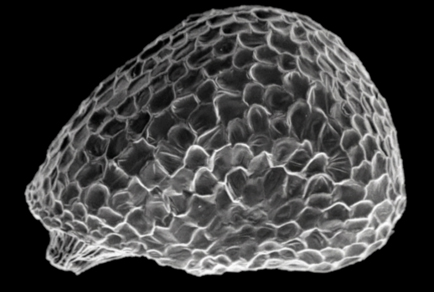
We describe and illustrate Fritzschia hatschbachii (Melastomataceae, Marcetieae), a new species endemic to the Brazilian state of Minas Gerais. This species is known from a single collection made in the 1990s by the renowned Brazilian botanist Gerdt Guenther Hatschbach, who is honored in the specific epithet. Since its collection, the specimen had remained unidentified in herbarium, and despite an exhaustive search conducted since 2016, no additional collections representing the new species have been found. Fritzschia hatschbachii is preliminarily assessed as Data Deficient according to IUCN guidelines and criteria. Morphologically, it is most similar to F. anisostemon and F. rupestris, but F. hatschbachii can be readily distinguished by a unique combination of floral traits and by being the only species that bears both tetramerous and pentamerous flowers. In this study, we also provide scanning electron microscopy images of the leaves and seeds of F. hatschbachii.
References
- Beentje, H. (2016) The Kew Plant Glossary: An illustrated dictionary of plant terms. Ed. 2. Royal Botanic Gardens, Kew, Richmond, 185 pp.
- Borgelt, J., Dorber, M., Høiberg, M.A. & Verones, F. (2022) More than half of data deficient species predicted to be threatened by extinction. Communications Biology 5: 679. https://doi.org/10.1038/s42003-022-03638-9
- Browne, P. (1756) The civil and natural history of Jamaica: in three parts. Printed for the author, and sold by T. Osborne and J. Shipton in Gray’s-Inn, London, 503 pp. https://doi.org/10.5962/bhl.title.10826
- Candolle, A.P. (1828) Melastomaceae. In: Candolle, A.P. (Ed.) Prodromus systematis naturalis regni vegetabilis, sive enumeratio contracta ordinum, generum, specierumque plantarum huc usque cognitarum, juxta methodi naturalis normas digesta. Vol. 3. Sumptibus Sociorum Treuttel et Würtz, Parisiis [Paris], pp. 99–202.
- Cazalis, V., Santini, L., Lucas, P.M., González-Suárez, M., Hoffmann, M., Benítez-López, A., Pacifici, M., Schipper, A.M., Böhm, M., Zizka, A., Clausnitzer, V., Meyer, C., Jung, M., Butchart, S.H.M., Cardoso, P., Mancini, G., Akçakaya, H.R., Young, B.E., Patoine, G. & Di Marco, M. (2023) Prioritizing the reassessment of data-deficient species on the IUCN Red List. Conservation Biology 37: e14139. https://doi.org/10.1111/cobi.14139
- Chamisso, A. (1834) De plantis in expeditione speculatoria romanzoffiana et in herbariis regiis berolinensibus observatis. Melastomaceae americanae. Linnaea 9: 368–402.
- Cogniaux, A. (1885) Melastomaceae. Tribus II. Tibouchineae Baill. In: Martius, C.F.P. & Eichler, A.G. (Eds.) Flora brasiliensis, enumeratio plantarum in Brasilia hactenus detectarum: quas suis aliorumque botanicorum studiis descriptas et methodo naturali digestas partim icone illustratas. Vol. 14. Frid. Fleischer, Monachii et Lipsiae [Munich & Leipzig], pp. 205–510. https://doi.org/10.5962/bhl.title.454
- Davis, C.C. (2023) The herbarium of the future. Trends in Ecology & Evolution 38: 412–423. https://doi.org/10.1016/j.tree.2022.11.015
- Davis, P.H. & Heywood, V.H. (1963) Principles of Angiosperm Taxonomy. Van Norstrand, New York.
- Fernandes, G.W., Barbosa, N.P.U., Alberton, B., Barbieri, A., Dirzo, R., Goulart, F., Guerra, T.J., Morellato, L.P.C. & Solar, R.R.C. (2018) The deadly route to collapse and the uncertain fate of Brazilian rupestrian grasslands. Biodiversity and Conservation 27: 2587–2603. https://doi.org/10.1007/s10531-018-1556-4
- Goodwin, Z.A., Harris, D.J., Filer, D., Wood, J.R.I. & Scotland, R.W. (2015) Widespread mistaken identity in tropical plant collections. Current Biology 25: R1066–R1067. https://doi.org/10.1016/j.cub.2015.10.002
- IUCN (2012) IUCN Red List categories and criteria. Version 3.1. Ed. 2. IUCN, Gland, Switzerland and Cambridge, UK.
- IUCN Standards and Petitions Committee (2024) Guidelines for using the IUCN Red List categories and criteria. Version 16. Prepared by the Standards and Petitions Committee. Available from: https://www.iucnredlist.org/documents/RedListGuidelines.pdf (accessed 15 September 2025)
- Kimball, S., Mattis, P. & the GIMP developer team (1995–2025) GNU Image Manipulation Program (GIMP). Available from: https://www.gimp.org/ (accessed 15 September 2025)
- Krasser, F. (1893) Melastomataceae. In: Engler, A. & Prantl, K. (Eds.) Die Natürlichen Pflanzenfamilien nebst ihren Gattungen und wichtigeren Arten insbesondere den Nutzpflanzen, unter Mitwirkung zahlreicher hervorragender Fachgelehrten. Vol. 3. Wilhelm Engelmann, Leipzig, pp. 130–199. https://doi.org/10.5962/bhl.title.4635
- Magdalena, U.R., Silva, L.A.E., Lima, R.O., Bellon, E., Ribeiro, R., Oliveira, F.A., Siqueira, M.F. & Forzza, R.C. (2018) A new methodology for the retrieval and evaluation of geographic coordinates within databases of scientific plant collections. Applied Geography 96: 11–15. https://doi.org/10.1016/j.apgeog.2018.05.002
- Martins, A.B. (1995) Notas nomenclaturais e taxonômicas em Melastomataceae: Combinações novas em Cambessedesia DC. e Marcetia DC. Acta Botanica Brasilica 9: 147–149. https://doi.org/10.1590/S0102-33061995000100007
- Martius, C.F.P. (1831) Melastomaceae. In: Martius, C.F.P. (Ed.) Nova genera et species plantarum: quas in itinere per Brasiliam MDCCCXVII – MDCCCXX jussu et auspiciis Maximiliani Josephi I., Bavariae Regis Augustissimi. Vol. 3. Typis Caroli Wolf, Monachii [Munich], pp. 93–162. https://doi.org/10.5962/bhl.title.450
- Melo, L.R.F., Vasconcelos, T., Reginato, M., Caetano, A.P.S. & Brito, V.L.G. (2021) Evolution of stamen dimetrism in Melastomataceae, a large radiation of pollen flowers. Perspectives in Plant Ecology, Evolution and Systematics 48: 125589. https://doi.org/10.1016/j.ppees.2021.125589
- Pacifico, R., Almeda, F. & Silva, D.N. (2018) Fritzschia rupestris (Melastomataceae: Marcetieae): A new endangered species from the Cadeia do Espinhaço, Minas Gerais, Brazil. Systematic Botany 43: 793–800. https://doi.org/10.1600/036364418X697508
- Rocha, M.J.R., Batista, J.A.N., Guimarães, P.J.F. & Michelangeli, F.A. (2016) Phylogenetic relationships in the Marcetia alliance (Melastomeae, Melastomataceae) and implications for generic circumscription. Botanical Journal of the Linnean Society 181: 585–609. https://doi.org/10.1111/boj.12429
- Rocha, M.J.R., Guimarães, P.J.F., Michelangeli, F.A. & Batista, J.A.N. (2018) Taxonomy of Marcetieae: A new neotropical tribe of Melastomataceae. International Journal of Plant Sciences 179: 50–74. https://doi.org/10.1086/694932
- Romero, R. & Rocha, M.J.R. (2017) Fritzschia furnensis (Marcetia alliance, Melastomataceae): an endangered new species from the state of Minas Gerais, Brazil. Phytotaxa 302 (1): 49–56. https://doi.org/10.11646/phytotaxa.302.1.4
- Romero, R., Silva, D.N., De-Paula, O.C. & Rocha, M.J.R. (2019) A new endangered species of Fritzschia Cham. (Melastomataceae, Marcetieae) from Espinhaço Range, Minas Gerais, Brazil. Systematic Botany 44: 664–669. https://doi.org/10.1600/036364419X15620113920707
- Shorthouse, D.P. (2010) SimpleMappr, an online tool to produce publication-quality point maps. Available from: https://www.simplemappr.net (accessed 15 September 2025)
- Silva, D.N. (2018) Revisão taxonômica do gênero Fritzschia Cham. (Marcetieae: Melastomataceae). Undergraduate thesis. Pontifícia Universidade Católica do Rio de Janeiro, Rio de Janeiro, Brazil, 109 pp.
- Silva, D.N., Rocha, M.J.R. & Guimarães, P.J.F. (2019a) Fritzschia atropurpurea (Melastomataceae, Marcetieae): A new species from the Serra do Cipó, Minas Gerais, Brazil. Systematic Botany 44: 844–850. https://doi.org/10.1600/036364419X15710776741512
- Silva, D.N., Rocha, M.J.R., Jesus, J.C. & Guimarães, P.J.F. (2019b) First record of Fritzschia Cham. (Melastomataceae, Marcetieae) in the state of Bahia, Brazil. Check List 15: 753–758. https://doi.org/10.15560/15.5.753
- Silva, D.N., Rocha, M.J.R. & Guimarães, P.J.F. (2025) Fritzschia in Flora e Funga do Brasil. Jardim Botânico do Rio de Janeiro. Available from: https://floradobrasil.jbrj.gov.br/FB9467 (accessed 15 September 2025)
- Silva, D.N., Fernandez, E.P., Verdi, M., Gonella, P.M. & Guimarães, P.J.F. (2026) Conservation efforts reveal two remarkable new species of Marcetieae (Melastomataceae) from Minas Gerais, Brazil. Botany Letters 173: 31–42. https://doi.org/10.1080/23818107.2025.2571935
- Silveira, F.A.O., Negreiros, D., Barbosa, N.P.U., Buisson, E., Carmo, F.F., Carstensen, D.W., Conceição, A.A., Cornelissen, T.G., Echternacht, L., Fernandes, G.W., Garcia, Q.S., Guerra, T.J., Jacobi, C.M., Lemos-Filho, J.P., Le Stradic, S., Morellato, L.P.C., Neves, F.S., Oliveira, R.S., Schaefer, C.E., Viana, P.L. & Lambers, H. (2016) Ecology and evolution of plant diversity in the endangered campo rupestre: a neglected conservation priority. Plant and Soil 403: 129–152. https://doi.org/10.1007/s11104-015-2637-8
- Thiers, B. (2026) Index Herbariorum: A global directory of public herbaria and associated staff. Available from: https://sweetgum.nybg.org/science/ih/ (accessed 5 June 2026)