

Abstract
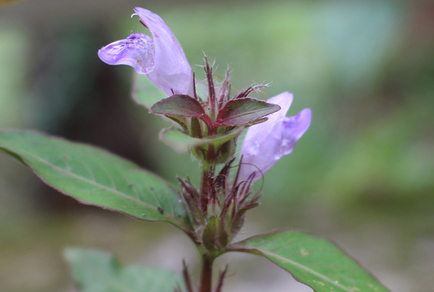
Hygrophila (Acanthaceae) is a group of herbaceous perennials of aquatic habitats mainly distributed in the Old and New world Tropics and Subtropics. There are currently 77 accepted species, but estimates range from 80 to 100 species in the world, with a centre of diversity in South/Southeast Asia. For a comprehensive molecular study of the Indian Hygrophila taxa, DNA was extracted from 12 of the currently accepted 16 Indian species, yielding a total of 94 sequences of the nuclear ribosomal internal transcribed spacer (ITS) region and the rbcL plastid gene. Sequences of 14 additional species were retrieved from GenBank for a total of 13 of the 16 Indian species. Phylogenetic relationships were then investigated with maximum likelihood (ML) analyses. The results reveal that the genus Brillantaisia is deeply nested within Indian Hygrophila, which is therefore paraphyletic.
References
- Arisdason, W., Lakshminarasimhan, P., Karthigeyan, K., Krishna, G., Albertson, D.W., Venu, P., Panja, D., Ghosh, T., Debnath, H.S., Gnanasekaran, G., Murthy, G.V.S. & Roy, D.K. (2020) Acanthaceae. In: Mao, A.A. & Dash, S.S. (Eds.) Flowering plants of India: an annotated checklist (Dicotyledons), Volume 1. Botanical Survey of India, Kolkata, pp. 270–319.
- Barker, R.M. (1986) A Taxonomic Revision of Australian Acanthaceae. Journal of the Adelaide Botanic Gardens 9: 1–286.
- Bentham, G. (1849) Brillantiaisia vogeliana. In: Hooker, W.J. (Ed.) Niger Flora. W. Thacker and Co., Calcutta, 718 pp.
- Brown, R. (1810) Prodromus florae Novae Hollandiae et insulae VanDiemen. R Taylor, London, 479 pp. https://doi.org/10.5962/bhl.title.6720
- Clark, C.B. (1885) Acanthaceae. In: Hooker, J.D. (Ed.) Flora of British India, Vol. 4. L. Reeve, London, pp. 387–558.
- Cramer, L. (1989) The Hygrophila complex (Acanthaceae) in India and Ceylon. Nordic Journal of Botany 9 (3): 261–263. https://doi.org/10.1111/j.1756-1051.1989.tb01000.x
- Furness, C.A. (1994) The pollen morphology of Hygrophila and Brillantaisia. Acta Botanica Gallica 141: 267–278. https://doi.org/10.1080/12538078.1994.10515158
- Heine, H. (1962) Tropical African Plants: XXVI. Some West African Acanthaceae. Kew Bulletin 16 (2): 161–183. https://doi.org/10.2307/4118806
- Heine, H. (1971) Notes sur Les Acanthacees Africaines: Hygrophila R. Br. - Adansonia 2 (4): 656–659.
- Hu, J., Deng, Y., Wood, J.R.I. & Daniel, T.F. (2011) Acanthaceae. In: Wu, Z. et al. (eds) Flora of China, Vol. 19. Science Press, Beijing, pp. 369–477.
- Jaseela, V.T., Sinisha, E.K. & Pradeep, N.S. (2024) A modified CTAB method for extracting high-quality genomic DNA from aquatic plants. Plant Science Today 11 (2): 125–132.
- Kalyaanamoorthy, S., Minh, B.Q., Wong, T.F.K., von Haeseler, A. & Jermiin, L.S. (2017) Model Finder: Fast model selection for accurate phylogenetic estimates. Nature Methods 14: 587–589. https://doi.org/10.1038/nmeth.4285
- Katoh, K. & Standley, D.M. (2013) MAFFT multiple sequence alignment software version 7: improvement in performance and usability. Molecular Biology and Evolution 30 (4): 772–780. https://doi.org/10.1093/molbev/mst)010
- Letunic, I. & Bork, P. (2021) Interactive Tree Of Life (iTOL) v5: an online tool for phylogenetic tree display and annotation. Nucleic Acids Research 49 (W1): W293–W296. https://doi.org/10.1093/nar/gkab301
- Lindau, G. (1895) Acanthaceae. In: Engler, A. & Prantl, K. (Eds.) Die natu¨rlichen Pflanzenfamilien 4(3b). VW Engelmann, Leipzig, pp. 274–354.
- Maddison, W.P. & Maddison, D.R. (2015) Mesquite: a modular system for evolutionary analysis. Mesquite v.3.40. [http://mesquiteproject.org]
- Minh, B.Q., Trifinopoulos, J., Schrempf, D., Schmidt, H.A., Lanfear, R. (2019) IQ-TREE version 2.0: Tutorials and Manual Phylogenomic software by maximum likelihood. [http://www.iqtree.org]
- Nees Von Esenbeck, C.G. (1847) Acanthaceae. In: de Candolle, A. (Ed.) Prodromus Systematis Naturalis Regni Vegetabilis. Sumptibus Sociorum Treuttel & Wurtz, Paris, 11: pp. 46–519.
- POWO (2024) Plants of the World Online. Facilitated by the Royal Botanic Gardens, Kew. Available from: http://www.plantsoftheworldonline.org (accessed 15 January 2024)
- Scotland, R.W., Sweere, J.A., Reeves, P.A. & Olmstead, R.G. (1995) Higher level systematics of Acanthaceae determined by chloroplast DNA sequences. American Journal of Botany 82: 266–275. https://doi.org/10.1002/j.1537-2197.1995.tb11494.x
- Sidwell, K. (1998) A revision of Brillantaisia (Acanthaceae). Bulletin of the Natural History Museum Bot. Ser. 28: 67–113.
- Tripp, E.A., Daniel, T.F., Fatimah, S. & McDade, L.A. (2013) Phylogenetic relationships within Ruellieae (Acanthaceae) and a revised classification. International Journal of Plant Sciences 174 (1): 97–137. https://doi.org/10.1086/668248
- Vollesen, K. (2008) Acanthaceae. In: Beentje, H.J. & Ghazanfar, S.A. (Eds.) Flora of Tropical East Africa, Pt. 1. Royal Botanic gardens, Kew, pp. 1–286.
- White, T.J., Bruns, T., Lee, S. & Taylor, J. (1990) Amplification and direct sequencing of fungal ribosomal RNA genes for phylogenetics. In: Innis, M.A., Gelfand, D.H., Sninsky, J.J. & White, T.J. (Eds.) PCR Protocols: A Guide to Methods and Applications. Academic Press, New York, pp. 315–322. https://doi.org/10.1016/B978-0-12-372180-8.50042-1