

Abstract
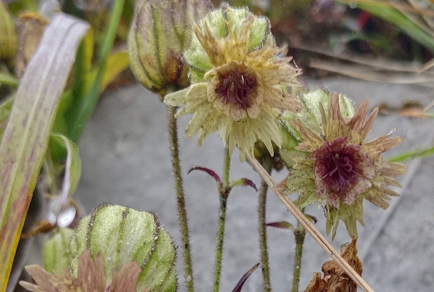
Silene husainii is described as a new species from Sela Pass of Arunachal Pradesh (NE-India). Morphologically, it is similar to S. birgittae from which, it differs in having stem 3-flowered (vs. stem single flowered), limb of petals 8 times fringed (vs. limb bilobed with crenulated lobes), capsule oblong (vs. capsule globose), seeds minutely winged (vs. seeds broadly winged). A detailed description, photographs, distribution map, and a comparison with allied species are provided.
References
- Bentham, G. (1834) Silene sect. Physolychnis. In: Royle, J.F. (Ed.) Illustrations of the Botany and Other Branches of the Natural History of the Himalayan Mountains, and of the Flora of Cashmere, vol. 1. Wm. H. Allen & Co., London, pp. 80.
- Bittrich, V. (1993) Caryophyllaceae Juss. In: Kubitzki, K., Rohwer, J. & Bittrich, V. (Eds.) The families and genera of vascular plants, Magnoliid, Hamamelid and Caryophyllid families, vol. 2. Springer, Berlin, pp. 206–236.
- Bocquet, G.F. (1967) Physolychnidium olim Gastrolychnidium nomenclaturae fundamentum includens combinationes taxaque nova nonnulla Silenes generis. Candollea 22 (1): 1–38.
- Chowdhuri, P.K. (1957) Studies in the genus Silene. Notes from the Royal Botanic Garden, Edinburgh 22: 221–278. https://doi.org/10.24823/nrbge.1957.2498
- Dillenberger, M.S. & Kadereit, J.W. (2014) Maximum Polyphyly: Multiple Origins and Delimitation with Plesiomorphic Characters Require a New Circumscription of Minuartia (Caryophyllaceae). Taxon 63 (1): 64–88. https://doi.org/10.12705/631.5
- Franzoni, J., Astuti, G., Bartolucci, F., Bernardo, L., Fior, S., Casazza, G., Conti, F., Iamonico, D., Iberite, M., Minuto, L., Turini, A. & Peruzzi, L. (2024) Different species or altitudinal morphotypes? Testing the taxonomic value of Dianthus brachycalyx (Caryophyllaceae). Taxon 73 (6): 1405–1418. https://doi.org/10.1002/tax.13237
- Greenberg, A.K. & Donoghue, M.J. (2011) Molecular Systematics and Character Evolution in Caryophyllaceae Published by : International Association for Plant Taxonomy ( IAPT ) All Use Subject to JSTOR Terms and Conditions Molecular Systematics and Character Evolution in Caryophyllaceae. Taxon 60 (6): 1637–1652. https://doi.org/10.1002/tax.606009
- Greuter, W. (1995) Silene (Caryophyllaceae) in Greece—a Subgeneric and Sectional Classification. Taxon 44 (4): 543–581. https://doi.org/10.2307/1223499
- Grierson, A.J.C. & Long, D.G. (1984) Flora of Bhutan: Including a Record of Plants from Sikkim. Vol. 1 (2). Royal Botanic Garden Edinburgh, Edinburgh, pp. 202.
- Harbaugh, D.T., Nepokroeff, M., Rabeler, K., McNeill, J., Zimmer, E.A. & Wagner, W.L. (2010) A New Lineage‐Based Tribal Classification of the Family Caryophyllaceae. International Journal of Plant Sciences 171 (2): 185–98. https://doi.org/10.1086/648993
- Hajra, P.K., Verma, D.M. & Giri, G.S. (2008) Materials for the Flora of Arunachal Pradesh. BSI India, Vol. 2. Botanical Surbey of India, Kolkata, pp. 491.
- Hernández-Ledesma, P., Berendsohn, W.G., Borsch, T., Mering, S.V., Akhani, H., Arias, S., Castañeda-Noa, I., Eggli, U., Eriksson, R., Flores-Olvera, H., Fuentes-Bazán, S., Kadereit, G., Klak, C., Korotkova, N., Nyffeler, R., Ocampo, G., Ochoterena, H., Oxelman, B., Rabeler, R.K., Sanchez, A., Schlumpberger, B.O. & Uotila, P. (2015) A taxonomic backbone for the global synthesis of species diversity in the angiosperm order Caryophyllales. Willdenowia 45 (3): 281–383. https://doi.org/10.3372/wi.45.45301
- Hooker, J.D. (Ed.) (1874) Flora of British India, vol. 1. L. Reeve & Co., London, pp. 740. https://doi.org/10.5962/bhl.title.678
- Hooker, J.D. & Thomson, T. (1858) Journal of the Linnean Society, Botany 2: 1–49. https://doi.org/10.1111/j.1095-8339.1857.tb02470.x
- Iamonico, D. (2015) Augustea (Polycarpaeae, Caryophyllaceae), a new genus from South America. Phytotaxa 236 (1): 71–78. https://doi.org/10.11646/phytotaxa.236.1.6
- Iamonico, D. (2018) A conspectus of Silene sect. Lasiocalycinae (Caryophyllaceae). Phyton (Horn, Austria) 57 (1–2): 113–127. https://doi.org/10.12905/0380
- Iamonico, D. (2021) The taxonomic position of Silene multinervia (Caryophyllaceae), endemic to California and northernwestern Mexico, and description of section Californicae, sect. nov. Rhodora 122 (991): 202–213. https://doi.org/10.3119/20-15
- Iamonico, D. (2022) Taxonomic remarks of the SE-European and W-Turkish Silene lydia (Caryophyllaceae). Nordic Journal of Botany 9: e03490. https://doi.org/10.1111/njb.03490
- Iamonico, D. & Domina, G. (2015) Nomenclatural notes on the Polycarpon tetraphyllum aggregate (Caryophyllaceae). Plant Biosystems 149 (4): 720–727. https://doi.org/10.1080/11263504.2015.1057260
- Linnaeus, C. (1753) Species plantarum, vol. 1. Laurentii Salvii, Holmiae, pp. 560.
- Linnaeus, C. (1754) Genera plantarum: eorumque characteres naturales secundum numerum, figuram, situm, et proportionem omnium fructificationis partium (Ed. 5th ed.). Laurentii Salvii, Holmiae, pp. 580. https://doi.org/10.5962/bhl.title.746
- Majumdar, N.C. (1964) Nomenclatural transfers in the Indian caryophyllaceae-Silenoideae. Journal of the Indian Botanical Society 42 (1–4): 646–652.
- McNeill, J. (1978) Silene alba and S. dioica in North America and the generic delimition of Lychnis, Melandrium, and Silene (Caryphyllaceae). Canadian Journal of Botany 56 (3): 297–308. https://doi.org/10.1139/b78-037
- Melzheimer, V. (1988) Silene L. In: Rechinger, K.H. (Ed.) Flora Iranica, vol. 163. Akad.Druck- und Verlagsanstalt, Graz, pp. 341–508.
- Ohba, H. (1978) New or critical species of Asiatic Sesoideae (3). Journal of Japanese Botany 53: 257–259.
- Otth, C.A. (1824) Silene L. In: Candolle, A.P. de (Ed.) Prodromus sytematis naturalis regni vegetabilis. sive enumeratio contracta ordinum generum specierumque plantarum huc usque cognitarum, juxta methodi naturalis normas digesta, vol. 1. Treuttel & Würtz, Paris, pp. 1–748.
- Oxelman, B. (1995) A Revision of the Silene sedoides-Group (Caryophyllaceae). Willdenowia 25 (1): 143–169.
- Oxelman, B., Lidén, M. & Berglund, D. (1997) Chloroplast rps16 intron phylogeny of the tribe Sileneae (Caryophyllaceae). Plant Systematics and Evolution 206: 393–410. https://doi.org/10.1007/BF00987959
- Oxelman, B., Lidén, M., Rabeler, R.K. & Popp, M. (2001) A revised generic classification of the tribe Sileneae (Caryophyllaceae). Nordic Journal of Botany 20: 743–748. https://doi.org/10.1111/j.1756-1051.2000.tb00760.x
- Oxelman, B., Lidén, M., Rabeler, R.K. & Popp, M. (2008) A revised generic classification of the tribe Sileneae (Caryophyllaceae). Nordic Journal of Botany 20 (6): 743–748. https://doi.org/10.1111/j.1756-1051.2000.tb00760.x
- Popp, M. & Oxelman, B. (2004) Evolution of a RNA polymerase gene family in Silene (Cayophyllaceae)—Incomplete concerted evolution and topological congruence among paralogues. Systematic Biology 53: 914–932. https://doi.org/10.1080/10635150490888840
- Popp, M., Erixon, P., Eggens, F. & Oxelman, B. (2005) Origin and evolution of a circumpolar polyploid species complex in Silene (Caryophyllaceae) inferred from low copy nuclear RNA polymerase introns, rDNA, and chloroplast DNA. Systematic Botany 30: 302–313. https://doi.org/10.1600/0363644054223648
- POWO (2026) Plants of the World Online. Available from: https://powo.science.kew.org/ (accessed 22 January 2026)
- Pusalkar, P.K. & Singh, D.K. (2012) Flora of Gangotri National Park, Western Himalaya, India. BSI, Dehradun, pp. 708.
- Royle, J.F. (1834) Illustrations of the Botany and Other Branches of the Natural History of the Himalayan Mountains, and of the Flora of Cashmere. Wm. H. Allen & Co., London, pp. 80. https://doi.org/10.2307/1797888
- Royle, J.F. (1839) Illustrations of the Botany and Other Branches of the Natural History of the Himalayan Mountains, and of the Flora of Cashmere. Vols. I–II. Wm. H. Allen & Co., London, pp. 472. https://doi.org/10.5962/bhl.title.449
- Singh, S., Kumar, A., Sharma, U., Sharma, N., Mehta, J.P. & Iamonico, D. (2026) New taxonomic status and first report of the little-known Silene nigrescens var. latifolia (Caryophyllaceae) in India with lectotypification of Lychnis nigrescens. Phytotaxa 750 (1): 24–32. https://doi.org/10.11646/phytotaxa.750.1.2
- Sadeghian, S., Zarre, S., Rabeler, R.K. & Heubl, G. (2015) Molecular Phylogenetic Analysis of Arenaria (Caryophyllaceae: Tribe Arenarieae) and Its Allies Inferred from Nuclear DNA Internal Transcribed Spacer and Plastid DNA Rps16 Sequences. Botanical Journal of the Linnean Society 178 (4): 648–669. https://doi.org/10.1111/boj.12293
- Singh, S., Kumar, A., Sharma, U., Sharma, N., Mehta, J.P. & Iamonico, D. (2026) New taxonomic status and first report of the little-known Silene nigrescens var. latifolia (Caryophyllaceae) in India with lectotypification of Lychnis nigrescens. Phytotaxa 750 (1): 24–32. https://doi.org/10.11646/phytotaxa.750.1.2
- Thiers, B.M. (2026+) Index Herbariorum: A global directory of public herbaria and associated staff. New York Botanical Garden. Available from: https://sweetgum.nybg.org/science/ih/ (accessed 22 January 2026)