

Abstract
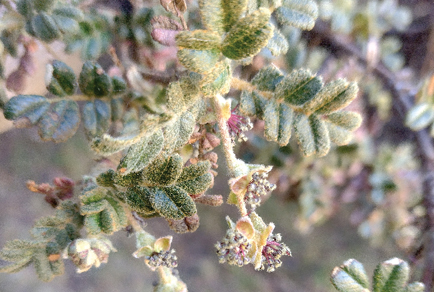
We describe and illustrate a new species of Polylepis endemic to the departments of Huancavelica and Ayacucho, Peru. It is most similar to P. occidentalis, but differs in having the lower leaflet surface and rachis densely lanate (vs. densely tomentose); stipular sheaths apically truncate (vs. apically acute and spurred); inflorescences bearing 3–8 flowers (vs. 4–12); sepals 3–5 (vs. 4); stamens 30–40 per flower (vs. 9–15); and densely lanate fruits (vs. densely villous). The species appears to be rare and narrowly distributed, suggesting that it may be critically endangered and in urgent need of conservation attention.
References
- Alinari, J., von Müller, A. & Renison, D. (2015) The contribution of fire damage to restricting high mountain Polylepis australis forests to ravines: insights from an un-replicated comparison. Ecología Austral 25 (1): 11–18. Available from: https://www.scielo.org.ar/scielo.php?script=sci_arttext&pid=S1667-782X2015000100002 (accessed 9 January 2026) https://doi.org/10.25260/ea.15.25.1.0.53
- Ames-Martínez, F.N., Quispe-Melgar, H.R. & Renison, D. (2021) Conservation status assessment of the highest forests in the world: Polylepis flavipila forests as a case study. Neotropical Biodiversity 7 (1): 160–169. https://doi.org/10.1080/23766808.2021.1920295
- Bachman, S., Moat, J., Hill, A.W., de la Torre, J. & Scott, B. (2011) Supporting Red List threat assessments with GeoCAT: Geospatial conservation assessment tool. ZooKeys 150: 117–126. https://doi.org/10.3897/zookeys.150.2109
- Bitter, G. (1911) Revision der Gattung Polylepis. Botanische Jahrbücher für Systematik 45: 564–656.
- Boza Espinoza, T.E. & Kessler, M. (2022) A monograph of the genus Polylepis (Rosaceae). PhytoKeys 203: 1–274. https://doi.org/10.3897/phytokeys.203.83529
- Boza Espinoza, T.E., Romoleroux, K. & Kessler, M. (2020) Taxonomic reevaluation of Polylepis pauta and P. sericea (Rosaceae) from Ecuador. Phytotaxa 454 (2): 111–126. https://doi.org/10.11646/phytotaxa.454.2.3
- Coblentz, D. & Keating, P.L. (2008) Topographic controls on the distribution of tree islands in the high Andes of south-western Ecuador. Journal of Biogeography 35: 2026–2038. https://doi.org/10.1111/j.1365-2699.2008.01956.x
- de Queiroz, K. (2007) Species concepts and species delimitation. Systematic Biology 56 (6): 879–886. https://doi.org/10.1080/10635150701701083
- Fjeldså, J. & Kessler, M. (1996) Conserving the biological diversity of Polylepis woodlands of the Highland of Peru and Bolivia: A contribution to sustainable natural resource management in the Andes. NORDECO, Copenhagen, Denmark, 214 pp.
- Franco, P., Cáceres, C., Navarro, M., Jove, C., Ignacio, J. & Oyague, E. (2021) Bosques de Polylepis tarapacana en la cuenca Maure, extremo sur del Perú: oportunidades para su conservación. Estudios Geográficos 82 (290): e059. https://doi.org/10.3989/estgeogr.202071.071
- Forest, F., Grenyer, R., Rouget, M., Davies, T.J., Cowling, R.M., Faith, D.P., Balmford, A., Manning, J.C., Procheş, Ş., van der Bank, M., Reeves, G., Hedderson, T.A.J. & Savolainen, V. (2007) Preserving the evolutionary potential of floras in biodiversity hotspots. Nature 445: 757–760. https://doi.org/10.1038/nature05587
- Hieronymus, G.H.E.W. (1895) Rosaceae. Botanische Jahrbücher für Systematik, Pflanzengeschichte und Pflanzengeographie 21 (3): 312.
- IUCN (2012) IUCN Red List Categories and Criteria: Version 3.1. Second edition. IUCN, Gland, Switzerland and Cambridge, UK, iv + 32 pp. Available from: https://portals.iucn.org/library/sites/library/files/documents/RL-2001-001-2nd.pdf (accessed 3 June 2026)
- Kessler, M. (2002) The “Polylepis problem”: where do we stand? Ecotropica 8: 97–110.
- Kessler, M. & Schmidt-Lebuhn, A.N. (2006) Taxonomical and distributional notes on Polylepis (Rosaceae). Organisms, Diversity and Evolution 6: 67–70. https://doi.org/10.1016/j.ode.2005.04.001
- Olivar, J.E.C., Ebersbach, J., Muellner-Riehl, A.N., Hensen, I., Kessler, M., Ritz, C.M. & Lehnert, M. (2025) First complete plastomes of the emblematic Andean tree genus Polylepis Ruiz & Pav. (Rosaceae). Scientific Reports 15: e32681. https://doi.org/10.1038/s41598-025-20603-8
- Pilger, R.K.F. (1906) Rosaceae andinae. Botanische Jahrbücher für Systematik, Pflanzengeschichte und Pflanzengeographie 37: 535.
- Quispe-Melgar, H.R., Llacua-Tineo, Y.S., Cuadros-Rojas, R.D., Huayta-Hinojosa, L.D., Lagones Poma, K.L., Ames-Martínez, F.N. & Boza Espinoza, T.E. (2023) An unexpected record of the endemic species Polylepis albicans Pilger (Rosaceae) in Huancavelica, Peru, with notes on its conservation and complex geographic distribution pattern. Check List 19 (2): 199–207. https://doi.org/10.15560/19.2.199
- Quispe-Melgar, H.R., Llacua-Tineo, Y.S., Ulloa Arias, N.E. & Kessler, M. (2024) A new species of Polylepis (Rosaceae) from Santuario Nacional Pampa Hermosa, Peru. Phytotaxa 653 (2): 165–174. https://doi.org/10.11646/phytotaxa.653.2.5
- Renison, D., Hensen, I., Suárez, R., Cingolani, A.M., Marcora, P. & Giorgis, M.A. (2010) Soil conservation in Polylepis mountain forests of central Argentina: is livestock reducing our natural capital? Austral Ecology 35 (4): 435–443. https://doi.org/10.1111/j.1442-9993.2009.02055.x
- Renison, D., Barberá, I., Cingolani, A.M., Rodríguez, J.M. & Hensen, I. (2025) Tree survival and growth in the highlands of central Argentina: impact of wildfires and land management. Forest Ecology and Management 589: 122773. https://doi.org/10.1016/j.foreco.2025.122773
- Ruiz, H. & Pavón, J. (1794) Florae Peruvianae et Chilensis Prodromus. Vol. 1. Gabrielis de Sancha, Madrid, 80 pp. https://doi.org/10.5962/bhl.title.887
- Toivonen, J.M., Gonzales-Inca, C.A., Bader, M.Y., Ruokolainen, K. & Kessler, M. (2018) Elevational shifts in the topographic position of Polylepis forest stands in the Andes of southern Peru. Forests 9 (1): 7. https://doi.org/10.3390/f9010007
- Trinidad, H. & Cano, A. (2016) Composición florística de los bosques de Polylepis Yauyinazo y Chaqsii-Chaqsii, Reserva Paisajística Nor Yauyos-Cochas, Lima. Revista Peruana de Biología 23: 271–286. https://doi.org/10.15381/rpb.v23i3.12862
- Valencia, B.G., Bush, M.B., Coe, A.L., Orren, E. & Gosling, W.D. (2018) Polylepis woodland dynamics during the last 20,000 years. Journal of Biogeography 45: 1019–1030. https://doi.org/10.1111/jbi.13209
- Valenzuela, G.L. & Boza Espinoza, T.E. (2025) A new species of Polylepis (Rosaceae) from the Oxapampa—Asháninka—Yánesha Biosphere Reserve, Peru. Phytotaxa 712 (3): 255–267. https://doi.org/10.11646/phytotaxa.712.3.3
- Valenzuela, G.L. & Villalba, V.M.I. (2024) A new species of Polylepis (Rosaceae) from the Bosque de Protección Pui Pui, Peru. Phytotaxa 655 (1): 97–104. https://doi.org/10.11646/phytotaxa.655.1.8