
Abstract
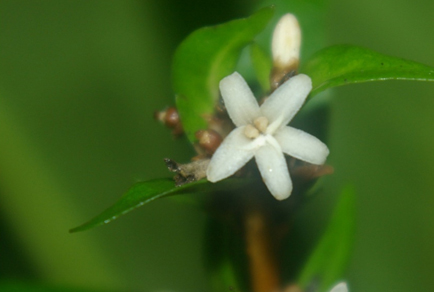
Conchocarpus piranii (tribe Galipeeae, Rutaceae), a new species within the Neotropical subtribe Galipeinae, is described and illustrated. The new species occurs within the coastal forest vegetation of the Brazilian Atlantic Forest domain. Morphologically, Conchocarpus piranii is most like to other species of the genus with inflorescences bearing foliaceous bracts such as C. bellus. C. cuneifolius, and C. macrophyllus, but differs from them by its non-umbilicate ovary with a terminal style, whereas the other species exhibit an umbilicate ovary. Our DNA based phylogenetic analysis revealed that species with foliaceous inflorescences within Conchocarpus are not closely related to each other. Additional data on foliar and floral anatomy, as well as palynology, are provided, along with comments on the geographic distribution and conservation status of C. piranii.
References
- Akaike, H. (1973) Information theory and an extension of the maximum likelihood principle. In: Petrov, B.N. & Csaki, F. (Eds.) Proceedings of the 2nd International Symposium on Information Theory. Akademiai Kiado, Budapest, pp. 267–281.
- Appelhans, M.S., Bayly, M.J., Heslewood, M.M., Groppo, M., Verboom, G.A., Fosster, P.I., Kallunki, J.A. & Duretto, M.F. (2021) A new subfamily classification of the Citrus family (Rutaceae) based on six nuclear and plastid markers. Taxon 70 (5): 1035–1061. https://doi.org/10.1002/tax.12543
- Aublet, J.B.C.F. (1775) Histoire des plantes de la Guiane Françoise, rangées suivant la méthode sexuelle, avec plusieurs mémoires: sur différens objets intéressans, relatifs à la Culture et au Commerce de la Guiane Françoise, & une Notice des Plantes de l’Isle-de-France. Ouvrage orné de près de quatre cents planches en taille-douce, où sont représentées des plantes qui n’ont point encore été decrites ni gravées, ou qui ne l’ont été qu’imparfaitement. Vol. 2. Chez Pierre-François Didot, London & Paris. https://doi.org/10.5962/bhl.title.64646
- Bachman, S., Moat, J., Hill, A.W., de la Torre, J. & Scott, B. (2011) Supporting Red List threat assessments with GeoCAT: geospatial conservation assessment tool. In: Smith, V. & Penev, L. (Eds.) e-Infrastructures for data publishing in biodiversity science. ZooKeys 150: 117–126. https://doi.org/10.3897/zookeys.150.2109
- Baillon, H. (1872) Observations sur les Rutacées. Adansonia 10: 299–333.
- Bellonzi, T.K., Dutra, F.V., Souza, C.N., Rezende, A.A. & Gasparino, E.C. (2020) Pollen types of Sapindaceae from Brazilian forest fragments: apertural variation. Acta Botanica Brasilica 34 (2): 327–341. https://doi.org/10.1590/0102-33062020abb0022
- Bentham, G. & Hooker, J.D. (1862) Genera Plantarum. Vol. 1 (1). Reeve & Co.: London.
- Bonpland, A., Humboldt, A. von & Kunth, C.S. (1825) Nova genera et species plantarum. Vol. 7. Lutetiae Parisiorum: Libraria Graeco-Latino-Germanica.
- Bruniera, C.P., Silva, C.I. & Groppo, M. (2011) A new species of Almeidea (Galipeinae, Galipeeae, Rutaceae) from Eastern Brazil. Brittonia 63: 281–285. https://doi.org/10.1007/s12228-010-9162-0
- Bruniera, C.P., Kallunki, J.A. & Groppo, M. (2015) Almeidea A.St.-Hil. belongs to Conchocarpus J.C.Mikan (Galipeinae, Rutaceae): evidence from morphological and molecular data, with a first analysis of subtribe Galipeinase. Plos One 10: e0125650. https://doi.org/10.1371/journal.pone.0125650
- Bruniera, C.P., Kallunki, J.A., Silva, I.M., Silva, C.I.D. & Groppo, M. (2021) A revision of Conchocarpus with pantocolporate pollen grains: the Almeidea Group (Galipeinae, Rutaceae). Systematic Botany 46: 375–388. https://doi.org/10.1600/036364421X16231782047361
- Colli-Silva, M. & Pirani, J.R. (2019) Biogeographic patterns of Galipeinae (Galipeeae, Rutaceae) in Brazil: species richness and endemism at different latitudes of the Atlantic Forest “hotspot.” Flora 251: 77–87. https://doi.org/10.1016/j.flora.2019.01.001
- Darriba, D., Taboada, G.L., Doallo, R. & Posada, D. (2012) jModelTest 2: more models, new heuristics and parallel computing. Nature Methods 9 (8): 772. https://doi.org/10.1038/nmeth.2109
- Dilcher, D.L. (1974) Approaches to the identification of angiosperm leaf remains. The Botanical Review 40: 1–85.
- Dutra, F.V. (2023) Evolução da morfologia polínica e palinotaxonomia de Galipeeae (Rutaceae) com ênfase em Conchocarpus J.C.Mikan. Tese de Doutorado, Universidade de São Paulo, 132 pp. https://doi.org/10.11606/t.59.2023.tde-13092024-143742
- Dutra, F.V., Groppo, M. & Gasparino, E.C. (2023) Pollen morphology characterization of Dryades Groppo, Kallunki & Pirani, a new genus of Rutaceae, and its phylogenetically related species. Palynology 47 (4): 1–10. https://doi.org/10.1080/01916122.2023.2246534
- El Ottra, J.H.L., Demarco, D. & Pirani, J.R. (2019) Comparative floral structure and evolution in Galipeinae (Galipeeae: Rutaceae) and its implications at different systematic levels. Botanical Journal of the Linnean Society 191: 30–101. https://doi.org/10.1093/botlinnean/boz029
- Erdtman, G. (1960) Pollen walls and angiosperm phylogeny. Botaniska Notiser 113: 41–45.
- Faegri, G. & Iversen, J. (1966) Textbook of modern pollen analysis. Scandinavian University Books, Copenhagen, 295 pp.
- Ferreira, C., Castro, N.M., Rodrigues, T.M., Seixas, D.P. & Groppo, M. (2022) Pulvinus or not pulvinus, that is the question: anatomical features of the petiole in the Citrus family (Rutaceae, Sapindales). Brazilian Journal of Botany 45: 485–496. https://doi.org/10.1007/s40415-021-00782-0
- Flora e Funga do Brasil (2026 [continuously updated]) Jardim Botânico do Rio de Janeiro. Available from: http://floradobrasil.jbrj.gov.br/ (acessed 9 March 2026)
- Gasparino, E.C., Cruz-Barros, M.A.V. & Chautems, A. (2013) Pollen morphology in Brazilian species of Codonanthe (Mart.) Hanst. and Nematanthus Schrader (Gesneriaceae). Grana 52: 285–274. https://doi.org/10.1080/00173134.2013.826274
- Goloboff, A.P. & Morales, M.E. (2023) TNT version 1.6, with a graphical interface for MacOS and Linux, including new routines in parallel. Cladistics 39 (2): 144–153. https://doi.org/10.1111/cla.12524
- Gonçalves-Esteves, V., Cartaxo-Pinto, S., Marinho, E.B., Esteves, R.L. & Mendonça, C.B.F. (2022) Pollen morphology and evolutionary history of Sapindales. Brazilian Journal of Botany 45: 341–366. https://doi.org/10.1007/s40415-021-00719-7
- Groppo, M., Costa, I.G., Bruniera, C.P., Ferreira, C., Afonso, L., Maeoka, H.M. & Ferreira, P.L. (2019) Rock star flowers: Conchocarpus hendrixii (Galipeinae, Rutaceae), a new species from eastern Brazil with notes on its phylogenetic position in the genus. Phytotaxa 422 (1): 75–92. https://doi.org/10.11646/phytotaxa.422.1.5
- Groppo, M., Lemos, L.J.C., Ferreira, P.L., Ferreira, C., Bruniera, C.P., Castro, N.M., Pirani, J.R., El Ottra, J.H.E. & Kallunki, J.A. (2021) A tree nymph of the Brazilian Atlantic Forest: Dryades (Galipeinae, Rutaceae), a new neotropical genus segregated from Conchocarpus. Molecular Phylogenetics and Evolution 154: 106971. https://doi.org/10.1016/j.ympev.2020.106971
- Groppo, M., Afonso, L. & Pirani, J.R. (2022) A review of systematics studies in the Citrus family (Rutaceae, Sapindales), with emphasis on American groups. Brazilian Journal of Botany 45: 181–200. https://doi.org/10.1007/s40415-021-00784-y
- Hickey, L.J. (1973) Classification of the architecture of dicotyledonous leaves. American Journal of Botany 60: 17–33. https://doi.org/10.1002/j.1537-2197.1973.tb10192.x
- Hickey, L.J. (1979) A revised classification of the architecture of dicotyledonous leaves. In: Metcalfe, E.R. & Chalk, L. (Eds.) Anatomy of the Dicotyledons. Clarendon Press, Oxford, pp. 25–39.
- Hooker, J.D. (1877) Hooker’s Icones Plantarum; or, Figures, with Brief Descriptive Characters and Remarks of New or Rare Plants, Selected from the Author’s Herbarium. Williams & Norgate, London.
- Huelsenbeck, J.P. & Ronquist, F. (2001) MRBAYES: Bayesian inference of phylogenetic trees. Bioinformatics 17 (8): 754–755. https://doi.org/10.1093/bioinformatics/17.8.754
- IUCN. (2012) IUCN Red list categories and criteria version 3.1. IUCN, Gland: IUCN; Cambridge, Information Press, 38 pp. Available from: http://www.iucnredlist.org/ (accessed 19 May 2023)
- Kallunki, J.A. (1992) A revision of Erythrochiton sensu lato (Cuspariinae, Rutaceae). Brittonia 44 (2): 107–139. https://doi.org/10.2307/2806828
- Kallunki, J.A. & Pirani, J.R. (1998) Synopses of Angostura Roem. & Schult. and Conchocarpus J.C.Mikan (Rutaceae). Kew Bulletin 53: 257–334. https://doi.org/10.2307/4114501
- Kallunki, J.A. (2009) Validation of Neoraputia (Galipeae, Rutaceae) and description of two new species from Eastern Brazil. Brittonia 61 (1): 28–34. https://doi.org/10.1007/s12228-008-9054-8
- Kallunki, J.A. & Meier, W. (2019) Conchocarpus jirajaranus (Rutaceae), a new endemic species of the Coastal Cordillera of Venezuela. Brittonia 71: 196–200. https://doi.org/10.1007/s12228-019-09572-1
- Kearse, M., Moir, R., Wilson, A., Stones-Havas, S., Cheung, M., Sturrock, S., Buxton, S., Cooper, A., Markowitz, S. & Duran, C., Thierer, T., Aston, B., Meitjes, P. & Drummond, A. (2012) Geneious Basic: an integrated and extendable desktop software platform for the organization and analysis of sequence data. Bioinformatics 28 (12): 1647–1649. https://doi.org/10.1093/bioinformatics/bts199
- Kubitzki, K., Kallunki, J.A., Duretto, M. & Wilson, P.G. (2011) Rutaceae. In: Kubitzki, K. (Ed.) The families and genera of vascular plants. Vol. 10. Flowering Plants: Eudicots (Sapindales, Cucurbitales, Myrtaceae). Springer Heidelberg, Berlin and Heidelberg, pp. 276–356.
- Lindley, J. (1831) Galipea odoratissima Lindl. Edwards’s Botanical Register 17: t. 1420.
- Linnaeus, C. (1753) Species plantarum :exhibentes plantas rite cognitas, ad genera relatas, cum differentiis specificis, nominibus trivialibus, synonymis selectis, locis natalibus, secundum systema sexuale digestas. Impensis Laurentii Salvii, Holmiae (Stockholm).
- Londoño-Echeverri, Y., Trujillo-López, A.M.., Perez-Zabala, J.Á. & Groppo, M. (2021) Conchocarpus kallunkiae (Rutaceae: Galipeinae), a new endemic species from the tropical rainforest in the Magdalena River Valley in Colombia. Brittonia 73 (4): 422–430. https://doi.org/10.1007/s12228-021-09671-y
- Londoño-Echeverri, Y., Trujillo-López, A.M. & Perez-Zabala, J.Á. (2023) A new species of Conchocarpus and first record of Euxylophora (Galipeinae, Zanthoxyloideae, Rutaceae) from Colombia. Phytotaxa 601: 174–184. https://doi.org/10.11646/phytotaxa.601.2.4
- Maddison, W.P. & Maddison, D.R. (2018) Mesquite: a modular system for evolutionary analysis. Available from: http://www.mesquiteproject.org (accessed 1 July 2026)
- Melhem, T.S., Cruz-Barros, M.A.V., Corrêa, A.M.S., Makino-Watanabe, H., Silvestre-Capelato, M.S.F. & Goncalves-Esteves, V.L. (2003) Variabilidade polínica em plantas de Campos do Jordão (São Paulo, Brasil). Boletim do Instituto de Botânica 16: 1–104.
- Mikan, J.C. (1820) Delectus Florae et Faunae Brasiliensis. Published by the author, Vienna, 50 pp. plus 24 plates.
- Miller, M.A., Pfeiffer, W. & Schwartz, T. (2010) Creating the CIPRES Science Gateway for inference of large phylogenetic trees. In: 2010 Gateway Computing Environments Workshop (GCE). pp. 1–8. https://doi.org/10.1109/GCE.2010.5676129
- Morellato, L.P. & Haddad, C.F.B. (2000) The Brazilian Atlantic Forest. Biotropica 32: 786–792. https://doi.org/10.1111/j.1744-7429.2000.tb00618.x
- Morton, C.M. & Kallunki, J.A. (1993) Pollen morphology of the subtribe Cuspariinae (Rutaceae). Brittonia 45: 286–314. https://doi.org/10.2307/2807604
- Nees, C.G.D. & Martius, C.F.P. (1823) Conchocarpus cuneifolius. Nova Acta Physico‑Medica Academiae Caesareae Leopoldino‑Carolinae Naturae Curiosorum 11: 162.
- Oxelman, B., Liden, M. & Berglund, D. (1997) Chloroplast rps16 intron phylogeny of the tribe Sileneae (Caryophyllaceae). Plant Systematics and Evolution 206: 393–410. https://doi.org/10.1007/BF00987959
- Pirani, J.R. & Groppo, M. (2010) Rutaceae. In: Forzza, R.C., Baumgratz, J.F.A., Bicudo, C.E.M., Carvalho Jr., A.A., Costa, A., Costa, D.P., Hopkins, M., Leitman, P.M., Lohmann, L.G., Maia, L.C., Martinelli, G., Menezes, M., Morim, M.P., Nadruz Coelho, M.A., Peixoto, A.L., Pirani, J.R., Prado, J., Queiroz, L.P., Souza, V.C., Stehmann, J.R., Sylvestre, L.S., Walter, B.M.T. & Zappi, D.C. (Orgs.) Catálogo de Plantas e Fungos do Brasil. Instituto de Pesquisas Jardim Botânico do Rio de Janeiro, Rio de Janeiro.
- Pirani, J.R., Groppo, M. & Kallunki, J.A. (2012) Two new species and a new combination in Conchocarpus (Rutaceae, Galipeeae) from eastern Brazil. Kew Bulletin 66: 521–527. https://doi.org/10.1007/s12225-011-9309-5
- Posada, D. (2008) jModelTest: Phylogenetic Model Averaging. Molecular Biology and Esvolution 25 (7): 1253–1256. https://doi.org/10.1093/molbev/msn083
- Punt, W., Hoen, P.P., Blackmore, S., Nilsson, S. & Le Thomas, A. (2007) Glossary of pollen and spore terminology. Review of Palaeobotany and Palynology 143 (1–2): 1–81. https://doi.org/0.1016/j.revpalbo.2006.06.008
- QGIS Development Team (2024) QGIS Geographic Information System. Open Source Geospatial Foundation. Version 3.36.1. Available from: https://www.qgis.org/ (accessed 1 April 2025)
- Radford, A.E., Dickinson, W.C., Massey, J.R. & Bell, C.R. (1974) Vascular Plant Systematics. Harper & Row, New York, 891 pp.
- Rambaut, A., Suchard, M.A., Xie, D. & Drummond, A.J. (2013) Tracer v1.6. Available from: http://beast.bio.ed.ac.uk/Tracer (accessed 1 July 2026)
- Ronquist, F. & Huelsenbeck, J.P. (2003) MrBayes 3: Bayesian phylogenetic inference under mixed models. Bioinformatics 19 (12): 1572–1574. https://doi.org/10.1093/bioinformatics/btg180
- Ronquist, F., Teslenko, M., van der Mark, P., Ayres, D.L., Darling, A., Hohna, S., Larget, B., Liu, L., Suchard, M.A. & Huelsenbeck, J.P. (2012) MrBayes 3.2: efficient Bayesian phylogenetic inference and model choice across a large model space. Systematic biology 61: 539–542. https://doi.org/10.1093/sysbio/sys029
- Salgado-Labouriau, M.L., Vanzolini, P.E. & Melhem, T.S. (1965) Variation of polar axes and equatorial diameters in pollen grains of two species of Cassia. Grana Palynology 6: 98–105. https://doi.org/10.1080/00173136509429142
- Saint-Hilaire, A.F.C.P.N. (1823) Bulletin des Sciences, publié par la Société Philomatique de Paris, series 2 10: 132.
- Stamatakis, A. (2014) RAxML version 8: a tool for phylogenetic analysis and post-analysis of large phylogenies. Bioinformatics 30: 1312–1313. https://doi.org/10.1093/bioinformatics/btu033
- Swofford, D. (2002) PAUP*. Phylogenetic Analysis Using Parsimony (*and Other Methods). Version 4.0b10. Sinauer, Sunderland. https://doi.org/10.1111/j.0014-3820.2002.tb00191.x
- Taberlet, P., Gielly, L., Pautou, G. & Bouvet, J. (1991) Universal primers for amplifications of three non-coding regions of chloroplast DNA. Plant Molecular Biology 17: 1105–1109. https://doi.org/10.1007/BF00037152
- Thiers, B.M. (2026 [continuously updated]) Index Herbariorum. New York Botanical Garden’s Virtual Herbarium. Available from: https://sweetgum.nybg.org/science/ih/ (accessed 1 July 2026)
- Tropicos (2025 [continuously updated]) Tropicos, Missouri Botanical Garden. Available from: https://tropicos.org/ (accessed 1 July 2025)
- Vahl, M. & Möller, N. (1796) Eclogae americanae, seu, Descriptiones plantarum praesertim Americae meridionalis, nondum cognitarum. Impensis Auctoris, Havniae, Copenhagen. https://doi.org/10.5962/bhl.title.429
- Vandelli, D. & de Haen, A. (1788) Florae Lusitanicae et Brasiliensis specimen. Et Epistolae ab eruditis viris Carolo a Linné, Antonio de Haen ad Dominicum Vandelli scriptae. Ex Typographia Academico-Regia, apud Bibliopolam Antonium Barneoud. https://doi.org/10.5962/bhl.title.51092
- Vellozo, J.M.C. (1825) Florae fluminensis, seu, Descriptionum plantarum praefectura fluminensi sponte nascentium iber primus ad systema sexuale concinnatus. Typographia Nacional, Rio de Janeiro, pp. 20–21.
- White, T.J., Bruns, T., Lee, S. & Taylor, J.W. (1990) Amplification and direct sequencing of fungal ribosomal RNA genes for phylogenetics. In: Innis, M.A., Gelfand, D.H., Sninsky, J.J. & White, T.J. (Eds.) PCR Protocols: A Guide to Methods and Applications. Academic Press, New York, pp. 315–322. https://doi.org/10.1016/B978-0-12-372180-8.50042-1