
Abstract
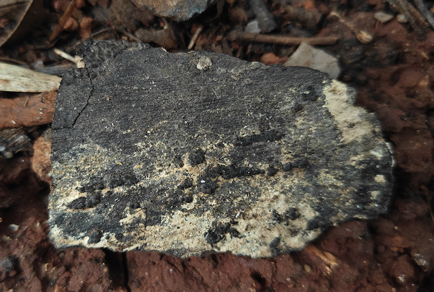
In this study, Candelabrochaete tenuis is described and illustrated as a novel species based on morphological characteristics and phylogenetic analyses of internal transcribed spacer (ITS) regions and the large subunit (nLSU) of nuclear ribosomal RNA genes. The species is characterized by smooth, membranaceous basidiomata with a cream to slightly brown hymenial surface, and allantoid to subcylindrical basidiospores. The phylogenetic analyses based on ITS+nLSU sequences inferred that the new species is nested within the genus Candelabrochaete and is closely related to C. guangdongensis. A description, illustrations, phylogenetic analysis results and comparisons with closely related taxa of the new species are provided.
References
- Boidin, J. (1970) Basidiomycètes Corticiaceae de la République Centrafricaine. II. — Les genres Botryobasidium Donk et Candelabrochaete nov. gen. Cahiers de la Maboké 8: 17–25.
- Chen, C.C., Chen, C.Y. & Wu, S.H. (2021) Species diversity, taxonomy and multi-gene phylogeny of phlebioid clade (Phanerochaetaceae, Irpicaceae, Meruliaceae) of Polyporales. Fungal Diversity 111: 337–442. https://doi.org/10.1007/s13225-021-00490-w
- Cui, B.K., Li, H.J., Ji, X., Zhou, J.L., Song, J., Si, J., Yang, Z.L. & Dai, Y.C. (2019) Species diversity, taxonomy and phylogeny of Polyporaceae (Basidiomycota) in China. Fungal Diversity 97: 137–392. https://doi.org/10.1007/s13225-019-00427-4
- Cui, Y.J., Wang, C.G., Dai, Y.C., Liu, S., Ren, H., Schultes, N.P., Kaishian, P.O., Paine, E., Yuan, Y., Li, D.W. & Zhao, H. (2026) Phylogeny, divergence times, and biogeography of the phytopathogenic fungal genus Phaeolus (Basidiomycota, Polyporales). Journal of Systematics and Evolution 64: 4–18. https://doi.org/10.1111/jse.13187
- Dai, Y.C. (2012) Pathogenic wood-decaying fungi on woody plants in China. Mycosystema 31: 493–509.
- Deng, Y.L., Chen, M., Wang, K.S., Liu, W.T., Chen, D.X., Yang, S.Q., Li, W.L., Zhou, H.M. & Zhao, C.L. (2025) Morphological and phylogenetic analyses reveal one new genus and six new species in Irpicaceae and Steccherinaceae (Polyporales, Basidiomycota) from the Yunnan–Guizhou Plateau, Asia. IMA Fungus 16: e172367. https://doi.org/10.3897/imafungus.16.172367
- Deng, Y.L., Liu, W.T., Chen, M., Wang, K.S., Chen, D.X., Zhang, S.H., Yang, R.C., Zhou, C.Q. & Zhao, C.L. (2026) Clavulina mollis, sp. nov. (Hydnaceae, Cantharellales), a new fungal species from southwest China revealed by morphology and phylogenetic analyses. New Zealand Journal of Botany 64: e70007. https://doi.org/10.1002/nzb2.70007
- Dong, J.H., Li, Q., Yuan, Q., Luo, Y.X., Zhang, X.C., Dai, Y.F., Zhou, Q., Liu, X.F., Deng, Y.L., Zhou, H.M., Muhammad, A. & Zhao, C.L. (2024) Species diversity, taxonomy, molecular systematics and divergence time of wood-inhabiting fungi in Yunnan-Guizhou Plateau, Asia. Mycosphere 15: 1110–1293. https://doi.org/10.5943/mycosphere/15/1/10
- Dong, J.H., Chen, M.L., Chen, M., Li, Q., Zhu, Y.J., Zhang, X.C., Zhou, C.Q., Li, W., Muhammad, A., Zhou, C.Q., Jabeen, S. & Zhao, C.L. (2025) Notes, outline, taxonomy and phylogeny of wood-inhabiting Agaricales. Mycosphere 16 (1): 2599–2711. https://doi.org/10.5943/mycosphere/16/1/16
- Duenas, M., Telleria, M.T., Melo, I., Armas, R.L.J. & Beltran, E. (2008) A new species of Candelabrochaete (Polyporales, Basidiomycota). Mycotaxon 103: 299–305.
- Eriksson, J., Hjortstam, K. & Ryvarden, L. (1981) The Corticiaceae of North. Europe 6. 1048–1276 pp.
- Felsenstein, J. (1985) Confidence intervals on phylogenetics: an approach using bootstrap. Evolution 39: 783–791. https://doi.org/10.2307/2408678
- Floudas, D., Binder, M., Riley, R., Barry, K., Blanchette, R.A., Henrissat, B., Martínez, A.T., Otillar, R., Spatafora, J.W., Yadav, J.S., Aerts, A., Benoit, I., Boyd, A., Carlson, A., Copeland, A., Coutinho, P.M., De Vries, R.P., Ferreira, P., Findley, K., Foster, B., Gaskell, J., Glotzer, D., Górecki, P., Heitman, J., Hesse, C., Hori, C., Igarashi, K., Jurgens, J.A., Kallen, N., Kersten, P., Kohler, A., Kües, U., Kumar, T.K.A., Kuo, A., Labutti, K., Larrondo, L.F., Lindquist, E., Ling, A., Lombard, V., Lucas, S., Lundell, T., Martin, R., McLaughlin, D.J., Morgenstern, I., Morin, E., Murat, C., Nagy, L.G., Nolan, M., Ohm, R.A., Patyshakuliyeva, A., Rokas, A., Ruiz-Dueñas, F.J., Sabat, G., Salamov, A., Samejima, M., Schmutz, J., Slot, J.C., St. John, F., Stenlid, J., Sun, H., Sun, S., Syed, K., Tsang, A., Wiebenga, A., Young, D., Pisabarro, A., Eastwood, D.C., Martin, F., Cullen, D., Grigoriev, I.V. & Hibbett, D.S. (2012) The Paleozoic origin of enzymatic lignin decomposition reconstructed from 31 fungal genomes. Science 336: 1715–1719. https://doi.org/10.1126/science.1221748
- Floudas, D. & Hibbett, D.S. (2015) Revisiting the taxonomy of Phanerochaete (Polyporales, Basidiomycota) using a four gene dataset and extensive ITS sampling. Fungal Biology 119: 679–719. https://doi.org/10.1016/j.funbio.2015.04.003
- Gomez-Montoya, N., Drechsler-Santos, E.R., Ferreira-Lopes, V., Tomšovský, M, Urcelay, C. & Robledo, G. (2017) New insights on Trametopsis Tomšovský (Polyporales Gäum) based on phylogenetic evidences and morphological analyses of neotropical species. Phytotaxa 311 (2): 155–167. https://doi.org/10.11646/phytotaxa.311.2.3
- Gu, Z.R., Zhou, C.Q., Zhang, J.L., Liu, Y., Deng, Q.H., Yang, R.C., Yang, S.Q. & Zhao, C.L. (2025) Taxonomy and phylogeny of Irpicaceae and Meruliaceae (Polyporales, Basidiomycota) with descriptions of four new species from southwestern China. MycoKeys 119: 197–234. https://doi.org/10.3897/mycokeys.119.157018
- Hawksworth, D.L. & Lücking, R. (2017) Fungal diversity revisited: 2.2 to 3.8 million species. Microbiology Spectrum 5. https://doi.org/10.1128/9781555819583.ch4
- Hyde, K.D., Xu, J.C., Rapior, S., Jeewon, R., Lumyong, S., Niego, A.G.T., Abeywickrama, P.D., Aluthmuhandiram, J.V.S., Brahmanage, R.S., Brooks, S., Chaiyasen, A., Chethana, K.W.T., Chomnunti, P., Chepkirui, C., Chuankid, B., de Silva, N.I., Doilom, M., Faulds, C., Gentekaki, E., Gopalan, V., Kakumyan, P., Harishchandra, D., Hemachandran, H., Hongsanan, S., Karunarathna, A., Karunarathna, S.C., Khan, S., Kumla, J., Jayawardena, R.S., Liu, J.K., Liu, N., Luangharn, T.,Macabeo, A.P.G., Marasinghe, D.S., Meeks, D., Mortimer, P.E., Mueller, P., Nadir, S., Nataraja, K.N., Nontachaiyapoom, S., O’Brien, M., Penkhrue, W., Phukhamsakda, C., Ramanan, U.S., Rathnayaka, A.R., Sadaba, R.B., Sandargo, B., Samarakoon, B.C., Tennakoon, D.S., Siva, R., Sriprom, W., Suryanarayanan, T.S., Sujarit, K., Suwannarach, N., Suwunwong, T., Thongbai, B.,Thongklang, N., Deping, W., Wijesinghe, S.N., Winiski, J., Yan, J., Yasanthika, E. & Stadler, M. (2019) The amazing potential of fungi: 50 ways we can exploit fungi industrially. Fungal Diversity 97: 1–136. https://doi.org/10.1007/s13225-019-00430-9
- Hyde, K.D., Baldrian, P., Chen, Y., Chethana, K.W.T., De, Hoog, S., Doilom, M., Gomes, de, Farias, A.R., Gonçalves, M.F.M., Gonkhom, D., Gui, H., Hilário, S., Hu, Y., Jayawardena, R.S., Khyaju, S., Kirk, P.M., Kohout, P., Luangharn, T., Maharachchikumbura, S.S.N., Manawasinghe, I.S., Mortimer, P.E., Niego, A.G.T., Phonemany, M., Sandargo, B., Senanayake, I.C., Stadler, M., Surup, F., Thongklang, N., Wanasinghe, D.N., Bahkali, A.H. & Walker, A. (2024) Current trends, limitations and future research in the fungi? Fungal Diversity 125: 1–71. https://doi.org/10.1007/s13225-023-00532-5
- James, T.Y., Stajich, J.E., Hittinger, C.T. & Rokas, A. (2020) Toward a fully resolved fungal tree of life. Annual Review of Microbiology 74: 291–313. https://doi.org/10.1146/annurev-micro-022020-051835
- Jung, P.E., Lee, H., Wu, S.H., Hattori, T., Tomšovský, M., Rajchenberg, M., Zhou, M. & Kim, Y.W. (2018) Revision of the taxonomic status of the genus Gloeoporus (Polyporales, Basidiomycota) reveals two new species. Mycological Progress 17: 855–863. https://doi.org/10.1007/s11557-018-1400-y
- Justo, A., Miettinen, O., Floudas, D., Ortiz-Santana, B., Sjökvist, E., Lindner, D., Nakasone, K., Niemelä, T., Larsson, K.H., Ryvarden, L. & Hibbett, D. (2017) A revised family-level classification of the Polyporales (Basidiomycota). Fungal Biology 121: 798–824. https://doi.org/10.1016/j.funbio.2017.05.010
- Katoh, K., Rozewicki, J. & Yamad, K.D. (2019) MAFFT online service: multiple sequence alignment, interactive sequence choice and visualization. Brief Bioinform 20: 1160–1166. https://doi.org/10.1093/bib/bbx108
- Larsson, A. (2014) AliView: a fast and lightweight alignment viewer and editor for large datasets. Bioinformatics 30: 3276–3278. https://doi.org/10.1093/bioinformatics/btu531
- Larsson, K.H., Viner, I., Volobuev, S. & Spirin, V. (2025) Additions to the taxonomy of Phanerochaetesensu lato (Polyporales, Basidiomycota): one new genus, two new species and twelve new combinations. Mycological Progress 24: 1–23. https://doi.org/10.1007/s11557-025-02094-z
- Li, Q., Zhang, Y.W., Zhao, C.L., Nakasone, K.K. & Li, W.L. (2025) Efibula cremea sp. nov. (Irpicaceae, Polyporales), a coriaceous fungus from Yunnan Province, China. Phytotaxa 725 (2): 159–172. https://doi.org/10.11646/phytotaxa.725.2.3
- Li, Y., He, S.H., Chen, C.C., Nakasone, K.K. & Ma, H.X. (2022) Global taxonomy and phylogeny of Irpicaceae (Polyporales, Basidiomycota) with descriptions of seven new species and proposals of two new combinations. Frontiers in Microbiology 13: 911978. https://doi.org/10.3389/fmicb.2022.911978
- Liu, S., Shen, L.L., Xu, T.M., Song, C.G., Gao, N., Wu, D.M., Sun, Y.F. & Cui, B.K. (2023) Global diversity, molecular phylogeny and divergence times of the brown-rot fungi within the Polyporales. Mycosphere 14: 1564–1664. https://doi.org/10.5943/mycosphere/14/1/18
- Maekawa, N. (2021) Taxonomy of corticioid fungi in Japan: Present status and future prospects. Mycoscience 62: 345–355. https://doi.org/10.47371/mycosci.2021.10.002
- Mao, W.L., Wu, Y.D., Liu, H.G., Yuan, Y. & Dai, Y.C. (2023) A contribution to Porogramme (Polyporaceae, Agaricomycetes) and related genera. IMA Fungus 14: 5. https://doi.org/10.1186/s43008-023-00110-z
- Miller, M.A., Pfeiffer, W. & Schwartz, T. (2012) The CIPRES science gateway. In: Proceedings of the 1st Conference of the extreme Science and engineering Discovery environment: Bridging from the extreme to the Campus and Beyond. Chicago, IL, 39 pp. https://doi.org/10.1145/2335755.2335836
- Niskanen, T., Lücking, R., Dahlberg, A., Gaya, E., Suz, L.M., Mikryukov, V., Liimatainen, K., Druzhinina, I., Westrip, J.R.S., Mueller, G.M., Cunha, K.M., Kirk, P., Tedersoo, L. & Antonelli, A. (2023) Pushing the Frontiers of Biodiversity Research: Unveiling the Global Diversity, Distribution, and Conservation of Fungi. Annual Review Environment and Resources 48: 149–176. https://doi.org/10.1146/annurev-environ-112621-090937
- Nylander, J.A.A. (2004) Mr Modeltest, vol. 2. Uppsala University, Uppsala, Sweden, Program Distributed by the Author; Evolutionary Biology Centre.
- Petersen, J.H. (1996) Farvekort. The danish Mycological Society’s Colour-Chart. Foreningen til Svampekundskabens Fremme, Greve, Germany, 6 pp.
- Rathnayaka, A.R., Tennakoon, D.S., Jones, G.E., Wanasinghe, D.N., Bhat, D.J., Priyashantha, A.H., Stephenson, S.L., Tibpromma, S. & Karunarathna, S.C. (2025) Significance of precise documentation of hosts and geospatial data of fungal collections, with an emphasis on plant-associated fungi. New Zealand Journal of Botany 63 (2-3): 462–489. https://doi.org/10.1080/0028825X.2024.2381734
- Ronquist, F., Teslenko, M., vander, Mark, P., Ayres, D.L., Darling, A., Hohna, S., Larget, B., Liu, L., Suchard, M.A. & Huelsenbeck, J.P. (2012) Mrbayes 3.2: Efficient bayesian phylogenetic inference and model choice across a large model space. Systematic Biology 61: 539–542. https://doi.org/10.1093/sysbio/sys029
- Spirin, W. (2003) Antrodiella romellii (Irpicaceae, Basidiomycetes) in Russia. Systematics & Geography 3: 48–52.
- Spirin, V., Malysheva, V. & Larsson, K.H. (2018) On some forgotten species of Exidia and Myxarium (Auriculariales, Basidiomycota). Nordic Journal of Botany 36 (3): e01601. https://doi.org/10.1111/njb.01601
- Swofford, D.L. (2002) PAUP*: Phylogenetic analysis using parsimony (*and Other Methods), Version 4.0b10. Sinauer Associates, Sunderland, MA, USA.
- Tedersoo, L., Bahram, M., Põlme, S., Kõljalg, U., Yorou, N.S., Wijesundera, R., Villarreal, R.L., Vasco-Palacios, A.M., Thu, P.Q., Suija, A., Smith, M.E., Sharp, C., Saluveer, E., Saitta, A., Rosas, M., riit, T. & Abarenkov, K. (2014) Global diversity and geography of soil fungi. Science 346: 1256688. https://doi.org/10.1126/science.1256688
- Tomšovský, M., Kolařík, M., Pažoutová, S. & Homolka, L. (2006) Molecular phylogeny of European Trametes (Basidiomycetes,Polyporales) species based on LSU and ITS (nrDNA) sequences. Nova Hedwigia 82: 269–280. https://doi.org/10.1127/0029-5035/2006/0082-0269
- Vilgalys, R. & Hester, M. (1990) Rapid genetic identification and mapping of enzymatically amplified ribosomal DNA from several Cryptococcus species. Journal of Bacteriology 172: 4238–4246. https://doi.org/10.1128/jb.172.8.4238-4246.1990
- Vu, D., Groenewald, M., de Vries, M., Gehrmann, T., Stielow, B., Eberhardt, U., Al-Hatmi, A., Groenewald, J.Z., Cardinali, G., Houbraken, J., Boekhout, T., Crous, P.W., Robert, V. & Verkley, G.J.M. (2019) Large-scale generation and analysis of filamentous fungal DNA barcodes boosts coverage for kingdom fungi and reveals thresholds for fungal species and higher taxon delimitation. Studies in Mycology 92: 135–154. https://doi.org/10.1016/j.simyco.2018.05.001
- Wang, C.G., Dai, Y.C., Kout, J., Gates, G.M., Liu, H.G., Yuan, Y. & Vlasák, J. (2024a) Multi-gene phylogeny and taxonomy of Physisporinus (Polyporales, Basidiomycota). Mycosphere 15: 1455–1521. https://doi.org/10.5943/mycosphere/15/1/12
- Wang, C.G., Zhao, H., Liu, H.G., Zeng, G.Y., Yuan, Y. & Dai, Y.C. (2023) A multi‑gene phylogeny clarifies species diversity, taxonomy, and divergence times of Ceriporia and other related genera in Irpicaceae (Polyporales, Basidiomycota). Mycosphere 14 (1): 1665–1729. https://doi.org/10.5943/mycosphere/17/1/9
- Wang, L., Kang, Z.L., Zhou, H.M. & Zhao, C.L. (2024b) Molecular phylogeny and morphology reveal two new wood-inhabiting fungal species (Basidiomycota) from China. Phytotaxa 647: 207–222. https://doi.org/10.11646/phytotaxa.647.3.1
- White, T.J., Bruns, T., Lee, S. & Taylor, J. (1990) Amplification and direct sequencing of fungal ribosomal RNA genes for phylogenetics. In: PCR protocols: a guide to methods and applications, Academic Press, New York, pp. 315–322. https://doi.org/10.1016/b978-0-12-372180-8.50042-1
- Wijesinghe, S.N., Deng, Y.L., Yuan, Q., Zhou, H.M., Wang, L., Dai, Y.F., Xu, Y., Jiang, N., AlOtibi, F., Al-Sadi, A.M., Cao, B., Chen, Q., de Silva, N.I., Dong, J.H., Dong, W., Du, T.Y., Gu, Z.R., He, S.Y., Jiang, Q.Q., Li, F., Li, Q., Li, W., Liu, P., Liu, W.X., Liu, X.Y., Liu, Z.B., Lu, W.H., Maharachchikumbura, S.S.N., Su, J.Q., Tang, S.M., Tennakoon, D.S., Wang, X.C., Xiao, W.Y., Xie, M.L., Yang, X., Yang, Y., Yang, Y.U., Yang, Y.H., Yang, Y.T., Zhang, J.L., Zhang, S.C., Zhang, X.C., Zhang, X.J., Zhou, Q., Al-Kharousi, M., Al-Maqbali, D., Al-Owaisi, A., Al-Yahya’ei, M.N., Han, X.X., Hongsanan, S., Hussain, S., Jin, J.L., Karunarathna, S.C., Li, C.T., Li, S.L., Li, Y., Luo, Z.L., Manawasinghe, I.S., Peng, L.Y., Thongklang, N., Tian, W.H., Tibpromma, S., Velazhahan, R., Xiao, Y.P., Zhang, Z.J., Zhao, H.J., Zhao, R.L., Rathnayaka, A.R., Wanasinghe, D.N., Hyde, K.D. & Zhao, C.L. (2025) Mycosphere Notes 572-624: Exploring the hidden diversity of fungi and fungi-like taxa in different terrestrial microhabitats. Mycosphere 16 (1): 2975–3129. https://doi.org/10.5943/mycosphere/16/1/21
- Wu, F., Yuan, Y., Chen, J.J., Cui, B.K., Zhou, M. & Dai, Y.C. (2020) Terrestriporiaceae fam. nov., a new family of Russulales (Basidiomycota). Mycosphere 11: 2755–2766. https://doi.org/10.5943/mycosphere/11/1/21
- Xu, Y.L., Cao, Y.F., Liu, S.L., Nakasone, K.K. & He, S.H. (2025) Taxonomy and phylogeny of Stereaceae (Russulales, Basidiomycota): two new genera, nine new species and twenty new combinations. Persoonia 54: 119–145. https://doi.org/10.3114/persoonia.2025.54.04
- Yang, Y., Xu, Y., Wang, L., Jiang, Q.Q., Su, J.Q., Li, R., Zhou, H.M. & Zhao, C.L. (2025) Multigene phylogeny of seven wood-inhabiting fungal orders in Basidiomycota, and proposal of a new genus and thirteen new species. Mycosphere 16: 245–295. https://doi.org/10.5943/mycosphere/16/1/4
- Yuan, Y., Ji, X.H., Wu, F., He, S.H. & Chen, J.J. (2016) Two new Gloeoporus (Polyporales, Basidiomycota) from tropical China. Nova Hedwigia 103: 169–183. https://doi.org/10.1127/nova hed wigia/2016/0344
- Zhao, C.L., Cui, B.K., Song, J. & Dai, Y.C. (2015) Fragiliporiaceae, a new family of Polyporales (Basidiomycota). Fungal Diversity 70: 115–126. https://doi.org/10.1007/s13225-014-0299-0
- Zhao, C.L., Qu, M.H., Huang, R.X. & Karunarathna, S.C. (2023) Multi-gene phylogeny and taxonomy of the wood-rotting fungal genus Phlebia sensu lato (Polyporales, Basidiomycota). Journal of Fungi 9: 320. https://doi.org/10.3390/jof9030320
- Zhao, C.L. & Wu, Z.Q. (2017) Ceriporiopsis kunmingensis sp. nov. (Polyporales, Basidiomycota) evidenced by morphological characters and phylogenetic analysis. Mycological Progress 16: 93–100. https://doi.org/10.1007/s11557-016-1259-8
- Zhao, H., Wu, F., Dai, Y.C., Vlasak, J., Ghobad-Nejhad, M., Liu, H.G. & Yuan, Y. (2025) Divergence time and biogeography of the fungal genus Porodaedalea (Basidiomycota, Hymenochaetales), obligate phytopathogens on coniferous trees. Molecular Phylogenetics and Evolution 212: 108–425. https://doi.org/10.1016/j.ympev.2025.108425
- Zhang, J.W., Markillie, L.M., Mitchell, H.D., Gaffrey, M.J., Orr, G. & Schilling, J.S. (2022) Distinctive carbon repression effects in the carbohydrate-selective wood decay fungus Rhodonia placenta. Fungal Genetics and Biology 159: 103673. https://doi.org/10.1016/j.fgb.2022.103673