

Abstract
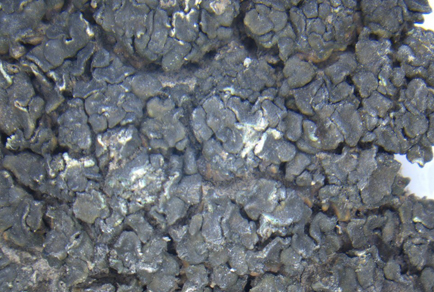
Based on morpho-anatomical, chemical, and phylogenetic analyses, a new species (Gloeoheppia planum) and two new records (G. erosa and G. polyspora) in China were identified. Gloeoheppia planum is characterized by squamules that are flat or slightly concave in the center, often forming mats up to 5 cm in diameter. Gloeoheppia erosa is well recognized by its very rough and cracked upper surface. Gloeoheppia polyspora is characterized by a swollen thallus, a smooth upper surface, and 16-spored asci. Detailed descriptions and morpho-anatomical images of the three species are provided, along with a key to the genus Gloeoheppia worldwide.
References
- Gardes, M. & Bruns, T.D. (1993) ITS primers with enhanced specificity for basidiomycetes-application to the identification of mycorrhizae and rusts. Molecular Ecology 2 (2): 113–118. https://doi.org/10.1111/j.1365-294x.1993.tb00005.x
- Gyelnik, V. (1935) De familia Heppiacearum II. Repertorium Specierum Novarum Regni Vegetabilis 38: 153–157, 307–313. https://doi.org/10.1002/fedr.4870382805
- Henssen, A. (1995) The new lichen family Gloeoheppiaceae and its genera Gloeoheppia, Pseudopeltula and Gudelia (Lichinales). The Lichenologist 27 (4): 261–290. https://doi.org/10.1006/lich.1995.0025
- Innis, M.A., Gelfand, D.H., Sninsky, J.J. & White, T.J. (2012) PCR Protocols: a guide to methods and applications. Academic Press Inc, New York, pp. 1–482.
- Iqbal, M.S. & Khalid, A.N. (2024) First report of poorly known genus Gloeoheppia (Ascomycota: Gloeoheppiaceae), reveals one new species from Pakistan[J]. Journal of Asia-Pacific Biodiversity 18 (2): 282–287. https://doi.org/10.1016/j.japb.2024.08.006
- Kalyaanamoorthy, S., Minh, B.Q., Wong, T.K.F., Von Haeseler, A. & Jermiin, L.S. (2017) ModelFinder: fast model selection for accurate phylogenetic estimates. Nature Methods 14 (6): 587–589. https://doi.org/10.1038/nmeth.4285
- Katoh, K. & Standley, D.M. (2013) MAFFT multiple sequence alignment software version 7: improvements in performance and usability. Molecular Biology and Evolution 30 (4): 772–780. https://doi.org/10.1093/molbev/mst010
- Lanfear, R., Frandsen, P.B., Wright, A.M., Senfeld, T. & Calcott, B. (2016) PartitionFinder 2: new methods for selecting partitioned models of evolution formolecular and morphological phylogenetic analyses. Molecular Biology and Evolution 34 (3): 772–773. https://doi.org/10.1093/molbev/msw260
- Lücking, R., Hodkinson, B.P. & Leavitt, S.D. (2017) Corrections and amendments to the 2016 classification of lichenized fungi in the Ascomycota and Basidiomycota. The Bryologist 120 (1): 58–69. https://doi.org/10.1639/0007-2745-120.1.058
- Marton, K. & Galun, M. (1981) The cyanophilous lichen population of the' Arava Valley and the Judean Desert (Israel). Israel Journal of Plant Sciences 30 (3): 125–155. https://doi.org/10.1080/0021213X.1981.10676915
- Niu, D.L., Wang, J.F. & Tian, X.Y. (2015) Pleopsidium Koerber—A new record genus for Ningxia with description of new record species. Acta Botanica Boreali-Occidentalia Sinica 35 (8): 1697–1700. https://doi.org/10.7606/j.issn.1000-4025.2015.08.1697
- Niu, D.L., Zhu, Q., Wang, Z.Z., Shi, J., Bai, M.S. & Zheng, X.P. (2016) New record of the lichen genus Peltigera from China. Acta Botanica Boreali-Occidentalia Sinica 36 (6): 1245–1249. https://doi.org/10.7606/j.issn.1000-4025.2016.06.1245
- Niu, D.L., Wang, X.Y., Bu, Y.F. & Hu, L.F. (2017) A revision of the lichen genus Pleopsidium in China. Acta Botanica Boreali-Occidentalia Sinica 37 (1): 191–195. https://doi.org/10.7606/j.issn.1000-4025.2017.01.019
- Niu, D.L., Zhao, G.G., Ma, J., Hu, Y.Q. & Su, Y.B. (2023a) Three new records of lichenized fungi for China. Acta Botanica Boreali-Occidentalia Sinica 43 (8): 1437–1440. https://doi.org/10.7606/j.issn.1000-4025.2023.08.1437
- Niu, D.L. (2023b) Lichen Atlas of Liupanshan National Nature Reserve. Henan Science and Technology Press, Zhengzhou, pp. 1–142.
- Orange, A., James, P.W. & White, F.J. (2001) Microchemical Methods for the Identification of Lichens. British Lichen Society, London.
- Ren, Q. (2023) Key to the lichen genera of China. Journal of Liaocheng University(Natural Science Edition) 36 (1): 107–110.
- Ronquist, F., Teslenko, M., Van, D.M.P, Ayres, D.L., Darling, A., Höhna, S., Larget, B., Liu, L., Suchard, M.A. & Huelsenbeck, J.P. (2012) MrBayes 3.2: efficient Bayesian phylogenetic inference and model choice across a large model space. Systematic Biology 61 (3): 539–542. https://doi.org/10.1093/sysbio/sys029
- Schultz, M. (2007) On the identity of Anema dodgei, Psorotichia segregata and Psorotichia squamulosa, three misunderstood cyanolichens from the southwestern United States. Bryologist 110 (2): 286–294. https://doi.org/10.1639/0007-2745(2007)110[286:OTIOAD]2.0.CO;2
- Talavera, G. & Castresana, J. (2007) Improvement of phylogenies after removing divergent and ambiguously aligned blocks from protein sequence alignments. Systematic Biology 56 (4): 564–577. https://doi.org/10.1080/10635150701472164
- Wang, S.Y., Zhao, G.G., Liang, Y.L., Zhu, Y.C., Sun, H.R., Tian, X.Y. & Niu, D.L. (2024a) Two newly recorded species of Peltula from China. Guihaia 44 (9): 1633–1640. https://doi.org/10.11931/guihaia.gxzw202311053
- Wang, S.Y., Zhao, G.G., Niu, D.L., Liang, Y.L., Zhu, Y.C. & Sun, H.R. (2024b) Two new species of the lichen genus Oxneriaria from China. Mycosystema 43 (11): 240191. https://doi.org/10.13346/j.mycosystema.240191
- Wang, S.Y., Zhao, G.G., Niu, D.L., Wang, L., Ren, X., Wu, J.A. & Qu, H.B. (2024c) Three New Species and a New Record of the Lichen Genus Peltula (Peltulaceae) from Helan Mountain in China. Biology 13 (8): 590. https://doi.org/10.3390/biology13080590
- Wei, J.C. (2018) A review on the present situation of lichenology in China. Mycosystema 37 (7): 812–818. https://doi.org/10.13346/j.mycosystema.180135
- White, T.J., Bruns, T., Lee, S. & Taylor, J. (1990) Amplification and direct sequencing of fungal ribosomal RNA genes for phylogenetics. In: Innis, M.A., Gelfand, D.H., Sninsky, J.J. & White, T.J. (Eds.) PCR protocols: a guide to methods and applications. Academic Press Inc, New York, pp. 315–322. https://doi.org/10.1016/b978-0-12-372180-8.50042-1
- Xiang, C.Y., Gao, F., Jakovlić, I., Lei, H., Hu, Y., Zhang, H., Zou, H., Wang, G. & Zhang, D. (2023) Using PhyloSuite for molecular phylogeny and tree-based analyses. Imeta 2 (1): e87. https://doi.org/10.1002/imt2.87
- Zhang, T., Liu, M., Wang, Y.Y., Wang, Z.J., Wei, X.L. & Wei, J.C. (2017) Two new species of Endocarpon (Verrucariaceae, Ascomycota) from China. Scientific Reports 7 (1): 7193. https://doi.org/10.1038/s41598-017-07778-5