
Abstract
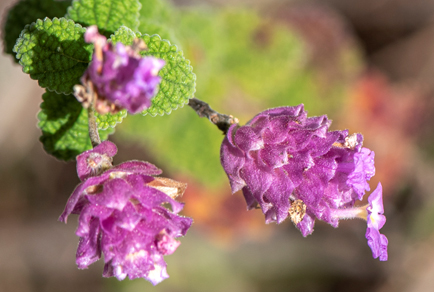
Lippia diamantinensis and L. glazioviana, described in Glaziou’s catalogue (1911), are considered not validly published. They represent distinct taxonomic entities within the genus and, in accordance with the International Code of Nomenclature for algae, fungi, and plants, are here formally described as new species: Lippia neodiamantinensis and L. neoglazioviana. The former is endemic to the Diamantina Plateau, Espinhaço Range, Minas Gerais state, and the second to the Chapada dos Veadeiros, Goiás state, both from Brazil. We provide descriptions, photographs, comparisons with morphologically similar species, a distribution map, and a preliminary conservation status assessment. Additionally, Verbena goyazensis and L. possensis are proposed as synonyms of L. herbacea and L. corymbosa, respectively.
References
- Atkins, S. (2004) Verbenaceae. In: Kubitzki, K. & Kadereit, J.W. (Eds.) The families and Genera of Vascular Plants, Vol. 7. Springer-Verlag, Berlin, pp. 449–468. https://doi.org/10.1007/978-3-642-18617-2_25
- Bachman, S., Moat, J., Hill, A.W., de la Torre, J. & Scott, B. (2011) Supporting Red List threat assessments with GeoCAT: geospatial conservation assessment tool. ZooKeys 150: 117–126. https://doi.org/10.3897/zookeys.150.2109
- Barbosa, A.G. (2008) As estratégias de conservação da biodiversidade na Chapada dos Veadeiros: conflitos e oportunidades. Universidade de Brasília, Brasília, 128 pp.
- Beentje, H. (2010) The Kew Plant Glossary, an illustrated dictionary of plant terms. Kew Publishing, London, Royal Botanic Gardens, 160 pp.
- Cardoso, P.H., Menini Neto, L. & Salimena, F.R.G. (2019a) A new species of Lippia (Verbenaceae) from the inselbergs of Brazilian Atlantic Forest. Phytotaxa 406: 243–249. https://doi.org/10.11646/phytotaxa.406.4.3
- Cardoso, P.H., Menini Neto, L. & Salimena, F.R.G. (2019b) Lippia mantiqueirae (Verbenaceae), a new species from Minas Gerais, Brazil. Phytotaxa 420 (3): 249–254. https://doi.org/10.11646/phytotaxa.420.3.5
- Cardoso, P.H., Valério, V.I.R., Menini Neto, L., Trovó, M. & Salimena, F.R.G. (2020a) Novelties in Lippia (Verbenaceae) from Minas Gerais State, Brazil. Phytotaxa 455: 47–52. https://doi.org/10.11646/phytotaxa.455.1.6
- Cardoso, P.H., Salimena, F.R.G. & Prado, J. (2020b) Proposal to reject the name Lippia riedeliana (Verbenaceae). Taxon 69: 1375–1376. https://doi.org/10.1002/tax.12404
- Cardoso, P.H., O’Leary, N., Olmstead, R.G., Moroni, P. & Thode, V. (2021a) An update of the Verbenaceae genera and species numbers. Plant Ecology and Evolution 154: 80–86. https://doi.org/10.5091/plecevo.2021.1821
- Cardoso, P.H., Menini Neto, L., Trovó, M. & Salimena, F.R.G. (2021b) Checklist and a new species of Lippia (Verbenaceae) from the Diamantina Plateau, Minas Gerais, Brazil. European Journal of Taxonomy 733: 42–55. https://doi.org/10.5852/ejt.2021.733.1219
- Cardoso, P.H., Moroni, P., O’Leary, N. & Salimena, F.R.G. (2021c) Amendments to the nomenclature of Lippia (Verbenaceae: Lantaneae): typification of names linked to the Brazilian flora. Brittonia 73: 446–458. https://doi.org/10.1007/s12228-021-09674-9
- Cardoso, P.H., Silva, G.B., Trovó, M. & Salimena, F.R.G. (2025a) Lippia carrascoana (Verbenaceae), an enigmatic new species from the Brazilian Caatinga. Phytotaxa 706: 47–60. https://doi.org/10.11646/phytotaxa.706.1.3
- Cardoso, P.H., Trovó, M., O’Leary, N. & Salimena, F.R.G. (2025b) The challenging Lippia sect. Goniostachyum (Verbenaceae) revisited: Taxonomic, nomenclatural, and distributional updates. Biologia 80: 3219–3254. https://doi.org/10.1007/s11756-025-02052-w
- Chamisso, L.K.A. (1832) Verbenaceae. Linnaea 7: 105–723.
- Cogniaux, A. (1906) Notice biographique sur Auguste Glaziou. Bulletin de la Société Royale de Botanique de Belgique 43: 365–369.
- Desfontaines, R.L. (1829) Catalogus Plantarum Horti regii parisiensis. Tableau de l’École de botanique du Muséum national d’Histoire naturelle, Paris, 484 pp.
- Fiedler, N.C., Merlo, D.A. & Medeiros, M.B.D. (2006) Ocorrência de incêndios florestais no Parque Nacional da Chapada dos Veadeiros, Goiás. Ciência Florestal 16: 153–161. https://doi.org/10.5902/198050981896
- Glaziou, M. (1911) Plantae brasiliae centralis. Société Botanique de France, Mémoires 3: 1–661.
- Gonçalves, E.G. & Lorenzi, H. (2007) Morfologia vegetal: organografia e dicionário ilustrado de morfologia das plantas vasculares. Instituto Plantarum, Nova Odessa, 416 pp.
- Harris, J.G. & Harris, M.W. (2001) Plant identification terminology: an illustrated glossary. Spring Lake Publ., Spring Lake, 216 pp.
- IUCN (2012) IUCN Red List categories and criteria. Available from: https://www.iucnredlist.org/resources/categories-and-criteria (accessed 8 February 2026)
- IUCN Standards and Petitions Subcommittee (2024) Guidelines for Using the IUCN Red List Categories and Criteria. Available from: http://www.iucnredlist.org/documents/RedListGuidelines.pdf (accessed 8 February 2026)
- Kunth, K.S. (1818) Verbenaceae. In: Humboldt, F.W.H.A. von & Bonpland, A.J.A. (Eds.) Nova Genera et Species Plantarum (quarto ed.) 2. Librariae Graeco-Latini-Germanicae, Paris, pp. 244–285.
- Lindley, J. (1824) Miscellaneous matter. Edwards’s Botanical register 10: 778–867.
- Linnaeus, C. (1753) Species Plantarum 2. L. Salvius, Stockholm, pp. 561–1200.
- Lu-Irving, P., Bedoya, A.M., Salimena, F.R., Silva, T.R.S., Viccini, L.F., Bitencourt, C., Thode, V.A., Cardoso, P.H., O’Leary, N. & Olmstead, R.G. (2021) Phylogeny of Lantana, Lippia, and related genera (Lantaneae: Verbenaceae). American Journal of Botany 108: 1354–1373. https://doi.org/10.1002/ajb2.1708
- Mansano, V.F. & Pederneiras, L.C. (2016) Proposal to add Glaziou’s “Plantae Brasiliae centralis a Glaziou lectae” to the list of suppressed works in Appendix VI. Taxon 65 (5): 1181–1182. https://doi.org/10.12705/655.28
- Moldenke, H.N. (1950) Novelties in the Eriocaulaceae and Verbenaceae II. Bulletin of the Torrey Botanical Club 77: 389–405. https://doi.org/10.2307/2481919
- Moldenke, H.N. (1965a) Materials towards a monograph of the genus Lippia II. Phytologia 12: 73–120. https://doi.org/10.5962/bhl.part.10343
- Moldenke, H.N. (1965b) Materials towards a monograph of the genus Lippia III. Phytologia 12: 130–181. https://doi.org/10.5962/bhl.part.10343
- Moldenke, H.N. (1975) Notes on new and noteworthy plants LXXXIV. Phytologia 32: 457–458.
- Moldenke, H.N. (1978) Additional notes on the genus Lippia IV. Phytologia 39: 434–456. https://doi.org/10.5962/bhl.part.7623
- Moreira, B.P., Souza, V.Q. & Deble, L.P. (2021) A new species of Lippia sect. Dioicolippia (Verbenaceae) from Rio Grande do Sul State, Brazil. Brittonia 73: 353–360. https://doi.org/10.1007/s12228-021-09673-w
- Moroni, P., Ais, J. & O’Leary, N. (2022) Las Verbenáceas comestibles de América: Una revisión bibliográfica. Darwiniana, nueva serie 10: 475–502. https://doi.org/10.14522/darwiniana.2022.101.1023
- Nesom, G.L. (2010) Infrageneric classification of Verbena (Verbenaceae). Phytoneuron 11: 1–15.
- O’Leary, N., Múlgura, M.E. & Morrone, O. (2010) Revisión taxonómica de las especies del género Verbena (Verbenaceae) II: Serie Verbena. Annals of the Missouri Botanical Garden 97: 365–425. https://doi.org/10.3417/2007070
- O’Leary, N., Lu‐Irving, P., Moroni, P., Salimena, F.R., Silva, T.R.S., Cardoso, P.H., Mirra, F., Schaefer, J., Bedoya, A.M., Viccini, L.F., Bitencourt, C., Thode, V.A. & Olmstead, R.G. (2023) Making Lantaneae (Verbenaceae) taxonomy useful: a phylogenetic classification. Taxon 72: 572–589. https://doi.org/10.1002/tax.12934
- Pascual, M.E., Slowing, K., Carretero, E., Mata, D.S. & Villar, A. (2001) Lippia: traditional uses, chemistry and pharmacology: a review. Journal of ethnopharmacology 76: 201–214. https://doi.org/10.1016/S0378-8741(01)00234-3
- Queiroz-Lima, A., Amorim, A. & Cardoso, D.B. (2018) Two more elegant species of the neglected Sauvagesia elegantissima complex (Ochnaceae). Systematic Botany 43: 221–230. https://doi.org/10.1600/036364418X697076
- Rosa, P.O., Vasconcelos, T.N., Lucas, E.J. & Proença, C.E. (2021) Revisiting Glaziou and the botany of the second Cruls Mission: three new species and 23 accepted species of Myrcia (Myrtaceae) collected from Goiás, Brazil and a detailed description of his “Goyaz” itinerary. Phytotaxa 509: 69–92. https://doi.org/10.11646/phytotaxa.509.1.3
- Rotman, A.D. & Múlgura de Romero, M.E. (2010) Novedades nomenclaturales en los géneros Lippia y Lantana (Verbenaceae). Darwiniana, nueva serie 48 (1): 97–99.
- Salimena, F.R.G., Ferreira, S.C., Cardoso, P.H. & Valério, V.I.R. (2016) Verbenaceae. In: Rizzo, J.A. (Ed.) Flora dos estados de Goiás e Tocantins. Coleção Rizzo. Vol. 47. Universidade Federal de Goiás, Goiânia, 157 pp.
- Salimena, F.R.G. & Cardoso, P.H. (2026) Lippia in Flora e Funga do Brasil. Available from: https://floradobrasil.jbrj.gov.br/FB15170 (accessed 15 February 2026)
- Santos, K. (2016) Brazilian plant specimens at the Regnellian herbarium: history and repatriation. Rodriguésia 67: 879–892. https://doi.org/10.1590/2175-7860201667403
- Santos Filho, L.G.D., Reis, R.B., Souza, A.S.Q., Canuto, K.M., Brito, E.S., Castro, K.N. & Diniz, F.M. (2023) Chemical composition and biological activities of the essential oils from Lippia alba and Lippia origanoides. Anais da Academia Brasileira de Ciências 95: e20220359. https://doi.org/10.1590/0001-3765202320220359
- Schauer, J.C. (1847) Verbenaceae. In: De Candolle, A.P. (Ed.) Prodromus Systematis Naturalis Regni Vegetabilis 11. Treuttel & Würtz, Paris, pp. 522–700.
- Silva, M.S., Gurgel, H. Laques, A., Silveira, B.D. & Siqueira, R.V. (2018) 30 anos de dinâmica espaço-temporal (1984–2015) da região de influência do Parque Nacional da Chapada dos Veadeiros, Goiás. Revista franco-brasilera de geografia 35. [http://journals.openedition.org/confins/14851]
- Silva, T.R.S. & Salimena, F.R. (2002) Novas combinações e novos sinônimos em Lippia e Lantana (Verbenaceae). Darwiniana 40: 57–59.
- Souza, C.D.D. & Felfili, J.M. (2006) The utilization of medicinal plants in the region of Alto Paraíso of Goiás, GO, Brazil. Acta Botanica Brasilica 20: 135–142. https://doi.org/10.1590/S0102-33062006000100013
- Thiers, B. (2026 [continuously updated]) Index Herbariorum: A global directory of public herbaria and associated staff. Available from: http://sweetgum.nybg.org/science/ih/ (accessed 22 April 2026)
- Turczaninow, P.K.N.S. (1863) Verbenaceae et Myoporaceae nonnullae hucusque indescriptae. Bulletin de la Société impériale des naturalistes de Moscou 36: 193–227.
- Turland, N.J., Wiersema, J.H., Barrie, F.R., Greuter, W., Hawksworth, D.L., Herendeen, P.S., Knapp, S., Kusber, W.-H., Li, D.-Z., Marhold, K., May, T.W., McNeill, J., Monro, A.M., Prado, J., Price, M.J. & Smith, G.F. (2018) International Code of Nomenclature for algae, fungi, and plants (Shenzhen Code). Koeltz Botanical Books, Glashütten. https://doi.org/10.12705/Code.2018
- Turland, N.J., Wiersema, J.H., Barrie, F.R., Gandhi, K.N., Gravendyck, J., Greuter, W., Hawksworth, D.L., Herendeen, P.S., Klopper, R.R., Knapp, S., Kusber, W.-H., Li, D.-Z., May, T.W., Monro, A.M., Prado, J., Price, M.J., Smith, G.F. & Zamora Señoret, J.C. (2025) International Code of Nomenclature for algae, fungi, and plants (Madrid Code). University of Chicago Press, Chicago, 288 pp. https://doi.org/10.7208/chicago/9780226839479.001.0001
- Verdi, M., Pougy, N., Martins, E., Sano, P.T., Ferreira, P.L. & Martinelli, G. (2015) Vetores de pressão que incidem sobre a flora em risco de extinção da Serra do Espinhaço Meridional. In: Pougy, N., Verdi, M., Martins, E. & Loyola, R. (Ed.) Plano de ação nacional para a conservação da flora ameaçada de extinção da Serra do Espinhaço Meridional. Instituto de Pesquisas Jardim Botânico do Rio de Janeiro/CNCFlora, Rio de Janeiro, pp. 33–48.
- Zavatin, D.A., Ramos, R., Salimena, F.R.G. & Cardoso, P.H. (2024) A new species of Lippia (Verbenaceae) from the Espinhaço Range, Minas Gerais, Brazil. Acta Botanica Brasilica 38: e20240024. https://doi.org/10.1590/1677-941x-abb-2024-0024