

Abstract
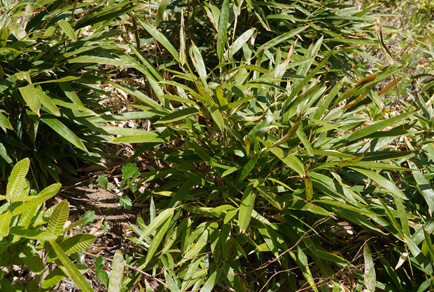
The temperate woody bamboos (tribe Arundinarieae) present long-standing taxonomic uncertainty owing to rapid radiation, frequent hybridization, and convergent morphology, which obscure species-level relationships. Although plastome phylogenomics has clarified deep lineages at the species level, Korean and Japanese taxa have received little molecular attention, leaving East Asian species diversity incompletely understood. To address this gap, we analyzed plastid genome data from 36 species and nuclear ribosomal ITS (nrITS) data from 30 species. We newly assembled complete plastomes for 12 species, seven of which are reported here for the first time. The plastome phylogeny recovered two strongly supported lineages, the Arundinaria and Phyllostachys clades, consistent with earlier studies. By contrast, the nrITS phylogeny showed substantial topological incongruence, revealing plastid-nuclear discordance with the plastome tree, particularly in the placement of the Pleioblastus subclade. Nevertheless, many species were consistently resolved within the same clades or subclades across both datasets, indicating stability at lower phylogenetic levels. Seven taxa, however, exhibited conflicting placements, suggesting signals of hybrid origin. A notable case was Arundinaria munsuensis, a Korean endemic restricted to Mt. Jirisan, which was consistently resolved within Pleioblastus in both plastome and nrITS phylogenies, supported also by morphological evidence. We therefore propose the new combination Pleioblastus munsuensis (Y. N. Lee) A. Gantsetseg, Y. J. Jang, E. K. Han & J. H. Lee. Taken together, these findings highlight plastid-nuclear conflict in Arundinarieae, with hybridization likely contributing to phylogenetic instability, and indicate that certain taxa remain in need of species-level taxonomic re-evaluation, either due to hybrid origins or to nomenclatural uncertainty.
References
- Attigala, L., Wysocki, W.P., Duvall, M.R. & Clark, L.G. (2016) Phylogenetic estimation and morphological evolution of Arundinarieae (Bambusoideae: Poaceae) based on plastome phylogenomic analysis. Molecular Phylogenetics and Evolution 101: 111–121. https://doi.org/10.1016/j.ympev.2016.05.008
- Betancur-R, R., Naylor, G.J. & Ortí, G. (2014) Conserved genes, sampling error, and phylogenomic inference. Systematic Biology 63 (2): 257–262. https://doi.org/10.1093/sysbio/syt073
- Burke, S.V., Grennan, C.P. & Duvall, M.R. (2012) Plastome sequences of two New World bamboos—Arundinaria gigantea and Cryptochloa strictiflora (Poaceae)—extend phylogenomic understanding of Bambusoideae. American Journal of Botany 99: 1951–1961. https://doi.org/10.3732/ajb.1200365
- Burke, S.V., Clark, L.G., Triplett, J.K., Grennan, C.P. & Duvall, M.R. (2014) Biogeography and phylogenomics of New World Bambusoideae (Poaceae), revisited. American Journal of Botany 101 (5): 1–6. https://doi.org/10.3732/ajb.1400063
- Byrne, M., Macdonald, B. & Brand, J. (2003) Phylogeography and divergence in the chloroplast genome of Western Australian Sandalwood (Santalum spicatum). Heredity 91 (4): 389–395. https://doi.org/10.1038/sj.hdy.6800346
- Cai, L., Xi, Z., Lemmon, E.M., Lemmon, A.R., Mast, A., Buddenhagen, C.E., Liu, L. & Davis, C.C. (2021) The perfect storm: gene tree estimation error, incomplete lineage sorting, and ancient gene flow explain the most recalcitrant ancient angiosperm clade, Malpighiales. Systematic Biology 70 (3): 491–507. https://doi.org/10.1093/sysbio/syaa083
- Cao, B., Ge, T., Ding, S. & Guo, C. (2020) The complete chloroplast genome of Phyllostachys glauca (Bambusoideae), a dominant bamboo species in limestone mountains endemic to China. Mitochondrial DNA Part B 5 (3): 3193–3194. https://doi.org/10.1080/23802359.2020.1810152
- Chao, C.S., Chu, C.D. & Hsiung, W.Y. (1980) A revision of some genera and species of Chinese bamboos. Acta Phytotaxonomica Sinica 18 (1): 20–36.
- Doležal, J., Matsuki, S. & Hara, T. (2009) Effects of dwarf-bamboo understory on tree seedling emergence and survival in a mixed-oak forest in northern Japan: a multi-site experimental study. Community Ecology 10 (2): 225–235. https://doi.org/10.1556/ComEc.10.2009.2.13
- Guo, Z.H., Chen, Y.Y. & Li, D.Z. (2002) Phylogenetic studies on the Thamnocalamus group and its allies (Gramineae: Bambusoideae) based on ITS sequence data. Molecular Phylogenetics and Evolution 22 (1): 20–30. https://doi.org/10.1006/mpev.2001.1039
- Guo, C., Ma, P.F., Yang, G.Q., Ye, X.Y., Guo, Y., Liu, J.X., Liu, Y.L., Eaton, D.A.R., Guo, Z.H. & Li, D.Z. (2021) Parallel ddRAD and genome skimming analyses reveal a radiative and reticulate evolutionary history of the temperate bamboos. Systematic Biology 70 (4): 756–773. https://doi.org/10.1093/sysbio/syaa076
- Han, E.K., Tamaki, I., Heo, T.I., Byeon, J.G., Gantsetseg, A., Jang, Y.J., Park, J.S. & Lee, J.H. (2025) Genetic variation and structure shaped by recent population fragmentation in the boreal conifer Thuja koraiensis: conservation perspectives. Global Ecology and Conservation 59: e03573. https://doi.org/10.1016/j.gecco.2025.e03573
- Han, E.K., Tamaki, I., Oh, S.H., Park, J.S., Cho, W.B., Jin, D.P., Kim, B.Y., Yang, S., Son, D.C., Choi, H.J., Gantsetseg, A., Isagi, Y. & Lee., J.H. (2023) Genetic and demographic signatures accompanying the evolution of the selfing syndrome in Daphne kiusiana, an evergreen shrub. Annals of Botany 131 (5): 751–767. https://doi.org/10.1093/aob/mcac142
- Hoang, D.T., Chernomor, O., Von Haeseler, A., Minh, B.Q. & Vinh, L.S. (2018) UFBoot2: improving the ultrafast bootstrap approximation. Molecular Biology and Evolution 35 (2): 518–522. https://doi.org/10.1093/molbev/msx281
- Huang, N.J., Li, J.P., Yang, G.Y. & Yu, F. (2020) Two plastomes of Phyllostachys and reconstruction of phylogenic relationship amongst selected Phyllostachys species using genome skimming. Mitochondrial DNA Part B 5 (1): 69–70. https://doi.org/10.1080/23802359.2019.1696244
- Jang, Y.J., Lee, E.D., Gantsetseg, A., Son, D.C., Chung, G.Y., Han, E.K. & Lee, J.H. (2023) A 200-year-long miscognition: Castanopsis cuspidata (Fagaceae) does not occur on the Korean Peninsula. Korean Journal of Plant Taxonomy 53 (4): 257–263. https://doi.org/10.11110/kjpt.2023.53.4.257
- Jing, W., Hu, B., Wan, R. & Guo, Q. (2023) A complete chloroplast genome of bamboo cultivar Phyllostachys edulis f. bicolor (Poaceae: Bambusoideae). Mitochondrial DNA Part B 8 (4): 532–535. https://doi.org/10.1080/23802359.2023.2204168
- Kalyaanamoorthy, S., Minh, B.Q., Wong, T.K., Von Haeseler, A. & Jermiin, L.S. (2017) ModelFinder: fast model selection for accurate phylogenetic estimates. Nature Methods 14 (6): 587–589. https://doi.org/10.1038/nmeth.4285
- Katoh, K. & Toh, H. (2010) Parallelization of the MAFFT multiple sequence alignment program. Bioinformatics 26 (15): 1899–1900. https://doi.org/10.1093/bioinformatics/btq224
- Kearse, M., Moir, R., Wilson, A., Stones-Havas, S., Cheung, M., Sturrock, S., Buxton, S., Cooper, A., Markowitz, S., Duran, C., Thierer, T., Ashton, B., Meintjes, P. & Drummond, A. (2012) Geneious Basic: an integrated and extendable desktop software platform for the organization and analysis of sequence data. Bioinformatics 28 (12): 1647–1649. https://doi.org/10.1093/bioinformatics/bts199
- Kelchner, S.A. & Group, B.P. (2013) Higher level phylogenetic relationships within the bamboos (Poaceae: Bambusoideae) based on five plastid markers. Molecular Phylogenetics and Evolution 67 (2): 404–413. https://doi.org/10.1016/j.ympev.2013.02.005
- Kobayashi, M. (2017) The illustrated book of plant systematics in color Bambusoideae in Japan. The Hokuryukan Co, Tokyo, 435 pp.
- Lee, Y.N. (1998) New taxa on Korean flora (6). Korean Journal of Plant Taxonomy 28 (1): 25–39. https://doi.org/10.11110/kjpt.1998.28.1.025
- Li, D.Z., Wang, Z.P., Zhu, Z.D., Xia, N.H., Jia, L.Z., Guo, Z.H., Yang, G.Y. & Stapleton, C.M.A. (2006) Bambuseae (Poaceae). In: Wu, Z.Y., Raven, P.H. & Hong, D.Y. (Eds.) Flora of China. Science Press, Beijing and Missouri Botanical Garden Press, St. Louis, pp. 7–180.
- Li, D.Z., Yang, H.M. & Zhang, Y.X. (2013) Revision of Arundinaria and Neomicrocalamus (Poaceae: Bambusoideae) for the Flora of China. Plant Diversity 35 (5): 605–612.
- Liu, J.X., Zhou, M.Y., Yang, G.Q., Zhang, Y.X., Ma, P.F., Guo, C., Vorontsova, M.S. & Li, D.Z. (2020) ddRAD analyses reveal a credible phylogenetic relationship of the four main genera of Bambusa-Dendrocalamus-Gigantochloa complex (Poaceae: Bambusoideae). Molecular Phylogenetics and Evolution 146: 106758. https://doi.org/10.1016/j.ympev.2020.106758
- Lobovikov, M., Ball, L. & Guardia, M. (2007) World bamboo resources: a thematic study prepared in the framework of the global forest resources assessment 2005 (No. 18). Food and Agriculture Organization of the United Nations, Rome, 87 pp.
- Ma, P.F., Zhang, Y.X., Zeng, C.X., Guo, C.X. & Li, D.Z. (2014) Chloroplast phylogenomic analyses resolve deep-level relationships of an intractable bamboo tribe Arundinarieae (Poaceae). Systematic Biology 63 (6): 933–950. https://doi.org/10.1093/sysbio/syu054
- Ma, P.F., Vorontsova, M.S., Nanjarisoa, O.P., Razanatsoa, J., Guo, Z.H., Haevermans, T. & Li, D.Z. (2017) Negative correlation between rates of molecular evolution and flowering cycles in temperate woody bamboos revealed by plastid phylogenomics. BMC Plant Biology 17 (1): 260. https://doi.org/10.1186/s12870-017-1199-8
- McClure, F.A. (1940) New genera and species of Bambusaceae from eastern Asia. Lingnan University Science Bulletin 9: 66–67.
- Meng, H.H., Song, Y.G., Hu, G.X., Huang, P.H., Li, M., Fang, O.Y., Su, R.P., Cao, G.L., Cai, X., Zhou, S.S., Tan, Y.H., Xiang, X.G., Wang, W. & Zhou, Z.K. (2025) Evolution of East Asian subtropical evergreen broad‐leaved forests: When and how? Journal of Systematics and Evolution 63 (5): 1045–1060. https://doi.org/10.1111/jse.70001
- Morales‐Briones, D.F., Liston, A. & Tank, D.C. (2018) Phylogenomic analyses reveal a deep history of hybridization and polyploidy in the Neotropical genus Lachemilla (Rosaceae). New Phytologist 218 (4): 1668–1684. https://doi.org/10.1111/nph.15099
- Niu, Z.Y., Tong, Y.H. & Xia, N.H. (2021) Pleioblastus triangulata (Poaceae: Bambusoideae), a new combination for Indosasa triangulata based on morphological and molecular evidence. Phytotaxa 527 (4): 275–283. https://doi.org/10.11646/phytotaxa.527.4.5
- Niu, Z.Y., Zhang, Z.X., Cai, Z.Y., Tong, Y.H., Zeng, S.J., Graham, S.W. & Xia, N.H. (2025) Phylogenomic and morphological evidence supports the reinstatement of the bamboo genus Clavinodum from Oligostachyum (Poaceae: Bambusoideae). Molecular Phylogenetics and Evolution 207: 108327. https://doi.org/10.1016/j.ympev.2025.108327
- Ní Chonghaile, G. (2002) Molecular systematics of the woody bamboos (Bambuseae). PhD Thesis, University of Dublin, Trinity College Dublin, Ireland.
- Ohrnberger, D. (1999) The bamboos of the world: annotated nomenclature and literature of the species and the higher and lower taxa. Elsevier, Amsterdam, 585 pp.
- Peng, W., Wang, B., Shen, Z. & Guo, Q. (2023) Complete chloroplast genome of bamboo species Pleioblastus ovatoauritus and comparative analysis of Pleioblastus from China and Japan. Forests 14 (5): 1051. https://doi.org/10.3390/f14051051
- Peng, S., Yang, H.Q. & Li, D.Z. (2008) Highly heterogeneous generic delimitation within the temperate bamboo clade (Poaceae: Bambusoideae): evidence from GBSSI and ITS sequences. Taxon 57 (3): 799–810. https://doi.org/10.1002/tax.573011
- Posada, D. & Buckley, T.R. (2004) Model selection and model averaging in phylogenetics: advantages of Akaike information criterion and Bayesian approaches over likelihood ratio tests. Systematic Biology 53 (5): 793–808. https://doi.org/10.1080/10635150490522304
- Qin, Q.M., Tong, Y.H., Zheng, X.R., Ni, J.B. & Xia, N.H. (2021) Sinosasa (Poaceae: Bambusoideae), a new genus from China. Taxon 70 (1): 27–47. https://doi.org/10.1002/tax.12422
- Qiu, Y.X., Fu, C.X. & Comes, H.P. (2011) Plant molecular phylogeography in China and adjacent regions: tracing the genetic imprints of Quaternary climate and environmental change in the world’s most diverse temperate flora. Molecular Phylogenetics and Evolution 59 (1): 225–244. https://doi.org/10.1016/j.ympev.2011.01.012
- Ruiz-Sanchez, E., Sosa, V., Ortiz-Rodriguez, A.E. & Davidse, G. (2019) Historical biogeography of the herbaceous bamboo tribe Olyreae (Bambusoideae: Poaceae). Folia Geobotanica 54 (3): 177–189. https://doi.org/10.1007/s12224-019-09342-7
- Scurlock, J.M., Dayton, D.C. & Hames, B. (2000) Bamboo: an overlooked biomass resource? Biomass and Bioenergy 19 (4): 229–244. https://doi.org/10.1016/S0961-9534(00)00038-6
- Shi, J.Y., Zhang, Y.X., Zhou, D.Q., Ma, L.S. & Yao, J. (2021) Illustrated flora of Bambusoideae in China. Springer, Singapore, 620 pp. https://doi.org/10.1007/978-981-15-7884-7
- Soderstrom, T.R. & Ellis, R.P. (1987) The position of bamboo genera and allies in a system of grass classification. In: Soderstrom, T.R., Hiu, K.W., Campbell, C.S. & Barkworth, M.F. (Eds.) Grass Systematics and Evolution. Smithsonian Institution Press, Washington, DC, pp. 225–238.
- Son, D.C., Kim, H.J., Moon, A.R., Jang, C.G. & Chang, K.S. (2016) A new combination in Phedimus (Crassulaceae), with neotypification of Sedum latiovalifolium. Phytotaxa 278 (3): 294–296. https://doi.org/10.11646/phytotaxa.278.3.10
- Suzuki, S. (1978) Index to Japanese Bambusaceae. Gakken Co. Ltd., Tokyo, 384 pp.
- Tong, Y.H., Niu, Z.Y., Cai, Z.Y., Ni, J.B. & Xia, N.H. (2023) Kengiochloa, a new bamboo genus to accommodate the morphologically unique species, Pseudosasa pubiflora (Poaceae). PhytoKeys 221: 131–145. https://doi.org/10.3897/phytokeys.221.98920
- Trifinopoulos, J., Nguyen, L.T., von Haeseler, A. & Minh, B.Q. (2016) W-IQ-TREE: a fast online phylogenetic tool for maximum likelihood analysis. Nucleic Acids Research 44 (1): 232–235. https://doi.org/10.1093/nar/gkw256
- Triplett, J.K., Weakley, A.S. & Clark, L.G. (2006) Hill cane (Arundinaria appalachiana), a new species of bamboo (Poaceae: Bambusoideae) from the southern Appalachian Mountains. SIDA, Contributions to Botany 22: 79–95.
- Triplett, J.K. (2008) Phylogenetic relationships among the temperate bamboos (Poaceae: Bambusoideae) with an emphasis on Arundinaria and allies. PhD Thesis, Iowa State University, Ames, Iowa, USA.
- Triplett, J.K. & Clark, L.G. (2021) Hybridization in the temperate bamboos (Poaceae: Bambusoideae: Arundinarieae): A phylogenetic study using AFLPs and cpDNA sequence data. Systematic Botany 46 (1): 48–69. https://doi.org/10.1600/036364421X16128061189503
- Triplett, J.K. & Clark, L.G. (2010) Phylogeny of the temperate bamboos (Poaceae: Bambusoideae: Bambuseae) with an emphasis on Arundinaria and allies. Systematic Botany 35: 102–120. https://doi.org/10.1600/036364410790862678
- Triplett, J.K., Clark, L.G., Fisher, A.E. & Wen, J. (2014) Independent allopolyploidization events preceded speciation in the temperate and tropical woody bamboos. New Phytologist 204 (1): 66–73. https://doi.org/10.1111/nph.12988
- Triplett, J.K., Oltrogge, K.A. & Clark, L.G. (2010) Phylogenetic relationships and natural hybridization among the North American woody bamboos (Poaceae: Bambusoideae: Arundinaria). American Journal of Botany 97 (3): 471–492. https://doi.org/10.3732/ajb.0900244
- Wang, L.H., Liu, W., Wang, B.X., Liu, Y.K. & Wang, J.N. (2023) The complete chloroplast genome sequence of Phyllostachys incarnata Wen, 1982. Mitochondrial DNA Part B 8 (6): 663–667. https://doi.org/10.1080/23802359.2023.2220434
- Wang, C., Li, Y., Yang, G., Zhang, W. & Guo, C. (2024) Comparative analysis of chloroplast genomes and phylogenetic relationships in the endemic Chinese bamboo Gelidocalamus (Bambusoideae). Frontiers in Plant Science 15: 1470311. https://doi.org/10.3389/fpls.2024.1470311
- Wen, T.H. (1984) New taxa of Bambusoideae in China (I). Journal of Bamboo Research 3 (2): 28–29.
- Wu, C., Mo, Q., Wang, H., Zhang, Z., Huang, G., Ye, Q., Zou, Q., Kong, F., Liu, Y. & Wang, G.G. (2018) Moso bamboo (Phyllostachys edulis (Carriere) J. Houzeau) invasion affects soil phosphorus dynamics in adjacent coniferous forests in subtropical China. Annals of Forest Science 75 (1): 24. https://doi.org/10.1007/s13595-018-0703-0
- Wu, Z.Y., Raven, P.H. & Hong, D.Y. (2006) Flora of China Vol. 22 (Poaceae). Science Press, Beijing, and Missouri Botanical Garden Press, St. Louis, 752 pp.
- Xu, Q.F., Liang, C.F., Chen, J.H., Li, Y.C. & Qin, H. (2020) Rapid bamboo invasion (expansion) and its effects on biodiversity and soil processes+. Global Ecology and Conservation 21: e00787. https://doi.org/10.1016/j.gecco.2019.e00787
- Yang, Z., Ma, W., Yang, X., Wang, L., Zhao, T., Liang, L., Wang, G. & Ma, Q. (2022) Plastome phylogenomics provide new perspective into the phylogeny and evolution of Betulaceae (Fagales). BMC Plant Biology 22 (1): 611. https://doi.org/10.1186/s12870-022-03991-1
- Yang, H.M., Zhang, Y.X., Yang, J.B. & Li, D.Z. (2013) The monophyly of Chimonocalamus and conflicting gene trees in Arundinarieae (Poaceae: Bambusoideae) inferred from four plastid and two nuclear markers. Molecular Phylogenetics and Evolution 68 (2): 340–356. https://doi.org/10.1016/j.ympev.2013.04.002
- Zeng, C.X., Zhang, Y.X., Triplett, J.K., Yang, J.B. & Li, D.Z. (2010) Large multi-locus plastid phylogeny of the tribe Arundinarieae (Poaceae: Bambusoideae) reveals ten major lineages and low rate of molecular divergence. Molecular Phylogenetics and Evolution 56 (2): 821–839. https://doi.org/10.1016/j.ympev.2010.03.041
- Zhang, Y.X., Guo,C. & Li, D.Z. (2020) A new subtribal classification of Arundinarieae (Poaceae, Bambusoideae) with the description of a new genus. Plant Diversity 42 (3): 127–134. https://doi.org/10.1016/j.pld.2020.03.004
- Zhang, Y.J., Ma, P.F. & Li, D.Z. (2011) High-throughput sequencing of six bamboo chloroplast genomes: phylogenetic implications for temperate woody bamboos (Poaceae: Bambusoideae). PloS One 6: e20596. https://doi.org/10.1371/journal.pone.0020596
- Zhang, Y.X., Ma, P.F. & Li, D.Z. (2018) A new genus of temperate woody bamboos (Poaceae, Bambusoideae, Arundinarieae) from a limestone montane area of China. PhytoKeys 109: 67–76. https://doi.org/10.3897/phytokeys.109.27566
- Zhang, X.Z., Zeng, C.X., Ma, P.F., Haevermans, T., Zhang, Y.X., Zhang, L.N., Guo, Z.H. & Li, D.Z. (2016) Multi-locus plastid phylogenetic biogeography supports the Asian hypothesis of the temperate woody bamboos (Poaceae: Bambusoideae). Molecular Phylogenetics and Evolution 96: 118–129. https://doi.org/10.1016/j.ympev.2015.11.025
- Zhang, Y.X., Zeng, C.X. & Li, D.Z. (2012) Complex evolution in Arundinarieae (Poaceae: Bambusoideae): Incongruence between plastid and nuclear GBSSI gene phylogenies. Molecular Phylogenetics and Evolution 63: 777–797. https://doi.org/10.1016/j.ympev.2012.02.023
- Zhang, Y.Q., Zhou, Y., Hou, X.Q., Huang, L., Kang, J.Q., Zhang, J.Q. & Ren, Y. (2019) Phylogeny of Fargesia (Poaceae: Bambusoideae) and infrageneric adaptive divergence inferred from three cpDNA and nrITS sequence data. Plant Systematics and Evolution 305 (1): 61–75. https://doi.org/10.1007/s00606-018-1551-y
- Zhou, M., An, M., Xia, X., Yang, H., Cheng, M., Wang, K. & Fang, W. (2016) Sequencing and phylogenetic analysis of the chloroplast genome of Pseudosasa japonica f. Akebonosuji. Biochem. Systematics and Ecology 69: 41–50. https://doi.org/10.1016/j.bse.2016.08.002
- Zhou, B.Z., Fu, M.Y., Xie, J.Z., Yang, X.J., Yang, X.S. & Lia, Z.C. (2005) Ecological functions of bamboo forest: research and application. Journal of Forestry Research 16 (2): 143–147. https://doi.org/10.1007/BF02857909
- Zhou, B., Yao, W., Guo, C., Bian, L., Ding, Y. & Lin, S. (2022) Chloroplast genome variation and phylogenetic analyses of seven dwarf ornamental bamboo species. Forests 13 (10): 1671. https://doi.org/10.3390/f13101671
- Zhou, Y., Zhang, Y.Q., Xing, X.C., Zhang, J.Q. & Ren, Y. (2019) Straight from the plastome: molecular phylogeny and morphological evolution of Fargesia (Bambusoideae: Poaceae). Frontiers in Plant Science 10: 981. https://doi.org/10.3389/fpls.2019.00981