

Abstract
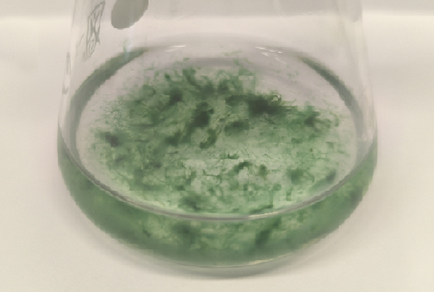
In the pre-Phylogenomic Analysis era, cyanobacteria of the genus Leptolyngbya have been identified according to such morphological character as thin filaments without true branching; secondary differences concerned ultrastructural and ecological traits. The advent of polyphasic approach allowed to split this genus into monophyletic constituents, and launch many proposals of new ‘Leptolyngbya-like’ taxa. In current interpretation, the genus Leptolyngbya encompasses Leptolyngbya spp. sensu stricto and closely related ‘Leptolyngbya-like’ species of the order Leptolyngbyales. In recent decades, new ‘Leptolyngbya-like’ genera phylogenetically distant from this order have been described. Some of them typified new phylogenetic orders Nodosilineales and Oculatellales. Herein, five ‘Leptolyngbya-like’ CALU strains were described as a separate cluster of Nodosilineales, and assigned to the family Nodosilineaceae. Besides separate 16S rRNA gene phylogeny, this cluster was supported by the analysis of 16S–23S ITS composition, as well as of rpoC1 and rbcL genes phylogeny records. Based on the polyphasic description, a new genus Ingrithrix gen. nov. (Nodosilineaceae, Nodosilineales) with a new species I. praediumpetri represented by five ‘Leptolyngbya-like’ CALU strains was proposed. Taxonomic diagnosis of the genus Ingrithrix was based on phylogenetic distinction from other Nodosilineaceae genera, and phenotypically substantiated by an ability to produce ‘red-shifted’ chlorophylls d and f in dependence on far-red (>700 nm) light, as well as by freshwater habitat and low tolerance to elevated salt concentration. Description of the genus Ingrithrix justified attention to ‘red-shifted’ chlorophylls in cyanobacterial taxonomy, and noticeably increased the availability of test objects with this non-trivial property.
References
- Albertano, P. & Kováčik, Ĺ. (1994) Is the genus Leptolyngbya (Cyanophyte) a homogeneous taxon? Archiv für Hydrobiologie Supplement 105, Algological Studies 75: 37–51.
- Anagnostidis, K. & Komárek, J. (1988) Modern approach to the classification system of cyanophytes. 3 – Oscillatoriales. Archiv für Hydrobiologie Supplement 80, Algological Studies 50–53: 327–472.
- Andreote, A.P., Vaz, M.G., Gentario, D.B., Barbiero, J., Rezende-Filho, A.T. & Fiore, M.F. (2014) Nonheterocystous cyanobacteria from Brazilian saline-alkaline lakes. Journal of Phycology 50: 675–684. https://doi.org/10.1111/jpy.12192
- Antonaru, L.A., Rad-Menéndez, C., Mbedi, S., Sparmann, S., Pope, M., Oliver, T., Wu, S., Green, D., Gugger, M. & Nürnberg, D. (2025) Evolution of far-red light photoacclimation in cyanobacteria. Current Biology 35: 2539–2553. https://doi.org/10.1016/j.cub.2025.04.038
- Averina, S., Polyakova, E., Senatskaya, E. & Pinevich, A. (2021) A new cyanobacterial genus Altericista and three species A. lacusladogae sp. nov., A. violacea sp. nov., and A. variichlora sp. nov., described using a polyphasic approach. Journal of Phycology 57: 1517–1529. https://doi.org/10.1111/jpy.13188
- Averina, S.G., Senatskaya, E.V., Polyakova, E.V., Lykholay, A.N. & Pinevich, A.V. (2026) Further acquaintance with the diversity of cyanobacteria adaptively expressing red-shifted chlorophylls: Descriptive information on twelve new cultured strains, extended with proposals of Kovacikia broсelensis sp. nov. and Leptolyngbya fluviusnevae sp. nov. (Leptolyngbyales, Cyanobacteriota). Nowa Hedwigia preprint. https://doi.org/10.1127/nova_hedwigia/1170
- Cai, F., Li, S., Zhang, H., Yu, G. & Li, R. (2022) Nodosilinea hunanensis sp. nov. (Prochlorotrichaceae, Synechococcales) from a freshwater pond in China based on a polyphasic approach. Diversity 14. https://doi.org/10.3390/d14050364
- Chen, M., Li, Y., Birch, D. & Willows, R.D. (2012) A cyanobacterium that contains chlorophyll f ¾ a red-absorbing photopigment. FEBS Letters 586: 3249–3254. https://doi.org/10.1016/j.febslet.2012.06.045
- Cordeiro, R., Luz, R., Vasconcelos, V., Gonçalves, V. & Fonseca, A. (2020) Cyanobacteria phylogenetic studies reveal evidence for polyphyletic genera from thermal and freshwater habitats. Diversity 12. https://doi.org/10.3390/d12080298
- Dadheech, P.K., Mahmoud, H., Kotut, K. & Krienitz, L. (2012) Haloleptolyngbya alkalis gen et sp. nov., a new filamentous cyanobacterium from the soda lake Nakuru, Kenya. Hydrobiologia 691: 269–283. https://doi.org/10.1007/s10750-012-1080-6
- Darriba, D., Taboada, G.L., Doallo, R. & Posada, D. (2012) jModelTest 2: more models, new heuristics and parallel computing. Nature Methods 9: 772. https://doi.org/10.1038/nmeth.2109
- Davydov, D., Shalygin, S. & Vilnet, A. (2022) New cyanobacterium Nodosilinea svalbardensis sp. nov. (Prochlorotrichaceae, Synechococcales) isolated from alluvium in Miner river valley of the Svalbard archipelago. Phytotaxa 442. https://doi.org/10.11646/phytotaxa.442.2.2
- Dojani, S., Katff, F., Weber, B. & Büdel, B. (2014) Genotypic and phenotypic diversity of cyanobacteria in biological soil crusts of the Succulent Karoo and Nama Karoo of Southern Africa. Microbial Ecology 67: 286–301. https://doi.org/10.1007/s00248-013-0301-5
- Dvořák, P., Casamatta, D., Hašler, P., Jahodářová, E., Norwich, A.R. & Poulíčková, A. (2017) Diversity of the Cyanobacteria. In: Hallenbeck, P.C. (Ed.) Modern Topics in the Phototrophic Prokaryotes. Springer International Publishing Switzerland, pp. 3–46. https://doi.org/10.1007/978-3-319-46261-5_1
- Dvořák, P., Skoupý, S., Stanojković, A., Johansen, J., Villanueva, C., Jung, P., Briegel-Williams, L., Laughinghouse IV, H.D., Lefler, F.W., Berthold, D.E., Kaštovský, J., Hurley, A.C. & Casamatta, D.A. (2025) A hitchhiker’s guide to modern, practical cyanobacterial taxonomy. Journal of Phycology 61: 1536–1552. https://doi.org/10.1111/jpy.70102
- Erwin, P.M. & Thacker, R.W. (2008) Cryptic diversity of the symbiotic cyanobacterium Synechococcus spongiarum among sponge hosts. Molecular Ecology 17: 2937–2947. https://doi.org/10.1111/j.1365-294X.2008.03808.x
- Gómez-Lojero, C., Leyva-Castillo, L.E., Herrera-Salgado, P., Barrera-Rojas, J., Ríos-Castro, E. & Gutiérrez-Cirlos, E.B. (2018) Leptolyngbya CCM 4, a cyanobacterium with far-red photoacclimaton from Cuatro Ciénegas Basin, Mexico. Photosynthetica 56: 342–353. https://doi.org/10.1007/s11099-018-0774z
- Hackmann, T.J. (2025) Setting new boundaries of 16S rRNA gene identity for prokaryotic taxonomy. International Journal of Systematic and Evolutionary Microbiology 75. https://doi.org/10.1099/ijsem.0.006747
- Heidari, F., Zima Jr., J., Riahi, H. & Hauer, T. (2018) New simple trichal cyamobacterial taxa isolated from radioactive thermal springs. Fottea 18: 137–149. https://doi.org/10.5507/fot.2017.024
- Herdman, M. & Rippka, R. (2024) CYANOBACTERIOTA: Phylogeny and taxonomy. Available from: http://cyanophylogeny.scienceontheweb.net/ (accessed 6 May 2026)
- Ho, M.J., Gan, F., Shen, G., Zhao, C. & Bryant, D.A. (2017) Far-red light photoacclimation (FaRLiP) in Synechococcus sp. PCC 7335: I. Regulation of FaRLiP gene expression. Photosynthesis Research 131: 173–186. https://doi.org/10.1007/s11120-016-0309-z
- Iteman, I., Rippka, R., Tandeau de Marsac, N. & Herdman, M. (2000) Comparison of conserved structural and regulatory domains within divergent 16S rRNA spacer sequences of cyanobacteria. Microbiology 146: 1275–1286. https://doi.org/10.1099/00221287-146-6-1275
- Jahodářová, E., Dvořák, P., Hašler, P., Holušová, K. & Poulíčková, A. (2017) Elainella gen. nov: a new tropical cyanobacterium characterized using a complex genomic approach. European Journal of Phycology 53: 39–51. https://doi.org/10.1080/09670262.2017.1362591
- Johansen, J.R., González-Rezendis, L., Escobar-Sánchez, V., Segal-Kischinevzky, C., Martinez-Yerena, J., Hernández-Sánchez, J., Hernández-Pérez, G. & León-Tejera, H. (2021) When will taxonomic saturation be achieved? A case study in Nunduva and Kyrtuthrix (Rivulariaceae, Cyanobacteria). Journal of Phycology 57: 1699–1720. https://doi.org/10.1111/jpy.13201
- Johansen, J.R., Kovacik, L., Casamatta, D.A., Fucikova, K. & Kaštovský, J. (2011) Utility of 16S–23S ITS sequence and secondary structure for recognition of intrageneric and intergeneric limits within cyanobacterial taxa: Leptolyngbya corticola sp. nov. (Pseudanabaenaceae, Cyanobacteria). Nova Hedwigia 92: 283–302. https://doi.org/10.1127/0029-5035/2011/0092-0283
- Kaštovský, J., Johansen, J.R., Hauerová, R. & Akagha, M.U. (2023) Hot is rich — an enormous diversity of simple trichal cyanobacteria from Yellowstone hot springs. Diversity 15. https://doi.org/10.3390/d15090975
- Kim, M., Oh, H.S., Park, S.C. & Chun, J. (2014) Towards a taxonomic coherence between average nucleotide identity and 16S rRNA gene sequence similarity for species demarcation of prokaryotes. International Journal of Systematic and Evolutionary Microbiology 64: 346–351. https://doi.org/10.1099/ijs.0.059744-0
- Koksharova, O., Schubert, M., Shestakov, S. & Cerff, R. (1998) Genetic and biochemical evidence for distinct key functions of two highly divergent GAPDH genes in catabolic and anabolic carbon flow of the cyanobacterium Synechocystis sp. PCC 6803. Plant Molecular Biology 36: 183–194. https://doi.org/10.1023/a:1005925732743
- Komárek, J. (2007) Phenotypic diversity of the cyanobacterial genus Leptolyngbya in the maritime Antarctic. Polish Polar Research 28: 211–231.
- Komárek, J. & Kaštovský, J. (2003) Coincidences of structural and molecular characters in evolutionary lines of cyanobacteria. Algological Studies 148: 305–325. https://doi.org/10.1127/1864-1318/2003/0109-0305
- Komárek, J., Kaštovský, J., Mareš, J. & Johansen, J.R. (2014) Taxonomic classification of cyanoprokaryotes (cyanobacterial genera) 2014, using a polyphasic approach. Preslia 86: 295–335.
- Kumar, S., Stecher, G., Li, M., Knyaz, C. & Tamura, K. (2018) MEGA X: Molecular Evolutionary Genetics Analysis across computing platforms. Molecular Biology and Evolution 35: 1547–1549. https://doi.org/10.1093/molbev/msy096
- Lane, D.J. (1991) 16S/23S rRNA sequencing. In: Stackebrandt, E. & Goodfellow, M. (Eds.) Nucleic Acid Techniques in Bacterial Systematics. J. Wiley and Sons, Chichester, pp. 115–175.
- Larsson, A. (2014) AliView: a fast and lightweight alignment viewer and editor for large data sets. Bioinformatics 30: 3276–3278. https://doi.org/10.1093/bioinformatics/btu531
- Li, X. & Li, R. (2016) Limnolyngbya circumcreta gen et. comb. nov. (Synechococcales, Cyanobacteria) with three geographical (provincial) genotypes in China. Phycologia 55: 478–491. https://doi.org/10.2216/15-149.1
- Li, Y., Scales, N., Blankenship, R.E., Willows, R.D. & Chen, M. (2012) Extinction coefficient for red-shifted chlorophylls: chlorophyll d and chlorophyll f. Biochimica et Biophysica Acta – Bioenergetics 1817: 1292–1298. https://doi.org/10.1016/j.bbabio.2012.02.026
- Mai, T., Johansen, J.R., Pietrasiak, N., Bohunická, M. & Martin, M.P. (2018) Revision of the Synechococcales (Cyanobacteria) through recognition of four families including Ocultellaceae fam. nov. and Trichocoleaceae fam. nov and six new genera containing 14 species. Phytotaxa 365. https://doi.org/10.11646/phytotaxa.365.1.1
- Mareš, J., Johansen, J.R., Hauer, T. & Zima Jr., J. (2019) Taxonomic resolution of the genus Cyanothece (Chroococcales, Cyanobacteria), with a treatment on Gloeothece and three new genera, Crocosphaera, Rippkaea, and Zehria. Journal of Phycology 55: 578–610. https://doi.org/10.1111/jpy.12853
- Mareš, J., Strunecký, O., Bučinská, & Wiedermannová, J. (2019) Evolutionary patterns of thylakoid architecture in cyanobacteria. Frontiers in Microbiology 10: 277. https://doi.org/10.3389/fmicb.2019.00277
- Mathews, D.H., Schroeder, S.J., Turner, D.H. & Zuker, M. (2005) Predicting RNA secondary structure. In: Gesteland, R.F., Cech, T.R. & Atkins, J.F. (Eds.) The RNA World. Cold Spring Harbor Laboratory Press, New York, pp. 631–657. https://doi.org/10.1101/0.631-657
- Miscoe, L.H., Johansen, J.R., Vaccarino, M.A., Pietrasiak, N. & Sherwood, A.R. (2016) The diatom flora and cyanobacteria from caves on Kawai, Hawaii. Taxonomy, distribution, new species. II. Novel cyanobacteria from caves on Kauai, Hawaii. Bibliotheca Phycologica 120: 75–152.
- Morais, J., Cruz, P., Hentschke, G.S., Silva, B., Oliveira, F., Neves, J., Silva, R., Ramos, V., Leão, P.N. & Vasconcelos, V.M. (2025) Diversity of cyanobacterial genera present in Cabo Verde marine environments and the description of Gibliniella gelatinosa sp. nov. Plants 14: 1–16. https://doi.org/10.3390/plants14030299
- Mühlsteinová, R., Johansen, J.R., Pietrasiak, N., Martin, M.P., Osorio-Santos, K. & Warren, S.D. (2014) Polyphasic characterization of Trichocoleus desertorum sp. nov. (Pseudanabaenales, Cyanobacteria) from desert soils and phylogenetic placement of the genus Trichocoleus. Phytotaxa 163: 241–261. https://doi.org/10.11646/phytotaxa.163.5.1
- Nuryadi, H., Sumimoto, S. & Suda, S. (2024) Discovery of novel Nodosilinea species (Cyanobacteria, Nodosilineales) isolated from terrestrial habitat in Ryukyus campus, Okinava, Japan. Algae 39: 59–74. https://doi.org/10.4490/algae.2024.39.6.5
- Osorio-Santos, K., Pietrasiak, N., Bohunická, M., Miscoe, L.H., Kováčik, L., Martin, M.P. & Johansen, J.R. (2014) Seven new species of Oculatella (Pseudanabaenales, Cyanobacteria): taxonomically recognizing cryptic diversification. European Journal of Phycology 49: 450–470. https://doi.org/10.1080/09670262.2014.976843
- Perkerson III, R.B., Johansen, J.R., Kovácik, L., Brand, J., Kaštovský, J. & Casamatta, D.A. (2011) A unique pseudanabaenalean (Cyanobacteria) genus Nodosilinea gen. nov. based on morphological and molecular data. Journal of Phycology 47: 1397–1412. https://doi.org/10.1111/j.1529-8817.2011.01077x
- Pietrasiak, N., Osorio-Santos, K., Shalygin, S., Martin, M.P. & Johansen, J.R. (2019) When is a lineage a species? A case study in Myxacorys gen. nov. (Synechococcales: Cyanobacteria) with the description of two new species from the Americas. Journal of Phycology 55: 976–996. https://doi.org/10.1111/jpy.12897
- Pinevich, A.V. & Averina, S.G. (2024) Taxonomy of cyanobacteria: the era of change. Microbiology 93: 521–536. https://doi.org/10.1134/S0026261724605724
- Raabová, L., Kovacik, L., Elster, J. & Strunecký, O. (2019) Review of the genus Phormidesmis (Cyanobacteria) based on environmental, morphological, and molecular data with description of a new genus Leptodesmis. Phytotaxa 395. https://doi.org/10.11646/phytotaxa.395.1.1
- Radzi, R., Muangmai, N., Broady, P., Wan Omar, W.M., Lavoue, S. & Convey, P. (2019) Nodosilinea signiensis sp. nov (Leptolyngbyaceae, Synechococcales), a new terrestrial cyanobacterium isolated from mats collected on Signy Island, South Orkney Islands, Antarctica. PloS ONE 14. https://doi.org/10.1371/journal.pone.0224395
- Rasouli-Dogaheh, S., Komárek, J., Chatchawan, T. & Hauer, T. (2022) Thainema gen. nov. (Leptolyngbyaceae, Synechococcales): A new genus of simple trichal cyanobacteria isolated from a solar saltern environment in Thailand. PloS ONE 17. https://doi.org/10.1371/journal.pone.0261682
- Rippka, R., Deruelles, J., Waterbury, J.B., Herdman, M. & Stanier, R.Y. (1979) Generic assignments, strain histories and properties of pure cultures of cyanobacteria. Journal of General Microbiology 111: 1–61. https://doi.org/10.1099/00221287-111-1-1
- Ronquist, F., Teslenko, M., van der Mark, P., Ayres, D.L., Darling, A., Höhna, S., Larget, B., Liu, L., Suchard, M.A. & Huelsenbeck, J.P. (2012) MrBayes 3.2: Efficient bayesian phylogenetic inference and model choice across a large model space. Systematic Biology 61: 539–542. https://doi.org/10.1093/sysbio/sys029
- Samylina, O.S., Sinetova, M.A., Kupriyanova, E.V., Starikov, A.Yu., Sukhacheva, M., Dziuba, M.V. & Tourova, T.P. (2021) Ecology and biogeography of the ‘marine Geilterinema’ cluster and description of Sodalinema orleanskyi sp. nov., Sodalinema gerasimenkovae sp. nov, Sodalinema stali sp. nov and Baaleninema simplex gen. et sp. nov. (Oscillatoriales, Cyanobacteria). FEMS Microbiology Ecology 97. https://doi.org/10.1093/femsec/fiab104
- Sciuto, K. & Moro, J. (2016) Detection of the new cosmopolitan genus Thermoleptolyngbya (Cyanobacteria, Leptolyngbyaceae) using the 16S rRNA gene and 16S–23S ITS region. Molecular Phylogenetics and Evolution 105: 15–35. https://doi.org/10.1016/j.ympev.2016.08.010
- Sciuto, K., Moschin, E. & Moro, I. (2017) Cryptic cyanobacterial diversity in the Giant Cave, Trieste, Italy): the new genus Timaviella (Leptolyngbyaceae). Cryptogamie, Algologie 38: 285–323. https://doi.org/10.7872/crya/v38.iss4.2017.285
- Shen, L.-Q., Zhang, Z.-C., Shang, J.-L., Li, Z.-K., Chen, M., Li, R. & Qiu, B.-S. (2022) Kovacikia minuta sp. nov. (Leptolyngbyaceae, Cyanobacteria), a new freshwater chlorophyll f-producing cyanobacterium. Journal of Phycology 58: 424–435. https://doi.org/10.1111/jpy.13248
- Siegesmund, M.A., Johansen, J.R., Karsten, U. & Friedl, T. (2008) Coleofasciculus gen. nov. (Cyanobacteria): morphological and molecular criteria for revision of the genus Microcoleus Gomont. Journal of Phycology 44: 1572–1585. https://doi.org/10.1111/j.1529-8817.2008.00604.x
- Singh, P., Fatma, A. & Mishra, A.K. (2015) Molecular phylogeny and evogenomics of heterocystous cyanobacteria using rbcl gene sequence data. Annals of Microbiology 65: 799–807. https://doi.org/10.1007/s13213-014-0920-1
- Stackebrandt, E. & Ebers, J. (2006) Taxonomic parameters revisited: Tarnished gold standards. Microbiology Today 33: 152–155.
- Strunecký, O., Ivanova, A.P. & Mareš, J. (2023) An updated classification of cyanobacterial orders and families based on phylogenomic and polyphasic analysis. Journal of Phycology 59: 12–51. https://doi.org/10.1111/jpy.13304
- Strunecký, O., Raabová, L., Bernardová, A., Ivanova, A.P., Semanova, A., Crossley, J. & Kaftan, D. (2020) Diversity of cyanobacteria at the Alaska North Slope with description of two new genera: Gibliniella and Shackletoniella. FEMS Microbial Ecology 96. https://doi.org/10.1093/femsec/fiz189
- Tang, J., Li, L., Li, M., Du, L., Shah, M.R., Waleron, M.M. & Waleron, M. (2021) Description, taxonomy, and comparative genomics of a novel species, Thermoleptolyngbya sichuanensis sp. nov., isolated from hot springs of Ganzi, Sichuan. Frontiers in Microbiology 12. https://doi.org/10.3389/fmicb.2021.696102
- Trifinopoulos, J., Nguyen, L.T., von Haeseler, A. & Minh, B.Q. (2016) W-IQ-TREE: a fast online phylogenetic tool for maximum likelihood analysis. Nucleic Acids Research 44 (W1): W232–W235. https://doi.org/10.1093/nar/gkw256
- Turland, N.J., Wiersema, J.H., Barrie, F.R., Gandhi, K.N., Gravendyck, J., Greuter, W., Hawksworth, D.L., Herendeen, P.S., Klopper, R.R., Knapp, S., Kusber, W.-H., Li, D.-Z., May, T.W., Monro, A.M., Prado, J., Price, M.J., Smith, G.F. & Zamora Señoret, J.C. (2025) International Code of Nomenclature for algae, fungi, and plants (Madrid Code). University of Chicago Press, Chicago, 303 pp. (Regnum Vegetabile 162). https://doi.org/10.7208/chicago/9780226839479.001.0001
- Turner, S. (1997) Molecular systematics of oxygenic phototrophic bacteria. Plant Systematics and Evolution 11: 13–52. https://doi.org/10.1007/978-3-7091-6542-3_2
- Turner, S., Pryer, K.M., Miao, V.P.W. & Palmer, J.D. (1999) Investigating deep phylogenetic relationships among cyanobacteria and plastids by small subunit rRNA sequence analysis. Journal of Eukaryotic Microbiology 46: 327–338. https://doi.org/10.1111/j.1550-7408.1999.tb04612.x
- Untiveros, D.P.M., Sanchez, L.R.S. & Cao, E.P. (2023) Whole genome sequence analysis of the filamentous Nodosilinea sp. PGN35 isolated from a mining site in Tuba, Benguet, Philippines. Frontiers in Ecology and Evolution 11. https://doi.org/10.3389/fevo.2023.1205557
- Vandamme, P., Pot, B., Gillis, M., de Vos, P., Kersters, K. & Swings, J. (1996) Polyphasic taxonomy, a consensus approach to bacterial systematics. Microbiology and Molecular Biology Reviews 60: 407–438. https://doi.org/10.1128/mr.60.2.407-438.1996
- Vázquez-Martínez, J., Gutierrez-Villagomez, J.M., Fonseca-García, C., Ramírez-Chávez, E., Mondragón-Sánchez, M.L., Partida-Martínez, L., Johansen, J. & Molina-Torres, J. (2018) Nodosilinea chupicuarensis sp. nov. (Leptolyngbyaceae, Synechococcales) a subaerial cyanobacterium isolated from a stone monument in central Mexico. Phytotaxa 334: 167–182. https://doi.org/10.11646/phytotaxa.334.2.6
- Wong, T.K.F., Ly-Trong, N., Ren, H., Baños, H., Roger, A.J., Susko, E., Bielow, C., De Maio, N., Goldman, N., Hahn, M.W., Huttley, G., Lanfear, R. & Minh, B.Q. (2025) IQ-TREE 3: Phylogenomic inference software using complex evolutionary models. Preprint. [https://ecoevorxiv.org/repository/view/8916/] https://doi.org/10.32942/x2p62n
- Yarza, P., Yilmaz, P., Pruesse, E., Glöckner, F.D., Ludwig, W., Schleifer, K.-H., Whitman, W.B., Euzéby, J., Amann, R. & Roselló-Móra, R. (2014) Uniting the classification of cultured and uncultured bacteria and archaea using 16S rRNA sequences. Nature Reviews Microbiology 12: 635–645. https://doi.org/10.1038/nmicro3330
- Zammit, G. (2018) Systematics and biogeography of sciophilous cyanobacteria; an ecological and molecular description of Albertania skiophila (Leptolyngbyaceae) gen. & sp. nov. Phycologia 57: 481–491. https://doi.org/10.2216/17-125.1
- Zammit, G., Billi, D. & Albertano, P. (2012) The subaerophytic cyanobacterium Oculatella subterranea (Oscillatoriales, Cyanophyceae) gen. et sp. nov.: a cytomorphological and molecular description. European Journal of Phycology 47: 341–354. https://doi.org/10.1080/09670262.2012.717106
- Zhou, W.-G., Ding, D.-W., Yang, Q.-S., Ahmad, M., Zhang, Y.-Z., Lin, X.-C., Zhang, Y.Y. & Dong, J.D. (2018) Marileptolyngbya sina gen. nov., sp. nov. and Salileptolyngbya diazotrophicum gen. nov., sp. nov. (Synechococcales, Cyanobacteria), species of cyanobacteria iaolated from a marine ecosystem. Phytotaxa 383: 075–092. https://doi.org/10.11646/phytotaxa.383.1.4
- Zuker, M. (2003) M-fold web server for nucleic acid folding and hybridization prediction. Nucleic Acids Research 31: 3406–3415. https://doi.org/10.1093/nar/gkg595